Loading this candidate’s profile from the FEC filings and campaign records.
Where They Stand is a nonpartisan guide to everyone running for Congress: their money, their own words and how incumbents voted. Find your ballot →
Candidates › CA-07 race › 2025–2026
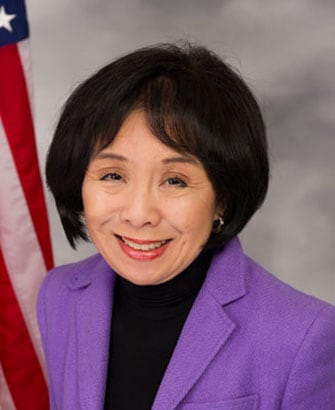
Doris O. Matsui
D Democratic nominee for U.S. House, CA-07
Representative since 2005
Other accounts (3)
The same platforms’ other accounts, such as a congressional office’s or an earlier campaign’s.
- On the ballot
- On the general election ballotNov 3, 2026 · California US House 7
- Where to vote
- Find your polling place (opens in a new tab) · More ways to vote
- Top priorities
- Environment
- Health
- Infrastructure
- Technology & Media
- In Congress
- Representative since 2005 · votes with their party 98% of the time. See the record · Office phone 202-225-7163
- Money
- $7.8M raised, $6.1M spent, $2M cash on hand (through Oct 14, 2026). Where it comes from
- Who gives
- 3.4% of individual money from donors at $200 or less · 46% from California · largest committee giver EDISON INTERNATIONAL PAC, $10K
- Outside groups
- $100.2K supporting, $442K opposing Matsui
- Backed by
- California Democratic Party · El Dorado County Democrats · Greater Lodi Area Democrats and 123 more. As the campaign lists them
- Sponsored most in
- Health, Science, Technology, Communications, Environmental Protection
4 priorities from matsuiforcongress.com, in the order they are listed there. Every heading and the text under it is copied exactly, as one passage for each page it is from, and links to that place on the page; hover a source to see which passage it opens.
Doris has consistently led efforts to modernize and decarbonize our electric grid and support energy efficiency programs that save ratepayers money while also cutting emissions.
- Authored the POWER ON Act that created the $10 billion Grid Resilience and Innovation Partnership.
- $50 million for grid reliability and resilience.
- $67 million for the State of California.
- $630 million for the California Energy Commission.
- Authored the Healthier and Greener Schools Act which provided $500 million nationally for indoor air quality improvements, energy efficiency upgrades, and clean energy investments in schools.
source ↗ (opens the page at this passage) · matsuiforcongress.com/issues
Doris has been one of Congress’s strongest champions for clean air and zero-emission vehicles.
- Led efforts to strengthen nationwide vehicle pollution standards.
- Led opposition to Trump’s attacks on California’s vehicle emissions authority.
- Fought Trump’s rollbacks of national clean vehicle standards.
- Protected EPA air monitoring and enforcement funds and Dept. of Energy clean vehicle research programs.
- Led efforts to extend and expand the Diesel Emissions Reduction Act which helps replace or retrofit older diesel engines that disproportionately pollute low-income communities.
source ↗ (opens the page at this passage) · matsuiforcongress.com/issues
As co-chair of the Congressional Lands Waters and Nature Task Force Doris is a national leader on protecting and restoring America’s public lands. In the Capital Region she brings this love for nature to the urban context championing city trees, parks, and green spaces.
- Doris authored the TREES Act which would provide federal funding to plant city trees in low-income neighborhoods to provide shade from the summer heat and reduce energy bills.
- She fought for $1.5 billion in funding in the Inflation Reduction Act for urban trees which provided $2 million for Sacramento city trees.
- Opposed Park Service staff cuts and President Trump’s attempts to log our public forests.
source ↗ (opens the page at this passage) · matsuiforcongress.com/issues
Enacting comprehensive mental and behavioral health reform is very personal to Doris and one of her biggest priorities. Mental health care is health care.
- Doris authored and passed the Excellence in Mental Health Act that created more than 500 behavioral health clinics that deliver crisis, mental health, and substance use treatment and care services to all regardless of ability to pay. This program has provided over $3.44 billion in grants to expand mental health care since 2018 including approximately $5 million in Sacramento.
source ↗ (opens the page at this passage) · matsuiforcongress.com/issues
Doris has led the charge to expand telehealth access nationwide to break down barriers to treatment. As co-chair of the Congressional Telehealth Caucus, Doris is the lead voice for extending telehealth.
- She passed the Telemental Health Expansion Act which permanently allows Medicare beneficiaries to access mental health treatment through telehealth services at home.
- She is also fighting for permanence for all telehealth services for Medicare beneficiaries through the CONNECT Act.
source ↗ (opens the page at this passage) · matsuiforcongress.com/issues
Too many families struggle with high medical bills. Doris supports key legislation to bring down out-of-pocket costs for patients.
- Doris is proud to have helped pass the most historic drug pricing legislation in history, the Inflation Reduction Act.
- She’s fighting to cap out-of-pocket costs for lifesaving medicines, including through her EPIPEN Act to limit what patients pay for EpiPens to $60 for a two-pack
source ↗ (opens the page at this passage) · matsuiforcongress.com/issues
Doris believes that early detection intervention and prevention are key to better public health and ultimately saving lives.
- She led the effort to create the Affordable Care Act’s Prevention and Public Health Fund, delivering over $12 billion to support core public health programs like tobacco control and disease prevention through 2023.
- She helped secure $18 million for Sacramento agencies and nonprofits through the Prevention and Public Health Fund in 2022-2023.
- Doris is working to increase funding to $2 billion a year to build our public health infrastructure so we’re ready for any future threats.
source ↗ (opens the page at this passage) · matsuiforcongress.com/issues
Doris has secured over $4 billion in federal funding during her time in office. In just the last 5 years Doris has secured over half a billion dollars for critical regional projects.
- $1.1 billion for the Folsom Dam and auxiliary spillway.
- $485 million for the Folsom Dam Raise.
- $1.5 billion to protect the Natomas Basin.
- $1.8 billion for levee improvements along the American River including $350 million for the new Sacramento Weir.
source ↗ (opens the page at this passage) · matsuiforcongress.com/issues
Doris has worked closely with SacRT and Capitol Corridor to modernize rail infrastructure in the Sacramento region. She continues to work closely with SacRT and local leaders to keep the region connected with access to affordable and reliable public transportation.
- $52 million to develop Sacramento Valley Station.
- $9.5 million for the new Dos Rios Blue Line Station.
- $45 million for 16 new low-floor light-rail cars.
- $135 million for the 4.3-mile light-rail extension to Cosumnes River College.
- $42.5 million for the Capitol Corridor Sacramento to Roseville Third Track Project
- $86 million in federal funding for the Downtown Sacramento Streetcar Project
- $76.8 million for new low-emission buses/SacRT’s McClellan maintenance facility
- $22.5 million for SACOG’s Green Means Go program
source ↗ (opens the page at this passage) · matsuiforcongress.com/issues
Doris has been a champion in securing funding to upgrade and improve Sacramento’s airports.
- Full funding ($60-80 million) for the new Air Traffic Control Tower.
- $42.5 million for improving and expanding SMF’s terminal facilities.
- $13.5 million to repair SMF’s runway and tarmac.
- $25 million for Mather Airport runway, tarmac and control tower maintenance.
- $9.8 million dollars for the Aircraft Rescue and Fire Fighting Facility.
source ↗ (opens the page at this passage) · matsuiforcongress.com/issues
Doris works with all levels of government to address Sacramento’s ongoing infrastructure needs.
- $250 million in federal and state funding for the “I” Street Bridge Replacement Project
- $400,000 for HWY 50 & Watt Avenue Interchange Project.
source ↗ (opens the page at this passage) · matsuiforcongress.com/issues
Doris has spent years working to expand broadband access while strengthening America’s wireless economy. Connecting rural communities to a stable modern internet is one part of Doris’ fight against unequal access.
- Leading the fight to protect the Bipartisan Infrastructure Law’s $42.45 billion Broadband Equity, Access, and Deployment program, ensuring Sacramento families and rural communities get connected.
- Pushing to modernize the Universal Service Fund, which supports Lifeline and other critical connectivity programs.
- Leading efforts to restore the Affordable Connectivity Program which provided monthly broadband discounts to low-income families before Republicans allowed it to lapse.
source ↗ (opens the page at this passage) · matsuiforcongress.com/issues
Doris co-authored the CHIPS for America Act which became the foundation for $52 billion in federal semiconductor investments to bring advanced manufacturing back to the United States.
- $225 million in CHIPS funding for Bosch supporting a $1.9 billion investment in the region.
- Creating high-skill jobs and strengthening our regional economy.
source ↗ (opens the page at this passage) · matsuiforcongress.com/issues
Doris is leading efforts to establish strong federal guardrails around AI development and deployment. She believes innovation must be paired with accountability.
- Authored the Algorithmic Justice and Online Platform Transparency Act which bans harmful algorithmic practices, increases transparency around content amplification and moderation, and launches a government-wide investigation into discriminatory AI systems.
- Fighting to ensure AI guardrails protect civil rights kids’ safety, workers’ protections and environmental sustainability.
source ↗ (opens the page at this passage) · matsuiforcongress.com/issues
Doris is leading the fight against political interference in our media. When President Trump and FCC
Chairman Carr acted to ignore the law and pressure broadcasters, Doris the introduced the Broadcast Freedom and Independence Act to:
- Prevent federal officials from pressuring local newsrooms.
- Protect broadcasters from political retaliation.
- Defend the independence of local journalism.
- Fighting back against media consolidation that would allow Nexstar to dominate the national and Sacramento markets.
source ↗ (opens the page at this passage) · matsuiforcongress.com/issues