Loading this candidate’s profile from the FEC filings and campaign records.
Where They Stand is a nonpartisan guide to everyone running for Congress: their money, their own words and how incumbents voted. Find your ballot →
Candidates › WA-06 race › 2025–2026
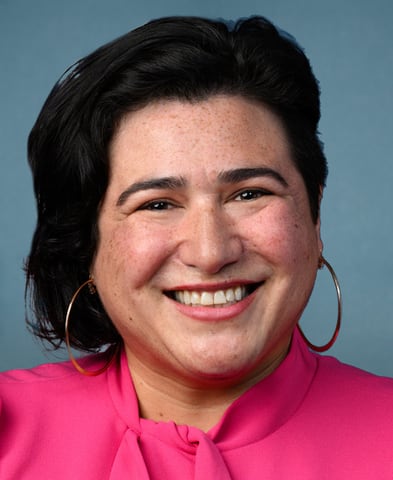
Emily Randall
D Democratic nominee for U.S. House, WA-06
Representative since 2025
- On the ballot
- On the general election ballotNov 3, 2026 · Washington US House 6
- Top priorities
- Fighting Climate Change
- Lowering Costs for Families
- Defending Democracy
- Enhancing Healthcare
- Improving Education
- In Congress
- Representative since 2025 · votes with their party 98% of the time. See the record · Office phone 202-225-5916
- Money
- $1.4M raised, $1.3M spent, $168.7K cash on hand (through Oct 14, 2026). Where it comes from
- Who gives
- 26% of individual money from donors at $200 or less · 86% from Washington · largest committee giver INTERNATIONAL BROTHERHOOD OF ELECTRICAL WORKERS POLITICAL ACTION COMMITTEE, $10K
- Outside groups
- $419 supporting Randall
- Backed by
- Planned Parenthood Action Fund · Senator Patty Murray · League of Conservation Voters Action Fund and 16 more. As the campaign lists them
- Sponsored most in
- Native Americans, Armed Forces and National Security, Public Lands and Natural Resources
6 priorities from electemilyrandall.com, in the order they are listed there. Every heading and the text under it is copied exactly, as one passage for each page it is from, and links to that place on the page; hover a source to see which passage it opens.
We must make a just and fair transition away from fossil fuels and invest in clean energy jobs and infrastructure.
The United States has a responsibility to be a leader and innovate new ways for countries to accelerate their transitions to a more green and clean economy.
I will work closely with labor and industry to find ways for workers to gain new skills and transition to the jobs that our changing economy and environment needs. I am committed to building an economy that is sustainable, and that protects those among us most vulnerable to the impacts of climate change. We must focus on renewable energy, and climate-neutral industry that protects not only today’s economy, but the ability for our grandchildren to live and work as well.
We know that the communities that will be most impacted by climate change are the ones with the least means to survive it. This is why I have been a leader in ensuring a just transition to a greener transportation system and adapting our electrical grid to the needs of a greener economy.
In Congress, I will build on my success in Washington State and expand these advancements across the country.
source ↗ (opens the page at this passage) · electemilyrandall.com/issues/fighting-climate-change
I believe in an economy that works from the middle class out–not trickle down–putting working families at the center of economic policies. I believe in equal pay for equal work, a tax structure that requires big business to pay its fair share, and in creating good jobs by investing in small and mid-sized businesses. I believe in the importance of driving technological innovation and economic growth, including through blockchain technology and the digital asset industry. I believe in removing the barriers to economic freedom and opportunity for our most marginalized communities such as communities of color, LGBTQ folks, and the disability community.
In our country today, there is too much wealth in too few hands. We can build a better future for all of us by strengthening the middle class, by giving folks the opportunity to earn a good wage and benefits, keep their lights on and food on their table, and have money in their pockets. We can create more jobs and grow our economy through comprehensive regulatory frameworks that encourage innovation while protecting consumers.
In Congress, I will work across the aisle to make sure that working class families like mine are able to earn a decent living where we can put food on the table, pay our bills, and breathe a little easier toward the end of the month.
source ↗ (opens the page at this passage) · electemilyrandall.com/issues/lowering-costs-for-families
We are at a critical moment for our democracy, and protecting the right to vote for Americans is crucial. This starts with ensuring that all eligible voters have access to the ballot box. I will continue to fight to remove barriers to voting and ensure every citizen’s voice is heard.
Washington’s 6th District deserves a champion who will work as hard for them, as they work for their families. For too long, too many in Congress have placed partisan politics and corporate special interests above The People and that needs to end.
As a member of Congress, I will be dedicated to lifting up the voices of Americans–not special interests. I am a part of the community I am running to represent–I see my constituents at the grocery store, and one thing that I consistently hear is that they appreciate the stand I’ve taken against taking corporate PAC money since I started running for office. They know where I stand, and it’s with them, not corporate special interests.
In Congress, I will continue to fight hard to safeguard and defend the right to vote for all eligible voters, and to ensure that those who are most impacted by legislation have a say in that legislation.
source ↗ (opens the page at this passage) · electemilyrandall.com/issues/defending-democracy
No one should go bankrupt to pay for lifesaving or palliative care. My family was only able to afford critical care for my younger sister when she was with us because, in addition to my dad’s government employee health insurance, Olivia qualified for Medicaid. I want to ensure that every family has these same opportunities for their loved ones. As a member of Congress, I will work hard to protect and strengthen the ACA, increase the flexibility of Medicaid dollars so that states like Washington can continue expanding coverage, bring down the out of pocket cost on medication, and invest in staffing critical healthcare positions and infrastructure so people have more than just theoretical access to the care they need.
I have been a leader in Washington in expanding access to healthcare providers and ensuring that people have more than just theoretical access to essential healthcare including comprehensive reproductive healthcare and gender affirming care.
I know firsthand just how devastating healthcare costs can be to working class families and no one should go bankrupt to pay for lifesaving or palliative care which is why I sponsored the legislation creating Washington’s Universal Healthcare Commission.
In Congress, I will fight to ensure healthcare, including mental health care and reproductive healthcare, is affordable, accessible, and culturally-relevant for patients.
source ↗ (opens the page at this passage) · electemilyrandall.com/issues/enhancing-healthcare
After graduating from my local high school, I became the first in my family to graduate from college — I understand and believe in the value of quality education to level the playing field. As the Senate Chair of the Higher Education and Workforce Development Committee, I have focused on opening doors wider for all students, and ensuring that whichever path a student chooses is well supported. We’ve made Washington State one of the most affordable states in which to go to college, while also strengthening our apprenticeship and career training system. I’ve also passed policies that help increase diversity in medical school admissions, ensure patients receive affordable and culturally competent care, and worked to expand the Latino Centers for Health at University of Washington.
I believe in equal access to good schools and well-compensated teachers no matter our zip-code or family background. Every student deserves a quality education from pre-K to post-high school. And that post-high school path might be college and it might be an apprenticeship, but it should prepare students for tomorrow’s job market without saddling them with insurmountable debt.
In Congress, I will support efforts to make all educational pathways affordable and accessible to all students.
source ↗ (opens the page at this passage) · electemilyrandall.com/issues/improving-education
From passing Reproductive Health Access for All in 2019, to working to ensure student health plans covered abortion care, to ending cost sharing, to preserving access to mifepristone, I have been a leader on reproductive health policy in Washington – and have worked in coalition with reproductive justice partners. I will continue that work – as a coalition builder and a policy maker – in DC.
In Washington state, I have been one of the top abortion rights and reproductive rights advocates. I have sponsored legislation to block religious hospital mergers that lead to reduced reproductive healthcare and gender affirming care access; extend postpartum healthcare coverage support birthing parents for a full year after giving birth; expand the types of healthcare professionals who can perform abortions require all health plans to cover reproductive healthcare and contraception; and many other pieces of legislation expanding access to healthcare generally and reproductive freedom specifically.
I work closely with reproductive care providers and advocates to find more ways to expand and protect access to this essential aspect of basic healthcare – including regulating CPCs/fake clinics in 2024! I am proud to have a 100% lifetime pro-choice voting record.
In Congress, 6th District voters can be sure that I will fight as hard for abortion rights as I do in Washington State.
source ↗ (opens the page at this passage) · electemilyrandall.com/issues/abortion