Loading this candidate’s profile from the FEC filings and campaign records.
Where They Stand is a nonpartisan guide to everyone running for Congress: their money, their own words and how incumbents voted. Find your ballot →
Candidates › VA-01 race › 2025–2026
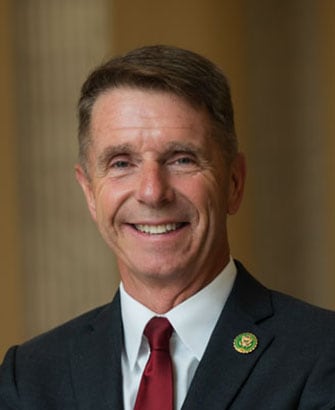
Robert J. Wittman
R Republican nominee for U.S. House, VA-01
Representative since 2007
Other accounts (2)
The same platforms’ other accounts, such as a congressional office’s or an earlier campaign’s.
- On the ballot
- Lost the general electionNov 3, 2026 · 113,916 votes (46.4%) · 2 of 2
- Where to vote
- Find your polling place (opens in a new tab) · More ways to vote
- Top priorities
- JOBS AND THE ECONOMY
- FISCAL ACCOUNTABILITY
- HEALTH CARE
- INFRASTRUCTURE
- SECURITY AT HOME AND ABROAD
- In Congress
- Representative since 2007 · votes with their party 98% of the time. See the record · Office phone 202-225-4261
- Money
- $5.4M raised, $6M spent, $797.3K cash on hand (through Oct 14, 2026). Where it comes from
- Who gives
- 4.3% of individual money from donors at $200 or less · 61% from Virginia · largest committee giver SEAL PAC SUPPORTING ELECTING AMERICAN LEADERS PAC, $12.5K
- Outside groups
- $979.1K supporting, $6.9M opposing Wittman
- Backed by
- Glenn Youngkin · Bob McDonnell · George Allen and 31 more. As the campaign lists them
- Polling
- 46% in the latest poll (The Washington Post/George Mason University Schar School of Policy and Government). The polls
- Sponsored most in
- Armed Forces and National Security, Health, Energy
6 priorities from robwittman.com, in the order they are listed there. Every heading and the text under it is copied exactly, as one passage for each page it is from, and links to that place on the page; hover a source to see which passage it opens.
Washington should be focused on making life more affordable, helping families get ahead, allowing workers to keep more of what they earn, and giving small businesses the freedom to grow and create jobs.
Too many families are working hard and still feeling squeezed by the cost of groceries, electricity, housing, health care, child care, and nearly everything else they need. A paycheck should go further than it does today, and families should not have to choose between filling up the gas tank, paying the electric bill, and putting food on the table.
I am fighting for policies that lower costs, keep taxes down, increase American energy production, reduce unnecessary regulations, and make it easier to build, invest, hire, and grow here at home.
I supported tax relief for working families, including locking in and doubling the Child Tax Credit, increasing the standard deduction to $31,500 for families, and no tax on qualifying tips and overtime. I also supported important tax provisions that help small businesses invest and create jobs, and seniors keep more of their social security checks.
Small businesses are the backbone of our communities. They employ our neighbors, support local organizations, sponsor our kids’ teams, and give our towns their character. Washington should be making it easier for them to succeed, not burying them under higher taxes, rising costs, and unnecessary red tape.
We also need to make sure Virginians have the skills to compete for the good-paying jobs being created across our Commonwealth. I have long supported career and technical education, apprenticeships, STEM programs, workforce training, and partnerships that connect workers with careers in shipbuilding, health care, manufacturing, construction, technology, transportation, and the skilled trades.
America should also make more of what we need right here at home.
For too long, our country has relied on Communist China and other foreign adversaries for critical minerals, medicines, technologies, energy components, and other products essential to our economy and national security. I am fighting to bring manufacturing and critical supply chains back to the United States, create more American jobs, and make our country less dependent on nations that do not share our interests.
My goal is an economy where hard work is rewarded, families can afford the basics and still have something left over, small businesses can thrive, and the next generation can find opportunity right here at home.
I will keep fighting to lower the cost of living, protect your paycheck, strengthen American businesses, and create more opportunities for Virginia families.
source ↗ (opens the page at this passage) · robwittman.com/issues
Education is personal to me. My mother spent her career as a public school teacher in Hanover County, and my wife, Kathryn, devoted more than 40 years to teaching elementary school students in Westmoreland County. I have seen firsthand the difference a great teacher can make in a child’s life.
I also know that no one knows a child better than his or her parents. As a father of two and grandfather of six, I believe parents deserve a meaningful voice in their children’s education, transparency about what is happening in the classroom, and the freedom to make the choices that are best for their families.
Parents, teachers, and local communities should be driving education decisions, not Washington bureaucrats. Our schools should be focused on giving students the fundamentals, teaching them how to think rather than what to think, and preparing them to succeed in the real world.
And success does not have to mean following one prescribed path. A four-year college degree can open tremendous doors, but it is not the only pathway to a successful career. We need to give young people more opportunities to pursue career and technical education, apprenticeships, dual enrollment, professional credentials, and hands-on training that can lead directly to good-paying jobs.
I know how difficult paying for an education can be. I worked two jobs while I was in college, and when I ran out of money my senior year, my father loaned me what I needed to finish. Then he handed me the bill on graduation day.
Students today should have more choices for building a future without feeling like they have to take on a mountain of debt to get there.
That’s why I introduced and championed the bipartisan Freedom to Invest in Tomorrow’s Workforce Act, which became law in 2025 and allows families to use 529 education savings accounts for qualified workforce training, certifications, licenses, and professional credentials. I also supported expanding Pell Grants to qualifying short-term career and technical programs so more Americans can get the skills they need for in-demand jobs.
Education should open doors. It should give every child a strong foundation, give parents a voice, give teachers the support they need to succeed, and give students the freedom to choose the path that is right for them.
I will keep fighting for an education system that puts students and parents first, supports our teachers, expands opportunity, and prepares the next generation to compete, succeed, and build their own American Dream.
source ↗ (opens the page at this passage) · robwittman.com/issues
Heading as listed on robwittman.com/issues ↗ (opens robwittman.com/issues at this heading)
Heading as listed on robwittman.com/issues ↗ (opens robwittman.com/issues at this heading)
Our national debt has now surpassed $40 trillion. Washington cannot continue spending money it does not have and leaving future generations to pay the bill.
Fiscal responsibility starts with respecting taxpayers’ hard earned money. That means eliminating waste, fraud, improper payments, and duplicative or ineffective programs while protecting the essential services Americans depend on. It also means pursuing pro-growth policies that strengthen our economy, create jobs, and expand the tax base rather than simply asking families and businesses to pay more.
But, we cannot solve Washington’s spending problem without fixing the broken process that created it. Too often, Congress misses its deadlines, waits until the last minute, and relies on massive spending packages instead of doing the hard work of setting priorities and scrutinizing how taxpayer dollars are spent. I believe Congress should be transparent about where your money is going, make responsible choices, and be held accountable when it fails to do its job.
That is why I have authored, repeatedly introduced, and continue to push forward legislation to hold Congress accountable:
- No Budget, No Pay Act: Withholds Members’ pay if Congress fails to pass a budget on time.
- Stay on Schedule (S.O.S) Resolution: Keeps the House in Washington instead of leaving for August recess if all 12 annual appropriations bills have not been passed.
- Inaction Has Consequences Act: Withholds Members’ pay if Congress fails to pass all 12 regular appropriations bills by the end of the fiscal year.
I have also supported efforts to strengthen government-wide fraud prevention, stop improper and fraudulent federal payments, and make sure taxpayer dollars are going where Congress intended them to go. When federal dollars go to fraud or error, that’s a waste of taxpayer dollars and less resources available for those who truly need them.
Every day, Virginia families and small businesses have to make tough choices, meet deadlines, and live within their means. Congress should be held to the same standard.
I will continue fighting for a government that is leaner, more efficient, more transparent, and accountable to the people who pay the bills: the American taxpayers.
source ↗ (opens the page at this passage) · robwittman.com/issues
Heading as listed on robwittman.com/issues ↗ (opens robwittman.com/issues at this heading)
Health care should give families peace of mind, not another reason to worry about how they are going to pay the bills.
You should be able to see the doctor you choose, understand what your care will cost, afford your medication, and receive the care you need without an insurance company standing in the way.
Before serving in Congress, I earned my master’s degree in public health and spent more than 26 years working for the Virginia Department of Health. I have spent much of my career focused on health care and public health, and I know there is no one-size-fits-all solution coming out of Washington.
My focus is on making health care more affordable, accessible, and transparent while protecting the relationship between patients and their doctors.
Too many families are paying more in premiums, deductibles, prescription drug costs, and out-of-pocket expenses while getting less in return. That has to change. I have supported efforts to increase price transparency, expand access to lower-cost medicines, give families more flexibility through Health Savings Accounts, and make it easier for patients to understand what they will actually pay before receiving care.
I am also fighting to hold insurance companies and prescription drug middlemen accountable. Insurance companies should not be able to delay or deny medically necessary care without transparency and accountability, and discounts intended to lower prescription drug costs should benefit patients instead of disappearing into a system of hidden rebates and fees.
When Virginia families faced the possibility of sharply higher health insurance premiums, I was one of a small number of House Republicans who voted to extend the enhanced Affordable Care Act tax credits. Health care policy should be about solving problems for people, not blindly following a party line.
I also believe we have an obligation to protect people with pre-existing conditions and preserve access to care for seniors, children, pregnant women, individuals with disabilities, and other vulnerable Americans.
Where you live should not determine whether you can see a doctor. Rural communities across Virginia face shortages of doctors and nurses, long drives for specialty care, and hospitals struggling to keep services available. I supported the $50 billion Rural Health Transformation Program, which is bringing nearly $190 million to Virginia in 2026 to strengthen rural health care, recruit and retain providers, expand telehealth, modernize facilities, and bring care closer to home.
We also need to bring more pharmaceutical and medical manufacturing back to the United States. America should not depend on China or other foreign adversaries for medicines and critical medical supplies that our families rely on.
I don’t believe the answer to our health care challenges is giving Washington more control over your medical decisions. I believe the answer is putting patients first and allowing more choices, lower costs, greater transparency, stronger competition, and accountability for the insurance companies and middlemen that too often stand between patients and the care they need.
I will keep fighting for a health care system where you and your doctor are in charge, families can afford the care they need, and every Virginian has access to quality care close to home.
source ↗ (opens the page at this passage) · robwittman.com/issues
Heading as listed on robwittman.com/issues ↗ (opens robwittman.com/issues at this heading)
Strong communities need infrastructure that works: safe roads and bridges, less time sitting in traffic, reliable ports and waterways, and high-speed internet that reaches every part of Virginia’s First District.
I have spent my career working with local leaders to solve infrastructure problems because I know Washington does not always understand what communities actually need. Whether it is a congested highway in Chesterfield, an aging bridge in the Northern Neck, or a rural family without dependable internet service, we need practical solutions that make people’s lives better and strengthen Virginia’s economy.
source ↗ (opens the page at this passage) · robwittman.com/issues
I commute from Montross to Washington every day when Congress is in session, so I see firsthand the transportation challenges families and businesses face across our region.
We should not just keep patching the same problems year after year. We need to invest wisely in roads, bridges, ports, and other infrastructure that improves safety, reduces congestion, supports economic and regional growth, and prepares Virginia for the future.
I have worked for years to advance the replacement of the Robert O. Norris Jr. Bridge between Lancaster and Middlesex counties. After sustained work with state and local leaders, construction is now scheduled to begin in 2028, years earlier than previously expected.
I have also fought for improvements along I-64, secured $8 million in federal dollars for the Powhite Parkway Extension in Chesterfield County, and worked to strengthen rural roads, bridges, waterways, and public-access infrastructure throughout the district.
The Port of Virginia is also critical to our economy and national security. I helped advance the Norfolk Harbor deepening and widening project so larger commercial and military vessels can move safely and efficiently through Hampton Roads.
Good infrastructure means safer travel, shorter commutes, stronger businesses, and more time for parents to spend with their families. I will keep fighting for projects that solve real problems and make sure taxpayers get results for the money they spend.
source ↗ (opens the page at this passage) · robwittman.com/issues
Heading as listed on robwittman.com/issues ↗ (opens robwittman.com/issues at this heading)
High-speed internet is no longer a luxury. It is essential for running a business, completing schoolwork, accessing health care, applying for jobs, managing a farm, and staying connected.
Yet too many rural families and businesses still struggle with slow, unreliable, or nonexistent service.
I have been working to address rural broadband for more than 20 years, dating back to my service on the Westmoreland County Board of Supervisors. Today, as co-chair of the bipartisan Congressional Rural Broadband Caucus, I continue fighting to make sure rural communities are not left behind.
I helped advance the Broadband DATA Act to improve federal broadband maps so we can better identify the homes and businesses that truly lack service. I also authored the Serving Rural America Act to encourage partnerships among local governments and broadband providers to reach communities where private investment alone may not be enough.
But success is not measured by how much Washington spends. It is measured by whether families actually get connected. I will continue working to support unserved communities, cut unnecessary delays, and bring reliable, affordable high-speed internet to every part of Virginia’s First District.
Whether we are building a bridge, widening a highway, improving a port, or connecting a rural home to broadband, my focus is simple: build infrastructure that improves people’s daily lives and keeps Virginia moving forward.
source ↗ (opens the page at this passage) · robwittman.com/issues
Heading as listed on robwittman.com/issues ↗ (opens robwittman.com/issues at this heading)
Heading as listed on robwittman.com/issues ↗ (opens robwittman.com/issues at this heading)
Keeping Americans safe is one of the most fundamental responsibilities of government. That means securing our borders, supporting the men and women who protect our communities, maintaining the strongest military in the world, and keeping our promises to the veterans who defended our nation.
source ↗ (opens the page at this passage) · robwittman.com/issues
America is a nation of immigrants, but we are also a nation of laws. We can welcome people who come here legally while insisting that our borders are secure and our immigration laws are enforced.
We need Border Patrol agents and law enforcement officers with the technology, infrastructure, and resources to do their jobs. We need to stop illegal crossings, target cartels and human traffickers, stop the flow of deadly drugs into our country, and make sure dangerous criminals do not fall through the cracks.
I supported the Laken Riley Act to strengthen detention requirements for individuals in the country illegally who commit dangerous crimes, and I support cooperation among federal, state, and local law enforcement to keep our communities safe.
People who follow the rules and come to America legally should not be disadvantaged by a system that rewards those who do not. I will continue fighting for an immigration system that respects the rule of law, protects legal immigration, strengthens our economy, and puts the safety of Americans first.
source ↗ (opens the page at this passage) · robwittman.com/issues
Heading as listed on robwittman.com/issues ↗ (opens robwittman.com/issues at this heading)
The world is becoming more dangerous. Communist China is rapidly expanding its military, Russia continues to threaten global security, and Iran, North Korea, terrorist organizations, and other adversaries are working to challenge the United States and our allies.
America cannot afford to be unprepared. As Vice Chairman of the House Armed Services Committee and Chairman of the Tactical Air and Land Forces Subcommittee, strengthening our military and supporting the men and women who serve are among my highest priorities.
We must rebuild our defense industrial base, expand shipbuilding, produce the munitions and weapons our military needs, accelerate the adoption of new technology, and make sure our servicemembers have the best equipment and training in the world.
Virginia is at the center of America’s national defense. Our shipyards, military installations, defense businesses, servicemembers, and civilian workforce make enormous contributions to our security and our economy. Defense is also central to Virginia’s economy: in the most recently available fiscal year, direct defense spending in Virginia was over $76 billion, the highest of any state. I will continue fighting to keep those missions strong.
A strong national defense also required taking care of the people who serve. That means improving housing, health care, child care, pay, mental health services, and quality of life for military families.
source ↗ (opens the page at this passage) · robwittman.com/issues
Heading as listed on robwittman.com/issues ↗ (opens robwittman.com/issues at this heading)
Our commitment to those who serve does not end when they take off the uniform. Veterans earned their benefits through service and sacrifice, and they should not have to fight another battle with Washington to receive what they have earned.
I have worked to make the Department of Veterans Affairs more accountable, cut unnecessary bureaucracy, improve access to health care and mental health services, and make it easier for veterans to receive their benefits.
I have introduced legislation to expand veterans’ access to community care, eliminate duplicative medical examinations when servicemembers transition from the Department of War to the VA, strengthen veterans’ education opportunities, and connect veterans with mental health resources during times of crisis.
Virginia is home to one of the largest veteran populations in the country, and I will always make sure our veterans, and their families have a voice. Our veterans kept their promise to America, we must keep our promise to them.
source ↗ (opens the page at this passage) · robwittman.com/issues
Heading as listed on robwittman.com/issues ↗ (opens robwittman.com/issues at this heading)
Every family deserves to feel safe in their home and their community. Our law enforcement officers, firefighters, emergency medical personnel, and first responders put themselves in harm’s way every day to protect us. They deserve the training, equipment, staffing, and support necessary to do their jobs safely and effectively.
I will continue fighting for resources that help local departments improve emergency communications, replace outdated equipment, combat violent crime, and strengthen coordination among local, state, and federal law enforcement.
We must confront the fentanyl and drug-trafficking networks devastating families and communities. That means going after the cartels bringing drugs across our border and giving law enforcement the tools they need to stop traffickers before more lives are lost.
The men and women who run toward danger when the rest of us run away deserve to know their government has their backs. They will always have mine.
source ↗ (opens the page at this passage) · robwittman.com/issues
Heading as listed on robwittman.com/issues ↗ (opens robwittman.com/issues at this heading)
Heading as listed on robwittman.com/issues ↗ (opens robwittman.com/issues at this heading)
Virginia’s natural resources are an integral part of who we are. They support our economy, sustain family farms and watermen, give us places to hunt, fish, boat, and enjoy the outdoors. That’s why they must be protected for our children and grandchildren.
Before serving in Congress, I worked as a marine scientist studying water quality and the health of the Chesapeake Bay. I am also a lifelong hunter, fisherman, and conservationist. Those experiences shaped my belief that good environmental policy should be practical, science-based, and focused on results. We can protect the environment, grow our economy, and keep energy affordable at the same time.
source ↗ (opens the page at this passage) · robwittman.com/issues
Virginia’s natural resources are an integral part of who we are. They support our economy, sustain family farms and watermen, give us places to hunt, fish, boat, and enjoy the outdoors. That’s why they must be protected for our children and grandchildren.
Before serving in Congress, I worked as a marine scientist studying water quality and the health of the Chesapeake Bay. I am also a lifelong hunter, fisherman, and conservationist. Those experiences shaped my belief that good environmental policy should be practical, science-based, and focused on results. We can protect the environment, grow our economy, and keep energy affordable at the same time.
The Chesapeake Bay is not just a national treasure. It is part of our way of life in Virginia and an economic engine for communities across the First District.
As Vice Chairman of the House Natural Resources Committee and co-chair of the bipartisan Chesapeake Bay Watershed Task Force, I have worked across the aisle to protect the Bay, improve water quality, restore wildlife habitat, preserve public access, and support the farmers, watermen, and businesses whose livelihoods depend on healthy waterways.
I helped write and pass bipartisan conservation legislation that strengthened Chesapeake Bay restoration, wetlands conservation, fisheries management, wildlife habitat, and locally led conservation efforts.
I am also working on practical challenges we see right here at home. I helped lead the bipartisan MAWS Act, which passed the House in 2026 to combat invasive blue catfish that threaten the Bay while creating new opportunities for Virginia’s seafood industry and watermen.
I believe conservation works best when farmers, watermen, sportsmen, scientists, local communities, and government work together instead of relying on one-size-fits-all mandates from Washington.
I will continue fighting for clean water, healthy fisheries, thriving wildlife, and a Chesapeake Bay that future generations of Virginians can enjoy just as I have.
source ↗ (opens the page at this passage) · robwittman.com/issues
Heading as listed on robwittman.com/issues ↗ (opens robwittman.com/issues at this heading)
Families should not have to choose between protecting our environment and being able to afford their electric bill.
America has the resources and technology to produce abundant, reliable energy here at home. I support an all-of-the-above approach that includes nuclear power, natural gas, oil, hydropower, wind, solar, carbon capture, and the next generation of American energy technologies.
Producing more American energy means lower costs for families and businesses, more American jobs, a stronger electric grid, and less dependence on Communist China, Russia, and other foreign adversaries.
As electricity demand grows, we also need to make sure families and small businesses are not forced to shoulder the costs created by massive new energy users. We need an energy system that can keep pace with economic growth while remaining reliable and affordable.
My approach is simple: protect our natural resources, unleash American energy, reduce reliance on foreign sources, lower costs for families, and power America’s energy future. We do not have to choose between conservation and economic prosperity. We can have both.
source ↗ (opens the page at this passage) · robwittman.com/issues
Heading as listed on robwittman.com/issues ↗ (opens robwittman.com/issues at this heading)
Heading as listed on robwittman.com/issues ↗ (opens robwittman.com/issues at this heading)