Loading this candidate’s profile from the FEC filings and campaign records.
Where They Stand is a nonpartisan guide to everyone running for Congress: their money, their own words and how incumbents voted. Find your ballot →
Candidates › OH-07 race › 2025–2026
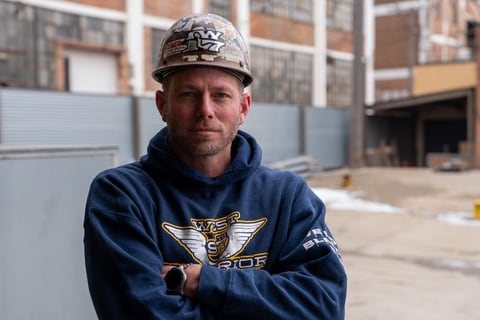
Brian Poindexter
D Democratic nominee for U.S. House, OH-07
Has not served in Congress
- On the ballot
- On the general election ballotNov 3, 2026 · Ohio US House 7
- Where to vote
- Find your polling place (opens in a new tab) · More ways to vote
- Top priorities
- Working People Aren’t Just a Revenue Source for when millionaire politicians need to bail out their friends
- Corruption
- Data Centers
- Gas Prices
- Healthcare you can access and afford
- Money
- $3.7M raised, $2.9M spent, $793.7K cash on hand (through Oct 14, 2026). Where it comes from
- Who gives
- 28% of individual money from donors at $200 or less · 29% from Ohio · largest committee giver SWING LEFT, $16.2K
- Outside groups
- $1.3M supporting, $606.1K opposing Poindexter
- Backed by
- Ohio AFL-CIO · Communications Workers of America · AFGE and 22 more. As the campaign lists them
- Polling
- 54% in the latest poll (Tavern Research). The polls
14 priorities from poindexterforcongress.com, in the order they are listed there. Every heading and the text under it is copied exactly, as one passage for each page it is from, and links to that place on the page; hover a source to see which passage it opens.
America doesn’t run on hedge funds and corporate boardrooms.
It runs on the people who punch the clock, work the jobsite, drive the truck, teach the kids, and keep the lights on.
We need leaders who understand that workers are the foundation — not a line item to squeeze when it’s convenient. Leaders who know that dignity, fairness, and opportunity aren’t radical ideas. They’re the minimum working families deserve.
That’s the perspective I’ll bring to Congress.
The Economy & Cost of Living ↗ (opens poindexterforcongress.com at this heading)
Working families are paying more while corporations post record profits. An economy that works should work for the people who power it.
Workers’ Rights & Unions
Every worker deserves the freedom to organize without intimidation. Strong unions mean safer workplaces, fair pay, and stronger communities.
Healthcare That Makes Sense
Healthcare shouldn’t disappear because a job does. The system is confusing by design, and working families pay the price.
Made in America ↗ (opens poindexterforcongress.com at this heading)
We shouldn’t reward companies for shipping jobs overseas. If corporations want the benefits of this country, they should invest in American workers and communities.
source ↗ (opens the page at this passage) · poindexterforcongress.com
Heading as listed on poindexterforcongress.com ↗ (opens poindexterforcongress.com at this heading) · “Ready to work for working families in congress” on poindexterforcongress.com ↗ (opens poindexterforcongress.com at this heading)
ending Corruption
Too many politicians are getting rich off of driving up your costs.
I am running to end the corruption in Washington. If an ironworker or bus driver got caught stealing on the job, they’d go to jail. But way too many politicians get away with robbing working people and nothing happens. That has to end.
I will stand up to both parties to take on the corruption in Washington.
We should immediately ban members of Congress from trading stocks. It’s wrong when Democrats in Congress trade stocks, and it’s wrong that Max Miller has traded more than $1 million in stocks.
We should get big money out of our elections so the people’s voice can be heard. That’s why I do not take Corporate PAC money and think we should ban Corporate PACs. Max Miller accepts Corporate PAC money. I also believe we should ban dark money so we always know who is trying to influence our elections.
And we must end tax breaks that benefit the wealthy and well connected and stick everyone else with the bill. Max Miller has voted for huge tax breaks for the rich, paid for by cutting health care for working people.
source ↗ (opens the page at this passage) · poindexterforcongress.com/corruption
I believe we need to slow down data centers. We need accountability to make sure:
- Local communities have total control over whether a center is built;
- No one ever pays more for electricity to subsidize a data center
- Data centers don't get special tax breaks. Max Miller voted for a tax break for data centers in the so-called Big Beautiful Bill. I would have opposed that.
And I believe we need strong protections to make sure AI does not displace workers or leave working people worse off.
source ↗ (opens the page at this passage) · poindexterforcongress.com/data-centers
Gas is too expensive. It's making it more expensive to get around, and it's making everything we buy cost more.
Gas prices are out of control.
I support bringing down the cost of gas by ending the war in Iran. Max Miller has voted six times to continue the war, and I would be a vote to end it. When gas prices are high, everything we do is more expensive – from driving to work to taking our kids to their game. And as a former truck driver I know all too well that when gas and diesel prices go up, they raise the price of everything that moves on a truck, from groceries to construction supplies.
source ↗ (opens the page at this passage) · poindexterforcongress.com/gas-prices
For working people, healthcare isn’t theoretical, it’s personal. It’s whether you can see a doctor when you’re sick, afford the medication you need, or get treatment without worrying about financial ruin. Right now, too many families are one layoff, injury, or slowdown away from losing coverage entirely and way too many families are struggling to afford rising premium costs.
Bringing down healthcare costs ↗ (opens poindexterforcongress.com/healthcare-that-makes-sense at this heading)
I will fight to bring down the cost of healthcare, because everyone who works hard should be able to afford insurance that actually gets them the care they need.
We should undo the huge health care funding cuts that have led to double-digit premium increases. My opponent supported the biggest health care cut in American history and allowed the Affordable Care Act tax credits to expire, which is one reason we have seen huge premium increases in Ohio. I support restoring that funding so prices come down. By taking pressure off the system, this will bring down prices for everyone – no matter how you get your insurance.
Bringing Down Drug Prices ↗ (opens poindexterforcongress.com/healthcare-that-makes-sense at this heading)
I support bringing down the cost of prescription drugs by letting Medicare negotiate with drug companies. Americans pay way too much for prescription drugs, and we should crack down on drug companies making huge profits while Americans struggle to afford medicine they need.
Saving rural hospitals ↗ (opens poindexterforcongress.com/healthcare-that-makes-sense at this heading)
I will fight to keep rural hospitals open. No one should have to drive hours to see a doctor or access an emergency room. Step one for protecting rural hospitals is restoring the health care cuts Max Miller voted for. Those cuts put our hospitals at risk, and we must reverse them.
A System Designed to Confuse Workers ↗ (opens poindexterforcongress.com/healthcare-that-makes-sense at this heading)
Ask any working person if they truly understand their health insurance plan. Most don’t, and that’s not their fault. Between networks, deductibles, co-pays, surprise bills, and coverage denials, the system feels like a shell game designed to wear people down.
That confusion is where costs are hidden.
Working families shouldn’t need a law degree to figure out whether they’re covered or what something will cost. A healthcare system that makes people afraid to seek care isn’t working. It’s failing the very people it’s supposed to protect.
Taking care of a human being isn’t radical. It’s the baseline responsibility of a society that values its people.
Healthcare That Respects Work and Dignity ↗ (opens poindexterforcongress.com/healthcare-that-makes-sense at this heading)
I believe healthcare policy should start with one simple question: does this help people get the care they need without fear, delay, or financial devastation?
That means strengthening access, increasing transparency, and making sure workers aren’t punished for getting sick, injured, or growing older. It also means recognizing that healthcare costs hit working families hardest, not politicians or executives insulated from those pressures.
If you work hard, play by the rules, and contribute to your community, you should be able to count on a healthcare system that treats you with dignity. That’s not asking for special treatment. It’s asking for common sense.
source ↗ (opens the page at this passage) · poindexterforcongress.com/healthcare-that-makes-sense
I am a strong supporter of law enforcement. As a 9-year member of the Brook Park City Council, I always supported funding law enforcement, and I will continue to support our men and women in uniform if elected to Congress.
I do not support Flock cameras. While I voted for funding on the city council, as I have learned more and seen the way they can be abused I believe we need strong safeguards. I believe law enforcement should have the tools it needs to keep us safe, but they must come with strong safeguards to protect people’s rights and privacy.
I support a secure border and would work with anyone to make sure our border is strong and secure. We should know who is coming in and out of our country. Our immigration system can be secure without being cruel.
source ↗ (opens the page at this passage) · poindexterforcongress.com/law-enforcement
Politicians love to talk about “Made in America,” but too often it’s just a slogan. The same people who wrap themselves in the flag are often the first to ship jobs overseas in search of cheaper labor and higher profits.
I believe in “Made in America” in real, practical ways: in the jobs we create, the products we buy, and the communities we invest in. When we hollow out our manufacturing base and send work overseas, workers here at home are left with fewer opportunities and less security.
An economy that depends on foreign labor while abandoning American workers isn’t strong; it’s fragile.
Stop Rewarding Companies That Ship Jobs Overseas ↗ (opens poindexterforcongress.com/made-in-america at this heading)
One of the biggest failures in modern economic policy has been rewarding corporations for outsourcing jobs while shifting the costs onto working families. When companies move production to countries with lower wages and weaker labor standards, American workers lose, and then we’re asked to make up the difference.
That’s backwards.
If corporations want tax breaks, subsidies, and access to American markets, they should earn them by creating good-paying jobs here, respecting workers’ rights, and investing in the communities that support them. Good corporate citizenship should be rewarded not avoided.
Building at Home Strengthens Our Economy and Our Security ↗ (opens poindexterforcongress.com/made-in-america at this heading)
Manufacturing and skilled trades don’t just support families, they support national strength. When we depend too heavily on foreign supply chains, we expose ourselves to disruptions, shortages, and vulnerabilities that hurt working people first.
Investing in American manufacturing means more than jobs. It means safer supply chains, stronger communities, and a future where working families can plan ahead instead of scrambling to survive the next economic shift.
We don’t win by racing to the bottom or lowering our standards to compete with other countries. We win by valuing work, respecting workers, and building an economy that’s strong because it’s fair.
source ↗ (opens the page at this passage) · poindexterforcongress.com/made-in-america
I will work hard to strengthen Social Security and Medicare for today’s seniors and future generations.
I have seen my own parents struggle to get by on Social Security, and I will oppose any cuts to Social Security or Medicare. I also oppose raising the retirement age. Max Miller has proposed raising the retirement age and Social Security was “never intended” to act as a safety net. I think that’s a slap in the face to millions of seniors who worked their whole lives paying into the system.
Strengthening Social Security should be a bipartisan issue. I support Sen. Bernie Moreno’s proposal to ask the wealthy to pay their fair share into Social Security so that we can strengthen the program and extend its lifespan. I hope to work with him on that bill.
I support allowing Medicare to negotiate the cost of prescription drugs, to save seniors money and protect the program.
source ↗ (opens the page at this passage) · poindexterforcongress.com/social-security-and-medicare
Working people feel the economy every single day — at the grocery store, when the utility bill arrives, and when rent or mortgage payments come due. Right now, too many families are doing everything right and still falling behind. Wages haven’t kept up, prices keep climbing, and too many policies in Washington are written to protect profits instead of people.
For years, we’ve been told that if corporations do well, everyone else will benefit. But what we’ve seen instead is record profits at the top and tighter belts everywhere else. That’s not a failure of workers — it’s a failure of leadership.
An economy that works can’t be built from the penthouse down. It has to be built from the foundation up, and workers are that foundation.
Working Families Are Always Asked to Sacrifice ↗ (opens poindexterforcongress.com/the-economy-and-cost-of-living at this heading)
When tax cuts are debated in Washington, they seem to flow easily to the wealthiest and most powerful. When subsidies are discussed, large corporations are first in line. But when the conversation turns to deficits, debt, or “tough choices,” it’s working families who are asked to give more, wait longer, or accept less.
That double standard is wrong.
Working people shouldn’t be treated as a backup plan or a revenue source. We shouldn’t only be remembered when it’s time to sacrifice. If the economy depends on our labor — and it does — then economic policy should reflect that reality.
Fair wages, predictable costs, and real economic security aren’t radical ideas. They’re the basics of a functioning economy.
A Fair Economy Starts With Respect for Work ↗ (opens poindexterforcongress.com/the-economy-and-cost-of-living at this heading)
I believe the economy should reward work, not exploit it. That means policies that strengthen wages, protect workers from being priced out of basic necessities, and stop rewarding companies that ship jobs overseas while expecting American workers to pick up the slack.
It also means recognizing that cost-of-living pressures don’t fall evenly. A rising grocery bill or healthcare premium hits a working family a lot harder than it hits a CEO or a politician insulated from those costs.
My focus is simple: if you work hard, you should be able to afford to live with dignity, support your family, and plan for the future. That’s not asking for special treatment — it’s asking for a fair deal.
source ↗ (opens the page at this passage) · poindexterforcongress.com/the-economy-and-cost-of-living
A union isn’t an outside force — it’s working people standing together to protect each other. Full stop. The right to organize is about safety, fairness, and dignity on the job, not politics or talking points.
Too often, workers who try to organize are met with pressure, misinformation, or fear tactics designed to keep them quiet. That doesn’t make workplaces stronger — it makes them less safe and less fair. If workers want to come together to improve their jobs, that choice should be theirs alone.
Strong unions raise standards not just for their members, but for entire industries. They help set the bar for wages, benefits, and safety, and they give workers the ability to speak with one voice instead of being isolated and ignored.
source ↗ (opens the page at this passage) · poindexterforcongress.com/workers-rights-and-unions
No one should risk their livelihood just for standing up for themselves or their coworkers. Yet too many workers are afraid to speak out because they know retaliation is real — and often goes unpunished.
That fear is by design.
When workers are divided or intimidated, it’s easier to cut corners, suppress wages, and ignore safety. Protecting workers’ rights means making it clear that organizing, speaking up, and demanding fair treatment are protected actions — not career-ending ones.
A workplace where workers feel respected and heard is safer, more productive, and more stable. That’s good for workers, good for employers who play by the rules, and good for our economy.
source ↗ (opens the page at this passage) · poindexterforcongress.com/workers-rights-and-unions
I’ve spent my career on jobsites where safety rules weren’t “red tape” — they were the difference between going home at night or not. Calling worker protections “burdensome” ignores the reality of the people doing the work.
Protecting workers’ rights isn’t about lowering standards to compete with anyone else. It’s about raising standards here at home. We don’t win by racing to the bottom — we win by valuing the people who build, move, teach, and care for this country.
Workers deserve a real seat at the table, real protections on the job, and leaders who understand that dignity at work is non-negotiable.
source ↗ (opens the page at this passage) · poindexterforcongress.com/workers-rights-and-unions