Loading this candidate’s profile from the FEC filings and campaign records.
Where They Stand is a nonpartisan guide to everyone running for Congress: their money, their own words and how incumbents voted. Find your ballot →
Candidates › CA-10 race › 2025–2026
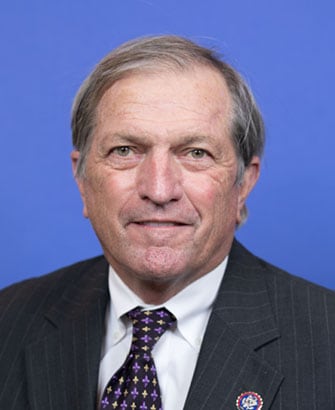
Mark DeSaulnier
D Democratic nominee for U.S. House, CA-10
Representative since 2015
Other accounts (3)
The same platforms’ other accounts, such as a congressional office’s or an earlier campaign’s.
- On the ballot
- On the general election ballotNov 3, 2026 · California US House 10
- Where to vote
- Find your polling place (opens in a new tab) · More ways to vote
- Top priorities
- The Issues - - - - - - - -
- SAFE COMMUNITIES & REDUCING GUN VIOLENCE
- In Congress
- Representative since 2015 · votes with their party 98% of the time. See the record · Office phone 202-225-2095
- Money
- $721.8K raised, $883.5K spent, $467.2K cash on hand (through Oct 14, 2026). Where it comes from
- Who gives
- 14% of individual money from donors at $200 or less · 89% from California · largest committee giver AMERICAN COUNCIL OF ENGINEERING COMPANIES (ACEC/PAC), $10K
- Outside groups
- $10 supporting DeSaulnier
- Backed by
- Alex Padilla · Adam Schiff · Nancy Pelosi and 194 more. As the campaign lists them
- Sponsored most in
- Health, Transportation and Public Works, Education
2 priorities from desaulnierforcongress.com, in the order they are listed there. Every heading and the text under it is copied exactly, as one passage for each page it is from, and links to that place on the page; hover a source to see which passage it opens.
I’ve been on both sides of a paycheck. I know what it’s like to sign one and what it’s like to depend on one. Right now, AI and automation are changing jobs faster than Washington is reacting. That’s a problem. Workers, not just tech companies, deserve a voice in what comes next. In Washington, I am fighting against the reckless Republican agenda and advocating for the issues that matter most to California families.
What I’ve done:
Created the Future of Work, Wages, and Labor initiative, producing over 30 concrete policy recommendations on preparing workers for an AI economy. Wrote a CEO tax bill, which has been adopted in Portland, OR, that taxes out of control CEO salaries at companies where workers aren’t being given their fair share. Authored the Justice for Dislocated Workers Act to protect workers from mass layoffs and plant closures.
What I’m doing:
Ranking Member, House Health, Employment, Labor, and Pensions Subcommittee. Pushing to ensure workers have a real voice as AI reshapes their industries. Fighting to protect the right to organize, safe workplaces, and wages that keep up with the cost of living.
source ↗ (opens the page at this passage) · desaulnierforcongress.com/issues
Heading as listed on desaulnierforcongress.com ↗ (opens desaulnierforcongress.com at this heading)
When local news disappears, accountability disappears with it. I grew up reading local newspapers and I’ve watched them disappear from the Bay Area over the past two decades. When local journalism goes away, city councils stop getting covered, corruption takes longer to catch, and people lose their most reliable connection to what is actually happening in their own community. This didn’t happen because people stopped caring about local news. It happened because Google and Facebook built enormous businesses distributing local journalism without paying for it, and the papers that produced that journalism couldn’t survive. That’s not a free market—that’s a broken one.
What I’ve done:
Authored legislation to allow local newspapers to operate as nonprofits and co-led an effort to allow news organizations to negotiate with tech platforms for fair compensation. Have been one of the most consistent voices in Congress on the collapse of local journalism and its impact on democracy.
What I’m doing:
Continuing to push for legislation that restores a sustainable business model for local news and holds tech platforms accountable for profiting from journalism they didn’t produce.
source ↗ (opens the page at this passage) · desaulnierforcongress.com/issues
Heading as listed on desaulnierforcongress.com ↗ (opens desaulnierforcongress.com at this heading)
The ancestors of nearly every American came here looking for a better life, and that story is still being written by families across Contra Costa County every day. Our immigration system needs reform, but reform means fixing what is broken, not using fear to score political points. People who have built their lives here, raised families here, and contributed to our communities deserve to be treated with dignity. I have fought for that principle throughout my career, including for individuals whose lives depended on it.
What I’ve done:
Authored and passed H.R. 785, granting permanent legal status to Isabel Bueso, a Guatemalan national with a rare life-threatening disease who came to the U.S. legally to participate in a federal clinical trial at UCSF. Only 37 private immigration relief bills have been enacted since 1997. Consistently supported legal cases against the Administration’s immigration crackdowns and harmful policies.
What I’m doing:
Fighting against mass deportation policies that tear families apart and harm communities. Demanding accountability for those killed and injured by ICE and anyone being deprive of their rights in an immigration detention center. Pushing for humane, fair, and functional immigration reform that reflects American values.
source ↗ (opens the page at this passage) · desaulnierforcongress.com/issues
Heading as listed on desaulnierforcongress.com ↗ (opens desaulnierforcongress.com at this heading)
I spent nine years on the California Air Resources Board making real decisions about vehicle emissions, fuel quality, and industrial pollution. I was in the room when California set the standards that became a model for the country, and I know from that experience that strong environmental policy works. Families in Contra Costa County have lived next to refineries for generations and deserve clean air and safe communities right now, not eventually. At the same time, the shift to clean energy is one of the great economic opportunities of our lifetime and the Bay Area is positioned to lead it. I am working on both because both matter.
What I’ve done:
Served on the California Air Resources Board (1997–2006). Co-led the Industrial Safety Ordinance, which became a model for California and national refinery safety regulation. Authored the Clean Corridors Act, a $2.5 billion national EV charging program enacted in the Bipartisan Infrastructure Law. Championed the Urban Limit Line to preserve farmland and open space in Contra Costa County.
What I’m doing:
Advocate for Delta water protection and fossil fuel worker transition programs. Fighting to protect California’s vehicle emission standards and clean energy investments against federal rollbacks. Opposing Republican attempts in Congress to undermine protections of federal lands.
source ↗ (opens the page at this passage) · desaulnierforcongress.com/issues
Heading as listed on desaulnierforcongress.com ↗ (opens desaulnierforcongress.com at this heading)
Cancer isn’t theoretical for me—it’s personal. In 2015 I was diagnosed with chronic lymphocytic leukemia. The treatment keeping me alive was developed through federally funded medical research, and without that investment I would not be here. Federal research funding saves lives. The NIH produces breakthroughs that reach patients in every corner of America, and I will fight every year to protect that funding. I also know from personal experience that getting a diagnosis is only the beginning. Navigating the health care system, understanding your options, and making a plan is overwhelming. Nobody should have to do that alone.
What I’ve done:
Founded the bipartisan Congressional Cancer Survivors Caucus. Authored the Cancer Care Planning and Communications Act to improve how doctors communicate with patients at their most vulnerable moments. Authored the Patient Navigation Assistance Act to help patients navigate the health care system after a diagnosis.
What I’m doing:
Strong advocate for NIH funding every year in the appropriations process. Fighting against any cuts to medical research funding that would slow the development of new treatments and cures.
source ↗ (opens the page at this passage) · desaulnierforcongress.com/issues
Heading as listed on desaulnierforcongress.com ↗ (opens desaulnierforcongress.com at this heading)
Every woman deserves to make her own health care decisions without interference from politicians. That was true before Dobbs, and it is more urgent now. The overturning of Roe v. Wade was a serious setback, but California has made clear that reproductive freedom will be protected here. My job in Congress is to fight to restore those protections at the federal level and to make sure that what happened in other states never happens here.
What I’ve done:
Voted for the Women’s Health Protection Act, which passed the House twice, to create a federal right to abortion access. Sponsor of the Right to Contraception Act and the Access to Family Building Act to protect access to contraception and IVF. Sponsor of the Paycheck Fairness Act to close the gender pay gap.
What I’m doing:
Fighting to codify reproductive rights into federal law. Opposing any federal legislation that would restrict women’s access to health care or override California’s protections.
source ↗ (opens the page at this passage) · desaulnierforcongress.com/issues
Heading as listed on desaulnierforcongress.com ↗ (opens desaulnierforcongress.com at this heading)
The cost of living in the Bay Area is pushing working families out of the communities they grew up in. When people are forced to live farther from their jobs, everything gets harder—longer commutes, higher childcare costs, and less time and money for their families. Right now, too many people feel like they’re falling behind even when they’re doing everything right. That’s not how this is supposed to work. I’ve spent my career focused on the connection between housing, transportation, and economic opportunity—because if you can’t afford to live near where you work, everything else gets harder.
What I’ve done:
Created a permanent funding source for affordable housing as a State Senator (SB 1220). Championed the Urban Limit Line to preserve open space and prevent sprawl in Contra Costa County. Secured funding for affordable housing projects like Habitat for Humanity’s Esperanza Place near Pleasant Hill BART. Delivered major transportation improvements, including the Caldecott Fourth Bore, eBART to Antioch, Highway 4 expansion, and a $166 million modernization of I-680—the largest infrastructure grant in California in 2024. Secured more than $46 million in direct community funding for Contra Costa and Alameda Counties.
What I’m doing:
Championed federal research on how telework can help reduce congestion and emissions while benefitting workers and employers. Advancing transit-oriented housing through the Equitable Transit Oriented Development Support Act and fighting for federal investments that bring down housing costs. As a senior member of the House Transportation and Infrastructure Committee, I’m working on smarter, cleaner transportation solutions that reduce commutes, expand access, and give people their time back
source ↗ (opens the page at this passage) · desaulnierforcongress.com/issues
Heading as listed on desaulnierforcongress.com ↗ (opens desaulnierforcongress.com at this heading)
I’ve worked on children’s issues since my days as a County Supervisor, creating after-school programs, children’s budgets, and youth commissions. I care deeply about this, and what I’m seeing right now worries me. Teenagers are struggling with anxiety and depression at levels we haven’t seen before, and the research connecting social media design to children’s mental health is serious and growing. Our mental health system doesn’t reach children until elementary school, which means we are already behind by the time we start. The good news is that mental health is finally being taken as seriously as physical health, early intervention funding is growing, and the conversation about holding social media platforms accountable is gaining real momentum in Congress.
What I’ve done:
Authored the Early Childhood Mental Health Support Act to bring mental health support into Head Start and early childhood centers. Authored legislation expanding behavioral health access for students, educators, and workers. Created AfterSchool4All as a County Supervisor to expand after-school programming for children across Contra Costa County. Authored the Family Engagement in Education Act, signed into law by President Obama as part of the Every Student Succeeds Act.
What I’m doing:
Pushing for platform accountability on youth mental health. Fighting to expand early intervention funding and ensure children get mental health support long before they reach elementary school.
source ↗ (opens the page at this passage) · desaulnierforcongress.com/issues
Heading as listed on desaulnierforcongress.com ↗ (opens desaulnierforcongress.com at this heading)
If you serve this country, the country should show up for you. Contra Costa County is home to thousands of veterans, and I believe that honoring military service means more than words. It means making sure the VA works, benefits are delivered, and no veteran falls through the cracks after serving this country. I have worked on veterans’ issues at every level of government and I host an annual Veterans Town Hall to hear directly from the men and women in our community who have served.
What I’ve done:
Secured funding for Veterans Memorial Building improvements in Contra Costa County. Voted for the PACT Act, the largest expansion of veterans’ health care and benefits in decades, extending care to millions of veterans exposed to toxic substances during their service. Authored legislation to ensure veterans have full access to disability pay and separation pay.
What I’m doing:
Fighting to protect veterans benefits and VA funding against cuts. Hosting annual Veterans Town Halls and resource fairs to connect veterans in CA-10 with the services they have earned.
source ↗ (opens the page at this passage) · desaulnierforcongress.com/issues
Heading as listed on desaulnierforcongress.com ↗ (opens desaulnierforcongress.com at this heading)
Only about 1 in 5 Americans trust the federal government. I don’t blame them. Trust isn’t built with speeches—it’s built by showing up and being accountable. That’s why I’ve held more than 260 town halls and why I’m the top Democrat on the House Ethics Committee.
What I’ve done:
Recognized nationally by nonpartisan group for transparency and constituent service. Led efforts to address misinformation and protect our democratic process.
What I’m doing:
Holding Congress to a higher standard and making sure the people I represent always have access to me—and answers when they need them.
source ↗ (opens the page at this passage) · desaulnierforcongress.com/issues
Heading as listed on desaulnierforcongress.com ↗ (opens desaulnierforcongress.com at this heading)
I believe that the measure of a just society is how it treats the people with the least power, and that civil rights work is never finished. The most concrete example I can point to from my own career is Port Chicago, which is in the district I represent. In 1944, an explosion there killed 320 sailors, most of them Black, and when 50 of the surviving African American sailors refused to return to the same unsafe conditions, they were court-martialed for mutiny. I spent nearly a decade fighting to clear their records of these false and discriminatory charges, and on July 17, 2024, the Secretary of the Navy fully exonerated all 256 remaining defendants. While justice took 80 years, I was prepared to fight forever if needed. That same commitment applies to everything I do on civil rights. Voting rights, disability rights, LGBTQ+ equality, and accountability in our criminal justice system are all part of the same belief that everyone deserves to be treated with dignity and fairness under the law.
What I’ve done:
Secured the full exoneration of the Port Chicago 50 on July 17, 2024. Secured federal funding to restore the Port Chicago site as a public memorial. Authored the 21st Century Assistive Technology Act to expand access for people with disabilities. Consistent advocate for voting rights, disability rights, and LGBTQ+ equality.
What I’m doing:
Fighting against efforts to roll back voting rights, civil rights protections, and equality under the law. Continuing to push for criminal justice reform and accountability in law enforcement.
source ↗ (opens the page at this passage) · desaulnierforcongress.com/issues
Heading as listed on desaulnierforcongress.com ↗ (opens desaulnierforcongress.com at this heading)
Heading as listed on desaulnierforcongress.com ↗ (opens desaulnierforcongress.com at this heading)
People want to feel safe in their communities—and they should. That means addressing gun violence, supporting mental health, and investing in solutions we know actually work—not just arguing about it. I’ve represented communities affected by gun violence for over a decade and I’ve sat with enough families who have lost someone to know that this is not an abstract policy debate. It is a public health crisis with real solutions that we already know work. California has shown that commonsense gun laws reduce violence. The data supports it. Progress is possible at the federal level when people are willing to work across the aisle, and I have proven that.
What I’ve done:
Supported passage of the Bipartisan Safer Communities Act, the first major federal gun safety law in nearly 30 years. Authored the Gun Safety Board and Research Act, the Advancing Gun Safety Technology Act, and the Local Gun Violence Reduction Act.
What I’m doing:
Pushing to fund research on what works to reduce gun violence, invest in technology that prevents unauthorized use, and make it easier for communities to share effective local strategies.
source ↗ (opens the page at this passage) · desaulnierforcongress.com/issues