$5M raised, $3.8M spent, $1.3M cash on hand (through Oct 14, 2026). Where it comes from
Who gives
76% of individual money from donors at $200 or less · 14% from Louisiana · largest committee giver MACHINISTS NON PARTISAN POLITICAL LEAGUE OF THE INTERNATIONAL ASSOCIATION OF MACHINISTS & AEROSPACE WORKERS, $5K
Their wordsWhat does Davis say they will do?
8 priorities from jamieforlouisiana.com, in the order they are listed there. Every heading and the text under it is copied exactly, as one passage for each page it is from, and links to that place on the page; hover a source to see which passage it opens.
8 priorities · 24 quoted statements
1 in 5 Louisianans live in poverty — the highest rate in the United States
Groceries, gas, and rent keep climbing while wages don't — and too many of our kids can't make enough money to stay in the state they grew up in. Washington keeps writing tax laws for the people who already have everything.
01 Bring real economic development to Louisiana communities — including good jobs in the small towns Washington leaves behind.
02 Roll back portions of the 2025 tax law that added as much as $4 trillion to the debt to cut taxes for the billionaires.
03 Raise the federal minimum wage — Louisiana's is still $7.25, the federal floor since 2009.
04 Build and create affordable housing opportunities — prioritize housing that working families can actually afford, and deliver real solutions to the housing insurance crisis that's pricing people out of a roof over their heads.
05 Crack down on price-gouging at the pump when refiners post record profits and Louisiana drivers pay the bill.
46th where Louisiana ranks in per-pupil school spending — every child deserves a real shot
Affordability keeps you afloat. Opportunity moves you up. Every Louisianan deserves a real shot — a strong school, a path to a good career, a business they can grow, and a government they can trust.
01 Expand trade schools and skills training so a good-paying career doesn't require a four-year degree — or leaving home to find one.
02 A strong and modernized public education available to every Louisiana student — keeping up with the high-tech future our kids deserve, no matter their zip code.
03 An effective Department of Education that serves every child — one that strengthens public education and, above all, stands up for the 1 in 7 Louisiana kids who count on an IEP and the families behind them.
04 Modernize what and how we teach — the best tools and techniques so our kids are ready for the jobs and technology of a modern world.
05 Pay great teachers what they're worth — recruit and keep highly qualified teachers, and reward the ones doing the work.
06 Help small and medium businesses grow with real access to capital, fewer hoops, and a fair shot at federal contracts.
07 Build the energy transition here — Louisiana energy workers should build what comes next, not be left out of it.
08 Take care of our elderly and our neighbors with disabilities with the dignity, services, and respect they've earned.
$7,304 avg. LA homeowner premium — 3rd-highest in the nation, more than double the U.S. average
No state takes hurricane hits like Louisiana — and no state can fix this market on its own. After Laura, Delta, and Ida, eleven insurers went under and rates exploded. States in the path of hurricanes and tornadoes need a real federal backstop, and Washington has to step up.
01 Make insurers prove their rate hikes with a federal backstop, real loss-data transparency, and an end to the "pay or sue" runaround.
02 Strengthen the National Flood Insurance Program so working families along the coast and the river aren't forced to drop coverage.
03 Stop letting Citizens become a permanent dumping ground — policies there grew from 34,000 to over 125,000 in four years.
04 Secure federal funding for coastal restoration and flood protection — because protecting our coast also protects families from rising insurance costs and economic uncertainty.
33 Louisiana rural hospitals at risk of closing as coverage shrinks and costs climb
Health care used to be something Louisiana families could afford. Not anymore. Coverage has been cut back, premiums and out-of-pocket costs keep climbing, and 33 rural hospitals are at risk of closing. People are paying more and getting less — and in a state where so many of us depend on that care, that's not just policy, it's a crisis.
01 Restore the coverage that's been cut before more rural hospitals close across the state.
02 Lower what families actually pay — rein in premiums and out-of-pocket costs so seeing a doctor doesn't wreck the budget.
03 Protect maternal care in the Delta — Louisiana has one of the worst maternal mortality rates in the country, more than 1 in 4 parishes have no birthing hospital, and Black mothers die at nearly four times the rate of white mothers.
04 Lower prescription drug prices using Medicare's buying power, not pharma's pricing power.
05 Expand coverage to everyone in Louisiana with fair pay for the doctors and nurses who care for us.
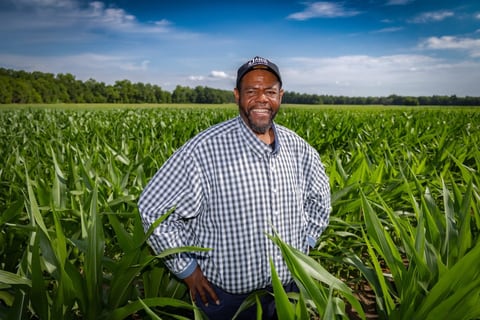
3,200 acres of sorghum, corn, soy, and cotton — Jamie farms the same Delta ground his grandfather worked
Jamie isn't a career politician explaining farms to you. He runs one. He knows what a five-year farm bill means at the kitchen table — and he won't trade away the land to do it.
01 Let our farmers compete on a level playing field — tit-for-tat trade wars hit Louisiana harder than any state. In one year, retaliatory tariffs cut Louisiana's farm exports to China by $1.85 billion, the biggest drop in the country, and farm profitability here is projected to fall from 80% in 2023 to 46% in 2026. Open our markets back up and stop using our farmers as bargaining chips.
02 Bring down the cost of diesel and fertilizer — fuel and fertilizer are a farmer's biggest bills, and both are climbing because conflict in the Middle East sent energy prices soaring. EIA projects diesel jumping from $3.66 a gallon in 2025 toward nearly $5 in 2026. Reckless foreign policy shows up at the pump and in the fertilizer bill — we need a steadier hand abroad and stable supply at home so a crop doesn't lose money before it's in the ground.
03 Pass a Farmers' Farm Bill with reference prices that reflect what it actually costs to put a crop in the ground.
04 Protect crop insurance and disaster aid — Louisiana farmers can't outrun every hurricane and flash drought alone.
05 Break up consolidation in seed, fertilizer, and grain so independent farmers aren't squeezed from both ends.
06 Invest in Delta infrastructure — ports, roads, and rural broadband that move our crops and our kids forward.
50× the national cancer risk in some River Parishes census tracts — a sign of just how out of balance things have gotten
Jamie isn't against these plants. They anchor good jobs, and they have to be on the Mississippi River — they're not going anywhere. That's exactly why we can hold them to a higher standard. Cancer Alley exists because those facilities are packed along the river and the environmental laws haven't been enforced. Make them do it safely, make them pay into the community, and Louisiana wins on both. This isn't a hard problem.
01 Hold industry to a higher standard, not a lower one — require the plants along the river to perform above the bare minimum it takes to keep their neighbors safe, and back it with independent monitoring and real enforcement instead of self-reporting. They can afford it, and it won't move a single plant off the Mississippi.
02 Enforce the Clean Air Act against the worst polluters along the 85-mile petrochemical corridor — near the Union Carbide plant in St. Charles Parish, EPA data put one neighborhood at the highest risk in the country for certain cancers from the ethylene oxide it releases.
03 Inspect hard, and hold operators accountable — when the Smitty's Supply plant in Roseland exploded in August 2025, it burned for two weeks and pushed oil and chemicals nearly 40 miles down the Tangipahoa River, and inspectors later found hundreds of spills and mislabeled containers at the site. Yes, real inspections mean more oversight of a private operation — but a payout after the fact doesn't un-poison a river. Catch the problems before they blow up, and hold the company accountable when they do.
04 Stop rubber-stamping new permits on top of communities already carrying the heaviest health burden in the state.
05 Plants need to pay their fair share into the community — the facilities on the river should be a long-term source of property-tax revenue that funds good schools, roads, and real opportunity for the families next door. No more secret tax giveaways that let the biggest operations off the hook.
06 Fund health monitoring and clinics — throughout the areas of the state where pollution has taken a toll on people's health, so families know what's in their air and water and can get care.
23M gallons of water a day Meta's Richland Parish AI data center is registered to use — new tech can't come at the expense of our water or our bills
Jamie wants to build the future here — but not on the backs of Louisiana families. New AI and data centers are welcome if they pay their own way, protect our water and land, create real local jobs, and play by common-sense rules.
01 Make data centers pay their own way — if a company needs more power, it builds it and foots the bill, not Louisiana families on their electric bill.
02 Give communities a real seat at the table — the people who live there deserve real input on the projects coming to their parish, and a straight answer on water, power, and land use. Good development works with a community, not around it.
03 Tie the deals to real Louisiana jobs — permanent jobs, training, and apprenticeships for local workers and businesses, not just a few years of construction.
04 Compensate communities for the impact — a data center that strains local water, power, and roads should pay to mitigate it and leave the community better off, with long-term property-tax revenue for local schools and roads. This is all possible without undermining the economics of the project — and it should never be negotiated in a secret deal.
05 Put common-sense rules on AI — some in Washington want a total hands-off approach, but the risks are too real to leave AI unregulated. Jamie backs guardrails written for people, not dictated by the industry or outside pressure — rules that keep humanity first while still letting the good come through.
06 Keep AI safe and honest — protect your privacy, stop AI scams and deepfakes, and keep it safe, without killing the good it can do.
07 Promote AI that does real good — smaller, more efficient tools that help improve our communities, local government, medical outcomes, and the fight against cancer.
27 amendments to the U.S. Constitution — Washington and its courts have to follow every one
Government works when it plays by the rules — the ones in the Constitution, and the ones that keep it honest. Jamie will keep government open with the people it serves, defend the rights the Constitution guarantees, and hold Washington to what that document actually says.
01 Make Congress do its job — Congress is supposed to have the say over war and the budget, and Congress writes the laws while the administration carries them out. That's the same whether the president is a Democrat or a Republican. Rushing into conflict without that check has real costs back home — from fuel to groceries — so foreign policy has to be cautious and thought through.
02 Clean, open government — no more NDAs, no more secret deals, and full transparency for the people who pay the bills.
03 Stop government self-dealing and corruption — no insider deals, no procurement steered to favored friends and donors. The public's money should be spent in the open, where everyone can see it.
04 Defend the Second Amendment — Jamie is a proud gun owner who'll protect the 2A rights of law-abiding Louisianans, and he backs common-sense gun safety like background checks to keep guns out of the wrong hands.
05 Hold Washington and the courts to the Constitution — the federal government and its judges have to uphold what the Constitution actually says, for every American. Judges should be umpires calling balls and strikes, not players with a stake in the outcome or influencers pushing an agenda.
Every contest for this seat that named this candidate, most recent last; a result is shown once the race is called. Election dates and results from civicAPI (civicapi.org). civicAPI aggregates results from Secretaries of State and equivalent election bodies, and makes its own race calls. civicapi.org ↗
Robert HaselowOne contribution on Apr 1, 2026 · DOCTOR · MINNEAPOLIS RADIATION ONCOLOGY · EDINA, MN$3,500
Elizabeth Macrae2 contributions, latest Jun 20, 2026 · NOT EMPLOYED · BONITA SPRINGS, FL$3,500
Colleen Haas7 contributions, latest Jun 30, 2026 · NOT EMPLOYED · SAUSALITO, CA$3,100
A donor who gave several times appears once. The 12 largest donors by total given are listed. In all, 1,804 itemized contributions were filed this cycle, totaling $279.2K.
LoansMoney the campaign borrowed this cycle, from the candidate or a lender, which it may repay.$54,0001.1%
Who lent it
Jamie Davisthe candidate’s own money · 3 loans · $54K not yet repaid$54,000
Each loan as the campaign’s report through Oct 14, 2026 lists it, with what is still owed. A loan from an earlier cycle can appear here, and one repaid in full drops off the report, so the list need not add up to the row.
PACs and other committeesPolitical action committees and other candidates' committees. Corporations and unions cannot give directly.$10,0000.2%
The 5 largest committees by total given are listed. In all, 5 committee contributions were filed this cycle, totaling $17.5K. Counted from the givers' own filings, which can run above the total the campaign itself reports.
Refunds and rebatesMoney coming back to the campaign: rebates and refunds of what it spent.$5,6190.1%
Party committeesNational, state, and local committees of a political party.$1,000<0.1%
Other receiptsInterest, dividends and other income the committee files on a line of its own.$34<0.1%
Total reported receipts $5,019,888
Every dollar the committee reported receiving this cycle, split by the source the FEC filing attributes it to. Open a source marked + to see who gave. FEC filings through Oct 14, 2026.
Who donated: where they live, their employers and jobs
Where the donors live $279,173 placed by state
Loading the map
Tap or hover over a state, or focus the map and use the arrow keys, to read its total. Ctrl or ⌘ and scroll to zoom.
under $2K
$2K+
$8.1K+
$18.3K+
$32.5K+
none
Outlined: Louisiana, home state
Home state and away
Louisiana 14%LA 14%Elsewhere 86%
14% of the money placed by state came from inside Louisiana: $40.3K of $279.2K.
Top states
Top donor states
Name
Amount
California383 contributions · 18%
$50,813
Louisiana home159 contributions · 14%
$40,265
New York109 contributions · 5.9%
$16,379
Pennsylvania54 contributions · 5.5%
$15,314
Virginia47 contributions · 5.3%
$14,933
Massachusetts171 contributions · 5.3%
$14,862
Florida149 contributions · 5%
$13,911
Illinois45 contributions · 4.9%
$13,670
By the state each donor wrote on the filing, across 51 states and territories. Donors who have given $200 or less this cycle are not itemized, so they cannot be placed on a map. The FEC’s grouping also counts joint-fundraising memo lines, so these rows can add up to more than the itemized total.
Donors’ employers as filed
Donors’ employers
Employer as filed
Amount
Not employedWritten instead of an employer · 1,351 contributions · 60% of ranked
$161,570
Self-employedWritten instead of an employer · 136 contributions · 11% of ranked
$29,875
RetiredWritten instead of an employer · 48 contributions · 2.8% of ranked
$7,580
Donald Henley8 contributions · 2.7% of ranked
$7,175
Minneapolis Radiation Oncology1 contribution · 1.3% of ranked
$3,500
Jonesgranger LAW Firm3 contributions · 1.1% of ranked
$3,000
NYU6 contributions · 1.1% of ranked
$3,000
Fisher Phillips4 contributions · 0.9% of ranked
$2,500
A further $12,070 came from donors whose answer names no employer (N/A, None, blank), so it is not ranked. Itemized gifts over $200, grouped by the words donors filed: not an industry classification, and a gift from an employee is not a gift from the employer. The FEC’s grouping also counts joint-fundraising memo lines, so these rows can add up to more than the itemized total. Gifts of $200 or less ($3,743,089) are not itemized, so no employer or occupation is filed for them.
Outside spending $25,696,417 across this race
Money groups spent on their own, not through a campaign. Each ad is filed against the candidate it names, so money attacking an opponent shows on the opponent’s row. Open a candidate to see who spent it.
Support and oppose are each group’s own labels, not a judgment made here.
$25,696,417 of the race total was filed about other candidates, so it would not show on Davis’ own record.
Independent expenditures (Schedule E) only. Electioneering communications and corporate or union member communications file separately; they are counted for Davisunder “Other outside spending” in the full finance detail, but not for the rest of the field, so every other row is a floor.
What the payments were for $3,714,074 itemized
The campaign also refunded $31,701 in contributions, which the categories below do not include.
Fundraising and eventsThe cost of raising money: finance consultants, donor list rental and acquisition, event venues, catering, and donor processing.$1,204,03632%
Filed as
FUNDRAISING AND CONSULTING$445,587
FUNDRAISING$204,933
ONLINE FUNDRAISING CONSULTING$139,896
SMS DIGITAL FUNDRAISING COMMISSION$73,123
DIGITAL FUNDRAISING COMMISSION$60,451
TEXTING FUNDRAISING COMMISSION$55,021
EMAIL FUNDRAISING SOFTWARE$47,772
FUNDRAISING REFERRAL$35,906
SMS FUNDRAISING EXPENSES$25,544
FUNDRAISING AND CONSULTING SOFTWARE$17,997
TEXTING FUNDRAISING$16,972
FUNDRAISING CONSULTING$15,000
Paid to
Pranayama Strategies$550,384
Ripple Effect Strategies$235,766
True Blue Analytics$133,573
Groundfloor Political$53,221
Constant Contact$47,772
North Shore Strategies$40,710
Taxes, fees, and bank chargesPayroll and income taxes, filing fees, bank and merchant processing charges.$699,53019%
Filed as
SMS FUNDRAISING FEES$415,113
SERVICE FEE$210,200
PAYROLL TAX$56,801
EVENT SPACE RENTAL FEE AND CATERING$6,462
SMS FUNDRAISING FEE$5,517
LEGAL FEES$3,500
FUNDRAISING. EVENT ROOM RENTAL FEE$800
PARADE FEE$487
INTERNET SERVICE FEE$454
LA UNEMPLOYMENT INSURANCE TAX$195
Paid to
Switchboard$412,905
ActBlue Technical Services$188,260
Gusto$59,407
Integrated Solutions: Political$14,729
DEL Porto Ristorante$6,462
Pantograph Labs$5,517
Advertising and mediaBroadcast, digital, and print advertising, and the media buying behind it.$624,47717%
Filed as
MEDIA BUY$300,000
META AD BUDGET$120,979
BILLBOARDS$90,000
COMMERCIAL PRODUCTION$30,000
ADVERTISING$22,199
SOCIAL MEDIA STRATEGY$15,566
DIGITAL MARKETING AND WEBSITE DEVELOPMENT$14,000
HISPANIC MEDIA ADVERTISING PACKAGE$8,250
NEWSPAPER ADS$6,397
CAMPAIGN MEDIA PRODUCTION - NO MORE SILENCE TOUR, WEEK ONE$4,000
RADIO ADS$2,650
VIDEO PRODUCTION$2,375
Paid to
Canal Partners Media$300,000
True Blue Digital$120,979
Marketing Blitz AD Group LLC$92,200
Lost Possum$30,000
Delta Current Strategies$15,566
Facebook$15,044
Payroll and staffSalaries, wages, benefits, and payroll services.$294,7717.9%
Filed as
PAYROLL$207,222
SALARY$69,168
APRIL SALARY$9,500
MAY 15TH PAYROLL$7,382
CECIL JACKSON JUNE 1-15 PAYROLL REIMBURSEMENT$1,188
FOOD/BEVERAGE FOR CAMPAIGN STAFF/VOLUNTEERS$312
Paid to
Joshua, Kaitlyn$21,998
Klein, Mitchell$20,764
Hernandez, Marco$18,375
Bering, Lynncal$15,500
Clark, Jamya$15,497
Johnson, Tremaine$15,056
Consulting and strategyStrategic, political, legal, and compliance consulting, and campaign management.$208,8215.6%
Filed as
AI AND AUTOMATION CONSULTING$97,537
COMPLIANCE CONSULTING$38,216
FIELD CONSULTING$26,000
GENERAL CAMPAIGN CONSULTING$16,189
GOTV CONSULTING$10,083
COMMUNICATIONS CONSULTING$7,900
CAMPAIGN CONSULTING$3,150
DIGITAL CONSULTING$3,000
DIGITAL CONSULTING/WEBSITE DEVELOPMENT$2,000
DIGITAL STRATEGY RETAINER$1,500
OUTREACH/CANVASSING CONSULTING$1,496
COMMUNICATION CONSULTING$1,250
Paid to
Nola AI$97,537
Gray Ventures LLC$30,000
Fortitude Strategies$26,000
The June Group$8,216
E. Rene 'soule' & Associates$8,115
Martinez, Ravis$8,074
Printing, mail, and shippingPrinted literature, direct mail, postage, design, and delivery.$193,6265.2%
Filed as
SIGNS$68,028
CAMPAIGN MAIL OUTS$40,700
BALLOT MAILER PRINTING$39,000
SIGNS/MAGNETS$11,088
CAMPAIGN PRINTING SERVICES$7,177
PRINTING$7,014
SIGN INSTALLATION AND ORGANIZING$5,250
SIGN PLACEMENT$4,075
SIGN PLACEMENT AND INSTALLATION$3,000
PRINTING COST$1,875
YARD SIGN PLACEMENT$1,500
CAMPAIGN SIGN INSTALLATION AND RETRIEVAL$1,050
Paid to
Democratic State Central Committee of LA$79,700
Mpress Printing$78,295
Ellis, John$7,325
Downtown Duplicating$7,177
Connors, Justin$5,250
Printers Wholesale Group$3,700
OtherPayments whose filed description does not match any category above. Every one is listed so it can be read directly.$151,2714.1%
Filed as
DIGITAL OUTREACH PLATFORM$82,995
TELEPHONE CALLS$13,700
CAMPAIGN SHIRTS$12,541
PUSH CARDS$11,220
RENTAL CAR$4,558
CAMPAIGN T-SHIRTS$3,075
BODYMAN SERVICES$3,000
PRESS PITCHES/CONTACTS$3,000
COPIES$3,000
FILM WORK$2,000
NO MORE SILENCE TOUR, SNEAKER BALL$1,850
COMMUNICATIONS PLAN AND PRESS CONTACT DEVELOPMENT$1,600
Paid to
Callhub$96,695
Mpress Printing$12,135
Print King$10,191
Pennington, Jennifer$4,600
Enterprise Rent a Car$4,558
Occulus REX Media$3,850
Digital and technologyWebsites, hosting, software subscriptions, databases, email, and texting platforms.$119,5463.2%
Filed as
TEXT RENTALS$113,846
EMAIL VALIDATION SERVICE$2,083
DJ/HOSTING FOR ELECTION NIGHT WATCH PARTY$1,000
AI SOFTWARE$974
WEBSITE SERVICES$835
SOFTWARE SUBSCRIPTION$332
QR CODE SOFTWARE$290
WEBSITE DOMAIN SERVICES$126
EMAIL PLATFORM$60
Paid to
Hockeystick LLC$67,626
Circuit Texting$45,248
Zerobounce$2,083
Cure With Love Strategies LLC$1,000
KEY Lime Strategies and Media$973
CLAUDE.AI$653
Field and canvassingDoor-to-door canvassing, phone banks, petition and signature gathering, and get-out-the-vote work.$83,4772.2%
Filed as
CANVASSING$81,821
ELECTION DAY CANVASSING$550
PHONE BANKING$340
GOTV CANVASSING$340
CANVASSER$225
GOTV FOOD/BEVERAGE AND CANVASSER STIPEND REIMBURSEMENT$130
REIMBURSEMENT FOR GOTV EFFORTS AND SUPPLIES$72
Paid to
Wallace, Aubrey$18,000
Bradford, Ansel$7,070
Jackson, Cecil$6,650
Perkins, Ella$5,576
White, Paula$4,856
Doss, Kelvin$4,413
Polling and researchSurveys, opposition research, voter file work, and analytics.$75,7192%
Filed as
POLL RESEARCH$39,000
VOTER DATA LICENSING AND SERVICES$19,219
POLLING$10,000
NO-CODE ANALYTICS PLATFORM$3,500
VOTER LIST$2,500
RESEARCH CONSULTING$1,500
Paid to
Hart Research Associates$39,000
L2, Inc.$19,219
Public Policy Polling$10,000
Optakit$3,500
The Arkansas Democratic Party$2,500
Green, Gabriel$1,500
Office and administrativeRent, utilities, phones, supplies, equipment, security, food, and campaign merchandise.$39,2731.1%
Filed as
OFFICE RENT$16,767
SECURITY DEPOSIT AND JUNE RENT FOR 803 N BROAD$4,400
FOOD/BEVERAGE$4,202
OFFICE SUPPLIES$2,701
STORAGE PAYMENT$2,000
ELECTION DAY SECURITY$1,860
ELECTRIC UTILITY SERVICE$1,328
OFFICE FURNITURE$1,007
IN KIND: INKIND: OFFICE SPACE$1,000
FOOD/BEVERAGE FOR VOLUNTEERS$649
FOOD/BEVERAGES$643
PHOTOGRAPHY SERVICES$630
Paid to
J Fatsis, Koula$12,600
Becnel Professional Buildings$4,500
Chase Tower LLC$3,000
Bags in Bulk$2,389
Ellis, John$2,000
Williams, Terrica$1,860
TravelAirfare, lodging, mileage, and ground transport.$18,3660.5%
Filed as
HOTEL$8,305
GAS$2,365
LODGING$1,636
MILEAGE REIMBURSEMENT$944
VAN TRANSPORTATION$800
CAMPAIGN TRAVEL BOOKING$797
AIRFARE$783
REIMBURSEMENT FOR TRAVEL$773
VOLUNTEER REIMBURSEMENT & GAS$550
BODYMAN FUEL REIMBURSEMENT$400
TRAVEL EXPENSES$377
TRANSPORTATION$306
Paid to
Homewood Suites$4,184
Hilton$1,118
HOME2 Suites by Hilton$982
Airbnb$935
Chevron$891
Marriott$828
Card paymentsPaid to a card processor with no itemisation filed beneath it, so the purchases behind it are not on the record.$910<0.1%
Filed as
CREDIT CARD PROCESSING FEES$910
Paid to
Numero$910
Given to othersContributions to other candidates, party committees, and PACs.$250<0.1%
Filed as
CONTRIBUTION$250
Paid to
The Collective PAC$250
Total itemized disbursements $3,714,074
Every itemized payment the committee reported this cycle, sorted by what it said each one was for. The categories are ours; the wording they are matched against is the committee’s own. Open a category to read the filed descriptions and who was paid. FEC filings through Oct 14, 2026.
All 1,148 itemized payments filed this cycle. Spending below the itemization threshold is not filed line by line.
110 payments were reported as a lump sum, such as a card or payroll bill, with the detail filed underneath as memo entries. Those entries, $300,045 in all, are counted under the payee and purpose they name rather than under the processor that was paid. The total is the same either way.
Largest vendors
Largest vendors
Name
Amount
Pranayama Strategies10 payments · 15% of all spending
$550,384
Switchboard28 payments · 11% of all spending
$412,905
Gusto144 payments · 9.2% of all spending
$344,641
Canal Partners Media1 payment · 8% of all spending
$300,000
Ripple Effect Strategies6 payments · 6.3% of all spending
$235,766
ActBlue Technical Services103 payments · 5% of all spending
$188,260
True Blue Analytics15 payments · 3.5% of all spending
$133,573
True Blue Digital6 payments · 3.2% of all spending
$120,979
The people, firms and committees paid the most, across every kind of payment. Each share is of everything the committee reported spending this cycle, not only the itemized payments above. A payee that is itself a committee links to its own profile.
Donors’ occupations as filed
Donors’ occupations
Occupation as filed
Amount
Not employedWritten instead of an occupation · 1,336 contributions · 60% of ranked
$161,226
Attorney29 contributions · 5.9% of ranked
$15,650
RetiredWritten instead of an occupation · 56 contributions · 2.9% of ranked
$7,818
Professional Musician Writer Producer7 contributions · 1.9% of ranked
$5,175
Professor29 contributions · 1.8% of ranked
$4,726
Doctor2 contributions · 1.5% of ranked
$4,000
Musician13 contributions · 1.5% of ranked
$3,900
Self-employedWritten instead of an occupation · 7 contributions · 1% of ranked
$2,600
A further $12,625 came from donors whose answer names no occupation (N/A, blank), so it is not ranked. Itemized gifts over $200, grouped by the words donors filed: not an industry classification, and a gift from an employee is not a gift from the employer. The FEC’s grouping also counts joint-fundraising memo lines, so these rows can add up to more than the itemized total. Gifts of $200 or less ($3,743,089) are not itemized, so no employer or occupation is filed for them.