Loading this candidate’s profile from the FEC filings and campaign records.
Where They Stand is a nonpartisan guide to everyone running for Congress: their money, their own words and how incumbents voted. Find your ballot →
Loading this candidate’s profile from the FEC filings and campaign records.
Where They Stand is a nonpartisan guide to everyone running for Congress: their money, their own words and how incumbents voted. Find your ballot →
Candidates › Illinois U.S. Senate race › 2025–2026
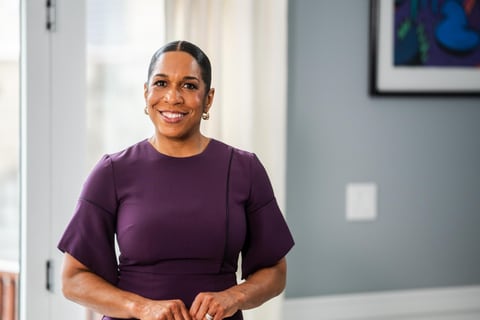
D Democratic nominee for U.S. Senate, Illinois
Has not served in Congress
4 priorities from julianastratton.com, in the order they are listed there. Every heading and the text under it is copied exactly, as one passage for each page it is from, and links to that place on the page; hover a source to see which passage it opens.
Juliana knows that working families need government to be a partner – not a roadblock. That’s why she fights to make life easier for Illinoisans. Now, she’s ready to take that fight to the United States Senate.
Juliana’s priorities are rooted in her experience as a mother, a lifelong public servant, and a daughter who served as primary caretaker for her mother during her battle with Alzheimer’s – that’s why she’s focused on policies that will uplift Illinois’ working and middle class families: making life more affordable, creating and expanding economic opportunities, and protecting our rights and freedoms.
In practice that looks like:
- Securing Medicare for All
- Fighting for a $25 Minimum Wage
- Rejecting ALL Corporate PAC Money in this race
As Lieutenant Governor, Juliana has represented all of Illinois and has traveled across the state, speaking directly to people from all walks of life. She will take that experience to the United States Senate where she will continue to fight for the people of Illinois.
source ↗ (opens the page at this passage) · julianastratton.com/issues
Heading as listed on julianastratton.com/issues ↗ (opens julianastratton.com/issues at this heading)
Right now, life is too expensive. Thanks to Donald Trump, prices on everything from food to health care continue to skyrocket and put a strain on our families. That’s not the fault of working Illinoisans. It’s a result of leaders who are more interested in looking out for their wealthy friends than middle-class families.
Juliana knows Illinoisans work hard, and she believes they should be able to afford a comfortable, dignified life where they can put food on the table without having to worry about making rent or skipping a dose of medication to afford it. That’s why as Lieutenant Governor, she’s helped bring down costs and ensure workers are paid fairly for their work. Together with Governor Pritzker, Juliana helped eliminate the grocery tax, raise the minimum wage, and relieve medical debt for thousands of families – putting money back in the pockets of hardworking Illinoisans.
Making life more affordable will be one of Juliana’s key priorities at the federal level too. As Senator, some of Juliana’s key legislative priorities would include:
- Ending Trump’s Trade War and Tax on Working Families
- Raising the Federal Minimum Wage
- Securing Medicare for All
- Passing a Tax Cut for the Middle Class, Paid for with a Tax Increase on those Making More than a Million Dollars a Year
source ↗ (opens the page at this passage) · julianastratton.com/issues
Heading as listed on julianastratton.com/issues ↗ (opens julianastratton.com/issues at this heading)
Hard work should be a pathway to a middle class life, but for too long, the American Dream has been out of reach for so many. That’s why in Illinois, Juliana has worked alongside Governor Pritzker to expand opportunities for the middle class: creating new jobs, investing in 21st century industries, and lowering the cost of job training so workers can get higher-paying jobs.
Juliana isn’t only focused on expanding economic opportunities, but educational ones too. By investing in early childhood programs like Head Start and Smart Start, increasing funding for public schools, and addressing teacher shortages, Juliana has helped support Illinois families while securing our state’s future.
As Senator, Juliana will continue to focus on making sure Illinois families have the opportunity to succeed and get ahead. Some of her key priorities would include:
- Restoring the Department of Education
- Expanding Federal Support for Trades Learning and Technical Schools
- Investing in Grant Programs for Small Business Owners
source ↗ (opens the page at this passage) · julianastratton.com/issues
Heading as listed on julianastratton.com/issues ↗ (opens julianastratton.com/issues at this heading)
Donald Trump and his powerful friends are carrying out unprecedented attacks on our rights, our democracy, and everything that makes us Americans. As they roll back the clock on our freedoms, they’re also dismantling our systems, ignoring the Constitution, and disregarding the courts. The goal? To give Donald Trump and his allies unchecked power – not to make life any better for our families.
Juliana believes that you should get to make your own choices about your family, your healthcare, and your beliefs. She also believes that future generations deserve to live safe, healthy lives. She has fought alongside Governor Pritzker to protect voting rights, safeguard reproductive freedom, stand up for LGBTQ+ rights, tackle the gun violence crisis, and take urgent action on climate change.
In Illinois, freedom is sacred and no one is above the law. As Senator, Juliana will fight back against Trump’s attacks and stand up for every Illinoisan’s right to live a safe, dignified life – just like she’s done in Illinois. Some of her key legislative priorities would include:
- Abolishing ICE
- Passing the John Lewis Voting Rights Act
- Restoring the Abortion Protections of Roe v. Wade
- Passing Common Sense Gun Safety Laws
source ↗ (opens the page at this passage) · julianastratton.com/issues
Heading as listed on julianastratton.com/issues ↗ (opens julianastratton.com/issues at this heading)
FEC filings, Apr 24, 2025 to Oct 14, 2026 · Official FEC bulk data · committee C00903252
79¢ of every dollar raised has been spent across 8 reports ($5.7M of $7.2M). Cash on hand went from $666.4K on Jun 30, 2025 to $1.5M on Oct 14, 2026.
| Report | Raised in the period | Spent in the period | Cash on hand at its close |
|---|---|---|---|
| JULY QUARTERLY 2025 through Jun 30, 2025 | $1,084,203 | $417,786 | $666,416 |
| OCTOBER QUARTERLY 2025 through Sep 30, 2025 | $1,000,672 | $747,314 | $919,775 |
| YEAR-END 2025 through Dec 31, 2025 | $1,114,200 | $912,380 | $1,121,595 |
| PRE-PRIMARY 2026 through Feb 25, 2026 | $857,800 | $721,976 | $1,257,419 |
| APRIL QUARTERLY 2026 through Mar 31, 2026 | $734,398 | $1,296,570 | $695,248 |
| JULY QUARTERLY 2026 through Jun 30, 2026 | $1,115,325 | $702,615 | $1,107,958 |
| OCTOBER QUARTERLY 2026 through Sep 30, 2026 | $1,182,890 | $644,880 | $1,645,967 |
| PRE-GENERAL 2026 through Oct 14, 2026 | $141,088 | $245,471 | $1,541,585 |
Each report’s own period, as filed with the FEC; a report filed again counts once, as its latest copy.
74 endorsers listed on Juliana Stratton’s own campaign site: 1 party, 24 officials, 17 unions, 27 organizations, 5 people.
This is the campaign's claim, checked by an editor against its page; the endorsers have not confirmed it to us. Each name opens the campaign’s page with that name highlighted.
Illinois Governor
u.s. senator from illinois
Former Ambassador and U.S. Senator from Illinois
u.s. senator from Maryland
u.s. senator from Wisconsin
U.S. senator from Minnesota
U.S. senator from massachusetts
Candidate for U.S. House of Representatives (IL-2)
Candidate for U.S. House of Representatives (IL-4)
Candidate for U.S. House of Representatives (IL-7)
Candidate for U.S. House of Representatives (IL-8)
Candidate for U.S. House of Representatives (IL-9)
Advanced · 483,997 votes (40%) · 1 of 10 · Full results ↗
Won · 2,582,966 votes (55%) · 1 of 3 · Full results ↗
Every contest for this seat that named this candidate, most recent last; a result is shown once the race is called. Election dates and results from civicAPI (civicapi.org). civicAPI aggregates results from Secretaries of State and equivalent election bodies, and makes its own race calls. civicapi.org ↗
Latest poll · ActiVote, Oct 20, 2026 · too few nonpartisan polls for a lead
A poll is a snapshot, not a forecast.
Official FEC filing record for the current cycle. The priorities they publish are quoted from their own site, in their order.
Statements are quoted from these pages exactly. Headings, order and wording are the campaign’s; the record marking is ours.
A donor who gave several times appears once. The 12 largest donors by total given are listed. In all, 4,781 itemized contributions were filed this cycle, totaling $3.1M.
The 12 largest committees by total given are listed. In all, 153 committee contributions were filed this cycle, totaling $537.8K. Counted from the givers' own filings, which can run above the total the campaign itself reports.
Total reported receipts $7,230,577
Every dollar the committee reported receiving this cycle, split by the source the FEC filing attributes it to. Open a source marked + to see who gave. FEC filings through Oct 14, 2026.
Loading the map
Tap or hover over a state, or focus the map and use the arrow keys, to read its total. Ctrl or ⌘ and scroll to zoom.
69% of the money placed by state came from inside Illinois: $2.1M of $3.1M.
| Name | Amount |
|---|---|
| 3,321 contributions · 69% | $2,130,861 |
| 160 contributions · 4.9% | $150,815 |
| 318 contributions · 4.4% | $136,026 |
| 105 contributions · 3.1% | $94,203 |
| 97 contributions · 2.9% | $87,782 |
| 70 contributions · 2.4% | $74,300 |
| 56 contributions · 2.1% | $63,425 |
| 88 contributions · 1.6% | $48,538 |
By the state each donor wrote on the filing, across 46 states and territories. Donors who have given $200 or less this cycle are not itemized, so they cannot be placed on a map. The FEC’s grouping also counts joint-fundraising memo lines, so these rows can add up to more than the itemized total.
| Employer as filed | Amount |
|---|---|
| Written instead of an employer · 2,228 contributions · 43% of ranked | $954,604 |
| Written instead of an employer · 383 contributions · 12% of ranked | $277,053 |
| 48 contributions · 1% of ranked | $22,434 |
| 6 contributions · 0.8% of ranked | $18,500 |
| 15 contributions · 0.7% of ranked | $15,800 |
| 8 contributions · 0.7% of ranked | $15,000 |
| 4 contributions · 0.6% of ranked | $14,000 |
| 4 contributions · 0.6% of ranked | $14,000 |
A further $36,400 came from donors whose answer names no employer (None, blank), so it is not ranked. Ranked from the largest 200 of 201 employer spellings filed; each share is of the money in those. Itemized gifts over $200, grouped by the words donors filed: not an industry classification, and a gift from an employee is not a gift from the employer. The FEC’s grouping also counts joint-fundraising memo lines, so these rows can add up to more than the itemized total. Gifts of $200 or less ($1,363,178) are not itemized, so no employer or occupation is filed for them.
Money groups spent on their own, not through a campaign. Each ad is filed against the candidate it names, so money attacking an opponent shows on the opponent’s row. Open a candidate to see who spent it.
The campaign also refunded $47,182 in contributions, which the categories below do not include.
Total itemized disbursements $2,998,280
Every itemized payment the committee reported this cycle, sorted by what it said each one was for. The categories are ours; the wording they are matched against is the committee’s own. Open a category to read the filed descriptions and who was paid. FEC filings through Oct 14, 2026.
All 1,097 itemized payments filed this cycle. Spending below the itemization threshold is not filed line by line.
35 payments were reported as a lump sum, such as a card or payroll bill, with the detail filed underneath as memo entries. Those entries, $522,727 in all, are counted under the payee and purpose they name rather than under the processor that was paid. The total is the same either way.
| Name | Amount |
|---|---|
| 44 payments · 13% of all spending | $744,934 |
| 2 payments · 7.7% of all spending | $440,250 |
| 25 payments · 5.8% of all spending | $329,777 |
| 23 payments · 3.5% of all spending | $198,812 |
| 15 payments · 3.2% of all spending | $180,827 |
| 58 payments · 2% of all spending | $115,695 |
| 9 payments · 1.5% of all spending | $85,000 |
| 8 payments · 1.4% of all spending | $81,012 |
The people, firms and committees paid the most, across every kind of payment. Each share is of everything the committee reported spending this cycle, not only the itemized payments above. A payee that is itself a committee links to its own profile.
| Occupation as filed | Amount |
|---|---|
| Written instead of an occupation · 1,776 contributions · 25% of ranked | $756,086 |
| 351 contributions · 12% of ranked | $353,440 |
| Written instead of an occupation · 450 contributions · 6.4% of ranked | $191,168 |
| 124 contributions · 4.7% of ranked | $141,568 |
| 83 contributions · 3.4% of ranked | $101,754 |
| 88 contributions · 3.1% of ranked | $93,515 |
| 108 contributions · 2.9% of ranked | $87,065 |
| 67 contributions · 2.6% of ranked | $77,015 |
A further $26,250 came from donors whose answer names no occupation (blank), so it is not ranked. Ranked from the largest 200 of 201 occupation spellings filed; each share is of the money in those. Itemized gifts over $200, grouped by the words donors filed: not an industry classification, and a gift from an employee is not a gift from the employer. The FEC’s grouping also counts joint-fundraising memo lines, so these rows can add up to more than the itemized total. Gifts of $200 or less ($1,363,178) are not itemized, so no employer or occupation is filed for them.