Loading this candidate’s profile from the FEC filings and campaign records.
Where They Stand is a nonpartisan guide to everyone running for Congress: their money, their own words and how incumbents voted. Find your ballot →
Candidates › CA-05 race › 2025–2026
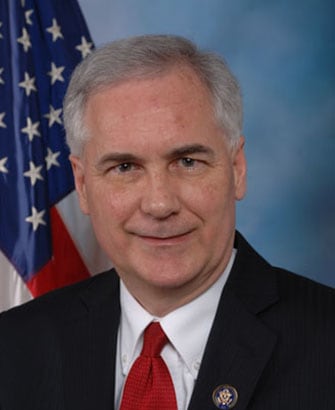
Tom McClintock
R Republican nominee for U.S. House, CA-05
Representative since 2009
- On the ballot
- On the general election ballotNov 3, 2026 · California US House 5
- Where to vote
- Find your polling place (opens in a new tab) · More ways to vote
- Top priorities
- Global Warming and Climate Change
- Transportation
- Yosemite
- Healthcare and Obamacare
- Water Policy
- In Congress
- Representative since 2009 · votes with their party 92% of the time. See the record · Office phone 202-225-2511
- Money
- $1.3M raised, $1.1M spent, $314.1K cash on hand (through Oct 14, 2026). Where it comes from
- Who gives
- 13% of individual money from donors at $200 or less · 90% from California · largest committee giver EUREKA POLITICAL ACTION COMMITTEE, $10K
- Sponsored most in
- Public Lands and Natural Resources, Immigration, Economics and Public Finance
21 priorities from tommcclintock.com, in the order they are listed there. Every heading and the text under it is copied exactly, as one passage for each page it is from, and links to that place on the page; hover a source to see which passage it opens.
Earth’s climate has been changing since the planet formed and it has been warming – on and off – since the last Ice Age, when a glacier more than a mile thick covered most of North America. Despite increasingly hysterical attempts by leftist politicians to stifle debate and punish contrary viewpoints, questions over the impact of human activity on this natural phenomenon are, in my opinion, dubious, political and unconvincing.
Whether or not we chose to impose policies that send our energy prices soaring and impoverish our economy, one thing is certain: the earth will continue to warm and cool as it has for four billion years.
Inconvenient Questions ↗ (opens tommcclintock.com/issues/global-warming-and-climate-change at this heading)
I must admit to being a little nervous to accept your kind invitation to come to New York to discuss global warming. I remember that it was right here in this city a year and a half ago that no less an authority than Robert F. Kennedy Jr. said that those of us who still have some questions over their theories of man-made global warming are “liars,” “crooks,” “corporate toadies,” “flat-earthers” and then he made this remarkable statement: “This is treason and we need to start treating them now as traitors.”
Ah, the dispassionate language of science and reason.
I certainly don’t want to die a traitor’s death, so I want the record to be very clear: I believe that the earth’s climate is changing and that our planet is warming.
I must tell you that this is a somewhat sore subject for me. You see, it was me – and not Al Gore – who discovered the theory of Global Climate Change, and yet all you ever hear is, “Al Gore said this” and “Al Gore said that.”
My climate change discovery came in the fall of 1964, when Miss Conroy took our third grade class to the Museum of Natural History.
It was there that we saw the panorama of dinosaurs tromping around the steamy swamps that are now part of Wyoming. That panorama was right next to the exhibit of the Wooly Mammoths foraging on glaciers that were also once the same part of Wyoming.
And I thought to myself, “Gee, those dinosaurs are swell.” And then I thought to myself, “Good God, the climate must have changed.”
I never got a Nobel Prize for that discovery. In fact, I later found out that Miss Conroy never even nominated me!
So, instead of jetting around the world in a fleet of Gulfstream jets to tell people they need to feel guilty about driving to work, I have to take the subway.
And I don’t get paid $100,000 a speech for my original discovery. But then again, I don’t have Al Gore’s electricity bills either, so I guess it all balances out.
(You have to admit a certain Helmslyesqe quality to it all: “We don’t conserve – only the little people conserve.)
Anyway, a few years after making my discovery about planetary climate change, I got to high school in the 1970’s and learned from the Al Gores of the time that we foolish mortals were plunging ourselves into another ice age.
It was, after all, beyond dispute. All the scientists agreed.
By the way, you may have seen the Washington Times story last year about the researcher who had stumbled upon a lurid story in the Washington Post dated July 9, 1971. It included the scary headline: “U.S. Scientist Sees New Ice Age Coming.”
The scientist based this on a scientific climate model developed by a young research associate named James Hansen. They warned that continued carbon emissions over the next ten years could trigger a run-away ice age.
And it was rather amusing, because a few months before this old newspaper clipping surfaced, the very same James Hansen had published a paper claiming that continued carbon emissions over the next ten years could trigger a run-away greenhouse effect.
For those in the liberal elite who jet to environmental conferences in Gulfstream jets and drive around in Hummers singing the praises of hybrids and bicycles, the Left now sells indulgences – you can actually calculate your carbon sins on-line and they’ll gladly tell you how much money to send them (all major credit cards accepted) to assuage your conscience.
In fact, I had a friend who paid $45 for one of these “carbon offsets” for his Lincoln Navigator. By paying $45, this company sends him a very attractive 10-cent decal that certifies his SUV now has absolutely NO carbon footprint.
But then he discovered that Priuses, which do have a carbon footprint, get to use our diamond lanes for free, while his Lincoln Navigator – which for just $45 now has no carbon footprint whatsoever – has to sit in bumper to bumper traffic with all the rest of us carbon sinners.
These carbon offsets are supposed to be used for such activities as planting more trees to absorb carbon dioxide. After all, young trees absorb much more of this “greenhouse gas” than old trees.
But isn’t replacing old-growth timber with young-growth timber exactly what lumber companies used to do until Al Gore’s acolytes stopped them?
Trees are also very important to reducing energy demand – we’re told that to conserve electricity we need to plant lots of shade trees to shield our roofs from the sun so that we don’t use our air conditioners. We’re also all supposed to install solar panels on our roofs, although they don’t work so well in the shade from our trees.
In fact, a year or two ago, a Sunnyvale, California couple was ordered to cut down the old redwood trees in their own backyard. Why? Their neighbor had installed solar panels in the shade of those redwoods, and the couple was informed that under state law, they’d be fined a thousand dollars a day if they didn’t cut their redwoods down at once.
One word of warning, however. Even though you had to cut down your trees at once if a neighbor decided to install solar panels in their shadow, you are forbidden to clear flammable brush from around your home in hazardous fire areas, because that’s an affront to Mother Nature. You’re supposed to let it burn – and your home along with it – because this is the most environmentally friendly way for Nature to dispose of carbon-trapping vegetation – and thereby releasing lots of carbon dioxide into the atmosphere.
That’s also why we’re supposed to do away with chemical fertilizer and replace it with natural compost, because replacing man-made greenhouse gases with natural greenhouse gases is the wave of the future.
Another important battle in the war against carbon is to force everyone to use electric cars and trains. But this also gets a little complicated, because at the same time, we’re all supposed to be cutting way back on our electricity usage – to the point that the California Energy Commission now wants to require every household thermostat to have a remote-control device that will allow the bureaucrats to decide what is the appropriate temperature of your living room.
You need to keep your thermostat set to 90 degrees in the summer to conserve electricity, but we’ll be happy to spend millions of your tax dollars for you to take an electric bullet train from L.A. to San Francisco for the weekend.
In fact, there are only two ways of generating vast amounts of clean electricity for electric cars and trains: hydroelectricity and nuclear power. But there’s no faster way to send these Luddites into hysterics than to mention that inconvenient truth.
The politically correct replacement is solar energy. Solar energy is roughly 17 times more expensive than either nuclear power or hydroelectricity – meaning, of course around 17 times LESS electricity to run electric cars and trains.
Energy conservation, then, is the answer, which is why we’re required only to use energy efficient fluorescent lights rather than the warm and fuzzy incandescent bulbs. But wait – California has banned the disposal of fluorescent lights with your trash because of the extreme environmental hazard they pose in our landfills.
So I approach the subject this morning with an admitted level of confusion as to what these people are thinking.
Let me instead merely pose three inconvenient questions.
First, if global warming is caused by your SUV, why is it that we’re seeing global warming on every other body in the solar system? For the last decade or so, the Martian south polar ice cap has conspicuously receded. Pluto is warming – about two degrees Celsius over the past 14 years. Jupiter is showing dramatic climate change by as much as 10 degrees Fahrenheit. Even Neptune’s moon, Triton, has warmed five percent on the absolute temperature scale – the equivalent of a 22 degrees Fahrenheit increase on Earth – from 1989 to 1998.
If you have any doubt, just Google “Pluto Warming” or “Mars Warming” or whatever your favorite planet or former planet might be.
Meanwhile, solar radiation has increased a small but measurable five hundredths of a percent since the 1970’s.
Now, I’m just thinking out loud here, but do you think it’s possible that as the sun gets slightly warmer, the planets do too?
This would be a little scary in its own right, except for the second inconvenient question: If global warming is caused by your SUV, why is it that we have ample historical records of periods in our recent history when the planet’s temperature was warmer than it is today?
During the Medieval Warm Period, from about 900 to 1300 AD, we know that wine grapes were thriving in northern Britain and Newfoundland — and that the temperature in Greenland was hot enough to support a prosperous agricultural economy for nearly 500 years. That’s why they called it “Greenland.”
That period was brought to an end by the Little Ice Age that lasted from 1300 until 1850. We know that during colonial times, Boston and New York Harbors routinely froze over in winter and during Elizabethan times, an annual Winter Festival was held on top of the Thames River, which froze solid every year.
And finally, the third inconvenient question: If global warming is caused by your SUV, why is it that increases in atmospheric carbon dioxide always follow increases in global temperatures by several hundred years? Again, I’m just thinking out loud here, but is it possible that if CO2 increases follow temperature increases that might possibly mean that increased CO2 is a byproduct of increasing temperatures – not a cause.
Al Gore must have an answer to these and other questions that have been raised by us treasonous-corporate- toady-holocaust-deniers. You’ve seen the “Inconvenient Truth.” In it, Al Gore portrays himself as a tireless, lonely sentinel (who should have been President of course) wandering the planet trying desperately to awaken the world to the danger it faces. “I’ve given this speech a thousand times,” he says about a thousand times.
So I wanted to touch base with all of you today, to find out when he is planning to accept the Heartland Institute’s invitation for an international debate on the subject. I am absolutely certain that this pious paragon of truth – who assures us he’s willing to go anywhere and talk to anybody to save us from our mortal folly – should be chafing at the bit to show us the error of our ways.
As I understand it, the Heartland Institute has offered our Nobel Peace Prize laureate of the left to debate any one of three internationally recognized authorities, and that you are willing to front all costs – at Oxford University, no less, and in a format of Gore’s own choosing.
After all, Gore’s book extols the importance of science and reason in the public policy debate, so what better way to deliver the coup de grace to us “skeptics” than to expose our fallacies in front of an international audience?
Yet, Al Gore, who has given his speech “a thousand times,” won’t give it just once in a forum where it might be questioned by a knowledgeable authority.
In a sense, though, we had that debate in the British courts several years ago. The High Court of Great Britain determined that there were no less than ELEVEN factual errors on key scientific points in that film, and ordered that a disclaimer to that effect must be made in ANY public classroom where this film is shown.
We laugh and shake our heads at all of this, but it is a serious and grim subject because of the actual threat that global warming poses to our planet – and most specifically to California. And that threat is very real and it is devastating.
I speak of the radical policies that the global warm-mongers are now enacting.
In the summer of 2006, in the name of saving the planet from global warming, California adopted the most radically restrictive legislation anywhere on the planet, including AB 32, which requires a 25 percent reduction in man-made carbon dioxide emissions by 2020.
To put this in perspective, we could junk every car in the state of California right now and not meet this mandate.
At about the same time, the same politicians who adopted these measures also adopted $40 billion of bonds that they promised would be used for highways, dams, aqueducts and other capital improvements.
Now here’s the problem. Building highways, dams, aqueducts and other capital improvements requires tremendous amounts of cement.
How is cement produced? It is produced by taking limestone and super-heating it into a molten state – it comes out the other side as a compound called clinker. Clinker is about 2/3 the weight of the original limestone. The missing 1/3 of that weight is carbon dioxide. And when you include the emissions required to superheat the limestone, it turns out that for every ton of cement, a TON of carbon dioxide is released. It’s the third biggest source of carbon dioxide in all human enterprise.
But now we have a law that specifically forbids us from doing so. That was the essence of lawsuits now being filed against construction projects across the state.
So much for construction.
Agriculture is in big trouble, too.
You can start with nitrogen fertilizer, which is a critical component of all agricultural activity. Unfortunately, it produces large amounts of nitrous oxide, another so-called greenhouse gas that must be radically curtailed in California.
The wine industry is also in for a shock. Fermentation of wine occurs when a molecule of glucose in the grapes is converted into EQUAL PARTS of alcohol and carbon dioxide.
But the biggest agricultural impact is the administration’s mandate for heavily subsidized use of ethanol fuel. Ethanol is produced in exactly the same way as the alcohol in wine: the glucose in corn is converted into equal parts of ethyl alcohol and carbon dioxide.
Following AB 32, this administration imposed a requirement that all gasoline sold in California by next year must be comprised of at least ten percent ethanol, doubling the current mandate.
Now pull out your calculators and we’re going to have a little fun with math. An acre of corn produces about 350 gallons of ethanol. There are 15 billion gallons of gasoline used in California each year. In order to meet the ten percent requirement in three years, it means converting 4.3 million acres of farmland to ethanol production. Now that’s a lot of farmland, considering that we have a total of 11 million acres producing crops of any kind.
Current ethanol mandates are already producing serious shortages in other parts of the world, as farmland that had been producing food, shifts to ethanol to chase hundreds of millions of dollars of government subsidies coming out of your pocket.
Higher taxes, higher food prices – and higher gas prices. What’s not to like?
And we’re seeing this across the board – including commodities like milk and beef that are responding to increased prices for corn feed.
As you see your grocery prices rise as a result of this policy, just be glad you’re not in the Third World. Food is a relatively small portion of the family incomes in affluent nations, but it consumes more than half of family earnings in third world countries.
So when the global warming alarmists predict worldwide starvation, they’re right. They’re creating it.
Electricity prices are also taking a heavy hit. California already suffers the highest electricity prices in the continental United States, but that situation is about to worsen.
A companion measure to AB 32 was SB 1368 that prohibits the importation of electricity produced by coal – even state-of-the-art plants thousands of miles from California that meet all EPA requirements.
Truckee became the first victim of this law. Truckee was about to sign a 50-year contract for electricity produced by a new coal fired plant in Utah. They were forced to back off because of AB 1368. The original contract was for $35 per megawatt hour – the green replacement power will cost Truckee consumers $65 per megawatt hour.
The radical laws now in place in California are having a dramatic impact on energy production, agriculture, manufacturing, wine-making and construction, cargo transportation, just to name a few sectors of our economy.
We are already seeing the economic impact in California.
Until last year, Californian’s unemployment rate tracked with the national figures, but since January of 2007, California’s unemployment rate began a radical divergence from the national figures and is now in double digits and nearly 40 percent higher than the national unemployment rate.
Even more ominous are the figures reported by the census bureau. In the last three years, 2/3 of a million more people moved out of California than moved in. Outbound U-HAUL rates are now between six and seven times the cost of renting the same truck to move in to California.
You cannot blame the national economy for these developments – for these you must look to state public policy.
I was struck by the Governor’s speech to the United Nations as he was imposing this lunacy. He told them:
“Last year in California, we enacted groundbreaking greenhouse gas emission standards.
“We enacted the world’s first low carbon fuel standard.
“Do I believe California’s standards will solve global warming? No.
“What we’re doing is changing the dynamic, preparing the way and encouraging the future…”
So even the individual most responsible for this economically catastrophic public policy ADMITS that it’s not going to solve global warming.
He just wants to set an example.
And in that singular respect, I believe that he has succeeded beyond his wildest dreams.
There is one other thing that strikes me on this issue, and that is how puny is the amount of carbon dioxide produced by human enterprise, compared to simple, natural processes.
The AB 32 mandate is to reduce man-made carbon dioxide emissions by 170 million metric tons per year. That’s what all this tremendous economic dislocation is about.
Now let me mention one other man-made source of carbon dioxide that they don’t count.
Every one of us in this room will produce about 2.2 pounds of carbon dioxide today – by breathing. That’s over 800 pounds of carbon dioxide per year. Keep your calculators out and stay with me here.
There are 6.6 billion of us on this planet. That comes to 5.3 trillion pounds or 2.4 billion metric tons of carbon dioxide – simply through the process of human respiration. And that’s before you count up all the cats and rats and elephants.
So there are 2.4 billion tons of carbon dioxide emissions worldwide by breathing and 170 million metric tons is what all the fuss in California is about.
You’ve all been snickering a lot and I know that watching Californians running amock is great spectator sport. New Yorkers especially enjoy knowing that there is at least one state more screwed up than your own. But I feel compelled to warn you that if the Luddite Left finally succeeds in wrecking California, there are 49 other states that we’re all going to move to – and yours is one of them.
People love to watch events in California – in much the same way that people love to gawk at car wrecks. You feel guilty about it, of course, and you know you shouldn’t stare, but you just can’t help yourselves.
But you do anyway and there’s at least a respectable reason for it. When you drive by that wreck, you can tell your children, “Kids, that’s what happens when you don’t pay attention when you drive.”
And California’s wreck is a good time to remind voters, “Kids, that’s what happens when you don’t pay attention when you vote.”
While we’re on that subject, the Obama Administration has just unveiled its budget, a $3.6 TRILLION monstrosity that includes some $650 billion in business taxes. They call it “cap and trade” but they mean, “cap and tax.”
The problem with business taxes, of course, is that businesses don’t pay them. Business taxes can only possibly be paid in one of three ways: by us as consumers through higher prices; but us as employees through lower wages and by us as investors through lower earnings on what’s left of our 401-K’s.
And the President’s cap and tax plan is going to cost about $2,100 for every man, woman and child in the nation, or about $8,400 out of the purchasing power of an average family of four in the worst economy in a generation.
Now before the nation follows California off the cliff, perhaps we should first ask how these policies are working in California.
And in that respect, maybe we can assist Gov. Schwarzenegger in his goal of making California an example for the rest of the nation.
Not only has the Governor’s promise of a new era of green jobs failed to materialize, the impact of these restrictions on California’s economy has been nothing short of catastrophic. As the unemployment rate has skyrocketed since the enactment of AB 32, Californians are clawing their way to escape our new environmental paradise, and the state’s revenues are imploding.
To replace evaporating tax revenues, the Governor just imposed the biggest state tax increase in the history of the country – $13 billion – including increases in income taxes, sales taxes and the car tax.
As California’s economy continues to implode, I think we’re going to see Americans rapidly coming to the conclusion that this isn’t the smartest policy to pursue.
In normal times, people don’t pay a lot of attention to public policy, and that’s why democracies occasionally drift off course. But when a crisis approaches, that’s when you see the strength of a democracy emerge. One by one, citizens sense the approach of a common danger and they rise to the occasion. They focus – they look beyond the symbols and rhetoric – and they begin to make very good decisions.
Political majorities can shift very quickly in such times. Polls can reverse themselves almost overnight in such times. And I believe that day is now rapidly approaching.
We have based our entire form of government on the assumption that when people start paying attention, they start making very good decisions.
The radical policies now imposed on California are taking a dreadful toll on its economy and will become ever more dire in the days ahead. As the impact of these policies is felt, people will begin paying close attention to policy making and to the policy makers responsible, and then they’ll begin exercising something that the majority of California’s public officials have so completely lacked: simple common sense.
Abraham Lincoln put it this way. He said, if the voters get their backsides too close to the fire, they’ll just have to sit on the blisters a while.
Our nation has some very painful blisters to sit on for a while, but in the process, like Coleridge’s Ancient Mariner, a sadder but a wiser nation we’ll rise the morrow morn.
source ↗ (opens the page at this passage) · tommcclintock.com/issues/global-warming-and-climate-change
Heading as listed on tommcclintock.com ↗ (opens tommcclintock.com at this heading)
We once enjoyed the finest highway system in the world, built around the automobile, which offers efficient, economical, convenient, comfortable, adaptive, doorstep-to-doorstep, 24-hour per day on-call service. We financed this remarkably simple system through fees, taxes and bonds paid for by highway users in proportion to their use. But beginning in the 1970’s, we abandoned all these advantages for rigid, inefficient, inconvenient, bureaucratized mass transit systems. We diverted highway taxes for purposes unrelated to our highways and squandered billions of dollars on government transit. The result is crumbling and chronically congested highways and breathtakingly expensive mass transit systems that the masses don’t use.
I believe that we need to restore our highway taxes for our highways, and undertake the long-overdue modernization of our once vaunted highway system.
source ↗ (opens the page at this passage) · tommcclintock.com/issues/transportation
Heading as listed on tommcclintock.com ↗ (opens tommcclintock.com at this heading)
Yosemite National Park is the crown jewel of the National Park System that includes some of the most beautiful natural splendors in all the world. It was also the cornerstone of the National Parks System, being the first public land set aside in 1864 by the United States government for “public use, resort and recreation…for all time.” One of the greatest honors of representing the Fourth Congressional District of California is to defend the original intent of the Yosemite Grant Act and all that it means for the millions of park visitors who come here each year and the many gateway communities whose economies depend directly on the tourism that the park generates.
Through the years, generations of Americans have come to Yosemite to take pleasure in those splendors while enjoying all varieties of outdoor activities amidst the park’s natural beauty, including camping and lodging, hiking and biking, horseback riding, river rafting, ice skating. Recent attempts to restrict access to the park and remove many of its amenities and activities undermines the original purpose of the Yosemite Grant Act.
Yosemite is also threatened by years of neglect of its surrounding forests, which are now dangerously overgrown and are falling victim to disease, pestilence and ultimately, catastrophic wild fire. The Rough Fire in 2015 burned into the periphery of the Park. The next major fire could decimate the valley itself, a matter I discuss in length under Forest Policy.
source ↗ (opens the page at this passage) · tommcclintock.com/issues/yosemite
Heading as listed on tommcclintock.com ↗ (opens tommcclintock.com at this heading)
Obamacare has caused premiums to skyrocket for millions of Americans and, at the same time, denied them the health plans and doctors that they had, they liked, and they were promised they could keep. It has caused the equivalent of 2.5 million American lost jobs, according to the non-partisan Congressional Budget Office. It is, in short, an unmitigated disaster that I have opposed every step of the way. There is no substitute for its complete repeal.
Once we have done that, there are many reforms to improve access and affordability. We should provide the same tax advantages we currently give to employers to the employees themselves so that they can select and own a plan that best meets their own needs. We should provide the freedom to shop anywhere in the nation for the best plan. We should expand Health Savings Accounts, so that people can meet their health care needs with pre-tax dollars; reform cost drivers like malpractice; and strengthen assigned risk pools for those with pre-existing conditions.
source ↗ (opens the page at this passage) · tommcclintock.com/issues/healthcare-and-obamacare
Heading as listed on tommcclintock.com ↗ (opens tommcclintock.com at this heading)
Droughts are nature’s fault; water shortages are our fault. We have not built a major reservoir of more than a million acre feet since 1979. Meanwhile, the state’s population has nearly doubled. We will not solve our water shortages until we start building more dams, and we won’t build new dams until we overhaul the environmental regulations that are making their construction cost-prohibitive.
source ↗ (opens the page at this passage) · tommcclintock.com/issues/water-policy
Heading as listed on tommcclintock.com ↗ (opens tommcclintock.com at this heading)
I believe the single greatest peril to our nation is our national debt – now exceeding $19 trillion. That debt grew by $595 billion this year – think of that as more than $4,000 added to an average family’s credit card bill. Interest on the debt is now the fastest growing component of the federal budget and the Congressional Budget Office warns that on our current trajectory, interest costs will exceed what we are currently spending on our entire defense establishment in just six years.
Obviously, the current budget system is not working. We need a balanced budget amendment to constrain borrowing, while restoring budget procedures that will allow Congress to regain control of the purse strings. The explosion of mandatory spending – mainly entitlements over which Congress lacks direct control – are the crux of the problem, and I believe that two simple reforms in the budget process can go a long way to fixing it: placing mandatory spending programs under the same annual review as discretionary spending and forbidding appropriations not authorized by law.
source ↗ (opens the page at this passage) · tommcclintock.com/issues/fiscal-reform-and-the-national-debt
Heading as listed on tommcclintock.com ↗ (opens tommcclintock.com at this heading)
The American nation is founded on a unique notion that there is a certain class of human rights that exists in nature and that we create governments to protect these rights. The American Constitution creates a government powerful enough to protect these rights, but not so big as to become destructive of them.
The arrangement the Founders devised depends on dividing the powers of government in a manner that assures the ambitions of one group constantly check and contain the ambitions of another. But this can only work so long as the powers are evenly divided; this, in turn can only work as long as those to whom we loan these powers are obedient to that Constitution; and this, in turn can only work as long as “We, the People,” insist on it. And the moment we cease to insist on it, we will forfeit that Constitution and the liberty it protects.
I believe that the disintegration of the fundamental architecture of the Constitution presents a potentially mortal peril to our Republic, and that the restoration of the separation of powers is vital to our freedom, prosperity and happiness.
The Great Question ↗ (opens tommcclintock.com/issues/the-american-constitution at this heading)
Ronald Reagan often said that the past four centuries proved that Providence plainly had a purpose in placing this continent between two vast oceans, preparing it to receive what Lincoln called “the last, best hope of mankind,” the American Republic.
After the victory at Yorktown, the American Founders began to realize that they had a fleeting opportunity to put all of the tyranny, injustice, corruption and misery of Europe behind them and as Thomas Paine put it, “to make the world over again.”
And so this remarkable group of men, aided by the great thinkers of the enlightenment, looked far back into history and deep into our own human nature and began to ask fundamental questions about the nature and purpose of government itself.
What is government? That’s an important question if you’re creating one. What is it?
An observation often attributed to Washington came closest to the mark when he observed, “Government is neither eloquence nor reason. Government is force. Like fire, it is a dangerous servant and a fearsome master.”
That’s a powerful metaphor for someone in the 18th Century. Fire was essential to heat your home and cook your food. But inherent in its very nature was the ability to destroy your home and ultimately your neighborhood and your city.
And if you think about it, government is exactly and precisely force. Every law that we pass, from the law that says you have to stop at a stop sign to the law that says you can’t punch somebody in the nose ultimately ends up being enforced at the point of a gun. There are no exceptions – government is force. Plain and simple.
If force is the nature of government, then what is its purpose? The Founders had answered that question at the outset of their struggle. It is a uniquely American answer. You’ll find it in those familiar words of the American Declaration of Independence – words that we often recite but rarely swell upon.
“We hold these truths to be self-evident; that all men are created equal. That they are endowed by their creator with certain unalienable rights; that among these are life, liberty and the pursuit of happiness;” – and then the answer to that question: what is the purpose of government – “that to secure THESE rights, governments are instituted among men, deriving their just powers from the consent of the governed; that when ANY form of government becomes destructive of these ends, it is the right of the people to alter or abolish it.”
There are many democracies around the world today and many republics – but only one, to my knowledge, is founded upon this unique American doctrine: that there are a certain class of rights that we are born with – they are simply deduced from the natural order of things – from the “laws of nature and nature’s God,” as the Founders put it.
How do you deduce these rights? They are the rights you would have if you were alone in the world. They make no demands on anyone else. The Founders gave some examples, “life, liberty, the pursuit of happiness.” Essentially, the right to be left alone as long as you’re not injuring any other person’s natural rights.
You have the right to the fruit of your own labor; the right to raise your children according to your own values; the right to enter into voluntary associations with others for your mutual betterment; the right to your opinions and to express those opinions freely; the right to your religious beliefs and to worship freely; in short, the right to live your own life according to your own best judgment.
The source of these rights is the foundation of American freedom, and the Founders were explicit on this point: We are endowed by our Creator with certain unalienable rights. That’s a critically important concept. Rights that are given to us by God cannot be legitimately taken away from us by any earthly power. They cannot be alienated. If God has given you those rights, no person can take those rights away.
In the American view, the only legitimate use of force by one person over another or by a government over its people is in the defense of these natural rights.
Part of the great question being decided today is whether this foundation of American liberty is to endure. There is a concerted effort by the American Left to remove references to God from our public buildings, from our public ceremonies, from our currency, and there is a reason for this that has nothing to do with aethiesm – it has everything to do with authoritarianism. If the source of these rights is not God, then the source of these rights is human – or more to the point, a government of humans. And if those rights come from government, then they can also be withdrawn by government.
In the American view, you can repeal the Bill of Rights, but that doesn’t change the fact that those rights still exist. In the authoritarian view, those rights only exist at the sufferance of your government – or more precisely, the official within your government.
Alexis de Tocqueville, the great French philosopher, came to America in 1836, ostensibly to study prisons but he had a much more important question on his mind. If you were a Frenchman in 1836, you would know exactly what that question was.
The American and French revolutions were fought within 13 years of each other; in fact, the French were inspired by the Americans. The French revolution was fought on the same principles, against the same kind of monarchy, with the same avowed goals.
One had blossomed as this magnificent success: the American Republic. The other had culminated in one of the most ghastly failures in the history of the world: The Reign of Terror.
Tocqueville wanted to know what the Americans did so right and the French did so wrong. He travelled to America and wrote one of the most perceptive observations about our country ever written, “Democracy in America.”
In it, one of the prevailing themes was this critical difference. The Americans believe their rights come from God. The French believed their rights came from government, or more precisely, from the “Committee on the Rights of Man.”
The French found that if their rights were given by man they could be taken by man. “Do the Americans believe in God,” Tocqueville asked. He said, I don’t know. Who can look into the heart of a man? But I do know this: the Americans believe this concept is absolutely essential to the preservation of their liberty.
Having answered these fundamental questions about the nature and purpose of government, the Founders then went to work to fashion a government that would be strong enough to protect these God-given rights, but not so strong as to threaten these rights.
And that’s not an easy question. In Federalist 51, James Madison put the problem quite clearly:
“But what is government itself, but the greatest of all reflections on human nature? If men were angels, no government would be necessary. If angels were to govern men, neither external nor internal controls on government would be necessary. In framing a government which is to be administered by men over men, the great difficulty lies in this: you must first enable the government to control the governed; and in the next place oblige it to control itself. A dependence on the people is, no doubt, the primary control on the government; but experience has taught mankind the necessity of auxiliary precautions.”
How do you do that? Let’s be honest; we’re hierarchical creatures. As the great philosopher Jack Handy of Saturday Night Live fame once put it, “In a previous life I must have been a great king, because I really like it when people do what I tell them.”
The Founders knew that human nature holds an inherent conflict. We’re all Jack Handy – we all like it when people do what we tell them to. But we’re always happier and more prosperous when we’re left alone to do as we please. We are all authoritarians. We are all libertarians.
The Founders sought to employ our own nature against itself to contain the natural authoritarian tendency of government and to preserve our liberty. They did that through the Constitution, by employing what is often called “Mother’s Rule.”
“Mother’s Rule” is very simple. Suppose you have two hungry brothers and one slice of pie. How do you divide that pie so that both brothers go away satisfied. And before you say, “right down the middle,” what are you going to do with the cherry, with the part that has too much crust, or the jagged edge where somebody cut a corner on one side?
You can write pages and pages of regulations on this subject and still one brother will still claim he got the smaller piece.
Mother has a different approach. One brother slices. The other chooses.
The ambitions of one check and contain the ambitions of the other. Both go away satisfied every time.
But how would it work if the same brother who sliced, also got to choose the piece he had just sliced?
That is why the American Founders drafted the Constitution the way it is. The checks and balances within our system are simply “Mother’s Rule” writ large.
The powers of government are divided horizontally among three branches – each fulfilling a different function and containing the ambitions of the other two. And the powers of government are divided horizontally between the states and the national government, apportioning to the national government certain enumerated powers to protect and preserve the Union, and leaving all other matters to the individual states.
Ronald Reagan summed it up best when he said, “The Constitution is not the government’s document telling the people what they can and cannot do. The Constitution is the people’s document telling the government those things that we will allow it to do.”
And this brings us to the fine point of the matter and to the great question before us.
This uniquely American notion of individual rights and constitutionally limited government is utterly despised by those with authoritarian designs, because it makes it impossible for them to subordinate those rights to their designs.
This concept is antithetical to American liberty. It is the notion that the purpose of government is not to protect our natural God-given rights, but rather to improve society in whatever manner those in power believe it should be improved. Individual rights are granted by the government and subordinate to the needs of society.
Lincoln put it this way in his last debate with Stephen Douglas in October of 1858. He said,
“That is the real issue. That is the issue that will continue in this country when these poor tongues of Judge Douglas and myself shall be silent. It is the eternal struggle between these two principles – right and wrong – throughout the world. They are the two principles that have stood face to face from the beginning of time; and will ever continue to struggle. The one is the common right of humanity, and the other is the divine right of kings. It is the same principle in whatever shape it develops itself. It is the same spirit that says, ‘You work and toil and earn bread, and I’ll eat it.’ No matter in what shape it comes, whether from the mouth of a king who seeks to bestride the people of his own nation and live by the fruit of their labor, or from one race of men as an apology for enslaving another race, it is the same tyrannical principle.”
Reagan echoed these remarks when he spoke to Eureka College in 1957. He said:
“This is a simple struggle between those of us who believe that man has the dignity and sacred right and the ability to choose and shape his own destiny and those who do not so believe. This irreconcilable conflict is between those who believe in the sanctity of individual freedom and those who believe in the supremacy of the state.”
This is the age old struggle. And we are watching it come to a head in our own time, in our own country.
What Lincoln called the common right of humanity and what Reagan called the sanctity of individual Freedom is now pitted in a life or death struggle with what Lincoln called the Divine Right of Kings and what Reagan called “the Supremacy of the State.”
I believe this is an age-old struggle that exists as long as humanity exists – because there are elements of both within our own human nature. But they are polar opposites in the realm of governance. They are incompatible concepts.
This is what Lincoln meant in the Summer of 1858, when he reminded us that “A house divided against itself cannot stand.”
“I believe this government cannot endure, permanently half slave and half free.
“I do not expect the Union to be dissolved — I do not expect the house to fall — but I do expect it will cease to be divided.
“It will become all one thing or all the other.”
Then, the issue was between Freedom and Slavery. Today the issue is Freedom and Socialism. But it is exactly the same issue in whatever shape it develops itself.
That is the issue that is now being decided by the American people – not in the halls of government. The Debates in Capitols and City Halls are merely a reflection of a much larger debate going on among the American people. It is going on right now over backyard fences and family dinner tables and coffee at Starbucks.
And Lincoln was right, this debate will not cease until a crisis shall have been reached and passed.
Upon the outcome of this debate rests nothing less than the question shall the United States of America simply fade away into history as another failed socialist state – or will this generation of Americans rediscover, revive and restore those uniquely American principles of individual freedom and constitutionally limited government that once produced the most prosperous and successful republic in the history of human civilization.
No one has a greater stake in this than your generation – because as a practical matter, you all are going to be around a lot longer than those now in the halls of government to deal with the result.
In May of 1780, John Adams poured his heart out to his wife, Abigail, in a letter in which he wrote,
“The science of government it is my duty to study, more than all other sciences; the arts of legislation and administration and negotiation ought to take the place of, indeed exclude, in a manner, all other arts. I must study politics and war, that our sons may have liberty to study mathematics and philosophy. Our sons ought to study mathematics and philosophy, geography, natural history and naval architecture, navigation, commerce and agriculture in order to give their children a right to study painting, poetry, music, architecture, statuary, tapestry and porcelain.”
That wheel has come full circle. The issues decided by the founding generation and reaffirmed by the Civil War generation are once again up for grabs.
The good news is that we have seen before what Americans do when they sense the approach of a common danger and they rise to the occasion. They set aside their personal lives and begin devoting enormous amounts of their time and energy to understanding the issues, exercising good judgment and setting things right.
It is something that the Obama Left does not understand and cannot possibly comprehend: it is called the Spirit of America – and we are seeing it summoned once again in our own time.
Each of you is here today because you are a part of that – a leading part of that. Learn these principles; learn them well; and take them to your generation. And remember, the American Founders didn’t call them “self-evident” truths for nothing. It helps to explain it to people, but when you do, they get it.
Late in life, a protégé of Frederick Douglass, the great abolition leader, came to him to ask, “What do we do now?”
He answered with three words: “Agitate, agitate and agitate.” We are in a great battle of ideas. Ours can be summed up in a single word: Freedom.
Take that message to every forum that you can find: write letters to the editor; call in to talk shows, twitter and blog. If you see an article that you think is important, email it to your friends, leave a comment, discuss it on facebook and Myspace and every other forum you can find.
That’s where the fight is right now.
And don’t get discouraged. The Left will excoriate and insult you and try to marginalize you. That’s their expertise – leave it to them – they’re not our teachers.
And some people never will get it. Adams remarked that throughout the American revolution, fully a third of our countrymen were Tories. In occupied France during World War II, about a third of the population was Vichy. These are the folks that Samuel Adams addressed when he said, “If you love wealth more than liberty, the tranquillity of servitude better than the animating contest of freedom, go home from us in peace. We ask not your counsels or arms. Crouch down and lick the hands which feed you. May your chain be set lightly upon you and may posterity forget ye were our countrymen.”
But if you speak your truth clearly in every forum that you can find, you will discover that the other two thirds of your countrymen crave freedom, and will fight for freedom in every forum that they can find. Educate them and animate them.
We’re watching that happen with the Tea Party. Despite the left’s attempts to belittle them and marginalize them, they are having a huge impact on American politics. In every poll, a larger portion of the American people now side with them than side with the current administration. Only about 60 percent of them are Republicans. Another 20 percent are independents and another 20 percent are Democrats. Long before the Tea Party, we had another name for this phenomenon: we called it the “Reagan Coaltion,” and today it is alive in a new generation.
In the winter of 1861, a train stopped in the town of Indianapolis to re-provision before the next leg of its journey. It had originated in Springfield Illinois, bound for Washington D.C.
A small crowd gathered to catch a glimpse of one of its passengers. To their surprise, Abraham Lincoln emerged and visited with them for a few minutes. A stenographer took down these words as he spoke to them.
He said, “Of the American people, it may be said, when they rise up united in defense of their Union and its liberties, ‘the gates of hell shall not prevail against them.’ I appeal to you, my fellow citizens, constantly to bear in mind that NOT with the President, NOT with the office-holders, but with YOU is the question, shall the liberties of our nation be preserved to the latest generation?”
Will the Constitution Stand? ↗ (opens tommcclintock.com/issues/the-american-constitution at this heading)
You’ve asked me to expand on remarks that I made on the House floor a few months ago, outlining what I believe is the overarching question of our generation. It is a question that I believe transcends everything else we are dealing with in our country today and is integrally related to them. That question is, “Will the American Constitution stand?”
When Lincoln made his way to Washington, the second night he stopped at Independence Hall in Philadelphia where he laid out his entire political philosophy with these words. He said,
“…all the political sentiments I entertain have been drawn, so far as I have been able to draw them, from the sentiments which originated in and were given to the world from this hall. I have never had a feeling, politically, that did not spring from the sentiments embodied in the Declaration of Independence.”
That’s what made the American Revolution revolutionary. It was the novel principle that there is a certain class of rights that exist in the natural order of things. These are rights you would have if you were alone in the world. They make no demands on others, and are self-evident. You have the right to enjoy the fruit of your own labor. You have the right to defend yourself from predators. You have the right to your own opinion and to express that opinion freely. You have the right to raise your children according to your own values. You have the right to be secure in your own home. Life. Liberty. The Pursuit of Happiness.
Because these rights predate government and exist apart from government, they therefore cannot come from government. Rather, we create governments to protect these rights.
It was this uniquely American view of the nature of human rights that created a voluntary society. Jefferson summed it up best in his first inaugural address. After cataloging the bountiful blessings the nation enjoyed, he asked, “With all these blessings, what more is necessary to make us a happy and a prosperous people? Still one thing more, fellow-citizens—a wise and frugal Government, which shall restrain men from injuring one another, shall leave them otherwise free to regulate their own pursuits of industry and improvement, and shall not take from the mouth of labor the bread it has earned. This is the sum of good government, and this is necessary to close the circle of our felicities.”
This was a fundamental departure from the compulsory societies of Europe.
In these compulsory societies, the sovereign sets the direction of society, allocates the resources, assigns the rights and makes the decisions of how society is to move to achieve them.
The voluntary society is one directed by the individual decisions of free citizens as they chart their own paths through life. The government guards the conditions necessary for them to do so: it restrains people from injuring one another; it provides the stable currency, it protects the sanctity of contracts and the security of property that makes human exchange possible; it shields the commons and provides for the common defense; and it superintends the basic infrastructure upon which human civilization depends.
Within this very simple, defined and limited framework, individuals make their own decisions over how to allocate their time and resources and how to live their lives. The sum total of their individual choices made dozens of times a day is what defines the path of that voluntary society, of which government is an obedient servant.
At a very practical level, this means we decide for ourselves where we wish to live, what we wish to eat, what light bulbs we prefer, how high we’ll set our thermostats, how we’ll get to work and how much water we’ll have in our toilet bowls. And we vote every day with every dollar we spend on what those priorities will be.
The compulsory society compels individuals to act in a manner that subordinates their individual hopes and aspirations to the collective designs of the state – all for the greater good, of course. And that requires great heaping gobs of government, because it’s not easy to force people to act against their own interests, their own moral principles and their own best judgment. That takes force – a lot of force – and a lot of bureaucrats to micromanage every facet of daily life.
We are told that such a compulsory society merely “reclaims” American values. Let there be no mistake, the advocates of the compulsory society are not reclaiming American values – they are fundamentally rejecting them and replacing them with values alien and antithetical to those which built our nation.
The American people have received a very clear sampling of what a compulsory society looks like during these past few years – and particularly in the past few months.
Last May, the President addressed students at Ohio State University. He extolled the benign virtues of an all-powerful government and told the students to ignore those who warn of its dangers.
Just a week later, Americans awoke to learn that for the last several years, their government has employed one of its most powerful and feared agencies to harass ordinary Americans because of their political beliefs, with the clear intention of intimidating them into withdrawing from exercising their right to participate in the public policy debate.
Nearly 500 conservative groups involving tens of thousands of individual Americans were subjected to invasive review and intimidation when they attempted to file for 501(c) status – the same status routinely granted for such advocacy groups as “Move-on-dot-org,” the ACLU, and the League of Conservation Voters.
The IRS demanded the names of every participant at every meeting these groups held over a period of years, transcripts of every speech given at those meetings, what positions they had taken on issues, the names of their volunteers and donors – and in some cases their families and associates – and copies of privileged communications they had with elected officials. In some cases, the person filing the request was then subjected to a personal income tax audit.
After nearly a year of congressional inquiries, the IRS, far from backing off from this behavior, is now seeking to institutionalize it through formal regulations that prevent individuals from pooling their resources to express their common views.
A week after the IRS scandal broke, Americans awakened to news that the Justice Department had surreptitiously seized the telephone records of some 20 reporters covering Washington for the Associated Press in an obvious attempt to discourage whistleblowers from talking to reporters.
Then Fox News Reporter James Rosen and his family were stalked by authorities as he tried to get to the bottom of the Benghazi scandal. Indeed, during this period, the government was far more interested in the comings and goings of Rosen’s elderly mother than it was in the activities of the Tsarniev brothers, dispite urgent and explicit warnings from the Russian government.
In order to search and wiretap the homes of Rosen and his family, the Attorney General of the United States had filed a spurious claim with a federal court that Rosen was conspiring to violate the Espionage Act – the same act under which the Julius and Ethel Rosenberg were executed in 1953.
The message to reporters asking inconvenient questions of the administration could not possibly have been more powerful or terrifying.
A few weeks later, Americans awoke to news that the federal government had swept up the phone and internet records of hundreds of millions of Americans in the name of state security.
These are precisely the kind of indiscriminate searches conducted by British authorities that John Adams said gave birth to the fight for American Independence.
The Founders specifically wrote the Fourth Amendment to assure that this NEVER happened in America. In America, in order for the government to invade your privacy or to go through your personal records or property, it must first present some evidence that justifies its suspicion against you and then specify what records or things it is looking for.
These are all fundamental violations of the natural rights of Americans that the bill of rights pledges the government to protect.
Gradually at first, routinely now, the executive branch has repeatedly asserted the legal authority to nullify any law or any portions of a law that he deems objectionable or inconvenient.
We began to see this with directives to agencies not to enforce immigration laws, and has now become epidemic as Obamacare has rolled out.
Now, the executive branch is asserting the authority to impose new laws through the regulatory bureaucracies that the elected Congress has specifically refused to enact. This includes the so-called Dreamers Act and the minimum wage.
All told, 3,200 final regulations were enacted by the executive branch last year – compared to only 300 laws passed by Congress, which has the sole constitutional authority to legislate.
In Libya and more recently in Syria, the President has asserted the authority to bypass Congress on the ultimate question of declaring war – the single most significant act a government can take and one clearly and unambiguously reserved to Congress and Congress alone.
Indeed, James Madison, the father of the American Constitution, said that its single most important feature was the provision that gave Congress and not the president, the authority to go to war.
This is the next step in the blurring of civil and military jurisdictions; a blurring of the concepts of war and peace that is producing a frightening breakdown in the constitutional safeguards of our liberty.
Just this morning it was revealed that the U.S. Navy NCIS is now keeping a centralized data base of the records of every civilian arrest, citation and even police field notes from interviews – more than 500 million records in total. This week, we learned that the NSA has been recording every phone conversation in at least one foreign country and has the same capability here at home. And the week before, we learned that the CIA has monitored the investigations of the Congress itself.
In response to the NSA and IRS scandals earlier this year, the President’s spokesman said, that quote — “the law is irrelevant.” He called these matters “a distraction.” What does that say about a society that once prided itself on being a nation of laws and not of men?
The first article of the Constitution establishes Congress. It is almost half of the entire document. The second article establishes the President and gives him the principle duty to (quote) “take care that the laws be faithfully executed.”
The faithful execution of law passed by Congress is what we call the Rule of Law – the American notion that the law is established by the elected representatives of the people and even-handedly administered by the executive.
That means the president may not pick and choose which laws to enforce and which to ignore, or who must obey the laws and who need not.
Article Three establishes a judiciary and accords every American the right of due process – and all the protections of English common law.
Yet last week, Congress received testimony from a constitutional scholar who warned that Americans are now ten times more likely to be tried in a regulatory tribunal than by a federal court.
These executive agencies now write the law, enforce the law and then adjudicate that law. The three powers of government that the Founders so meticulously divided are now united again in one all-powerful organ.
Look at the laws that are passed under the Constitution. They have an elaborate, well-armed enforcement mechanism. Break one of these laws, and ultimately a police officer will appear at your doorstep with a gun.
Yet the Constitution itself has no such mechanism.
Why is that? It is because the Constitution was designed to be self-enforcing. Mother’s rule doesn’t need enforcement – it enforces itself through similar checks and balances as those contained in the Constitution.
But in order for those checks and balances to work, the powers of government must be evenly balanced, those who exercise those powers must be devoted to the Constitution and to the institutions they serve, and – most importantly – the people must INSIST on it.
Congress has two checks on the executive. One is impeachment – but our Constitution reserves that for high crimes and misdemeanors. It has been raised three times in our history and never once sustained. And it is a power not to be taken lightly – for one branch to remove the head of another can only be taken for egregious acts so offensive that a national consensus has formed for its use. Experience tells us this is a very rare event that is not within practical reach.
The other is obvious: the power of the purse. The origination clause gives to the House of Representatives the sole power to propose taxes, and implicit in this is the sole power to propose appropriations. The Senate’s role is to approve the appropriation or to propose amendments back to the House.
And yet, this power, too, has broken down. Last fall, as the fiscal year approached, the House originated not one – not two – but three appropriations bills to fund the government – but exercising the power of the purse, it declined to fund the roll-out of Obamacare.
The Senate not only did not approve the appropriations, it refused to propose amendments back to the House or even to enter into negotiations to resolve the differences between the House and the Senate.
This is a fundamental breakdown within the legislative branch. The two Houses were specifically designed to have different perspectives and therefore to disagree. That is why, once the House has exercised its best judgment on given issue and the Senate has exercised its best judgment, a conference process then resolves their differences. But this can be thwarted if those responsible for those institutions refuse to act.
The government shut down. The House was blamed, and that second check on the executive – the power of the purse – is no longer available as a practical matter.
Ironically, the President is now doing unconstitutionally what the House had attempted to do constitutionally last year.
The only remaining check rests with the judiciary, but that third branch rarely enters into disputes between the first and second branches.
So what to do?
The oath sworn of every official and every member of our armed forces, is NOT to “preserve, protect and defend the United States of America.” It is not to preserve, protect and defend the United States Government.
It is to “preserve, protect and defend the Constitution of the United States.” The American Founders understood something that this generation is forgetting: that if we ever lose the Constitution, we have already lost the country.
It should be obvious that much of the structure of the American Constitution that has preserved our liberty for 225 years, that has contained the unwarranted expansion of governmental power and that has preserved the natural and individual rights of every citizen, has been allowed to decay.
The form is still there – the institutions continue to function – but they no longer serve their principle role to protect the rule of law and the liberty of the people.
In the U.S. Capitol, we are surrounded by the symbols of the Roman Republic. They should be a warning to us. The Roman Senate continued to exist 400 years after the fall of the Republic – but its nature and purpose had been emptied.
Surveying the wreckage of the Roman Republic, the great historian Edward Gibbon wrote, “the principles of a free constitution are irrevocably lost, when the legislative power is dominated by the executive.”
That is precisely what is happening.
The institutions of our American Republic continue to operate, but the structures within them are rapidly degrading. In this condition, our Constitution is becoming like a rotting porch: we can still discern its form and purpose, but the structure that gave it strength and support is hollowing out through years of abuse and neglect until one day it will simply collapse.
How ironic it would be if the liberties of this nation, heroically defended by sacrifices of nine generations of Americans on far off battlefields, might someday be carelessly thrown away here at home.
What is to be done when the Constitution ceases to be self-enforcing. That is the question our generation must resolve.
Ours wouldn’t be the first civilization to succumb to the siren song of a benevolent and all-powerful government. But without a single exception every civilization that has fallen for that lie has awakened one morning to realize that the benevolence is gone and the all-powerful government is still there.
Ever since we lost Ronald Reagan we have been slowly and inexorably losing the debate over the size and role of government – whether we would remain a voluntary society or become a compulsory one.
That may now be changing as Americans begin to consider the implications of these developments.
Indeed, in January, the Gallup Poll reported that a record 66 percent of the American people – two out of every three Americans – now believes the federal government is – quote – “too big and too powerful.”
That is what it comes down to. The American people. After all, the only document in the national archives that is not the government’s document is the Constitution itself. Its ownership is made crystal clear in the first three words and the biggest three words on that parchment.
Ronald Reagan put it this way: “The Constitution is not the government’s document telling the people what we can and cannot do – it is the people’s document telling our government those things that WE will allow it to do.”
Ultimately, the only way to restore and enforce the Constitution is through the votes we cast in every election. It is our responsibility as citizens to hold accountable every elected official for their fidelity to the Constitution. And if we are unwilling or unable to do so, we will have lost it for all time.
This is not the first time our nation has drifted from its Constitutional principles. But the farther we drift from them, the stronger they begin to pull us back. I believe that is now happening, and every one of us has a duty as citizens to see that happens.
One thing has never failed us is times such as these. It is the American people, awakening from their slumber, rising up and demanding through the votes they cast that their elected officials either honor and obey the Constitution or get the hell out of our government.
It is what we do when we vote. It is that single act upon which the survival of our Constitution and our Republic ultimately depends.
And that vote comes about after a great national debate. I don’t mean the debate in Congress. That’s just a reflection of a much larger debate going on among the American people. That’s the debate that goes on every day across family dinner tables, over back yard fences, and over coffee at Starbucks. It is upon the outcome of that debate that the future of our nation will be decided.
So I urge you to immerse yourself in that debate in every forum you can find.
In January of 1838, a 29-year old state legislator named Abraham Lincoln gave a speech in Springfield. In it, he posed this question:
“At what point shall we expect the approach of danger? By what means shall we fortify against it? Shall we expect some transatlantic military giant, to step the Ocean, and crush us at a blow? Never! All the armies of Europe, Asia and Africa combined, with all the treasure of the earth (our own excepted) in their military chest; with a Buonaparte for a commander, could not by force, take a drink from the Ohio, or make a track on the Blue Ridge, in a trial of a thousand years.
“At what point then is the approach of danger to be expected? I answer, if it ever reach us, it must spring up amongst us. It cannot come from abroad. If destruction be our lot, we must ourselves be its author and finisher. As a nation of freemen, we must live through all time, or die by suicide.”
A generation later, as the inaugural train made its first stop in Indianapolis on its way to Washington, he spoke these words to the crowd that gathered:
“Of the American people it may be said, when they rise united in defense of their union and its liberties, the gates of hell shall not prevail against them. I appeal to you to constantly bear in mind that not with the President, not with the office-seekers, but with you is the question: ‘Shall the liberties of this country be preserved to the latest generations.”
The American founders often referred to a “Liberty Tree.” Our generation didn’t plant that tree – we didn’t grow that tree – we were simply handed it by the generations of Americans who came before us. We accepted it and all its blessings – with the solemn obligation to care for it, to protect it, to nurture it – so that it can continue to bear the fruits of liberty for the generations who follow ours.
As we leave here today, let us highly resolve not to rest until we have delivered to our sons and daughters a Liberty Tree that is just as healthy, a Constitution that is just as strong; and a nation that is just as free as those that our fathers and mothers gave to us.
As Daniel Webster said so long ago: “Hold fast, my friends, to the Constitution and to the Republic for which it stands — for miracles do not cluster, and what has happened once in 6,000 years may not happen again. Hold fast to the Constitution, for if the American Republic should ever fail, there will be chaos throughout the world.”
source ↗ (opens the page at this passage) · tommcclintock.com/issues/the-american-constitution
Heading as listed on tommcclintock.com ↗ (opens tommcclintock.com at this heading)
Excess timber comes out of the forest one way or the other: it is either carried out or it burns out. From the inception of the U.S. Forest Service, we managed our public lands according to sound forest management principles. We prevented overcrowding by removing excess timber so that trees had room to grow healthy and strong. This assured not only resilient forests, but also a thriving economy throughout our mountain communities and an important revenue stream to the treasury that was available for additional improvements to the public lands.
But beginning in the 1970’s, Congress began enacting laws such as the National Environmental Policy Act and the Endangered Species Act that promised to improve the forest ecology. Routine forest management projects and timber sales became subject to cost prohibitive and endlessly time consuming environmental studies, accompanied by opportunistic litigation. Our once healthy and well maintainned federal forests were consigned to a policy of benign neglect. After 40 years of these laws – all predicated on the promise they would improve the forest environment – I believe we are entitled to ask, “How is the forest environment doing?”
The answer is damning. In those years, Federal surplus timber harvests have dropped 80 percent while acreage destroyed by fire has increased concomitantly. The Sierra now has four times the timber density that the acreage can support. In this overcrowded and stressed condition, our trees become susceptible to drought, pestilence, disease and ultimately, catastrophic wildfire. Even after a fire, salvageable trees sit and rot for at least a year before required environmental studies are completed — during which time they lose most of their marketable value and the acreage is abandoned to scrub brush.
More than 1,000 square miles of forest have been incinerated by wildfire in the last three years in the fourth congressional district, including many habitats these laws were supposed to protect. When laws not only fail to achieve their objective, but are directly counterproductive to their promises, and when they economically devastate local communities to boot, then it is time, as Lincoln said, “that we must think anew and act anew.”
The Federal Lands Subcommittee that I chair has produced landmark legislation to restore sound management to our federal forests, and I have introduced legislation to expedite the removal of dead timber, replanting of lost acreage and proper grooming of our surviving acreage.
Restoring Sound Forest Management ↗ (opens tommcclintock.com/issues/forest-policy at this heading)
Ladies and Gentlemen:
Thank you for your invitation to join you here in Eureka for the American Loggers Council Annual Meeting. “Eureka” of course is the motto of California, taken from the Greek, meaning, “I have found it.” It’s an appropriate motto for California, which became an economic powerhouse of the nation – indeed, of the world – based on its immense bounty of natural resources.
Thanks to the foresight of our pioneers, we set aside vast tracts of land – in the words of the original Yosemite Charter – “for public use, resort and recreation…for all time.”
More than a century ago, we created the National Forests based on founder Gifford Pinchot’s maxim: “to provide the greatest amount of good for the greatest amount of people in the long run.”
In the view of these visionaries, preserving these resources for future generations did not mean closing them to the current generation. Rather, it meant managing them for the sustained and on-going benefit of the nation.
For our national forests, this meant good stewardship of the public lands. The emerging science of forestry offered us principles of sound forest management with which to assure healthy, thriving and resilient forests in perpetuity.
These practices prevented vegetation and wildlife from overgrowing the ability of the land to support them. Not only did this assure robust and healthy forests capable of resisting fire, disease and pestilence, it also supported a prosperous economy. The sale of excess timber provided a steady stream of revenues to the treasury which could, in turn, be used to further improve, protect and manage the public lands.
But 45 years ago, we replaced these sound management practices with what can only be described as a policy of benign neglect. In 1970, Congress adopted the National Environmental Policy Act and in 1973 the Endangered Species Act, that opened a floodgate of ponderous and Byzantine policies, regulations and lawsuits, with the explicit promise to “save the environment” from the predations of mankind.
After 45 years of these policies, I believe we are entitled to ask, “How is the forest environment doing?” The answer is damning. According to every scrap of evidence submitted to our sub-committee by a wide spectrum of forest experts, these laws have not only failed to improve the forest environment – they have catastrophically harmed that environment.
The harvest of surplus timber from our national forests has dropped more than 80 percent in those years, while acreage destroyed by forest fire has increased proportionally. Wildlife habitats these laws were supposed to preserve are being systematically incinerated as forests become choked with dry tinder – precisely because these same laws prevent us from thinning. Precipitation that once flowed to riparian habitats now evaporates in overgrown canopies or is quickly claimed in the fierce competition of densely packed vegetation. We have lost vast tracts of national forests to beetle infestations and disease as weakened trees can no longer resist their attacks. As these trees die and cannot legally be removed, they provide the fuel for the ultimate round of destruction: catastrophic wildfire.
The U.S. Forest Service reports that in the Tahoe Basin in my district, there is now four times the vegetation density as normal under proper forest management, and trees that once had room to grow and thrive now fight for their lives against other trees trying to occupy the same ground.
Revenues that our forest management agencies once produced – and that facilitated our forest stewardship – have all but dried up. Some years we actually lose money on timber sales because of wildly expensive environmental reviews and restrictions.
This has devastated mountain communities that once thrived from the forest economy. Precious resources that could have been used to further benefit the forests must now be diverted for fire suppression. Economic support programs like Secure Rural Schools and Payments in Lieu of Taxes divert billions more from forest management in order to replace the tax revenues lost to these communities because of these policies.
Not only can we no longer manage lands to prevent fire, we cannot even salvage dead timber once fire has destroyed it. Salvage after a fire must first undergo a full year of environmental reviews while the fire-killed timber loses half its value. Litigation often runs out the clock on what time remains to get any value from these losses – resulting in vast tracts of forest left to decay.
Scrub-brush – not new trees – takes first claim of our fire-killed forests left to neglect. Within a few years, five to eight feet of dry tinder accumulates where mighty pines and cedars once grew. Then the dead, dry trees begin toppling over, forming a perfect fire-stack for a second-generation fire.
Appeals, lawsuits and especially the threat of lawsuits has paralyzed and demoralized the Forest Service and created perverse incentives to ‘do nothing.’ Our forests once had well maintained timber roads and small timber crews dotted the mountains. When a fire broke out, it was a simple matter to move equipment to the source of the fire and stop it. Now fire often explodes out of control before firefighters can reach it.
This steadily deteriorating situation is forcing managers to raid forest treatment and fire prevention funds to pay for the growing costs for wildfire suppression, creating a fiscal death spiral – the more we raid prevention funds the more wildfires we have; the more wildfires we have, the more we raid prevention funds.
I visited the command center for the King Fire in my district on the day firefighters feared we would lose the entire communities of Georgetown and Foresthill. One firefighter, with tears in his eyes, came up to me and said, “Congressman, I can’t even get to this fire on the ground. We used to have good timber roads throughout the forest – we could get to the fire and put it out. All I can do now is drop stuff from the air and pray the wind shifts.”
The wind did shift, saving the homes of hundreds of Georgetown and Foresthill families, but that fire nevertheless destroyed 150 square miles of our precious forests.
Last month, I toured the aftermath of that fire. It was a remarkable sight from the air. You can vividly see the property line separating the federal lands from the privately owned and managed lands of Sierra Pacific Industries. On the federal side there is complete devastation – it’s as if a giant had planted 30 foot black toothpicks one next to another as far as you can see. It is a scene of complete devastation – until you reach the SPI property line. The moment the fire hit SPI’s well-managed land, it began to break up into smaller patches that could finally be extinguished.
A year after the fire, those fire-killed patches on the SPI lands have been completely salvaged and crews are beginning to plant new trees before brush can claim the ground. Meanwhile, the federal lands sit abandoned and forsaken. Today, the dead federal timber has already lost much of its value and most of it will probably never be salvaged.
Just a few short years from now, the private lands will once again be green, growing, thriving young forests, while the public lands will be scrub brush, dead trees and bark beetles.
A few weeks ago I visited the command center for the Rough Fire that has destroyed almost 250 square miles of the Stanislaus forest in my district. The fire fighters there wanted to impress one thing on me: fire breaks matter and forest management matters. Where the fire reached properly thinned and managed acreage, it slowed enough for firefighters to extinguish it. But there wasn’t nearly enough such ground.
Ironically, our private forest lands are conspicuously healthier than the public lands precisely because they are freed from so many of the laws that are tying the hands of our public foresters. These policies may be making environmental law firms rich, but they are killing our national forests.
Eric Hofer once observed that every great cause begins as a movement, becomes a business and degenerates into a racket. That is the story of the environmental movement – organized to address some very real problems but that gradually crossed the line from sound public policy to ideological extremism.
So here we are today. The U.S. Forest Service manages a land area the size of the state of Texas – about ten percent of all the lands in the United States. Because of our current laws, between one fourth and one third of this land – about the size of New York and Pennsylvania combined – has been declared at risk of catastrophic wildfire, and yet the agency this year expects to treat less than three percent of that acreage. Last year, the forest service estimated that 851,000 acres of fire-destroyed forests needed to be replanted.
We’re told we don’t have the funds. But you know the economics of forest management better than anyone. The excess timber on these public lands – if allowed to be carried out of the forests before it burns out – can generate more than enough funds not only to clean out and protect our forests, but also to replant the acreage we have lost, assure a perpetual resource for future generations, restore a vibrant and prosperous economy to our forested regions, generate a bounty of tax revenues for state and local governments in these regions, and provide a positive cash flow to the U.S. Treasury.
We’re told just to leave nature alone and it will take care of itself. But Thomas Hobbes was right when he said that life in a state of nature is nasty, brutish and short. A century ago, we made a sound decision to preserve our forests so that they are available for future generations. That decision REQUIRES that we manage them properly. In a state of nature, fire takes out overgrown vegetation, devastating wildlife habitats and in the case of catastrophic fires, requiring a century or more for the forest to grow back.
In my district alone over the last three years, we have lost more than a THOUSAND SQUARE MILES of Sierra Forest – a thousand square miles of a national treasure that our government had a solemn responsibility to protect.
Leaving our forests to nature to reclaim means losing them to our children, their children, and their children after them. This is not responsible stewardship of our public lands. It makes a mockery of our vows to preserve them for future generations.
We are sacrificing our forests on the altar of environmental extremism – a policy that is now destroying 3.6 million acres of federal forest land each year. Unless we act, we are literally running out of forests to pass on to future generations.
But I sense the tide finally is turning. The cost of these policies is now becoming graphically clear to the American people. A new generation is living with the consequence of these policies. Because this new generation is not emotionally invested in the mistakes of the past, it is beginning to ask some fundamental questions – such as, “Mom, Dad – what were you thinking?”
The first step toward restoring sound forest management to our public lands has already been taken by the House in the form of the Resilient Federal Forests Act of 2015, HR 2647. Its principle author is Congressman Bruce Westerman, himself a professional forester schooled at Yale University, which the founder of the U.S. Forest Service, Gifford Pinchot, did so much to shape.
It seeks to provide the Forest Service with immediate reforms that require no new regulations, rules, planning or mapping. Instead, it builds on existing authorities from the 2014 Farm Bill.
It requires forest managers to consider the cost of no-action alternatives. It streamlines fire and disease prevention programs by providing categorical exclusions from NEPA for forest treatment and salvage operations. It sets a 90-day time limit on environmental studies for salvage sales, assuring that fire-killed timber can be quickly removed to create both revenues and room so that we can restore fire-damaged lands. It protects forest managers from frivolous lawsuits by requiring litigants to post bonds. It prevents restraining orders from running out the clock on time-sensitive projects.
It permanently fixes the fire borrowing problem by amending the Stafford Act to allow wildfire costs that exceed the budget to be paid for by the Disaster Relief Fund.
HR 2647 passed the House in July, and we now await action in the Senate. And, as you know, the Senate is a different institution. It is, as Jefferson said, “The saucer in which the hot tea of the House is left to cool.” Under the current Senate rules, it takes six Democrats to defy their leaders and cross party lines just to consider a bill. But I have high hope and even an expectation that this growing crisis will produce the votes from western state Democrats to adopt this legislation so we can get it to the President.
And in 483 days, I am confident that we will have a president who will sign it.
When we are successful – and I fervently believe it is a question not WHEN and not IF – I believe other legislation can quickly follow that will produce a renaissance of forest management.
When Gifford Pinchot founded the U.S. Forest Service in 1905, his vision was of an agency that welcomed the American people to their public lands; and that worked cooperatively with local communities to maximize the sustainable use and enjoyment of our resources. His policy was to manage our forests “for the greatest good for the greatest number of people in the long run.”
Pinchot gave a series of lectures at the Yale School of Forestry from 1910 to 1915, in which he propounded maxims for the (quote) “Behavior of Foresters in Public Office.”
Among them:
A public official is there to serve the public and not run them.
Public support of acts affecting public rights is absolutely required.
It is more trouble to consult the public than to ignore them, but that is what you are hired for.
Find out in advance what the public will stand for. If it is right and they won’t stand for it, postpone action and educate them.
Get rid of an attitude of personal arrogance or pride of attainment or superior knowledge.
Don’t try any sly or foxy politics. A forester is not a politician.
The land management policies of the environmental left – policies of benign neglect and “look, but don’t touch” — are the antithesis of the American vision of public lands managed well for the public good. Our objective is not only to restore sound forest management practices to our national forests, but to restore public access and enjoyment of the public lands and to restore the federal government as a good neighbor to those communities directly impacted by its policies.
To do so, we must confront the environmental left on its own ground – hold it accountable for the disastrous environmental damage it has wrought upon our national forests and the tragic economic damage it has caused to thousands of hard-working families in our mountain communities. We must hold them accountable for the elitist and exclusionary policies that seek to deny the public’s right to the use, resort and recreation of their own lands. We must educate the public that there is a better way.
I see a day in the not-so-distant future when we can again manage our federal public lands just as carefully as private owners manage their own land – constantly tending to its health and vitality; removing excess timber to promote healthy forests and a thriving economy. Our forests are not being struck down by mysterious acts of God, but by specific and breathtakingly foolish acts of government. We can change that the moment we summon the political will to do so – and necessity now demands it.
And for that reason, I feel confident in predicting that The Golden Age of our Federal Forests is ahead of us – not behind us.
This is a chart of the board feet harvested out of the forests plotted against the acres destroyed by fire. As the board feet declined, the fire destruction increased proportionally. The excess timber is either carried out or it is burned out.
For the past six years that I have attended these meetings, this comes up every time – and yet timber yield continues to decline, from 1.9 billion board feet in 1980 to 223 million board feet last year.
Now we have had the Rim Fire. It is estimated that on the current trajectory of fires, every acre of productive forest land will be destroyed by fire within 35 years.
For this, the Forest Service is deeply answerable.
But I do want to thank them for at least attempting to expedite the Timber Salvage Plan and for their assistance in drafting legislation that would cut through the red tape and prevent litigation from running out the clock.
That legislation passed the House, but languishes in the Senate. I met with Senator Feinstein last month, who indicated support for the legislation, but nothing has happened. With it, salvage could begin this month. Without it, salvage cannot begin until August at the earliest, and litigation then could once again run out the clock until this timber loses its commercial value.
We are losing 2.2 million board feet of salvageable timber every day the Senate refuses to act.
Meanwhile, on the 16,000 acres of privately held land, salvage is more than half finished. A portion of those proceeds will be used to re-plant that acreage, which just a few years from now will be thriving, growing new forest. Meanwhile, the public lands are on track to be overwhelmed by brush. Our management of the public lands will be measured against the management of the private lands, and at this point it is clear will be found grievously wanting.
The Forest Service plans to sell 400 million board feet of fire-killed timber next year, but only 100 million board feet of excess timber – adding to the overgrowth in the forests and hastening the next major fire.
At present, we are only harvesting 7 percent of the annual growth of the Sierra and that will be further reduced by the current plan.
The second issue I would like to raise is the overwhelming impact of special interest groups and their influence on the Forest Service. When the Forest Service says it consults and listens to the public, it is usually referring to a handful of activists on the public’s fringe, who are accorded disproportionate influence and attention.
source ↗ (opens the page at this passage) · tommcclintock.com/issues/forest-policy
Heading as listed on tommcclintock.com ↗ (opens tommcclintock.com at this heading)
Our modern military should have the latest technology and best equipment our nation can produce. It should have the trained manpower necessary to repel an attack from wherever it may come, launch retaliatory strikes and make hot pursuit in response to provocations. Most of all, it must maintain the structure necessary to expand rapidly in time of actual, congressionally declared war. No less, but also no more.
Reagan rightly said that defense is not a budget issue – we spend what we must to defend our nation. But we should not spend in excess of what is required either, for it is equally true that we cannot provide for the common defense if we cannot pay for it. Nations that fail to maintain an adequate defense do not survive very long, but neither to those that maintain excessive forces, overextend their military and bankrupt themselves.
Traditionally, America has not attacked another country unless it has attacked us first. When we have faced hostile powers in the past, we instead have surrounded them with superior force and waited them out. Usually, this has proven sufficient, and when it hasn’t we have been prepared. When we have had war forced upon us and have placed our military in harm’s way, Congress has declared war, as the Constitution requires, and we have backed our troops with the full might and fury of the nation and gotten it over with as quickly as possible.
Since the Korean War, we have largely abandoned these principles, and the result has been 70 years of stalemate and the gradual diminishment of our nation’s resources, international respect, and public will. We need to get back to the ancient principles that worked: a small, agile, professional and well equipped military that can fulfill core peace-keeping functions with the ability and structure to expand rapidly and decisively in time of war.
source ↗ (opens the page at this passage) · tommcclintock.com/issues/national-defense
Heading as listed on tommcclintock.com ↗ (opens tommcclintock.com at this heading)
The Miracle of Markets ↗ (opens tommcclintock.com/issues/economic-growth at this heading)
Lincoln told of being absolutely terrified by a meteor shower when he was a small boy. It was so intense it looked like the heavens were falling. His kindly step-mother took him outside and pointed out all the stars that were still solidly fixed in the firmament and told him to keep his gaze on them and all would be well.
In difficult times like these, that’s still good advice. So I want to take a few minutes just to marvel at the natural miracles that each of you perform every day by engaging in commerce and industry through free markets and the free exchange of goods. Transient governmental policies can make a mess of it – and they have – but it’s important to keep our eyes fixed on the steady laws of nature that produce the prosperity and happiness of any human society.
And perhaps a good place to start is the mystery of human language, because it so clearly illustrates what Adam Smith described as the invisible hand of markets. It really is an amazing thing, human language. Think about how miraculous it is that hundreds of millions of human beings often separated throughout the world and throughout history have somehow managed to agree on how to combine sounds to form hundreds of thousands of words in scores of languages that can then be linked together in an order that expresses not only everything in the physical world, but the most esoteric and theoretical concepts the mind can imagine.
Did you notice that all this happened without a government Department of Language? It happened without a Language Court to prosecute and punish bad syntax. There are no language police prowling conversations for infractions of grammar.
It was through the untold cooperative, voluntary transactions made between people day by day, that we human beings created this remarkable achievement that makes it possible for each of us to exchange experience and ideas and to profit from the wisdom of others.
Don’t free markets work exactly the same way?
Milton Friedman used to ponder the miracle of a simple pencil. He pointed out that this very simple implement only existed because of the cooperation of hundreds of people who had never met each other and most of whom didn’t even know they were making a pencil. The miner in Pennsylvania digging for graphite that a worker in Tennessee would turn into the pencil core; the farmer in Brazil growing rubber trees that would eventually become the eraser through the work of still others; the lumber jack in Oregon cutting down trees that a millworker in California would turn into pulp, and that another worker would form around the core; the steel plant in Ohio smelting the ore that would become part of the brass ring that holds the eraser; and many others who transported these products across oceans and continents all to come together for a ten cent pencil he held in his hand.
And then think about those ten cents. Why just a dime? Who came up with that price?
That by itself is a miracle that you perform every day. You agree on prices for everything you do that encapsulates an incredible wealth of information which in turn makes it possible for every consumer and worker to make rational choices about where to put his time and money. Without a single government study or report, without a “Federal Commission on Pencils” setting prices and quotas, that simple 10-cent price computes everything from the effect of the drought in Oregon on timber yields, the cost of diesel fuel to haul it to the pulp mill, and then across the country for manufacture; political instability in Brazil and its effect on labor to tap the rubber; not to mention the corresponding cost of alternative products and what the guy down the street is charging.
Because you do that in every transaction, you give me as a customer the accurate information that I need to make rational selections as I go through the day. But those decisions can only be rational if the information in the price is accurate. It is guaranteed to be accurate as long as every participant in that market is free to decide for themselves at what price it is in their interest to sell and at what price it is in their interest to buy – from the lead miner to the clerk behind the counter.
Here’s another miracle that you perform every day. You determine how the resources of the world will be put to their highest and best use for the prosperity and advancement of all mankind. The price you set not only allows every consumer to make rational decision about the allocation of his own resources, it also empowers them to direct the allocation of society’s resources toward its greatest needs. If society needs more pencils, you begin to raise the price of pencils. As the price rises, more people devote more time and energy to producing more pencils and to look at more efficient ways to make pencils or to make something even better. If society needs fewer pencils, the price begins to fall, and people who had been making pencils begin making other things instead.
And in each transaction — in this case the pencil seller and the pencil buyer — both benefit.
Is the pencil buyer a dime poorer from that exchange because he now has one less dime to spend? On the contrary, he has something more valuable to him than his dime – he has this miracle of a pencil. If it wasn’t of greater value to him than his dime, he would have bought something else or not bought anything.
Is the pencil seller now poorer for having relinquished his pencil? Of course not – he has something of greater value to him than his pencil – he now has that dime. That’s the miracle of commerce — both parties go away richer for it – both sides go away with something of greater value than they had before.
And that’s what I marvel most of all about what you do: that profit you manage to make, after you’ve paid all your taxes and fees and met all the requirements that government has heaped upon you. That evil, greedy profit you made today by selling me that 10-cent pencil. What does that profit do?
That dime put food on the table and a roof over the heads not only for you and your employees, but for all of those hundreds of people whose work and vision and enterprise brought that pencil into being and placed it in my hand.
That, ladies and gentlemen, is what you do every day. You not only make yourselves more prosperous – you make every client, every employee, and every customer that comes into your shop or your business better off and more prosperous at the same time. You constantly assure that the most important needs of our society are being met and you constantly and efficiently and accurately adjust the allocation of resources to meet those needs. By competing with others, every day you assure that every consumer can have the widest selection of goods and services to meet his needs at the lowest possible price. That is an awe-inspiring thing and we shouldn’t get so consumed by the daily grind that we don’t celebrate and appreciate what the free exchange of goods and labor makes possible or what we owe to those who engage in it day in and day out.
We used to praise and esteem and encourage free enterprise and industry and commerce. We used to devote a lot of attention teaching our children and our fellow citizens the miracles that free markets perform every day. We used to honor those who risked their time and money to create businesses. We used to recognize that profit is not waste and it is not greed; that on the contrary, profit is that essential thing that creates jobs and opportunities for millions of people every day; that spurs innovation and research and advancement; that drives and fuels a growing economy that promises that our children will be better off than ourselves.
I think it’s a universal truth that the freer the society, the more prosperous it is; and the less free, the less prosperous. Alexis de Tocqueville noted that difference in 1836 when he traveled down the Ohio River. He observed that the Ohio divided the same fertile valley; the same equitable climate, and the same bountiful resources. The only difference was that on the right bank was the free state of Ohio and on the left bank was the slave state of Kentucky.
“Thus,” he wrote, “the traveler … may be said to sail between liberty and servitude, and a transient inspection of surrounding objects will convince him which of the two is more favorable to humanity.
“Upon the left bank of the stream the population is sparse; from time to time one descries a troop of slaves loitering in the half-deserted fields; the primeval forest reappears at every turn; society seems to be asleep, man to be idle, and nature alone offers a scene of activity and life.
“From the right bank, on the contrary, a confused hum is heard, which proclaims afar the presence of industry; the fields are covered with abundant harvest; the elegance of the dwellings announces the taste and activity of the laborers; and man appears to be in the enjoyment of that wealth and contentment which is the reward of labor.”
When I first read this, it occurred to me that the same division can start to be discerned in our own time. Up the road from here is the community of Lake Tahoe. A few years ago, when I visited with a group from their Chamber of Commerce I asked what it was like to conduct business in a community divided between two states. A businessman immediately replied, “It’s really very simple. On the Nevada side, they ask, ‘How can we help you,’ and on the California side they ask, “How can we stop you.”
One of the ski resorts literally straddles the state line. It is quite conspicuous in this respect. The ski lifts and buildings are concentrated on the Nevada side of their property. When I asked about this, one of its executives explained, “It’s so much easier to get permits in Nevada.”
A Chinese businessman put it this way as we discussed the economic expansion going on in China and the stagnation of the American economy. He said, “You Americans have an export-import problem.” I said, “What do you mean?” “Well, for years you have been exporting capitalism and importing socialism.”
The prosperity of a society depends upon its commerce, and its commerce depends upon its freedom: the freedom of individuals to make their own choices in pursuing their own happiness. Governments cannot create wealth but they can create the conditions that support free markets: representations made in the marketplace must be true; contracts must be enforceable; property rights must be secure; the currency must be reliable and stable. But free societies – truly free societies — recognize that once government has secured the conditions that make commerce possible, it then leaves to each of us — as buyers and sellers, as employees and employers – free to decide for ourselves what products we will buy or sell and what price we are willing to pay or charge; what jobs we will accept or not accept, hire or not hire; what we will pay or not pay, and what we will be paid or not be paid.
I think that’s what Jefferson was driving at in his first inaugural address. After he had reviewed the bountiful resources and blessings of the new nation, he asked, “With all these blessings, what more is necessary to make us a happy and a prosperous people? Still one thing more, fellow-citizens – a wise and frugal Government, which shall restrain men from injuring one another, shall leave them otherwise free to regulate their own pursuits of industry and improvement, and shall not take from the mouth of labor the bread it has earned. This is the sum of good government.”
When the chief architect of Alexandria presented his plans for the city to the great Alexander, he proudly described its centerpiece. The entire city was to be laid out around a great fountain that featured a gigantic statue of Alexander. Water from this fountain would then flow outward from this central square to all parts of the city.
Alexander seemed unimpressed. The architect proudly said, “You see the symbolism, of course. All water, the life’s blood of the city, flows from your image.”
Alexander shook his head and said, “No, water is NOT the life’s blood of a city. COMMERCE is the life’s blood of a city.”
The statue of Alexander was placed at the entrance to its great port instead.
Commerce IS the life’s blood of any human society. No great civilization has ever risen without great commerce, and no civilization has endured that has not maintained its commerce.
And isn’t commerce just another word for freedom? The freedom of any two people to come together, to decide on terms they find mutually advantageous, and to make an exchange based on their own best judgment without the interference of some well-intentioned but meddlesome buffoon? And isn’t it that freedom that is the engine of any civilization’s prosperity?
True, sometimes we make bad decisions. Sometimes we pay too much for our pencils – or charge too little for them – or realize we didn’t need them after all. We don’t ask others to bail us out; rather, we go away from these experiences sadder and wiser. And aren’t the bad decisions we sometimes make, a very small price to pay for the freedom we have to make all the good decisions in our lives?
If our prosperity isn’t what we’d like it to be, maybe that’s because something is interfering with that freedom of commerce that produces our prosperity. And if that’s the case, maybe we ought to do something about that.
I know these are difficult and uncertain times for commerce and for each of you struggling in the eighth year of this economy. But these challenges are because of transient public policies – and in that respect they are very much like the shooting stars that frightened young Abraham Lincoln on the prairie of Illinois that night so many years ago. They are a temporary phenomenon that will ultimately pass like a meteor shower.
Living it day by day, I know it must seem like the heavens are falling. But when it seems that way, I urge you to reflect on the miracles you perform every day in the commerce you conduct, and keep your eyes fixed on the natural principles of freedom that are still shining bright and unwavering in the firmament beyond. Steer by them, and rest assured that they will guide our nation back to the prosperity, happiness and freedom that we once took for granted.
source ↗ (opens the page at this passage) · tommcclintock.com/issues/economic-growth
Heading as listed on tommcclintock.com ↗ (opens tommcclintock.com at this heading)
The principal problem with our immigration laws is that they are not being enforced. We already have a “pathway to citizenship” that is taken by millions of LEGAL immigrants who have obeyed our laws, respected our nation’s sovereignty, waited patiently in line and done everything our nation has asked of them, while 15 million ILLEGAL immigrants attempt to cut in line in front of them.
Our nation of immigrants is only possible because of assimilation: as immigrants come to America, they come with a sincere desire to be Americans – to acquire a common culture, a common language and a devotion to American constitutional principles. Our immigration laws were written to assure assimilation. ILLEGAL immigration undermines assimilation and makes a mockery of the rule of law.
I favor the strict enforcement of our current immigration law as a prerequisite for any other reform.
source ↗ (opens the page at this passage) · tommcclintock.com/issues/illegal-immigration
Heading as listed on tommcclintock.com/issues ↗ (opens tommcclintock.com/issues at this heading)
I believe history will look to the Iran nuclear agreement as a mistake as significant as the Munich Accords were to World War II. It gave Iran’s Islamic-Fascist dictators $150 billion in frozen assets with which to pursue their military and terrorist activities and to finance their nuclear arms program. It gave them the legal right to continue research and development of advanced centrifuges and heavy water – the only purpose of which is to produce nuclear weapons. It gave them legal access to the conventional arms market in five years and to ICBM’s in just 8 years. Its lack of verifiability with a regime notorious for breaking agreements is breathtaking in its naiveté or outright duplicity. And it undermined the Iranian opposition just when that opposition was about to boil over.
It also marked a surrender of the constitutional prerogative of the Senate to approve treaties. Driven by Democratic obstructionism in the Senate, Congress failed to forthrightly confront a rogue executive, first by abjectly surrendering its Constitutional prerogatives by passing the Corker Act and then failing to follow through even with this watered down alternative.
source ↗ (opens the page at this passage) · tommcclintock.com/issues/the-iran-nuclear-agreement
Heading as listed on tommcclintock.com/issues ↗ (opens tommcclintock.com/issues at this heading)