Loading this candidate’s profile from the FEC filings and campaign records.
Where They Stand is a nonpartisan guide to everyone running for Congress: their money, their own words and how incumbents voted. Find your ballot →
Candidates › CA-24 race › 2025–2026
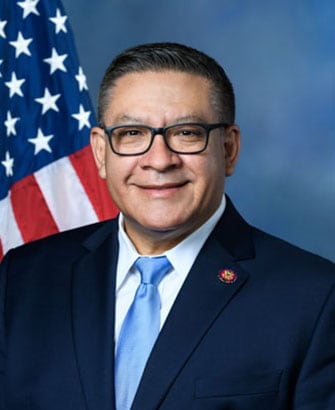
Salud O. Carbajal
D Democratic nominee for U.S. House, CA-24
Representative since 2017
Other accounts (2)
The same platforms’ other accounts, such as a congressional office’s or an earlier campaign’s.
- On the ballot
- Won the general electionNov 3, 2026 · 133,337 votes (57.2%)
- Where to vote
- Find your polling place (opens in a new tab) · More ways to vote
- Top priorities
- Caring For Our Veterans
- Creating Good-Paying Jobs
- Fighting for the Middle Class
- Helping Our Students Achieve a Higher Education
- Making Health Care More Affordable
- In Congress
- Representative since 2017 · votes with their party 98% of the time. See the record · Office phone 202-225-3601
- Money
- $1.9M raised, $1.2M spent, $3.3M cash on hand (through Oct 14, 2026). Where it comes from
- Who gives
- 2.6% of individual money from donors at $200 or less · 89% from California · largest committee giver APPLIED RESEARCH ASSOCIATES, INC. POLITICAL ACTION COMMITTEE (ARAPAC), $10K
- Outside groups
- $1K supporting Carbajal
- Backed by
- California Federation of Teachers · United Farm Workers (UFW) · International Longshore & Warehouse Union (ILWU) and 38 more. As the campaign lists them
- Sponsored most in
- Transportation and Public Works, Armed Forces and National Security, Public Lands and Natural Resources
9 priorities from saludcarbajal.com, in the order they are listed there. Every heading and the text under it is copied exactly, as one passage for each page it is from, and links to that place on the page; hover a source to see which passage it opens.
I joined the Marine Corps Reserves to give back to our country. Today, our veterans and their families face more challenges than ever before after returning home from service. As a veteran who serves on the House Armed Services Committee, I work every day in Congress to tackle these challenges and ensure veterans receive the support they deserve. We must step up for veterans the way they stepped up for us.
The stories I have heard from veterans about issues with adequate or timely VA service are unacceptable, and they are problems we have to solve. From accessible health care to job opportunities to financial aid for continued education, we must make good on our commitment to those who serve. We also need to take care of our most vulnerable veterans and, through funding and bills like my Home for the Brave Act, I am working to ensure we help veterans experiencing homelessness obtain resources and get back on their feet.
I am advocating to expand services for crucial programs to reintegrate veterans into the workforce with resources like job training and housing assistance. Deployed veterans have a 41% higher suicide risk compared to the general population, and mental health services must be easily available for our veterans. We have to implement more programs to ensure that veterans living with depression, post-traumatic stress disorder (PTSD) and other trauma can get the care they need.
There are nearly 40,000 veterans living in the 24th District with almost 4,000 more serving on active military duty. Whether its reducing VA wait times, increasing accountability and transparency, improving care or helping returning troops transition back into the civilian world, I will honor their service by taking action to improve the lives of veterans on the Central Coast and across our nation.
source ↗ (opens the page at this passage) · saludcarbajal.com/issues/caring-for-our-veterans
No one who works full time should live in poverty. We have to create more opportunities for people to lift themselves into the middle class and thrive. Throughout my career, I have worked across the aisle to ensure people have the chance to succeed, secure a good-paying job and live their own American Dream story.
That’s why I fought to get our Bipartisan Infrastructure Law signed into law in 2021, a landmark investment in the Central Coast that will create thousands good-paying union jobs by:
- Repairing hundreds of miles of roads and highways and bridges that are in disrepair or beyond their lifespan
- Expanding high-speed internet to communities that still lack critical broadband connectivity
- Creating clean energy jobs by adding additional EV charging stations, clean transit options, and capping leaking oil and gas wells up and down our coast.
- Investing in wildfire prevention, drought mitigation, and climate weatherization, creating new jobs that will help keep our communities safe
In the House, I've also backed bills to raise the federal minimum wage to $15 an hour, and to address the gender pay gap and demand pay equity. People should be compensated fairly for their hard work.
As Santa Barbara County Supervisor, I helped secure $100 million in local transportation funds to widen our highways, repair our bridges and roads and boost our economy. Upgrading our infrastructure is critical to our long-term economic growth and key to expanding the middle class. It puts people back to work, helps reduce traffic, and allows our businesses to get their products to market faster.
I believe protecting the environment and creating good-paying jobs can go hand in hand. In Santa Barbara, we established the EMPower energy efficiency program for our residents and approved the Cuyama Solar Project, the first large-scale solar project in our county. These types of programs have the potential to produce highly skilled, good-paying jobs and set us on a path for a sustainable future.
Here at home and back in Washington, I am committed to amplifying the voices of working families and fighting for change that lifts us all up.
source ↗ (opens the page at this passage) · saludcarbajal.com/issues/creating-good-paying-jobs
Many middle class families are struggling. They work hard, but still feel like they are falling further behind–in large part because of the rising cost of living that we see on the Central Coast.
Lowering costs for you and your family is my number one priority in Congress, because I know that higher prices keep folks from getting ahead and finding prosperity.
Housing: We need more affordable housing options in our communities. It’s that simple. I’ve delivered millions of dollars directly to the Central Coast to create more affordable housing units, and I will continue to fight for policies that help renters and homeowners alike keep the Central Coast as their home.
Food & Gas: Global market disruptions caused by COVID-19, supply chain bottlenecks, and Russia’s unjustified war in Ukraine have meant that the cost of food, gas, and other energy have put extra pressures on Central Coast residents.
That’s why I pushed to increase funding for programs that help food insecure families. And its why I’ve backed releases from our strategic petroleum reserves to offset the market disruptions that Californians have felt at the pump. We can’t drill our way out of higher prices, however, and I continue to advocate for investments in clean energy alternatives that will ensure our families are less reliant on volatile fossil fuel prices.
Health Care: I’ve been advocating for measures that lower the cost of health care since before I came to Congress. After successfully preventing Republicans from repealing the Affordable Care Act dozens of times, I also delivered lower premiums and out of pocket costs through expansions of ACA tax cuts in our COVID-19 relief bills.
I’ve also specifically worked to get legislation to lower the extraordinary costs of prescriptions drugs passed in the House multiple times in recent years, and will continue to advocate for those measures in months and years to come.
In Congress, I put the fight for these working class families first because I understand these challenges personally. My father worked the fields in Oxnard and our family lived in public housing. I focused on my education and worked my way through UCSB, and served my country in the Marine Corps Reserves.
I worked hard to get ahead and build a better life for my family, and I am committed to making sure that same opportunity is afforded to all who are willing to put in the hard work.
source ↗ (opens the page at this passage) · saludcarbajal.com/issues/fighting-for-the-middle-class
I was the first in my family to graduate from college. That achievement did not come without assistance in the form of working multiple jobs, financial aid, student loans and the Veterans Education Assistance Program.
Middle-class families are struggling to send their children to college because it is unaffordable. It’s outrageous that so many students and their families have to take on crushing debt just to get the education they need to compete in our economy. What makes it worse is that they are paying higher interest rates than they should.
My education changed my path in life, and I am working to make sure all students have that same chance. I introduced my Degrees Not Debt Act to restore the power of Pell Grants, ensure more families receive the full Pell Grant amount and incentivize states to invest in higher education. As student aid falls short and student debt continues to rise, we must stand up for students.
I’ve also pushed President Biden to continue the delay on student loan payments first begun during the COVID-19 pandemic, as well as for him to use authorities already granted to him to cancel student debt for borrowers who are struggling to succeed under the weight of crushing debt.
We must do everything in our power to make college more affordable including lowering interest rates for government backed loans, expanding the Pell Grant program, allowing students to refinance their loans, just like mortgages and car loans, and pushing universities to keep costs down if they want to continue to receive federal research dollars and other aid. I also believe we should push for two years of tuition-free community college to allow students to further their education or get the career technical skills they need to compete in today’s global economy.
source ↗ (opens the page at this passage) · saludcarbajal.com/issues/helping-our-students-achieve-a-higher-education
Congress needs to focus on improving our health care system and ensuring that everyone can afford lifesaving care and medicine—not on rolling back protections for millions of Americans.
During my first term in Congress, I voted against the Republican repeal of the Affordable Care Act (ACA) and fought for legislation to improve and expand our health care system.
I've fought for bills like the Lower Drug Costs Now Act (H.R. 3), the Build Back Better Act, and the Affordable Insulin Now Act so that out of pocket costs are capped, Medicare can negotiate directly with drug companies, and all patients can access lower prescription costs.
And through measures like the CARES Act and the American Rescue Plan, I successfully got ACA tax cuts expanded for millions of families to get lower premiums, free COVID-19 vaccines, testing and treatment, and additional support for the community health clinics and centers that are the cornerstone of the Central Coast’s public health.
I've heard countless stories from Central Coast residents who are relying on Congress to protect their care and stand up for their interests, and I promise I will always fight for you.
On the House Armed Services Committee, I have introduced legislation to expand TRICARE services for our military members to provide free contraceptive services, allow gestational diabetes screening without copayment and waive statutorily imposed pharmacy costs for preventive services.
I'm also fighting to strengthen our Medicare and Medicaid programs that ensure millions of older Americans and low-income families are not forced to choose between paying their mortgage or paying for lifesaving care.
source ↗ (opens the page at this passage) · saludcarbajal.com/issues/making-health-care-more-affordable
Our coastline and natural environment are renowned. It is our responsibility to protect and preserve our unique communities, scenic views and open spaces along the Central Coast. I have worked tirelessly to bring Democrats and Republicans together to ensure our open spaces are conserved for future generations to enjoy.
I am proud to have served on President Obama’s task force on climate change where we worked to create sustainable climate solutions for states and localities. I led efforts locally to tackle carbon pollution and combat climate change.
In the U.S. House, I have continued my fight to protect our planet by introducing and passing a bill to ban future offshore oil drilling off of California's coast; working to preserve our environment, maintain our waters, create a new marine sanctuary to protect our coastline and sea life, and designate parts of the Los Padres National Forest and Carrizo Plain National Monument as protected wilderness.
I secured funding in the Bipartisan Infrastructure Law to not only create more clean energy transportation options in our communities, but also mitigate the effects of the climate crisis and fight the worsening effects of wildfires and drought on our communities.
During the Trump Administratio, I fought back against attempts to roll back climate protections, and now I'm always working on plans to help our coastal communities remain resilient and well-equipped in the face of climate change.
I will continue saying no to new offshore drilling and keep us moving toward cleaner energy solutions that help create new jobs, like we did with solar power facilities in the Cuyama Valley and on the Carrizo Plain, by guiding projects like our first-ever offshore wind project off the coast of Morro Bay.
We must do more to bring wind and biofuel initiatives to market, and encourage more efforts for residents to retrofit their homes so they are more energy-efficient and cost-effective for consumers.
source ↗ (opens the page at this passage) · saludcarbajal.com/issues/preserving-our-natural-environment
When I was a young boy, my sister used my father’s gun and took her own life. I am no stranger to the tragedy inflicted on family in the wake of gun violence. Our community came together after the devastating shootings around UCSB. For me, it underscored the need to do everything we can to keep guns away from those who pose a threat to themselves or others.
We need more commonsense gun safety measures–which is why I’m proud to have helped craft the first new federal gun safety law in 30 years: the Bipartisan Safer Communities Act.
This law includes my bill that I championed for more than half a decade, the Extreme Risk Protect Order Act, which helps states set up ‘red flag’ laws and increases awareness of these laws in places like California that already have them. ‘Red flag’ laws are proven to save lives by temporarily removing guns from people who pose a danger to themselves or others while preserving due process.
The law we got approved this year also helps crack down on straw gun purchases, ghost guns, and gun traffickers, improves background checks, and invests in community violence prevention.
This was a big step forward, but there is still plenty of work to be done to keep our communities safe from gun violence. That’s why I’ve also backed and helped pass commonsense gun safety measures that institute universal background checks and close loopholes in our vetting systems.
As a veteran, I’ve seen what weapons of war can do. They have no place on our streets. I support reinstituting national restrictions on assault weapons and high-capacity magazines.
I am committed to making sure we keep our communities safe and end our nation’s gun violence epidemic.
source ↗ (opens the page at this passage) · saludcarbajal.com/issues/pushing-for-sensible-gun-laws
As a former Planned Parenthood California Central Coast Board Member, I am a staunch supporter of expanding women's access to health care and defending reproductive justice and the right to choose.
And I know that, in the face of the erosion of decades of legal protection provided by Roe v. Wade and Planned Parenthood v. Casey, more must be done to codify a woman’s Constitutional right to choose into law.
That’s why I am a co-sponsor and leading advocate for the Women’s Health Protection Act, which would explicitly protect the right to an abortion nationwide. This measure passed the House with my help in September 2021.
On the House Armed Services Committee, I have introduced legislation to expand TRICARE services for our military members to provide no-cost contraceptive services, allow gestational diabetes screening without copayment and waive statutorily imposed pharmacy costs for preventive services.
All who want and need them must be able to access safe, affordable reproductive services. I am proud to cosponsor bills to repeal the damaging Hyde Amendment and ensure all women can access abortion care; affirm that reproductive justice is a human rights issue and direct the State Department to restore the practice of assessing reproductive rights in reports; helping to appropriate $286 million for Title X family planning and $108 million for the Teen Pregnancy Prevention Program; and much more.
Every day, we face blatant attacks on reproductive health. From President Trump’s anti-choice Supreme Court justices and draconian new state laws in places like Texas and Florida, to global and domestic gag rules to attempts at banning abortion, stripping health center resources and limiting available contraception—we have much to protect and much to improve.
As your member of Congress, I will never sit silently when reproductive justice is on the line. I will always stand up for reproductive rights because they are human rights.
source ↗ (opens the page at this passage) · saludcarbajal.com/issues/reproductive-justice
Seniors have earned Social Security and Medicare. They have paid into the system throughout their working lives and deserve those benefits in retirement, but retirees are finding it harder to make ends meet. We should not be forcing our seniors to choose between their next meal and a lifesaving prescription.
We need to strengthen Medicare and Social Security, not put these programs in the hands of the private market. I strongly oppose privatizing Social Security and oppose turning Medicare into a voucher system. Instead, we must find ways to increase Social Security benefits so that we provide additional retirement security to elderly Americans who are living longer than ever and have found it difficult to save for 30 or more years of retirement. We need a balanced approach to identify revenues and close the loopholes that allow billionaires and multinational corporations to avoid paying their fair share.
We also need to look at the rising cost of prescription drugs. It’s time we start using the government’s bargaining power to reduce the costs of prescriptions. Rural health care providers are being shortchanged with Medicare reimbursements and our rural residents are finding it increasingly difficult to get the health care they need. We need to look at incentivizing doctors and hospitals to operate in rural areas so that all of our seniors have access to care.
source ↗ (opens the page at this passage) · saludcarbajal.com/issues/strengthening-security-in-retirement