Loading this candidate’s profile from the FEC filings and campaign records.
Where They Stand is a nonpartisan guide to everyone running for Congress: their money, their own words and how incumbents voted. Find your ballot →
Candidates › OH-15 race › 2025–2026
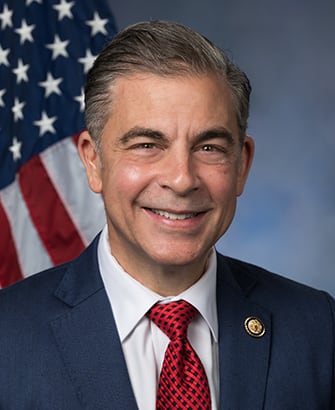
Mike Carey
R Republican nominee for U.S. House, OH-15
Representative since 2021
Other accounts (2)
The same platforms’ other accounts, such as a congressional office’s or an earlier campaign’s.
- On the ballot
- On the general election ballotNov 3, 2026 · Ohio US House 15
- Where to vote
- Find your polling place (opens in a new tab) · More ways to vote
- Top priorities
- Fighting for Ohio Communities
- Delivering a More Affordable Future
- Protecting and Fixing Social Security
- Keeping Ohio Communities Safe
- Ensuring Veterans, Law Enforcement, and First Responders Receive the Care and Respect They Deserve
- In Congress
- Representative since 2021 · votes with their party 97% of the time. See the record · Office phone 202-225-2015
- Money
- $4.2M raised, $4M spent, $370.3K cash on hand (through Oct 14, 2026). Where it comes from
- Who gives
- 9.1% of individual money from donors at $200 or less · 33% from Ohio · largest committee giver STANLEY BLACK & DECKER, INC. POLITICAL ACTION COMMITTEE, $10K
- Outside groups
- $1.6M supporting, $2.9M opposing Carey
- Backed by
- President Donald J. Trump. As the campaign lists them
- Sponsored most in
- Taxation, Health, Government Operations and Politics
7 priorities from careyforcongress.com, in the order they are listed there. Every heading and the text under it is copied exactly, as one passage for each page it is from, and links to that place on the page; hover a source to see which passage it opens.
Congressman Carey's top priority is strengthening Ohio communities by promoting economic growth, public safety, and opportunity for working families.
Congressman Carey’s highest priority in Congress is delivering for his constituents and creating a stronger future for the communities he represents. Since becoming your Congressman, Mike Carey has helped constituents navigate federal agencies and brought tax dollars back to our communities. Working families pay their taxes and Congressman Carey is making sure that money is put to good use right back in their communities.
Since taking office, Congressman Carey has secured more than $50 million for his constituents at home in Ohio. This includes solving delays in veterans’ services because of inefficiency at the VA and helping seniors navigate Social Security and Medicare to access their full benefits.
Congressman Carey has also directed federal tax dollars back to Ohio for local projects through the appropriations process. This includes a $25 million grant to improve roads and replace bridges on Alum Creek Drive in Franklin County; water infrastructure improvements to Sidney and Bloomingburg; a new law enforcement facility in London; funds to fight human trafficking in Columbus; expansion of the Mid-Ohio Food Collective; new facilities at the Ohio State University; and much more.
source ↗ (opens the page at this passage) · careyforcongress.com/priorities
Mike Carey is working to lower the cost of living by reducing taxes, creating good-paying jobs, and fighting inflation.
After the Biden Administration ushered in the worst cost of living crisis in half a century with inflation peaking at 9% from reckless, left-wing government spending and mandates, Congressman Carey has worked with Congressional Republicans and President Trump to author and pass the Working Families Tax Cuts: the largest tax cut in American history.
This legislation codified President Trump’s signature campaign promises of:
- No taxes on tips.
- No taxes on overtime.
- Tax deductions for seniors on Social Security.
- Making the 2017 Trump tax cuts permanent.
Promises Made. Promises Kept.
source ↗ (opens the page at this passage) · careyforcongress.com/priorities
Mike is committed to strengthening Social Security and ensuring seniors receive the benefits they have earned.
As the Vice Chairman of the House Ways and Means Social Security Subcommittee, Congressman Carey has made it a priority to work in a bipartisan fashion to strengthen Social Security and preserve it for generations to come.
Social Security Overpayments:
- Congressman Carey was the first member of Congress to call for a hearing regarding Social Security Administration (SSA) overpayment notices after SSA refused to disclose how many Americans were negatively impacted by the agency’s own mistakes.
- Congressman Carey’s leadership uncovered that SSA is demanding Social Security payments back from more than 2 million Americans per year. Americans who were living by the rules and were hit with notices demanding repayment of tens of thousands of dollars.
- Fixing this troubling mistake from SSA has become a priority for Mike Carey. Seniors and disabled Americans on a fixed income shouldn't be penalized for bureaucratic mistakes on the part of the Social Security Administration.
Social Security Fairness Act:
Congressman Carey played an integral role in ending antiquated regulations on the Social Security benefits of retired public employees such as teachers, police officers, and firefighters by helping lead the passage of the Social Security Fairness Act in 2025. Today, public servants who dedicated their careers and risked their lives for their communities will get their full Social Security benefits thanks to this law.
source ↗ (opens the page at this passage) · careyforcongress.com/priorities
Mike supports law enforcement, secure borders, and policies that keep Ohio families and neighborhoods safe.
Following the Biden Border Crisis that allowed record-high illegal crossings into America, along with deadly drugs like Fentanyl, Congressman Carey worked with President Trump and Congressional Republicans to secure the border, stop the flow of drugs, and arrest the criminals threatening communities across Ohio and America.
In 2025, Congressman Carey voted to pass the Laken Riley Act, legislation signed into law by President Trump that enacted higher penalties for illegal aliens who commit crimes in America and made them easier to deport. This bill was named after Laken Riley, a student in Georgia, senselessly and ruthlessly murdered by a dangerous illegal alien.
Congressman Carey also voted to pass the HALT Fentanyl Act, a bill that classified fentanyl and all its pharmaceutical analogues as Schedule I substances with no accepted medical use. The law also raised penalties for criminals who trafficked this poison into American communities.
Congressman Carey also supported President Trump’s efforts to secure the border, providing $175 billion to enact border security in the Working Families Tax Cuts. In 2025, America saw some of the lowest illegal crossings in history, including 6 months of zero illegal releases of illegal aliens into the country. All we needed was a new President.
source ↗ (opens the page at this passage) · careyforcongress.com/priorities
Veterans, law enforcement, and first responders deserve the respect, resources, and care they've earned.
Congressman Carey has taken a stand in Congress to always do what is best for our veterans, law enforcement officers and first responders. Here is some of the legislation Mike has introduced and championed:
- Supporting Our First Responders Act - Mike Carey knows the importance of Emergency Medical Services and the struggles the industry faces. That’s why he introduced this legislation as an original cosponsor to establish a competitive grant program to support medical transport and EMS.
- The Veterans HSA Access Act - Mike introduced this bipartisan legislation to allow disabled veterans who were injured in non-service related incidents to continue contributing to a tax free Health Savings Account while still receiving their earned VA benefits.
- Enhancing COPS Hiring Program Grants for Local Law Enforcement Act - Our law enforcement continues to struggle with hiring and retention of officers to protect our communities. To help with this critical issue, Mike Carey worked on and introduced this legislation as an original cosponsor to authorize law enforcement agencies to use COPS grants to recruit and retain law enforcement officers.
- The Honoring our PACT Act - Mike voted in favor of this life saving legislation to expand VA health care and benefits for Veterans exposed to burn pits, Agent Orange, and other toxic substances.
- Protect and Serve Act - Mike has championed this legislation to support law enforcement by making it a federal crime to knowingly cause or attempt to cause serious bodily injury to a law enforcement officer.
source ↗ (opens the page at this passage) · careyforcongress.com/priorities
Mike is fighting to eliminate government waste, reduce the national debt, and protect taxpayer dollars.
Congressman Carey supported President Trump’s efforts to cut needless spending and end waste, fraud, and abuse in government programs. In 2025, Congressman Carey voted to codify the Department of Government Efficiency’s (DOGE) cuts to wasteful, anti-American programs unearthed by DOGE.
Congressman Carey also voted to enact commonsense work requirements for Medicaid in the Working Families Tax Cuts so that illegal immigrants and able-bodied non-workers don’t steal critical healthcare benefits from the vulnerable American citizens that need it the most.
source ↗ (opens the page at this passage) · careyforcongress.com/priorities
Mike believes leaders can stand firm on their principles while working together to deliver results for Ohio.
It is no secret that tensions are at an all-time high in Congress. While Mike Carey may have political and policy differences with his fellow members, he believes that we should treat one another with civility and respect.
That is why he partnered with Democrat Congresswoman Joyce Beatty to create the Civility and Respect Caucus to encourage decorum amongst fellow members regardless of party.
source ↗ (opens the page at this passage) · careyforcongress.com/priorities