Loading the public record
Where They Stand is a nonpartisan guide to everyone running for Congress: their money, their own words and how incumbents voted. Find your ballot →
All recent votes112th CongressSenate
S. 1769Rebuild America Jobs Act
- Sponsor
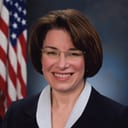
- Amy Klobuchar [D-MN]
- Cosponsors
- 23 · 23 Democrats
- Policy area
- Labor and Employment
- Latest action
- Nov 3, 2011 · Motion to proceed to consideration of measure under the order of 11/2/2011, not having achieved 60 votes in the affirmative, was rejected in Senate by Yea-Nay Vote. 51 - 49. Record Vote Number: 195. (consideration: CR S7113)
- IntroducedOct 31, 2011
- Passed the SenateNot yet reached
- Passed the HouseNot yet reached
- Sent to the PresidentNot yet reached
- Became lawNot yet reached
Rebuild America Jobs Act - Prohibits the use of funds made available by this Act for a project for the construction, alteration, maintenance, or repair of a public building or public work unless all of the iron, steel, and manufactured goods used in such project are produced in the United States (Buy American).
Waives such prohibition in cases where: (1) the prohibition would be inconsistent with the public interest; (2) iron, steel, and the relevant manufactured goods are not produced in the United States in sufficient and reasonably available quantities of a satisfactory quality; or (3) inclusion of iron, steel, and manufactured goods produced in the United States will increase the cost of the overall project by more than 25%.
Requires all laborers and mechanics employed on federally-assisted projects to be paid wages at the locally prevailing rates (Davis-Bacon Act).
Makes specified funds available to the Secretary of Transportation (DOT) for: (1) grants-in-aid for airport planning and development and noise compatibility planning projects under the airport improvement program (AIP); (2) Federal Aviation Administration (FAA) Next Generation air traffic control system advancements; (3) highway and bridge restoration, repair, and construction projects and for passenger and freight rail transportation and port infrastructure projects; (4) grants for high-speed rail projects, capital investment grants for intercity passenger rail service, and grants to reduce congestion on intercity rail passenger transportation; (5) capital grants to the National Railroad Passenger Corporation (Amtrak); (6) transit capital assistance grants; (7) capital projects for existing fixed guideway system modernization, replacement and repair of buses and bus-related equipment, and construction of bus-related facilities; and (8) discretionary capital investment grants for surface transportation infrastructure.
Authorizes the Secretary to establish standards under which contracts for construction projects contain requirements for the local hiring of individuals to perform construction work under such contracts.
Requires projects to comply with Buy American requirements.
Building and Upgrading Infrastructure for Long-Term Development - Establishes the American Infrastructure Financing Authority (AIFA) as a wholly-owned government corporation to make direct loans and loan guarantees to facilitate transportation, water, or energy infrastructure projects. Requires infrastructure projects assisted under this Act to have costs that are reasonably anticipated to equal or exceed $100 million ($25 million for rural infrastructure projects).
Sets forth special requirements for infrastructure projects in rural areas. Requires the AIFA Chief Lending Officer to establish: (1) an Office of Rural Assistance to provide technical assistance in the development and financing of rural infrastructure projects, and (2) a Center for Excellence to provide such assistance to public sector borrowers for the same purpose.
Establishes an Office of Special Inspector General to audit and investigate the business activities of AIFA.
Makes private projects for which no public benefit is created ineligible for financial assistance. Sets forth terms for loans or loan guarantees for infrastructure projects.
Requires the Chief Executive Officer of AIFA to establish and collect fees sufficient to cover AIFA administrative costs.
Amends the Internal Revenue Code to extend through 2012 the exemption from the alternative minimum tax (AMT) for certain tax-exempt private activity bonds.
Imposes on individual taxpayers in taxable years beginning after 2012 an additional tax equal to 0.7% of so much of their modified adjusted gross income as exceeds $1 million. Provides for an inflation adjustment to the $1 million threshold amount for taxable years beginning after 2013.
Written by the nonpartisan Congressional Research Service, describing S. 1769 as introduced in Senate on Oct 31, 2011. It is not the text of the measure; a later amendment may have changed what it does.
Senate Nov 3, 2011
On the Motion to Proceed
Motion to Proceed to Consider S. 1769
Motion to Proceed Rejected
51 Yea 49 Nay
Party-line vote 1 of 100 voting members broke with their own party: 1 Democrat.
How the chamber split
DemocratsIndependentsOtherRepublicansFilled: YeaRing: NayGrey: not voting or present
Showing 100 of 100 members
- DAkakaHI · DemocraticYea
- RAlexanderTN · RepublicanNay
- RAyotteNH · RepublicanNay
- RJohn BarrassoWY · RepublicanNay
- DBaucusMT · DemocraticYea
- DBegichAK · DemocraticYea
- DMichael F. BennetCO · DemocraticYea
- DBingamanNM · DemocraticYea
- DRichard BlumenthalCT · DemocraticYea
- RBluntMO · RepublicanNay
- RJohn BoozmanAR · RepublicanNay
- DBoxerCA · DemocraticYea
- RBrownMA · RepublicanNay
- DBrownOH · DemocraticYea
- RBurrNC · RepublicanNay
- DMaria CantwellWA · DemocraticYea
- DCardinMD · DemocraticYea
- DCarperDE · DemocraticYea
- DCaseyPA · DemocraticYea
- RChamblissGA · RepublicanNay
- RCoatsIN · RepublicanNay
- RCoburnOK · RepublicanNay
- RCochranMS · RepublicanNay
- RSusan M. CollinsME · RepublicanRunning in 2026Nay
- DConradND · DemocraticYea
- DChristopher A. CoonsDE · DemocraticRunning in 2026Yea
- RCorkerTN · RepublicanNay
- RJohn CornynTX · RepublicanRunning in 2026Nay
- RMike CrapoID · RepublicanNay
- RDeMintSC · RepublicanNay
- DRichard J. DurbinIL · DemocraticYea
- REnziWY · RepublicanNay
- DFeinsteinCA · DemocraticYea
- DFrankenMN · DemocraticYea
- DKirsten E. GillibrandNY · DemocraticYea
- RGrahamSC · RepublicanNay
- RChuck GrassleyIA · RepublicanNay
- DHaganNC · DemocraticYea
- DHarkinIA · DemocraticYea
- RHatchUT · RepublicanNay
- RHellerNV · RepublicanNay
- RJohn HoevenND · RepublicanNay
- RHutchisonTX · RepublicanNay
- RInhofeOK · RepublicanNay
- DInouyeHI · DemocraticYea
- RIsaksonGA · RepublicanNay
- RJohannsNE · RepublicanNay
- DJohnsonSD · DemocraticYea
- RRon JohnsonWI · RepublicanNay
- DKerryMA · DemocraticYea
- RKirkIL · RepublicanNay
- DAmy KlobucharMN · DemocraticYea
- DKohlWI · DemocraticYea
- RKylAZ · RepublicanNay
- DLandrieuLA · DemocraticYea
- DLautenbergNJ · DemocraticYea
- DLeahyVT · DemocraticYea
- RMike LeeUT · RepublicanNay
- DLevinMI · DemocraticYea
- OLiebermanCT · Other partyNay
- RLugarIN · RepublicanNay
- DManchinWV · DemocraticYea
- RMcCainAZ · RepublicanNay
- DMcCaskillMO · DemocraticYea
- RMitch McConnellKY · RepublicanNay
- DMenendezNJ · DemocraticYea
- DJeff MerkleyOR · DemocraticRunning in 2026Yea
- DMikulskiMD · DemocraticYea
- RJerry MoranKS · RepublicanNay
- RLisa MurkowskiAK · RepublicanNay
- DPatty MurrayWA · DemocraticYea
- DNelsonFL · DemocraticYea
- DNelsonNE · DemocraticBroke with party (Democratic majority)Nay
- RRand PaulKY · RepublicanNay
- RPortmanOH · RepublicanNay
- DPryorAR · DemocraticYea
- DJack ReedRI · DemocraticRunning in 2026Yea
- DReidNV · DemocraticYea
- RJames E. RischID · RepublicanRunning in 2026Nay
- RRobertsKS · RepublicanNay
- DRockefellerWV · DemocraticYea
- RRubioFL · RepublicanNay
- IBernard SandersVT · IndependentYea
- DCharles E. SchumerNY · DemocraticYea
- RSessionsAL · RepublicanNay
- DJeanne ShaheenNH · DemocraticYea
- RShelbyAL · RepublicanNay
- RSnoweME · RepublicanNay
- DStabenowMI · DemocraticYea
- DTesterMT · DemocraticYea
- RJohn ThuneSD · RepublicanNay
- RToomeyPA · RepublicanNay
- DUdallCO · DemocraticYea
- DUdallNM · DemocraticYea
- RVitterLA · RepublicanNay
- DMark R. WarnerVA · DemocraticRunning in 2026Yea
- DWebbVA · DemocraticYea
- DSheldon WhitehouseRI · DemocraticYea
- RRoger F. WickerMS · RepublicanNay
- DRon WydenOR · DemocraticYea
100 members on this roll call, from the official Senate record. Party majorities need at least five voting members, so an independent never counts as breaking with a party.
Signing on is not a vote: a member can cosponsor S. 1769 and vote against it. 17 signed when it was filed.
DJoseph Manchin [D-WV]
DSheldon Whitehouse [D-RI]
DHARRY REID [D-NV]
DJOHN KERRY [D-MA]
DBARBARA BOXER [D-CA]
DChristopher A. Coons [D-DE]
DMark Begich [D-AK]
DFRANK LAUTENBERG [D-NJ]
DAl Franken [D-MN]
DCharles E. Schumer [D-NY]
DCLARENCE NELSON [D-FL]
DRichard Blumenthal [D-CT]