Loading this candidate’s profile from the FEC filings and campaign records.
Where They Stand is a nonpartisan guide to everyone running for Congress: their money, their own words and how incumbents voted. Find your ballot →
Candidates › Virginia U.S. Senate race › 2025–2026
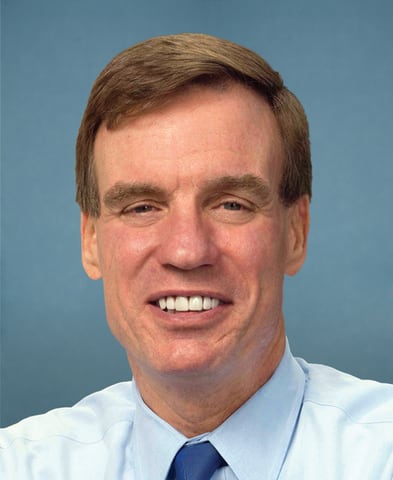
Mark R. Warner
D Democratic nominee for U.S. Senate, Virginia
Senator since 2009
Other accounts (5)
The same platforms’ other accounts, such as a congressional office’s or an earlier campaign’s.
- On the ballot
- Won the general electionNov 3, 2026 · 0 votes (0.0%)
- Where to vote
- Find your polling place (opens in a new tab) · More ways to vote
- Top priorities
- Making Virginia Affordable
- Delivering for Virginians
- Keeping Americans Safe
- Upholding Virginia Values
- Fighting to Protect our Freedoms
- In Congress
- Senator since 2009 · votes with their party 91% of the time. See the record · Office phone 202-224-2023
- Money
- $20.2M raised, $19.6M spent, $6.2M cash on hand (through Oct 14, 2026). Where it comes from
- Who gives
- 31% of individual money from donors at $200 or less · 40% from Virginia · largest committee giver MORTGAGE BANKERS ASSOCIATION POLITICAL ACTION COMMITTEE (MORPAC), $19.5K
- Outside groups
- $184.6K supporting Warner
- Polling
- 45% in the latest poll (Responsive Management). The polls
- Sponsored most in
- Health, Taxation, Finance and Financial Sector
5 priorities from markwarnerva.com, in the order they are listed there. Every heading and the text under it is copied exactly, as one passage for each page it is from, and links to that place on the page; hover a source to see which passage it opens.
The United States is 3.7 million homes short of meeting basic housing needs. In the Senate, Mark’s plan is designed to expand housing supply and bring down costs by encouraging rehabilitation of existing structures, speeding up permitting, and making it easier for first-time homebuyers to obtain their first mortgage. He has also worked to drive down the cost of child care by addressing the child care labor crisis.
source ↗ (opens the page at this passage) · markwarnerva.com/plan
Heading as listed on markwarnerva.com/plan ↗ (opens markwarnerva.com/plan at this heading)
During his first term in the Senate, Mark helped write the Affordable Care Act, and has worked ever since to strengthen it. He believes that the only way to lower premiums and keep the health care system sustainable is to ensure every American has access to an affordable basic standard of care. Without access to health care coverage, people still get sick. They end up in emergency rooms, which is the most expensive type of care, raising costs for everyone.
source ↗ (opens the page at this passage) · markwarnerva.com/plan
Heading as listed on markwarnerva.com/plan ↗ (opens markwarnerva.com/plan at this heading)
Washington is largely unprepared for the coming AI jobs crisis and we urgently need forward-looking policies to prepare our economy for this new era. Mark believes the AI companies and big corporations that stand to massively profit from this disruption must do their part, including preparing workers for the economy of the future and paying their fair share of the enormous energy demands AI will place on our grid.
source ↗ (opens the page at this passage) · markwarnerva.com/plan
Heading as listed on markwarnerva.com/plan ↗ (opens markwarnerva.com/plan at this heading)
Heading as listed on markwarnerva.com/plan ↗ (opens markwarnerva.com/plan at this heading)
As a primary author of the landmark bipartisan infrastructure bill, Mark secured funding to expand high-speed internet in rural Virginia and key transportation and infrastructure projects throughout the Commonwealth. Because of Mark’s work, Virginia leads the nation in access to broadband and is on track to be among the first states with universal broadband access.
source ↗ (opens the page at this passage) · markwarnerva.com/plan
Heading as listed on markwarnerva.com/plan ↗ (opens markwarnerva.com/plan at this heading)
Mark wrote the groundbreaking CHIPS and Science Act, which is bringing advanced manufacturing back to America instead of relying on foreign countries for critical technology. The law has already brought billions in investment benefitting Virginia and spurred innovation. He has also championed clean-energy projects that are creating thousands of jobs and building a stronger, more competitive economy.
source ↗ (opens the page at this passage) · markwarnerva.com/plan
Heading as listed on markwarnerva.com/plan ↗ (opens markwarnerva.com/plan at this heading)
Mark helped cap the price of insulin, lower prescription drug costs for seniors, and is fighting to extend tax credits that make healthcare more affordable for the middle class. He was also proud to support the PACT Act, which expanded health care coverage and benefits for veterans exposed to burn pits and other toxic chemicals.
source ↗ (opens the page at this passage) · markwarnerva.com/plan
Heading as listed on markwarnerva.com/plan ↗ (opens markwarnerva.com/plan at this heading)
Mark has delivered major improvements for veterans by strengthening VA facilities, expanding access to health care, and modernizing benefits to meet today’s challenges. He championed legislation to address toxic exposure, improve mental health care, reduce wait times at VA clinics and make sure that veterans can receive the care they deserve closer to home. Mark has also led efforts to repair substandard military housing so that servicemembers and their families have the stability and dignity they deserve.
source ↗ (opens the page at this passage) · markwarnerva.com/plan
Heading as listed on markwarnerva.com/plan ↗ (opens markwarnerva.com/plan at this heading)
Heading as listed on markwarnerva.com/plan ↗ (opens markwarnerva.com/plan at this heading)
No state plays a larger role in building and sustaining America’s military might than Virginia. Mark knows 21st-century security won’t just be about who has the most planes, guns, or missiles. It’s also about who leads in AI, unmanned systems, advanced computing, quantum, cybersecurity, and other technologies that will define the next generation of warfare, and he’s worked to ensure that the U.S. stays ahead.
source ↗ (opens the page at this passage) · markwarnerva.com/plan
Heading as listed on markwarnerva.com/plan ↗ (opens markwarnerva.com/plan at this heading)
Mark has championed policies to protect critical technologies, boost federal R&D, and protect U.S. intellectual property from theft. He wrote the bipartisan CHIPS and Science Act to rebuild domestic semiconductor manufacturing so the U.S. is never again dependent on China for the core technology that powers our economy and military.
source ↗ (opens the page at this passage) · markwarnerva.com/plan
Heading as listed on markwarnerva.com/plan ↗ (opens markwarnerva.com/plan at this heading)
As the top Democrat on the Senate Intelligence Committee, Mark has led bipartisan efforts to counter the Chinese government’s technological and economic aggression – from securing supply chains to cracking down on foreign investments that threaten U.S. national security.
source ↗ (opens the page at this passage) · markwarnerva.com/plan
Heading as listed on markwarnerva.com/plan ↗ (opens markwarnerva.com/plan at this heading)
Heading as listed on markwarnerva.com/plan ↗ (opens markwarnerva.com/plan at this heading)
Mark was the first in his family to graduate from college, and his first two businesses failed – but he got a third shot at success, building a business that created thousands of jobs. He believes every American deserves that same fair shot to try, fail, and succeed.
source ↗ (opens the page at this passage) · markwarnerva.com/plan
Heading as listed on markwarnerva.com/plan ↗ (opens markwarnerva.com/plan at this heading)
Mark has sponsored 85 bills that have been signed into law – by both Democratic and Republican presidents. He has built bipartisan coalitions, working with Democrats and Republicans alike to deliver on a range of priorities like funding infrastructure projects, increasing access to capital for small businesses, and expanding high-tech domestic manufacturing.
source ↗ (opens the page at this passage) · markwarnerva.com/plan
Heading as listed on markwarnerva.com/plan ↗ (opens markwarnerva.com/plan at this heading)
Mark knows that trust is the foundation of a healthy democracy. He has earned the trust of both his Senate colleagues and Virginians by being open, transparent, and accountable, keeping his word, and owning up to tough choices.
source ↗ (opens the page at this passage) · markwarnerva.com/plan
Heading as listed on markwarnerva.com/plan ↗ (opens markwarnerva.com/plan at this heading)
Heading as listed on markwarnerva.com/plan ↗ (opens markwarnerva.com/plan at this heading)
Our democratic norms and institutions have never before faced the threats that we face today. Mark still believes that politics is the best way to make a difference and improve people’s lives, but only if we have a strong democracy and voters are able to make their voices heard. Mark helped negotiate and pass a revised Electoral Count Act to make clear that the Vice President does not have the power to overturn the will of the people when Congress is certifying the presidential election.
source ↗ (opens the page at this passage) · markwarnerva.com/plan
Heading as listed on markwarnerva.com/plan ↗ (opens markwarnerva.com/plan at this heading)
Republicans bent the Senate rules to put a conservative super majority on the Supreme Court – with the clear intent to overturn Roe v. Wade, which they did. 2026 is a critical year for abortion access in Virginia because voters will have an opportunity to constitutionally protect abortion access in the Commonwealth. Mark will work to ensure this amendment passes as well as other critical state constitutional amendments to protect marriage equality and the restoration of voting rights.
source ↗ (opens the page at this passage) · markwarnerva.com/plan
Heading as listed on markwarnerva.com/plan ↗ (opens markwarnerva.com/plan at this heading)
Mark has seen firsthand the devastation that gun violence has brought to our communities and is working to ensure Virginians can go to school, the grocery store, and their place of worship free from the fear of gun violence. He believes that Americans have the right to own guns, but that we need commonsense solutions like banning assault weapons and background checks to keep our communities safe.
source ↗ (opens the page at this passage) · markwarnerva.com/plan
Heading as listed on markwarnerva.com/plan ↗ (opens markwarnerva.com/plan at this heading)
Heading as listed on markwarnerva.com/plan ↗ (opens markwarnerva.com/plan at this heading)