Loading this candidate’s profile from the FEC filings and campaign records.
Where They Stand is a nonpartisan guide to everyone running for Congress: their money, their own words and how incumbents voted. Find your ballot →
Candidates › IL-11 race › 2025–2026
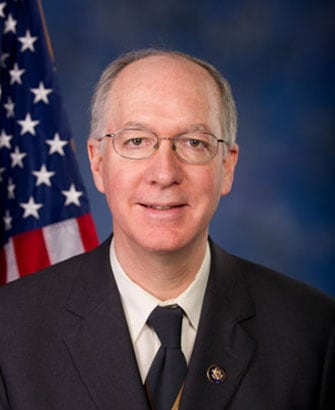
Bill Foster
D Democratic nominee for U.S. House, IL-11
Representative since 2008
Other accounts (2)
The same platforms’ other accounts, such as a congressional office’s or an earlier campaign’s.
- On the ballot
- Won the general electionNov 3, 2026 · 146,172 votes (58.5%)
- Where to vote
- Find your polling place (opens in a new tab) · More ways to vote
- Top priorities
- Reproductive Freedom
- Healthcare
- Economy
- Immigration
- Defending the Constitution
- In Congress
- Representative since 2008 · votes with their party 98% of the time. See the record · Office phone 202-225-3515
- Money
- $2.6M raised, $1.5M spent, $2.6M cash on hand (through Oct 14, 2026). Where it comes from
- Who gives
- 10% of individual money from donors at $200 or less · 44% from Illinois · largest committee giver THE OPTIONS CLEARING CORPORATION PAC, $10K
- Outside groups
- $10 supporting Foster
- Backed by
- Dick Durbin · Tammy Duckworth · Jonathan Jackson and 174 more. As the campaign lists them
- Sponsored most in
- Finance and Financial Sector, Science, Technology, Communications, Health
12 priorities from billfoster.com, in the order they are listed there. Every heading and the text under it is copied exactly, as one passage for each page it is from, and links to that place on the page; hover a source to see which passage it opens.
Bill fight to defend women’s bodily autonomy and the right for every American to access reproductive health care.
source ↗ (opens the page at this passage) · billfoster.com
I have been a strong supporter of women’s reproductive rights throughout my time in Congress – and throughout my life. I believe that the decision to have an abortion is best left as a private decision between a woman and her doctor, not by politicians and the government.
The U.S. Supreme Court issued a ruling in Dobbs v. Jackson Women’s Health Clinic that overturned Roe v. Wade: the 1973 case that established a constitutionally protected right to an abortion. This decision dismantled nearly 50 years of settled judicial precedent for reproductive rights, the right to abortion care, and the right to privacy and autonomy. Now, millions of women across the nation are being denied the right to make personal and private health care decisions and, in certain instances, are even criminalized for doing so.
This decision is the culmination of a decades-long attack by extreme politicians to exert power and control over women’s bodily autonomy. I’m proud that Illinois has already codified Roe and preserved access to safe abortion care for generations to come. With Republicans in control of the House, Senate, and the White House, they will make passing a nationwide abortion ban that overrides states like Illinois a priority.
That’s why I’m committed to passing legislation supported by an overwhelming majority of Americans to codify Roe’s protections and other reproductive health freedoms on a national scale. The Women’s Health Protection Act, which I was proud to help pass for a second time in July, would enshrine access to safe abortion care and reproductive health care into federal law.
I was also proud to vote for the Right to Contraception Act, which would place the right to access and use contraception into federal law. Contraception is a core tenant of basic preventive health care that millions of people rely upon, and we must do all we can to protect it from far-right attacks.
As long as I have a vote in Congress, I’ll fight to defend women’s bodily autonomy and the right for every American to access reproductive health care.
source ↗ (opens the page at this passage) · billfoster.com/issue/reproductive-freedom
Bill believes that health care is a basic human right and that we should continue moving towards universal coverage.
source ↗ (opens the page at this passage) · billfoster.com
The next steps forward in our healthcare system must be to promote universal access to coverage by allowing Americans to buy into a public option, and to further expand eligibility and coverage for Medicaid – two policies that Bill has voted for repeatedly and are supported by the overwhelming majority of Americans. Americans should have a choice between private insurance and a public option in accessing quality and affordable health care, which is why Bill is supporting these initiatives. Employers should also have the choice to enroll their employees in a public option, which would lead to competition on the open market and thereby reduce prices.
source ↗ (opens the page at this passage) · billfoster.com/issue/healthcare
Bill is focused on strengthening Medicare to ensure it continues to serve the needs of Americans as they age. One way to do this is to move Medicare away from a fee-for-service model that incentivizes waste and overspending on healthcare and instead encourage payment models focused on paying for quality care and positive health outcomes.
source ↗ (opens the page at this passage) · billfoster.com/issue/healthcare
Bill was proud to vote for the Inflation Reduction Act that began negotiating lower drug prices. It’s past time that we put a stop to skyrocketing prescription drug prices that are devastating hardworking American families, and there is no reason Americans should be forced to pay far more than people in other countries for the same medication.
source ↗ (opens the page at this passage) · billfoster.com/issue/healthcare
The single most effective thing we can do to control healthcare costs over the long term is to support research and development of life-saving cures for debilitating and expensive diseases. Alzheimer’s will be responsible for one-third of Medicare spending by 2050. Diabetes costs Americans $327 billion a year and the majority of that cost is covered by Medicaid, Medicare, and the Veterans Administration. A low-cost cure for either one of these diseases would eliminate budgetary stress on Medicare and Medicaid. For diabetes and related illnesses, recent breakthrough GLP-1’s (Ozempic, Wegovy, Mounjaro…) should be deployed and subsidized as rapidly and broadly as possible. As the only Ph.D. scientist in Congress, Bill has been at the forefront of protecting research budgets at the National Institutes of Health against the proposed budget cuts from the Trump Administration, and expanding them in the post-COVID era.
source ↗ (opens the page at this passage) · billfoster.com/issue/healthcare
Bill has been deeply involved in writing laws which will prevent crises like the 2008 financial collapse from hurting working families in the future.
source ↗ (opens the page at this passage) · billfoster.com
Bill has served on the Financial Services Committee since entering Congress at the start of the financial collapse in March 2008. As a scientist and businessman, Bill was deeply involved in both the emergency response to rescue our economy, and the structural changes (namely, the Dodd-Frank Wall Street Reform Act) that set up fair rules of the road to prevent future crises that disproportionately hurt working families.
Three economic issues recurred throughout Bill’s time in Congress:
1 ) The proper scale of economic stimulus spending required to respond to emergencies like the Financial Crisis of 2008, or the COVID-19 pandemic, which must be balanced against the potential dangers of over-stimulating the economy and driving inflation or an eventual debt crisis.
- 2) Long term economic stress from technological job displacement, global competition, and ill-considered changes in trade and tax policies that have tilted the playing field against American manufacturers and workers, and caused wealth to be redistributed to those at the very top.
- 3) How best to shield those at the bottom of the economic ladder from economic crises, structural change, and systemic discrimination. As the son of a civil rights lawyer who represents a very diverse district, Bill understands the importance that our complex laws and financial regulations have on the real lives of those he represents.
source ↗ (opens the page at this passage) · billfoster.com/issue/economy
The net worth of our country is essential to understanding constraints on taxes and spending. It has two main parts:
- 1) The Net Worth of American Households, about $160 trillion as of 2025.
- 2) The National Debt (eventually to be paid by taxpayers), about $35 trillion as of 2025.
Important points:
- The United States as a whole has a large positive total net worth:
- Our country’s $160 trillion dollars in household wealth, minus $35 trillion in national debt, still leaves us with $125 trillion dollars
($160T – $35T = $125T dollars)
- In fact, our country’s net worth has been rising steadily since the Obama Recovery started in 2009
- Household net worth is up over $100 trillion dollars, while the national debt has increased only about $25 trillion dollars
- Over the last 15 years, our net worth has been rising more than 4x faster than our debt
- There is no imminent debt crisis in the United States
- Household wealth is disproportionately concentrated among the wealthiest Americans:
- The Top 1% owns One-Third of America’s wealth
- The Top 10% owns Two-Thirds of America’s wealth
- The bottom half (150 Million Americans) holds just 2% of America’s wealth
- There is more than enough money to retire our National Debt
- The wealth of the top 1% could pay of the debt alone while still leaving them multimillionaires
- The wealth of the top 10% could pay off the debt while still preserving 2/3 of their wealth
- The entire wealth of the bottom 50% could not even make a dent on the National Debt
- Lawmakers can protect the average American family’s household wealth in times of crisis only by providing adequate fiscal stimulus
- During the 2008 financial crisis, American households lost over $10 trillion dollars, in large part because Tea Party Republicans prevented adequate fiscal stimulus
- During the COVID-19 crisis, household wealth recovered more quickly due to adequate fiscal stimulus
source ↗ (opens the page at this passage) · billfoster.com/issue/economy
The United States is a proud nation of immigrants and we must adhere to the promise of the American Dream. Our diversity is what makes us strong. Unfortunately, our immigration system is outdated and presents unnecessary challenges to immigrants who want to legally come to the United States.
source ↗ (opens the page at this passage) · billfoster.com/issue/immigration
Bill has been a longtime supporter of the DREAM Act, first voting for the bill in 2010 and again in 2019. Children brought to the U.S. by their parents deserve a fair chance at American citizenship and the chance to live out the American Dream in the only country many have ever known.
source ↗ (opens the page at this passage) · billfoster.com/issue/immigration
Bill also supports Comprehensive Immigration Reform along the lines of the 2013 Bill that passed the Senate but was denied a vote by House Republicans. This commonsense compromise bill would have provided funding for border security while also ensuring we reformed our outdated immigration system. It provided a strict but fair pathway to citizenship for long-time undocumented residents who were able to pass a criminal background check, pay back-taxes, and pay a modest fine. This bill then made realistic adjustments to the number of worker visas in various categories, after which there would be strong e-verify enforcement to ensure that only those who were here legally could be hired. Bill believes the framework in this bill should be the foundation for a new comprehensive immigration reform package.
source ↗ (opens the page at this passage) · billfoster.com/issue/immigration
President Trump's trampling of the Constitution is a threat to our democracy
source ↗ (opens the page at this passage) · billfoster.com
President Trump’s pardoning of perpetrators of the mob violence and insurrection of January 6th, and his trampling of Constitutional Separation of Powers is a mortal threat to our democracy. The failure of virtually all Republicans to acknowledge and respond has left a scar on the Republican Party that will last forever. Bill will do everything he can to block Trump’s ongoing unconstitutional acts.
source ↗ (opens the page at this passage) · billfoster.com/issue/defending-the-constitution
Although our election system is fundamentally sound, public confidence would be improved by a number of means. That’s why Bill voted for the Securing America’s Federal Elections (SAFE) Act, as well as H.R. 1, which would require verified paper ballots to be used in election systems to prevent hacking by a foreign government. Bill has also supported efforts that would require any campaign to report contacts with foreign agents attempting to interfere in elections to the FBI. Unfortunately, the Republican-led Senate repeatedly refused to act on these bills, leaving our election system at risk.
This should not be a partisan issue. Americans must have complete faith in the accuracy of our elections, and Bill will continue fighting to get measures passed to protect our election systems.
source ↗ (opens the page at this passage) · billfoster.com/issue/defending-the-constitution
The right to vote is the underpinning of American democracy. As the son of a civil rights lawyer, Bill is committed to making sure all Americans have equal access to the ballot box. Bill proudly voted for the John Lewis Voting Rights Act and the Voting Rights Advancement Act of 2019 – and Bill will continue supporting legislation that makes it easier for Americans to vote.
source ↗ (opens the page at this passage) · billfoster.com/issue/defending-the-constitution
The influence of big money and the rise of SuperPACs has had a disastrous effect on our political system. Within hours of being sworn in for the first time, Bill cast the deciding vote in favor of the strongest Congressional Ethics Reform legislation in decades.
In 2020, Bill introduced the Shareholder Political Transparency Act to eliminate secret corporate political donations. This legislation passed the House in 2021 and died in the Senate. In the longer term, Bill supports a constitutional amendment to overturn the Citizens United Supreme Court decision.
In the 117th Congress, Bill proudly voted to pass HR 1, the For the People Act, which would:
- Make SuperPACs and Dark Money groups to disclose their donors
- Make social media companies disclose the source and amount of money spent for political advertisements
- Make candidates for President and Vice President disclose 10 years of their tax returns
- Require disclosure of all political spending by government contractors
- Allow Campaigns to be financed by small dollar donations and public matching funds
- Numerous other provisions to improve the quality, safety, and fairness of our elections.
source ↗ (opens the page at this passage) · billfoster.com/issue/defending-the-constitution
As a businessman who started a manufacturing company that now provides hundreds of good-paying jobs right here in the Midwest, nothing is more important to Bill than the health of manufacturing in America.
source ↗ (opens the page at this passage) · billfoster.com
As a businessman who started a manufacturing company that now provides hundreds of good-paying jobs right here in the Midwest, nothing is more important to Bill Foster than the health of manufacturing in America. Bill fought the Trump Administration’s tariffs because they were misguided policy – Trump’s tax and tariff policies sent the US into a Manufacturing Recession a full year before COVID.
As a Democrat, Bill Foster is proud that U.S. Manufacturing Jobs have Increased Under Every Democratic Administration since FDR — and angered at the Loss of Manufacturing Jobs that Has Occurred Under Every Single Republican Administration.
In 2001, manufacturing employment began a catastrophic drop. From 2001 to 2009, one third of U.S. manufacturing jobs were wiped out. Although manufacturing employment recovered under President Obama, and that recovery continues today, the damage done during the Bush years will take decades to repair.
This job loss was across the board – from rust belt industries to hi-tech manufacturing. During this time, the auto industries imploded and Silicon Valley recently saw its last integrated circuit foundry close.
As a businessman who started a company that now provides hundreds of good manufacturing jobs in the Midwest, Bill Foster is angered at the misguided policies that brought about this collapse. In Congress, Bill has been a strong supporter for restoring a balance to our economy that recognizes the importance of manufacturing—particularly hi-tech manufacturing—for reasons of both our economic health and for our national security.
source ↗ (opens the page at this passage) · billfoster.com/issue/reviving-american-manufacturing
- 1) Democrats will stand up against abusive trade practices without alienating our allies. When a foreign trading partner engages in abusive trade practices like “dumping” manufactured good at below their production costs, Democratic presidents have proven far more willing to stand up and fight for American jobs. In contrast, Republicans often treat this as an opportunity to bust trade unions, lower wages, or increase the profitability of their multinational campaign contributors. A recent example of this was the refusal of the Bush administration and the Republican majorities in Congress to respond to the massive currency manipulation by China in the early 2000’s. President Trump’s tariffs have so far accomplished little besides alienating our allies, damaging the reputation of the United States as a reliable trading partner, and further devastating our rural economy.
- 2) Democrats will take tough votes in tough times to ensure the survival of U.S. manufacturing. The vote for the automobile bailout — a vote taken in the depths of the financial crisis, when the public was scared and angry and polling was running 70-30 against the auto bailout, and shortly after the CEOs of the Big Three Automakers had flown to Washington in their private jets to beg for money even as they had steered their companies to the edge of bankruptcy. There is a long list of brave Democrats — myself included — who lost their seats in Congress after taking these and other brave votes to save our economy. And yet, without those votes, three million American manufacturing jobs would not exist today.
- 3) Democrats understand the importance of a fair and rules-based business environment, and stable and respectful international relations, to export manufacturing and economic growth. The Trump Administration’s ill-considered tariffs, spurious public intimidation of U.S. manufacturers, and erratic and inconsistent claims and promises, are no substitute for stable well-structured incentives that promote U.S. manufacturing.
- 4) Democrats understand the connection between manufacturing and national security. Under the Republican philosophy that the only duty of a CEO is to maximize shareholder profits, if a company can make more money by substituting a cheaper foreign component, they should go ahead — even if this comes at the cost of destroying U.S. industries like electronics or shipbuilding that are crucial to our national defense. Democrats hold a wider view of corporate responsibility — to their workforce, to our national defense, our national economy, consumer privacy, and to our environment.
- 5) Democrats will fight for a tax code that incentivizes U.S. manufacturing and keeping profits onshore. Republican tax and trade policies have consistently favored transnational companies that offshore jobs. It is not an accident that the trade deficit has skyrocketed since the passage of the Trump Administration’s tax cuts for billionaires.
source ↗ (opens the page at this passage) · billfoster.com/issue/reviving-american-manufacturing
- 1) Eliminate tax incentives to move jobs offshore.
Although overall U.S. income tax rates are the lowest in 60 years, the tax code is still littered with misguided and indefensible incentives that encourage companies to ship American jobs offshore. Many of these were enacted due to lobbying by large corporations whose business plans were to move manufacturing operations offshore, and paid high-powered lobbyists to obtain beneficial tax breaks for doing so.
These tax incentives to move jobs offshore have to be dismantled – carefully and quickly – and Bill has been proud to vote for legislation to begin this process.
- 2) Stop poorly conceived and badly executed trade agreements.
In all trade negotiations, four things are always on the table: manufacturing, agriculture, financial services interests, and diplomatic considerations. Bill believes that for decades, the United States was ill-served by trade agreements influenced by special interests and their lobbyists who pushed forward the priorities of Wall Street and short-term diplomatic interests at the expense of U.S. manufacturers, workers, and farmers. Trump’s proposed trade deals to upgrade NAFTA will do little to enforce fair labor standards in Mexico and will actually increase prescription drug prices in the U.S.
- 3) Restore the emphasis on manufacturing in American education and culture.
Educational excellence in Science, Technology, Engineering, and Math (STEM) is crucial to success in a dynamic modern manufacturing economy. See Bill Foster’s positions on Education.
The problem is also cultural. Henry Ford and Thomas Edison were once heroes to ordinary Americans because of the products they invented and manufactured. A large and growing fraction of the students from top universities now head to careers on Wall Street instead of the real economy. It’s been decades since a leader in the manufacturing world has been recognized as a hero in our popular culture.
The key to U.S. Manufacturing is to get the next generation of students interested in building things.
One of the things Bill is most proud of in Congress is his sponsorship of Fab Labs. These are a set of state-of-the-art rapid prototyping equipment, located in storefronts and schools throughout the country, where kids and adults can drop in, design their own parts on a computer, and then have completed parts built and in their hands within minutes. Kids use the computers and equipment to design and make everything imaginable – jewelry, furniture, motors, models, or robots – using this true “workplace of the future”.
source ↗ (opens the page at this passage) · billfoster.com/issue/reviving-american-manufacturing
The financial crisis of 2008 cost our economy 8 million jobs and cost American families more than $16 trillion dollars of net worth.
source ↗ (opens the page at this passage) · billfoster.com
The first step in creating jobs and continuing economic growth is to get a clear picture of our recent economic history, so that we will not repeat the mistakes that lead to the financial crisis. The financial crisis of 2008 cost our economy 8 million jobs and cost American families more than $16 trillion dollars of net worth. Bill Foster served on the Financial Services Committee during the emergency intervention that was required to avoid another Great Depression, and understands that it will take time to repair the damage caused by a decade of economic mismanagement. This means restoring fiscal discipline to our government, re-balancing our economy, improving the health of U.S. manufacturing, rebuilding the middle class and reforming Wall Street to prevent a crisis like this from ever happening again.
source ↗ (opens the page at this passage) · billfoster.com/issue/the-financial-crisis
Families in the United States faced their worst economic conditions in generations as a result of the 2008 crisis. In a period of 18 months, household net worth – the total of everything a family owns: its house, retirement funds, bank accounts, and any small businesses it owns – dropped by more than $16 trillion dollars. This is more than $50,000 for every man, woman, and child in the United States.
As a businessman, Bill Foster supported three crucial steps for economic recovery:
- 1) An emergency intervention to prevent our economy from spiraling into another Great Depression. This intervention included cutting taxes to their lowest point in 60 years and making targeted investments in our economy. As a result, a depression has been avoided, retirement funds are recovering, business profits and household net worth have surpassed pre-crisis levels, and jobs are being created at the highest rate since the Clinton years. Unfortunately nearly ten years of bad economic leadership and misplaced priorities created this recession, and it will take us years to get out of it.
- 2) Restoring balance to our economy by reversing the economic mismanagement of the last decade. This includes returning to fiscally responsible practices with government finances, reforming broken trade policies, improving the business climate, and reviving the health of U.S. manufacturing. As a businessman who started a company that now provides hundreds of good manufacturing jobs here in the Midwest, Bill Foster knows what it takes for businesses to grow.
- 3) Reforming Wall Street to make sure we never again face a preventable crisis like economic disaster of 2008. As a member of the Financial Services Committee, Bill played a strong role in crafting legislation that will prevent the irresponsible practices that led to this crisis while ensuring a stable and efficient Financial Services industry for decades to come.
The Emergency Intervention: In response, Democrats put in place a targeted intervention to stimulate our economy: Tax cuts for small businesses and individuals, making funds available to banks, unfreezing lines of credit, providing incentives for consumers to buy homes, a fiscal stimulus to temporarily replace the drop in private-sector demand and to begin rebuilding our infrastructure, and extending benefits for the unemployed. Republicans uniformly opposed these policies, predicting runaway inflation and economic collapse.
The Economic Recovery: These Democratic policies triggered a V-shaped recovery which has now exceeded pre-crisis levels. Household net worth has rebounded by more than $18 trillion dollars, job creation is back at levels not seen since the Clinton years, and the deficit has dropped by two-thirds. Under Trump, the rate of job creation has not increased but the deficit has soared due to Trump’s tax cuts for the wealthy.
The recovery has been interrupted only twice: by the Eurozone crisis of 2010 which was caused by the failure of Europeans to restore Dodd-Frank style soundness to their banking systems, and by the Tea Party Default Crisis of 2011 (the ratings downgrade caused by newly-elected Republicans threatening to default on U.S. debt) which cost the Stock market over $1 trillion dollars and cost the average American over $10,000.
The Remaining Work: Although, on average, household net worth now exceeds pre-crisis levels, our economic recovery has not been widely shared. Over 90% of the benefits of our economic recovery have gone to the wealthiest few percent. This has been aggravated by the regressive nature of Trump’s tax cuts. Republicans continue to block Democratic efforts to ensure the recovery is widely shared by raising the minimum wage, reforming our tax code so that billionaires no longer pay taxes at a lower rate than hard-working Americans, investing in education and restoring the bargaining power of workers.
source ↗ (opens the page at this passage) · billfoster.com/issue/the-financial-crisis
The hit that our economy took during the financial crisis was actually worse than in the Great Depression, and the recovery was been much faster. At the start of the Great Depression, real per-capita household net worth dropped by 12% over a period of three years from 1929-1932. In contrast, household net worth dropped by more than 23% in a period of 18 months ending in March 2009.
In retrospect, it is remarkable that our economy did not fall into a full-blown recession following the 2007 collapse. Although the downturn was two times worse than the Great Depression, the recovery has actually been more rapid.
source ↗ (opens the page at this passage) · billfoster.com/issue/the-financial-crisis
Our financial system came under tremendous stress at the start of the COVID crisis. Millions were thrown out of work, the stock market cratered, the market for treasuries came under stress. And yet our financial system did not fail – thanks, in no small part, to the Dodd-Frank Wall Street Reform Act, and to a decade of Democrats’ efforts to protect those reforms and to maintain the independence of the Federal Reserve. Bill Foster is proud to have been part of that effort.
The financial crisis of 2008 destroyed millions of jobs and crushed the retirement savings of American families. There is no higher priority than making sure that we never face such a crisis again. As a businessman with a background in manufacturing and the real economy, Bill Foster recognizes that an efficient and well-regulated financial services sector is essential to our economic growth. As a member of the Financial Services Committee, Bill played a strong role in crafting legislation to prevent the irresponsible practices that led to this crisis.
The Wall Street Reform legislation:
- Puts an end to taxpayer bailouts of private firms
- Shuts down the unregulated mortgage pipeline that inflated the housing bubble and flooded our markets with “Toxic Assets”
- Empowers regulators to increase oversight and strengthen the supervision of large banks and investment firms to prevent a recurrence of “too-big-to-fail”
- Establishes a regulatory agency to restore consumer confidence and protect consumers from predatory and deceptive practices by banks, mortgage lenders, credit card companies, and other financial institutions
- Ensures healthy community banks and small businesses are able to borrow and lend
- Requires that complex financial products such as derivatives be regulated and traded on an open exchange.
source ↗ (opens the page at this passage) · billfoster.com/issue/reforming-wall-street
As a businessman, Bill Foster recognizes the importance of a stable and well-regulated Banking and Financial Services industry. Stable banking relationships and reliable access to credit were the key to the growth of Bill’s business, and he is heartbroken when he sees the damage done to businesses in the real economy from the chaos in our financial markets.
It is important to realize that this financial crisis was not inevitable and was not the result of a normal business cycle. Many countries avoided this calamity. This crisis was the result of a thoughtless deregulation of our financial markets driven by special interests and lobbyists, and it will happen again if we do not understand what happened and take appropriate action to restore stability and accountability to Wall Street.
The chart above shows the history of bank failures in the United States from 1864 to 2009. Prior to 1933, the banking system was essentially unregulated and hundreds of banks failed every year – banks were simply not safe places to deposit money.
- In 1933, the Federal Deposit Insurance Corporation and associated strong regulations ushered in a 50-year era of banking stability and economic growth – a period in which the U.S. economy overtook the world.
- In the 1980s, the first wave of ideological deregulation resulted in the Savings & Loan crisis – a bail-out that made the U.S. taxpayer liable for the mistakes of others. The Savings & Loan crisis, and the bailout eventually needed to fix it, cost taxpayers $160 trillion, or about 3.2% of GDP. This bailout was many times larger than the final taxpayer cost of TARP, currently estimated to be under $20 billion or about 0.2% of GDP.
- In the early 2000s, a second wave of ideological and lobbyist-driven deregulation resulted in the 2008 financial crisis.
The key lesson here is that financial regulation is not the enemy of economic progress – in fact, thoughtful and competent regulation is essential to the stability needed for growth of the real economy. That was demonstrated in the ten years of the Obama Recovery – the longest stretch of uninterrupted economic growth in our history – and in the robust ability of our system to withstand the COVID-19 crisis.
source ↗ (opens the page at this passage) · billfoster.com/issue/reforming-wall-street
Climate change is a worldwide crisis that demands a worldwide solution. As the only physicist in Congress, Bill has been the leader in securing federally-funded research and development into clean, safe, and low-cost energy and storage technologies. These new technologies will allow the world to decarbonize, and they are cheaper than continuing to use fossil fuels. Developing these technologies will allow America and the entire world to decarbonize their economies at a cost they can afford.
Bill was the lead sponsor of the BEST (Better Energy Storage and Technology) Act of 2019, as well as the BEST Act of 2018, which was signed into law. The BEST Act of 2018 allowed for $45 million to be spent in order to develop and prove commercially viable energy storage technology research.
Bill was proud to vote for the Inflation Reduction Act, which made historic investments to decarbonize our economy.
source ↗ (opens the page at this passage) · billfoster.com
Our dependence on fossil fuels for energy production has been a growing problem for decades. The answers must be found in sound science, sound economics, technological innovation, and long-term planning. Attacks on science-based energy and environmental policies by past Republican Congressional majorities and Republican presidents have been counterproductive. Republican majorities have shown us that they cannot be trusted to solve this global crisis.
Attacks on science-based energy and environmental policies by the Trump Administration and Republicans in Congress are dangerous and counterproductive.
Directing energy policy is a complex and broad subject, requiring substantial economic and technological input, as it even seemingly minor policy shifts have significant impacts on our economy and environment. As a scientist and businessman, Bill Foster has the knowledge and experience we need to face the environmental and energy challenges of the 21st Century.
We must aggressively combat climate change, reduce our dependence on foreign oil and promote cleaner and more economical sources of energy. In the near term we must do what we can, within the bounds of what is economically sensible and technically feasible, to begin making progress in these efforts. In the longer term, we must develop new energy technologies that have the best chance of succeeding in the market place.
Funding long-term energy research is crucial to our economic competitiveness and national security. However, during the last decade, we spent more money on the War in Iraq than we have invested in energy research and development throughout the entire history of our country. The Trump Administration’s proposal to transfer $54B from the discretionary budget to the military would have had devastating consequences for national research priorities.
source ↗ (opens the page at this passage) · billfoster.com/issue/combating-the-climate-crisis
Bill Foster’s principles for a comprehensive energy policy:
- Competently manage our existing fossil fuels programs, so that they serve the needs of our country rather than the special interests of international oil companies.
- Immediately perform all energy efficiency upgrades that pay for themselves over the lifetime of the equipment – and that are a net plus for our economy.
- Expand federal R&D programs on transformative pre-commercial energy research.
- Incentivize public-private partnerships for technologies approaching commercialization, after subjecting them to rigorous economic analysis to map out their path to success without subsidies.
With these principles, competently executed, we can have an energy program that is good for our economy in both the short term and long term.
source ↗ (opens the page at this passage) · billfoster.com/issue/combating-the-climate-crisis
As a member of the House Science Committee, Bill is at the forefront of opposition to House Republicans’ efforts to attack the science behind Climate Change. Bill’s position on global warming rests on three principles:
- The observed global warming is dangerous and real.
- Global warming is human-caused, so action is imperative.
- It is our responsibility to fix this problem in the way that does the least damage our economic growth in the U.S. and throughout the world.
It is crucial that we get a more accurate scientific picture of the situation as soon as possible. If the global warming problem must be corrected within 10 years, this will be much more expensive to “fix” than if we have 70 years to correct the problem. Thus a high priority should be given to measuring and computer-modeling of the Earth’s climate, so that the effects of corrective actions – as well as the price of inaction – can be properly understood. Republican-proposed cuts to budgets to study climate science are likely to have enormous long-run costs to our national economic health.
source ↗ (opens the page at this passage) · billfoster.com/issue/combating-the-climate-crisis
There are a large number of energy efficiency improvements and equipment upgrades that reduce carbon pollution and pay for themselves over the lifetime of the equipment – in economists’ terms, have “Positive Net Present Value” (NPV). Many of these have not been done in the free market for a variety of reasons: so-called “market failures,” lack of capital, or simply lack of industry knowledge about best practices. Government programs can reduce these market failures, save consumers money, and produce a cleaner environment.
The Republicans’ War on Efficient Lighting is (so to speak) illuminating. For years, Bill listened to Republicans like Rep. Michelle Bachman and former Secretary of Energy Rick Perry complain about “unelected bureaucrats telling what kind of electric bulbs to buy”. In fact, by setting sensible and achievable efficiency standards the federal government accelerated by years the transition to efficient LED lighting, which is already saving Americans billions of dollars annually in electrical costs. Now, even the Dallas-based American Lighting Association says: “Today, the LED bulb is the most efficient, long lasting, and often the most suitable for home lighting. The new models look very similar to traditional bulbs. The slightly higher up-front cost of these bulbs is mitigated by their very long life.”
source ↗ (opens the page at this passage) · billfoster.com/issue/combating-the-climate-crisis
What does an optimal energy policy look like? Opportunities for efficiency improvements have been studied by both the McKinsey & Co. as well as the National Academy of Sciences, with similar results. The bottom line is that large classes of these investments are good for both the economy and the environment. McKinsey estimates that with an investment of $500 billion dollars over the next 10 years, we can save our economy $1.2 trillion dollars. This savings is more than enough to support a historically overdue increase in energy research, while still not damaging our economy. This is exactly the approach that Bill Foster supports.
The chart below provides an economic analysis of the cost of carbon pollution reduction with various technologies. Items at left have negative cost, i.e. they are good for our economy.
source ↗ (opens the page at this passage) · billfoster.com/issue/combating-the-climate-crisis
Our limited dollars for basic energy research, technology development, and commercial deployment must be invested wisely. Continuously evolving technological and political developments should cause us to rebalance our investments in emerging technologies. The ARRA act and other investments Bill voted for provided a large increase in energy R&D that is prioritized using both science and economics. Here are some representative examples where Bill believes increased effort has been warranted:
- High Performance Battery Research. The JCESR collaboration led by Argonne National Laboratory has made great progress towards its goal of designing and building a battery with 5x the energy storage and 5x lower cost than conventional lithium-ion batteries. This will mean the difference between electric cars with a driving range of 100 miles and 500 miles, and will make electric cars and long-distance drone deliveries a practical reality. Electric car components – except the battery – are cheaper than traditional cars. When ongoing research demonstrates lower cost battery systems for electric cars, there will be no argument against decarbonizing our transportation systems.
- Grid-Scale Energy Storage: Bill was the lead sponsor of the BEST (Better Energy Storage and Technology) Act of 2019, as well as the BEST Act of 2018, which was signed into law. The BEST Act of 2018 allowed for $45 million to be spent in order to develop and prove commercially viable energy storage technology research. Another promising example of developments funded by both the JCESR program and the ARPA-E program that Bill voted for was the development of grid-scale batteries that leapfrog existing battery technology in energy density, cost, efficiency and battery lifetime. These will help solve two of the most challenging problems in using renewable power in our energy grid: the intermittency of sources like wind and solar power, and the transient loading from consumer demand.
- Hybrid Thermo-Solar Energy with Storage: This uses concentrated solar power to heat molten salts which are then stored in tanks for days to weeks before being used to boil water to run a steam turbine. In the rare cases that the tank runs out, a low cost natural gas burner can temporarily substitute. In other variants, solar energy preheating is used to boost the output of a gas turbine. This is an area where the basic technology exists and public-private partnerships are required to demonstrate the economics.
source ↗ (opens the page at this passage) · billfoster.com/issue/combating-the-climate-crisis
The economic success of agriculture is greatly affected by our nation’s energy and agricultural policies. Unfortunately, Congress has been erratic at best in its enthusiasm for biofuels. One of the main causes is the uncertainty and misinformation about the carbon footprint of corn-based ethanol, arising from the use of studies based on decade-old ethanol plant design, old corn yield and fertilizer usage data, and lack of analysis of the value of co-products such as DDG’s. Modern analyses of current practice indicate that corn-based ethanol emits less than half the greenhouse gasses of gasoline. When one factors in the projected doubling of corn yields over the next 20 years due to improved genetic traits, the replacement of fossil fuel based fertilizer with biological fertilizers developed with federally funded R&D, corn-based ethanol will be a strong economic competitor even to future cellulosic ethanol technology. That is why Bill Foster supports extending the Volumetric Ethanol Excise Tax Credit (VEETC) and biodiesel tax credit, along with increasing the ethanol blend wall for cars from 10% to 15%, and opposes the Trump administration’s irresponsible exemptions for refineries that refuse to blend or use ethanol. Responsibly increasing our use of biofuels will create new jobs, lessen our dependence on foreign oil, and help protect our environment.
source ↗ (opens the page at this passage) · billfoster.com/issue/combating-the-climate-crisis
As a scientist, Bill Foster believes nuclear power can be made safe, and has been made safe in the United States. Waste disposal remains a technically possible but politically unsolved problem.
What is missing in the nuclear debate is an accurate understanding of the costs of nuclear compared to other low-carbon energy sources. In the short term, it appears that low natural gas prices from hydro-fracturing technology may make the capital investment in new nuclear plants hard to justify – even at sites where the licensing and environmental permitting is already in place. In the longer term, we should press ahead with advanced technologies such as inherently safe High-Temperature Gas Reactors with high Carnot efficiency and noncorrosive coolants, small modular reactor designs, inertial and magnetically confined fusion energy, and accelerator-driven Thorium cycle energy production. The balance of effort in these areas should be continually refined based on best available knowledge technical progress and projected economic feasibility.
source ↗ (opens the page at this passage) · billfoster.com/issue/combating-the-climate-crisis
It is a moral shame that we have so many ways to prevent gun violence in this country, but we have a Congress who has failed to do anything to protect Americans. I support and have voted for numerous pieces of federal legislation to strengthen gun laws and keep weapons out of the hands of people who should not have them. Americans deserve to live, work, and play in communities, homes, schools, and workplaces that are safe from anyone who wants to turn them into places of violence. I support a ban on assault weapons that are designed to kill as many people as possible in a short amount of time.
We also need universal background checks. Over 90 percent of Americans support legislation to require background checks for all gun buyers, whether they are purchasing a firearm from a gun store, from a dealer, at a gun show, or on the internet.
I proudly voted for H.R. 8 and H.R. 1112 which would close loopholes in purchasing firearms and ensure we have universal background checks. It is unconscionable that Senate Republicans have refused to even vote on this critical safety measure for our children and all Americans.
I support a host of gun safety legislation including the Zero Tolerance for Domestic Abusers Act which would increase protections for victims of domestic abuse, violence, and stalking by barring convicted stalkers from buying or owning firearms and ensuring people who have abused dating partners are prohibited from buying or owning firearms. I also support the e-Gun Violence Restraining Order Act which provides tools to family members to prevent an individual who they fear is a danger to themselves or others from possessing a gun.
As the only Ph.D. physicist in Congress, I also strongly believe that Congress should have the data it needs to make sound policy decisions to prevent gun violence. After decades of debate, Congress recently passed legislation this spring to allow the Centers for Disease Control to conduct research on gun violence so we can know how to stop the traumatic effects it has on too many communities in the United States. I was proud to vote for the FY20 spending package which included federal funding for gun violence prevention research for the first time in decades.
source ↗ (opens the page at this passage) · billfoster.com/issue/reducing-gun-violence
Wise investments in our children’s education are crucial to our long-term economic health.
source ↗ (opens the page at this passage) · billfoster.com
Because of its importance to society, lowering the cost of education – and particularly higher education – must be a priority. In Congress, Bill Foster voted for initiatives that will significantly lower the cost of student loans, by removing subsidies to private banks that make student loans and, instead, put that money directly in the hands of students. In 2019, Bill also introduced H.R. 4645, the Public Service Loan Forgiveness Inclusion Act, to assist those who forgo potentially lucrative careers to serve the public good.
College costs are especially important to vets returning from overseas, and Bill was proud to vote for the GI Bill for 21st Century which will help the men and women who volunteered to serve in Iraq and Afghanistan after 9/11 be able to go to college for free because of their commitment to our country.
source ↗ (opens the page at this passage) · billfoster.com/issue/education
College textbooks costs also represent a considerable burden on students – averaging over $1200 per year. To relieve this burden, Bill introduced H.R. 1464 – legislation to provide federal support for the development of Open-Source Textbooks – high quality electronic textbooks that students can download for free from the internet.
source ↗ (opens the page at this passage) · billfoster.com/issue/education
For his entire time in Congress, Bill Foster has been fighting to defend our country’s science and education programs against attacks from Republicans – and now Donald Trump.
Investments in basic scientific research provide some of the highest returns on investment of any that our society can make. As a scientist and successful businessman, Bill Foster believes that keeping the technological pipeline full – from basic research, to technology development, to market driven deployment of advanced manufacturing technologies – is crucial to our country’s long term economic health.
As a scientist at Fermi National Accelerator Laboratory for more than 20 years, and an entrepreneur in a successful high-tech manufacturing business before that, Bill Foster understands the long-term benefits of investments in science and technology. Bill has designed and built particle accelerators, integrated circuits, superconducting magnets, computer hardware and software systems used identify the Top Quark (the heaviest known form of matter), and computer systems that control theater lights from Disneyland to the Metropolitan Opera. The company that Bill started with his brother now provides more than 500 manufacturing jobs in the Midwest, and when Bill first ran for Congress, his campaign was endorsed by 31 Nobel Prize winners.
Over time, long-term investments in education and scientific research have provided the highest return on investment of any that our country can make. Studies indicate that over half of our economic growth during the last 50 years is due to investment in science and technology. Medical advances to cure chronic diseases like diabetes will be crucial to controlling future health care costs. And yet, these investments are also difficult to sustain politically due to the short-term incentives for our nation’s political leaders. Career politicians naturally care only about what will help them win the next election, rather than making the long-term investments that may enrich the lives of children but will not pay off for decades. The only solution to this dilemma is electing people like Bill Foster who value the long-term interests of our country above those of the political expediency that drive mindless cuts to investments in science and technology.
In the business world, CEOs of publicly held companies are judged by quarterly profits, so they also have little incentive to invest in long-term scientific research. Over time, this has caused the decay of institutions like Bell Labs, Xerox PARC, and the great privately-funded scientific laboratories that helped bring our country to the technological leadership of the world. We have to restore incentives that will make this sector of our economy bloom again – like the efforts Bill has strongly supported to make the R&D tax credit permanent.
Government-funded research has also provided breakthroughs that expand our economy and change our lives: the Internet, non-invasive medical imaging, the Global Positioning System (GPS), and fundamental biochemical research that is producing drugs that we could not have dreamed of a generation ago. And yet, too often the bridge has been missing to successful commercial products from these innovations.
Over the last 30 years, the fraction of GDP devoted to federal funding for the physical, mathematical, and engineering sciences has declined at a time when other countries are substantially increasing their own research budgets. Funding at NIH and the biological sciences has fared better but should also expand at a sustainable pace. Bill Foster believes that federally funded scientific research should play an important role in advancing science and technology in the classroom, the laboratory, and the transition to industrial production.
Our country has counterproductive student immigration policies that discourage the world’s best and brightest from setting up shop in America – even after the U.S. taxpayer has helped pay for their education. While countries like Canada have a deliberate national policy that results in 56% of immigrants having university degrees, the U.S. has no policy and the corresponding number for the United States is less than 10%.
The patent system in the United States, for decades the engine of unparalleled innovation and growth, has not been upgraded to keep pace with either technology or the rising flood of patent applications from around the world. Ideologically-driven underfunding of the Patent Office has led to patent backlog of many months, creating delays and uncertainties that cripple innovation and causing many companies to abandon the patent system entirely.
The list goes on. Stem cell research has suffered from opposition that has no basis in science and has immobilized important sectors of cutting-edge research. In the energy field, special-interest lobbying by corporate owners of incumbent technologies has frozen progress on new energy technology. For decades, our country has gone without either a manufacturing policy or an innovation policy. In a Congress dominated by lawyers and career politicians, good scientific, technological and business sense has been lacking – all resulting in the slow deterioration of the economic competitiveness of the United States.
Prior to the 2010 elections, these mistakes were beginning to be reversed. The American Recovery and Reinvestment Act (ARRA) provided crucial funding for long-neglected scientific infrastructure. The Science Technology Engineering and Mathematics (STEM) Education Act passed by the House in 2009 provides a coherent framework for funding Science and Math education. The America COMPETES Act authorized a doubling of science funding over 10 years.
All of these efforts have come under continuing attack since the anti-science waves of the 2010, 2016, and 2024 elections. Making effective arguments for science policy means the technology has to be understood and the details matter. To make sure that these policies are implemented in a rational and cost-effective manner, there is no substitute for having scientists and businessmen like Bill Foster in Congress.
source ↗ (opens the page at this passage) · billfoster.com/issue/science-and-technology