Loading this candidate’s profile from the FEC filings and campaign records.
Where They Stand is a nonpartisan guide to everyone running for Congress: their money, their own words and how incumbents voted. Find your ballot →
Candidates › WI-06 race › 2025–2026
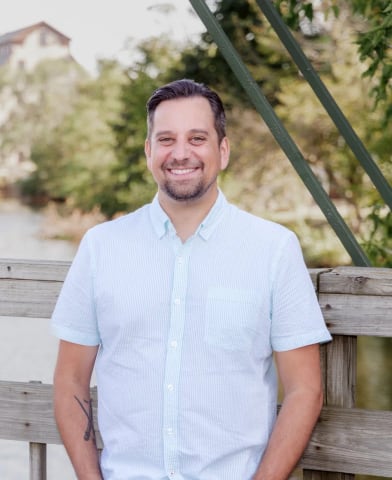
Brad Smith
D Democratic nominee for U.S. House, WI-06
Has not served in Congress
- On the ballot
- On the general election ballotNov 3, 2026 · Wisconsin US House 6
- Where to vote
- Find your polling place (opens in a new tab) · More ways to vote
- Top priorities
- Forward ★Together
- Flock Cameras, ALPR Tech and Community Privacy Policy
- Data Center Development and Community Protection
- Good Jobs and Fair Wages
- Healthcare
- Money
- $322.3K raised, $231K spent, $91.3K cash on hand (through Oct 14, 2026). Where it comes from
- Who gives
- 33% of individual money from donors at $200 or less · 97% from Wisconsin · largest committee giver INTERNATIONAL BROTHERHOOD OF ELECTRICAL WORKERS POLITICAL ACTION COMMITTEE, $5K
- Outside groups
- $29 supporting Smith
- Backed by
- National Education Association · Wisconsin Education Association Council · Wisconsin AFL-CIO and 44 more. As the campaign lists them
18 priorities from bradsmithforcongress.com, in the order they are listed there. Every heading and the text under it is copied exactly, as one passage for each page it is from, and links to that place on the page; hover a source to see which passage it opens.
Raise minimum wage, expand apprenticeships, and reward companies that create and expand jobs right here at home.
source ↗ (opens the page at this passage) · bradsmithforcongress.com
Heading as listed on bradsmithforcongress.com ↗ (opens bradsmithforcongress.com at this heading)
Lower costs, protect coverage for pre-existing conditions, and keep care close to home, from rural communities to large metros.
source ↗ (opens the page at this passage) · bradsmithforcongress.com
Heading as listed on bradsmithforcongress.com ↗ (opens bradsmithforcongress.com at this heading)
Increase access to tech schools, college, trades, apprenticeships, and lifelong learning so every worker can thrive.
source ↗ (opens the page at this passage) · bradsmithforcongress.com
Heading as listed on bradsmithforcongress.com ↗ (opens bradsmithforcongress.com at this heading)
Protect our water, energy grid, and local communities by requiring transparency, strong safeguards, and accountability for massive data center developments before they move forward.
source ↗ (opens the page at this passage) · bradsmithforcongress.com
Heading as listed on bradsmithforcongress.com ↗ (opens bradsmithforcongress.com at this heading)
Restore prevailing wage, strengthen Project Labor Agreements, and protect the right to organize.
source ↗ (opens the page at this passage) · bradsmithforcongress.com
Heading as listed on bradsmithforcongress.com ↗ (opens bradsmithforcongress.com at this heading)
As a responsible gun owner, I support common-sense safety measures such as universal background checks, red flag laws, and secure storage. These policies protect our children while respecting the Second Amendment.
source ↗ (opens the page at this passage) · bradsmithforcongress.com
Heading as listed on bradsmithforcongress.com ↗ (opens bradsmithforcongress.com at this heading)
Fair milk pricing, year-round legal workforce solutions, broadband on every farm, and policies that level the playing field so family farms can compete and thrive.
source ↗ (opens the page at this passage) · bradsmithforcongress.com
Heading as listed on bradsmithforcongress.com ↗ (opens bradsmithforcongress.com at this heading)
We’ll defend reproductive freedom and ensure women, not politicians, have the right to make their own healthcare choices.
source ↗ (opens the page at this passage) · bradsmithforcongress.com
Heading as listed on bradsmithforcongress.com ↗ (opens bradsmithforcongress.com at this heading)
Defend marriage equality, strengthen protections against discrimination and stand against political attacks on LGBTQ+ people. Everyone deserves the freedom to live safely, openly, and authentically.
source ↗ (opens the page at this passage) · bradsmithforcongress.com
Heading as listed on bradsmithforcongress.com ↗ (opens bradsmithforcongress.com at this heading)
We’ll grow Wisconsin’s renewable energy economy, creating good-paying local jobs while protecting our land and lakes for the next generation. That means investing in solar and wind, promoting clean water standards, and ensuring WI leads in clean energy transition.
source ↗ (opens the page at this passage) · bradsmithforcongress.com
Heading as listed on bradsmithforcongress.com ↗ (opens bradsmithforcongress.com at this heading)
Uncap the House so every vote counts, reduce the influence of big money, and rebalance power so everyday people are heard in Washington.
source ↗ (opens the page at this passage) · bradsmithforcongress.com
Heading as listed on bradsmithforcongress.com ↗ (opens bradsmithforcongress.com at this heading)
Heading as listed on bradsmithforcongress.com ↗ (opens bradsmithforcongress.com at this heading)
Automated license plate readers such as Flock cameras are positioned as tools that help law enforcement locate stolen vehicles, investigate serious crimes, and find missing or endangered people. Crucially, these systems also create major privacy concerns by creating detailed records of where all individuals travel, potentially allowing government agencies or individual officers to track people who are not suspected of any crime.
Recent cases across the country, including here in Wisconsin, have exposed egregious abuses of these systems, including law enforcement personnel allegedly using their access to track individuals for personal purposes. These are not abstract privacy concerns. They demonstrate what can happen when enormous amounts of location data are collected and made searchable without adequate legal restrictions, access controls, and independent oversight.
Technology capable of reconstructing a person’s movements must not be deployed without clear public rules, democratic oversight, strict controls on access, and substantial legal consequences for abuse. I also believe the aggregation and warrantless searching of this location data raises serious Fourth Amendment concerns regarding unreasonable government searches.
I support a moratorium on usage of automated license plate reader (ALPR) technology and networks (Flock, Axon, etc) until strong regulatory protections are in place. Protections must put citizens’ privacy first, strictly limit access and retention, prevent the creation of an unrestricted nationwide tracking network, require independent oversight, and give communities a choice in deciding whether this technology should operate in their community.
The regulatory policies I will pursue follow below.
1. Give Communities Control Over Surveillance Technology ↗ (opens bradsmithforcongress.com/flock-alpr-policy at this heading)
Local police departments must not be able to install or substantially expand large surveillance networks without public knowledge and approval.
I support requirements that communities:
- Receive advance public disclosure before automated license plate readers or similar surveillance technologies are purchased or deployed.
- Hold a public hearing explaining what technology is being proposed, what information it collects, how long information will be stored, who can access it, and what agencies can receive the data.
- Require affirmative approval from the elected local governing body before deployment, renewal, or major expansion.
- Allow communities to require a public referendum when residents want the decision made directly by voters.
- Require periodic reconsideration rather than allowing surveillance programs to continue indefinitely without review.
2. Limit Surveillance to Legitimate Law-Enforcement Investigations ↗ (opens bradsmithforcongress.com/flock-alpr-policy at this heading)
License plate databases should never be available for casually searching where someone has been.
I support requiring:
- A legitimate, documented, law-enforcement purpose for every search.
- A case number, incident number, or documented investigative justification tied to every database query.
- Judicial warrants for searches involving significant amounts of historical location information or access to privately operated ALPR networks where appropriate.
- Clear limits on which crimes and investigations justify allowable use of these systems.
- Human review before automated alerts alone are used as the basis for significant law-enforcement action.
3. Protect Innocent People's Location Data ↗ (opens bradsmithforcongress.com/flock-alpr-policy at this heading)
The majority of vehicles captured by these systems belong to people who are not suspected of wrongdoing - regular citizens going about their lives. Their location histories should never be stored indefinitely.
I support:
- Short automatic retention periods for data involving people who are not connected to an investigation, with a goal of approximately seven days wherever operationally practical.
- Longer retention only when information has been properly connected to an active investigation or legal proceeding.
- Preventing local vehicle-location records from automatically entering a nationwide searchable surveillance database.
- Strict restrictions on sharing data with federal agencies, other states, or outside jurisdictions unless there is a legitimate investigation and appropriate documented legal authorization.
- Prohibiting the use of ALPR systems to monitor constitutionally protected political activity, protests, religious activity, reproductive healthcare, or immigration status absent an independent lawful basis for investigation.
- Additional safeguards around sensitive locations such as private residences, schools, healthcare facilities, houses of worship, courts, shelters, and similar locations.
4. Require Independent Auditing and Accountability ↗ (opens bradsmithforcongress.com/flock-alpr-policy at this heading)
Every ALPR system should maintain a permanent audit trail showing:
- Who conducted a search.
- When the search occurred.
- What vehicle or plate was searched.
- The documented justification or associated case number.
- What agencies received or accessed the information.
Agencies using these systems should be subject to regular independent audits rather than relying exclusively on internal police review.
Communities should also have open access to regular public reports and disclosure showing overall search volume, outside-agency access, data-sharing activity, successful investigative uses, misuse investigations, disciplinary actions, and other information necessary to evaluate whether the system is providing legitimate public-safety value or being misused.
Intentional misuse should carry substantial legal consequences, including disciplinary action, loss of system access, and appropriate civil or criminal penalties when someone knowingly uses government surveillance systems for personal or unlawful purposes.
5. Put Strict Rules on Flock and Other ALPR Vendors ↗ (opens bradsmithforcongress.com/flock-alpr-policy at this heading)
Contracts with Flock or any other ALPR and related surveillance provider should require that:
- The local government entity retains ownership and control of its data.
- Vendors cannot sell location data.
- Vendors cannot independently share or repurpose government-collected data.
- Outside agencies and entities cannot automatically search local databases without authorization.
- Local government agencies have full control over retention periods and information-sharing settings.
- Vendors maintain strong cybersecurity protections and disclose breaches or unauthorized access immediately.
- Contracts allow communities to terminate service and permanently delete collected information with clear evidence of removal.
6. Establish Federal Privacy Standards While Enabling Stronger Local Protections ↗ (opens bradsmithforcongress.com/flock-alpr-policy at this heading)
Congress must establish baseline privacy and privacy protections for automated license plate readers and other location-tracking technologies.
Federal legislation should establish minimum baseline standards for:
- Data retention.
- Search justification.
- Warrants for sensitive historical searches.
- Interstate and federal information sharing.
- Public disclosure.
- Audit requirements.
- Vendor data practices.
- Cybersecurity.
- Protected activities and sensitive locations.
- Penalties for intentional misuse.
These standards would serve as a floor, not a ceiling. States and local communities then have the ability to adopt stronger privacy protections or prohibit the technology entirely as desired for their community.
source ↗ (opens the page at this passage) · bradsmithforcongress.com/flock-alpr-policy
The scale and speed of hyperscale data center development in our communities and across the country requires strong protections immediately.
These enormous facilities require extraordinary amounts of electricity and water, and often drive construction of new power plants, transmission lines, and other infrastructure. These impacts create long-term consequences for local ratepayers, taxpayers, communities, and our environment.
We cannot allow massive corporations to push these costs onto Wisconsin families and businesses, receive taxpayer-funded subsidies they do not need, or make decisions behind closed doors that leave our communities carrying the consequences for decades.
Before projects move ahead, communities must have full transparency about electricity and water demands, independent environmental and financial reviews, clear corporate responsibility for infrastructure costs, and a voice in whether these developments move forward.
I support strong, enforceable protections that put Wisconsin residents, our natural resources, and our communities first. That means making corporations pay their own way, protecting ratepayers and taxpayers, demanding transparency, and ensuring local communities retain control over their future.
1. Protect Families and Businesses From Higher Energy Costs ↗ (opens bradsmithforcongress.com/flock-alpr-policy-1 at this heading)
Families, farms, manufacturers, and small businesses should never be forced to subsidize the extraordinary electricity demands of massive data centers.
If a project creates the need for new transmission lines, generation, or other grid infrastructure, the companies creating that demand must pay for these costs….period.
Federal regulators should establish strong protections against shifting data-center-driven transmission costs onto existing customers. States should do the same for generation, distribution, and other utility costs under their jurisdiction.
When extraordinary corporate demand creates extraordinary infrastructure costs, the financial responsibility should be assigned to those driving the consumption.
2. Protect Ratepayers From Stranded Infrastructure ↗ (opens bradsmithforcongress.com/flock-alpr-policy-1 at this heading)
Communities and utilities can spend billions of dollars preparing for projected electricity demand that may never materialize. A data center can be announced, delayed, downsized, relocated, or canceled after utilities have already begun investing in infrastructure to serve it, as we saw with the Foxconn debable. Families should never inherit the bill in these scenarios.
Large developments that require substantial infrastructure investment should be required to provide guaranteed financial commitments, including appropriate upfront contributions, minimum demand commitments, credit requirements, bonds, guarantees, or other financial security.
If infrastructure is built around a corporation's promised future demand, that corporation should carry the financial risk if the promise disappears.
3. Require Full Transparency Before Projects Are Approved ↗ (opens bradsmithforcongress.com/flock-alpr-policy-1 at this heading)
Communities deserve the facts before governments approve projects or commit public resources.
For major data center developments, the public should be able to review the projections for:
- Electricity demand and annual energy consumption.
- Water withdrawals and actual water consumption.
- Water sources and cooling technology.
- New power generation, transmission lines, and other grid upgrades.
- Wastewater and environmental impacts.
- Backup generators and fuel requirements.
- Roads and other public infrastructure.
- Construction and permanent employment.
- Development phases and timelines.
- Public subsidies, tax incentives, and other government support.
- Who is expected to pay for required infrastructure.
Material changes to a project should require updated disclosure. The public should understand the impacts before government grants final approval or commits public resources.
4. Stop NDAs From Keeping Communities in the Dark ↗ (opens bradsmithforcongress.com/flock-alpr-policy-1 at this heading)
Legitimate trade secrets and cybersecurity information can be protected without allowing corporations to conceal the basic impacts of massive developments.
Non-disclosure agreements should not prevent government officials from informing residents how much electricity or water a project will use, what infrastructure will be required, what taxpayers or ratepayers could be responsible for, what public subsidies are being offered, or what environmental consequences are expected. Private agreements should never override the public's right to understand major commitments being made in its name.
5. Require Independent Impact Analysis ↗ (opens bradsmithforcongress.com/flock-alpr-policy-1 at this heading)
Communities should not have to rely solely on studies and projections produced by the corporation seeking approval.
Major developments should undergo independent analysis of their potential effects on:
- Residential and business utility rates.
- Electricity generation and transmission.
- Grid reliability.
- Water supplies and groundwater.
- Wastewater systems.
- Roads and other public infrastructure.
- Environmental resources.
- Long-term taxpayer and ratepayer exposure.
Developers should pay the reasonable cost of these reviews, while government or independent regulators select or approve the experts. Before billions of dollars and decades of infrastructure commitments are locked in, communities must have an independent factual assessment of what they are being asked to accept.
6. Protect Wisconsin's Water and Environment ↗ (opens bradsmithforcongress.com/flock-alpr-policy-1 at this heading)
Wisconsin's water is one of our greatest natural resources. It should never be treated as an unlimited resource for industrial development and consumption. Before approval, communities should know where a data center's water will come from, how much will be withdrawn, how much will actually be consumed, how demand could affect municipal systems, groundwater, private wells, rivers, lakes, and watersheds, and who will pay for required infrastructure.
Large withdrawals should receive appropriate hydrological and environmental review before approval. Policy should also drive developers toward water recycling, closed-loop and lower-water cooling systems, greater energy efficiency, clean energy, energy storage, waste-heat recovery, and technologies that reduce demands on the surrounding community and environment.
7. Make Transmission Planning Transparent ↗ (opens bradsmithforcongress.com/flock-alpr-policy-1 at this heading)
Massive projected increases in electricity demand can influence decisions to build transmission infrastructure costing billions of dollars and spanning multiple states.
Before major transmission projects driven in significant part by projected large-load growth move forward, regulators and the public should know:
- How much projected electricity growth comes from data centers and other very large users.
- Which proposed developments are included in those forecasts.
- How firm or speculative those projects are.
- How much electricity they are expected to require.
- What infrastructure would be needed without that additional demand.
- What infrastructure is being accelerated, enlarged, or built because of it.
- How those costs will be allocated.
The central question should be simple: Would this infrastructure, at this size and at this time, be necessary without the new demand driven by data centers? If not, the customers driving the additional need must carry their share of the cost.
8. Stop Tax Breaks and Corporate Subsidies for Data Centers ↗ (opens bradsmithforcongress.com/flock-alpr-policy-1 at this heading)
I oppose providing special tax breaks, subsidies, and financial incentives to attract or support massive data center developments. Many of these projects are backed by some of the wealthiest corporations and investors in the world, with billions of dollars available to finance their operations and expansion. Wisconsin taxpayers should never subsidize their growth.
That includes special tax exemptions, property tax abatements, direct grants, subsidized financing, or publicly funded infrastructure built primarily to serve these private developments. Our public resources should be invested in priorities that directly benefit Wisconsin residents, including schools, healthcare, public infrastructure, and essential community services.
Corporations with billions of dollars at their disposal should pay their own way. Wisconsin taxpayers should never be expected to help finance their expansion.
9. Hold Corporations Accountable for Existing Public Commitments ↗ (opens bradsmithforcongress.com/flock-alpr-policy-1 at this heading)
Where governments have already provided tax benefits, grants, financing, infrastructure, or other public assistance to data center developments, taxpayers deserve enforceable protections. Those agreements should include measurable commitments involving infrastructure responsibility, employment, energy and water use, environmental performance, transparency, labor standards, and long-term operations.
If companies receive public benefits based on promises they later fail to fulfill, government should have meaningful clawback authority to recover taxpayer funds or financial benefits.
Public commitments must come with enforceable accountability, and taxpayers should never be left paying for corporate promises that go unfulfilled.
10. Protect Workers and Require Honest Job Commitments ↗ (opens bradsmithforcongress.com/flock-alpr-policy-1 at this heading)
Massive data center developments can involve substantial construction work, but communities also deserve a clear accounting of the long-term employment these projects will actually provide. I support strong labor standards, including prevailing wages where applicable, registered apprenticeships, workplace safety protections, workforce-development partnerships, and domestic sourcing where practical.
Where public infrastructure funding is involved, these standards should be enforceable, and the corporations benefiting from that infrastructure should meet explicit employment and labor commitments. Developers should also be required to disclose realistic permanent employment projections, distinguishing temporary construction jobs from lasting positions.
11. Protect Local Control and Community Voice ↗ (opens bradsmithforcongress.com/flock-alpr-policy-1 at this heading)
Decisions this consequential should not be made behind closed doors or forced onto communities from Washington. The federal government has a responsibility to protect ratepayers, oversee interstate transmission, establish transparency requirements, and attach strong conditions to federal taxpayer support. Federal standards should establish a floor which states can further build upon for local protection.
Wisconsin should retain authority over utility regulation, water resources, state incentives, and matters within state jurisdiction. Local communities should retain authority over zoning, land use, development agreements, infrastructure, and whether a proposed project fits their community.
Congress should reject broad federal preemption that prevents states and communities from establishing stronger protections.
source ↗ (opens the page at this passage) · bradsmithforcongress.com/flock-alpr-policy-1
Working people built this country. They should be able to afford to live in it.
I support livable wages, stronger worker protections, and a tax system that stops giving the biggest breaks to the people already at the top. We should reward companies that create good jobs here in Wisconsin, not companies that ship jobs overseas and walk away from our communities.
If a corporation takes public money and then closes a plant, busts a union, or offshores jobs, there should be real consequences.
source ↗ (opens the page at this passage) · bradsmithforcongress.com/priorities-and-positions
Access to high quality healthcare must be a right of every citizen.
No one should go broke because they got sick. No family should have to drive hours because their local clinic closed. No senior should have to choose between groceries and prescriptions.
I support protecting and strengthening the Affordable Care Act, lowering prescription drug prices, expanding rural clinics and telehealth, and building toward universal coverage through a strong public option that actually gives people a lower-cost choice.
source ↗ (opens the page at this passage) · bradsmithforcongress.com/priorities-and-positions
Not everybody’s path looks the same, and that is a good thing.
College matters. So do the trades. So do apprenticeships, technical colleges, and mid-career retraining. We need to stop treating one path like it has more dignity than another.
The GI Bill helped me become the first man Smith in seven generations of my line to graduate from college. I want every Wisconsinite to have a real shot to build a good life, whether that means a four-year degree, a welding certificate, an apprenticeship, or starting over in a new field.
source ↗ (opens the page at this passage) · bradsmithforcongress.com/priorities-and-positions
Massive data center development in our communities is a significant concern. No community should be kept in the dark while these are being planned or left guessing about the impacts these massive data centers will have on its water, its electricity costs, or its environment. We need detailed regulatory hurdles, transparency requirements, and serious penalties for violations so citizens know they will not be harmed by these developments.
We must protect our people and our environment, while enabling communities discuss and decide what is best for them. Projects that move forward should support skilled local union labor, with local prevailing wages.
source ↗ (opens the page at this passage) · bradsmithforcongress.com/priorities-and-positions
Technology must never give government unchecked power to track the movement of regular citizens.
Automated license plate readers like Flock cameras may be useful for solving crimes but they also create searchable records of all our movements. Recent abuses, including here in Wisconsin, show the danger of deploying this technology without comprehensive legal protections.
I support a moratorium on the use of automated license plate reader tech and networks until comprehensive privacy safeguards are in place. Safeguards must include strict limits on access and data retention, documented justification for every search, warrants for sensitive historical searches, independent audits, restrictions on nationwide data sharing, and aggressive consequences for abuse.
Communities must also have a say before these surveillance systems are deployed on their streets. Public safety and privacy are not mutually exclusive. We must not give government unrestricted power to track ordinary citizens in the pursuit of enhancing law enforcement tools. Until comprehensive protections are in place, turn the cameras off.
source ↗ (opens the page at this passage) · bradsmithforcongress.com/priorities-and-positions
I support a serious transition to renewable energy and a cleaner economy.
That means growing solar and wind, supporting electrification, expanding electric vehicle adoption, and modernizing our infrastructure so Wisconsin is ready for the future. Done right, this creates jobs, lowers long-term energy costs, and helps keep more of our energy dollars here at home.
I also believe conservation is a core responsibility. We need to protect public lands, defend clean water, and preserve the woods, wetlands, and outdoor spaces that define Wisconsin. We should not have to choose between economic growth and protecting the places we hunt, fish, hike, and pass on to our kids.
My view is simple: build the future, protect the land, and leave Wisconsin better than we found it.
source ↗ (opens the page at this passage) · bradsmithforcongress.com/priorities-and-positions
Housing should be for families, not just investors.
I support building more affordable housing near jobs and schools, expanding practical options like duplexes and triplexes, protecting renters from predatory fees and extreme rent hikes, and pushing back on large investment firms that buy up homes and shut working families out of the market.
If you work hard and play by the rules, you should have a fair shot at owning a home.
source ↗ (opens the page at this passage) · bradsmithforcongress.com/priorities-and-positions
I am strongly pro-union.
Workers should have the freedom to organize, bargain, and earn fair wages. I support the PRO Act, prevailing wage protections, and project labor agreements because when public money funds big projects, those jobs should support skilled workers and local families.
Taxpayer dollars should never be used to help corporations undercut workers.
source ↗ (opens the page at this passage) · bradsmithforcongress.com/priorities-and-positions
Family farms are not just part of our economy. They are part of who we are.
I support fair milk pricing, stronger farm safety nets, investment in young farmers, better rural healthcare, expanded broadband, stronger infrastructure, and clean water protections that work with farmers instead of talking down to them.
Rural Wisconsin deserves more than campaign-season lip service. It deserves real investment and real respect.
source ↗ (opens the page at this passage) · bradsmithforcongress.com/priorities-and-positions