Loading this candidate’s profile from the FEC filings and campaign records.
Where They Stand is a nonpartisan guide to everyone running for Congress: their money, their own words and how incumbents voted. Find your ballot →
Candidates › OH-08 race › 2025–2026
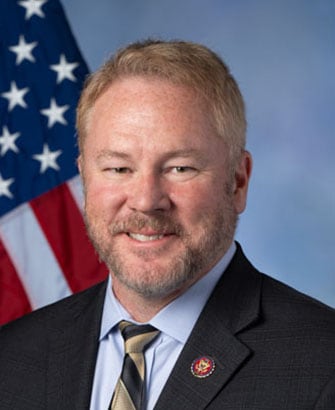
Warren Davidson
R Republican nominee for U.S. House, OH-08
Representative since 2016
Other accounts (2)
The same platforms’ other accounts, such as a congressional office’s or an earlier campaign’s.
- On the ballot
- Won the general electionNov 3, 2026 · 137,069 votes (56.7%)
- Where to vote
- Find your polling place (opens in a new tab) · More ways to vote
- Top priorities
- Economy
- Freedom
- Healthcare
- Justice
- National Security
- In Congress
- Representative since 2016 · votes with their party 89% of the time. See the record · Office phone 202-225-6205
- Money
- $757.2K raised, $853.6K spent, $298.3K cash on hand (through Oct 14, 2026). Where it comes from
- Who gives
- 4.5% of individual money from donors at $200 or less · 31% from Ohio · largest committee giver THE COUNCIL OF INSURANCE AGENTS & BROKERS POLITICAL ACTION COMMITTEE, $10K
- Outside groups
- $8.7K supporting, $185 opposing Davidson
- Sponsored most in
- Finance and Financial Sector, International Affairs, Taxation
9 priorities from davidsonforcongress.com, in the order they are listed there. Every heading and the text under it is copied exactly, as one passage for each page it is from, and links to that place on the page; hover a source to see which passage it opens.
Effective federal economic policy starts with the first principle: limited government constrained by the Constitution, free enterprise, private property, and sound money.
Limited Government. Historically, conservatives supported low taxes to “starve the beast”. With less of your money, the size and scope of government could be limited. Those days have passed because federal spending has become disconnected with federal revenue. They are pretending like scarcity is no longer a constraint, but even for the reserve currency there is a finite limit to debt. If something cannot continue, it eventually stops. We are approaching that historical limit.
Taxes. I oppose the income tax. It is an invasion of privacy. Did anyone pay you? Did you pay anyone? Did you buy or sell something? Did you make or lose money? Did you give or receive a gift? Was the gift too generous? Do you have kids? What kind of car? What kind of appliances… etc. Get out of my life or get a warrant! Moreover, it is an inefficient and ineffective means of taxation. Far better to tax consumption with exclusions for food, clothing, shelter, healthcare, etc.
Fiscal Discipline. The US economy is roughly $25 trillion. Federal revenue (tax collections) is roughly $5 trillion. Federal spending is roughly $7 trillion. If you have a 25-gallon barrel of water, take out 5 gallons, and add back 7 gallons you have overflow. Call that 2-gallon overflow inflation. Obviously, during COVID the spending overflow was far greater, so the impact has also been more substantial.
You can call it inflation, debased currency, growing inequality, or an affordability crisis, but understand the cause-and-effect relationship. Deficits destroy your money.
Regulation. Boxing isn’t much of sport if the fighters are hugging in the corner. The referee breaks them up and makes them compete. This is the most basic need for regulation within our own economy. Nevertheless, there is a seemingly irresistible temptation to have federal intervention into nearly everything. This is like an invasive weed and must be pruned back to make sure it doesn’t choke out healthy growth.
Trade. Read The Candlemaker’s Petition by Frederic Bastiat. This describes an ideal scenario for free trade. However, recognized that our companies aren’t simply competing with one another and with foreign companies. Some countries, particularly China, abuse trade agreements. China subsidizes select industries. They use their intelligence service to steal intellectual property. They dump cheap goods into the market to kill the market price, put competitors out of business, and protect their own subsidized companies. They block access to their own market. This is not free trade. Ross Perot famously warned NAFTA would result in a giant sucking sound as jobs fled our country for more favorable treatment overseas. With the benefit of hindsight, people still want to deny reality. Thankfully, President Trump is countering China and correct abuses by others as he seeks to unite a coalition to counter China and end the abuses of the World Trade Organization. As a former manufacturing company owner, I am thankful for the effort while working to improve the effectiveness.
Defense Production Act. The proper level of federal ownership of private companies is zero. Nevertheless, the Defense Production Act is being used to take equity positions. To understand why, look at China’s practices (described above) and think about critical minerals. There are no market prices for some of them because China controls the processing. If a foreign rival goes into business, China dumps inventory below market prices to kill the competitor. Knowing this would cause them to lose money, businesses cannot take on debt. Since it is in our strategic interest to reduce supply chain dependency on China for certain commodities, the US government needs to intervene by setting a market floor with tariffs, creating domestic demand, and then exiting once we have a functioning market. The Defense Production Act is a powerful and essential tool, dating back to 1950, but it has been abused. To reform the DPA, limit its scope, improve its effectiveness, and prevent ethical conflicts, I sponsored the bipartisan HR7688 which passed the Financial Services Committee unanimously, but has yet to receive a floor vote.
source ↗ (opens the page at this passage) · davidsonforcongress.com/issues
Religious Freedom. Thankfully, the first portion of the First Amendment protects religious freedom in America. Americans on the left have routinely and wrongly use the phrase separation of church and state out of context to prevent the free exercise of religion, as if faith should exist without corresponding works.
Under the Articles of Confederation, states and territories had different religious traditions (all Christian), 9 of 13 even included religious tests for office. Forming a United States of America under the US Constitution required a framework where the only compatible standard was to have no religious tests for federal office and no established religion by the federal government. The debate to defend religious freedom had already been resolved similarly in Rhode Island and more recently in Virginia just prior to the Constitutional Convention. Following the adoption of the 14th Amendment, all states must always protect the free exercise of religion.
Speech. George Washinton said it best, “If the freedom of speech is taken away, then dumb and silent we may be led, like sheep to the slaughter.” In an era where factions seek to criminalize speech, filter, moderate, or permission it, America is in peril. We must defend speech. The correct remedy for offensive speech is better speech.
Press. An honest free press is essential to defending freedom. Instead, we have the controlled media. We need to address media consolidation, coordination, and other anti-trust considerations.
2nd Amendment. The 2nd Amendment must always protect an individual American citizen’s right to keep and bear arms. Individual gun owners have saved countless lives, including their own, by exercising this right. I oppose gun control measures including red flag laws, expanded restrictions on lawful transfers, magazine bans, and others. National concealed carry reciprocity is the Constitutional standard. It says, “Keep and bear”, not “Keep and store”. I oppose limitations on suppressors and short-barrel rifles. Restrictions should be limited to people convicted of prior gun crimes, persons lawfully adjudicated mentally dangerous to themselves or others (Baker Act), and non-citizens.
Privacy. The right to privacy is the most infringed portion of the Bill of Rights. Without privacy, free speech is easily silenced. Without privacy, your right to transact can be filtered or blocked entirely without due process. Without respecting privacy, the federal government is creating a gun registry. Inspiring the Revolution, Samual Adams used more than 20 pseudonyms. To argue for and against adoption of the Constitution, the Federalists and Anti-Federalist published papers using pseudonyms. They meant to protect privacy. The Patriot Act, the Bank Secrecy Act, digital ID, and more are all examples of lawfare and must be paired back to restore a government small enough to fit within the Constitution.
The right to transact. The right to transact pre-dates any government. I am working to ensure your right to transact privately without surveillance or intermediation by a third party shall not be infringed without due process. Cash isn’t yet illegal, but it should always be available for “all debts public and private”, and other payment measures should have similar levels of privacy – no ability for a bank or the government to block your transactions or your access to your own money without due process.
General. In general, adults should remain free to do what they want provided it doesn’t hurt others. Some will quickly cite abortion. Abortion definitely hurts another person – a baby is literally killed. Some will cite drug use. Fentanyl is killing tens of thousands of Americans and leaving their families irreparably harmed. Stopping illicit drugs save lives. Please reach out to share your thoughts and questions!
source ↗ (opens the page at this passage) · davidsonforcongress.com/issues
When you want to solve a problem, you align responsibility with authority so there can be accountability. Did you know Congress does not have a Healthcare Committee? Congress diffuses healthcare across 3-4 committees. Clearly that isn’t working. In 1965, healthcare was about 6% of the US economy. Today, healthcare is nearly 25% of the US economy. This is not sustainable.
Here are solutions I support: ↗ (opens davidsonforcongress.com/issues at this heading)
- Establish a House Healthcare Committee. One Chairman. One question: Did you improve healthcare in America this Congress? If not, why should we keep this Chairman?
- Individuals should be able to choose the combination of care, coverage, and cost they find best for their own circumstances from a range of high-quality alternatives in a truly competitive market.
- End the antitrust exemption provided for health insurance companies.
- Make HSAs available to all people and make payment for health insurance an eligible expense.
- Require healthcare providers to provide one bill per visit and not multiple bills – which would eliminate surprise billing and apply pressure to contain costs.
- Require healthcare providers & pharmacies to standardize their pricing so they each pick their own price, but they must honor it for everyone. For example, if the final price paid by Anthem is currently lower than a small insurance company, or the cash price is lower than the insurance price, or Proctor & Gamble gets a better price than the local small business, plan A gets better pricing than plan B, that would end. One price.
- Most Favored Nation drug pricing. President Trump’s executive order makes sense. If pharmaceutical companies sell a drug for $10 in England and $800 in the USA, they can reset their price, but they can’t keep subsidizing the world at our expense.
- Eliminate gag rules for pharmacies.
- A safety net already ensures that no one goes without healthcare, but it needs to be reformed. There is no clear federal consensus. Providing Medicaid is not an enumerated power, so federalism offers a path forward. Eliminate most federal mandates and block grant all federal Medicaid on a per citizen basis. Among the many benefits, this eliminates the incentives for fraud where states were claiming credit for Medicaid payments to illegals because they get more federal dollars than they put in.
source ↗ (opens the page at this passage) · davidsonforcongress.com/issues
Don’t hurt people.
Don’t take their stuff.
Don’t tolerate those who do.
Justice is the measure of civilization. Ever since Cain killed Abel, people have struggled with this most basic condition. Consequently, we need judges. Who is right and who is wrong? What should be done about it?
Somehow justice has become a partisan issue. In cities like Cincinnati, in states like Illinois, and in federal office, Democrats have sided with criminals over peaceful citizens and waged war on policing.
Nevertheless, for most of southwest Ohio and most of the country, there is no partisan divide. Common sense prevails over crazy. Respecting civil liberties, we overwhelmingly support our police. We work to promote honest judges who apply the law rather than act as lawmakers. We expect our friends, families, and neighbors to do the same.
The Founding Fathers cared deeply about justice. Much of our Bill of Rights is devoted to this cause:
- The 1st Amendment protects freedom of assembly and the right to address grievances with elected officials.
- The 3rd Amendment specifically prevents the federal government from compelling citizens to host the military in their homes at their own expense. I believe the intent means citizens should not be compelled to host the government in their homes – or in their phones, computers, cars, bank accounts, etc.
- The 4th Amendment protects against unreasonable searches and requires probable cause for warrants.
- The 5th Amendment requires grand jury indictment for serious crimes, prohibits double jeopardy and compelled self-incrimination, guarantees due process of law, and requires just compensation for takings of private property.
- The 6th Amendment guarantees a speedy and public trial by an impartial jury, notice of the accusation, confrontation of witnesses, compulsory process for screening biased witnesses, and assistance of professional counsel.
- The 7th Amendment preserves the right to jury trial in certain civil suits, and limits re-examination of facts already tried by a jury.
- The 8th prohibits excessive bail, excessive fines, and cruel and unusual punishments. This enforces proportionality and humanity in pretrial detention, monetary penalties, and sentencing.
- The 10th Amendment was supposed to reserve most power for the states.
“Justice consists not in being neutral between right and wrong, but finding out the right and upholding it, wherever found, against the wrong.” – Theodore Roosevelt
source ↗ (opens the page at this passage) · davidsonforcongress.com/issues
“We the People of the United States, in Order to form a more perfect Union, establish Justice, ensure domestic Tranquility, provide for the common defense, promote the general Welfare, and secure the Blessings of Liberty to ourselves and our Posterity, do ordain and establish this Constitution for the United States of America.”
Identity. National security begins at our own borders. The United States was formed by sovereign states for the benefit of our own people. Our founding fathers established a republic (if we can keep it), not an empire, and not an economic zone with open borders. We must always protect America First.
Experience. As a former Army Ranger who served in the 75th Ranger Regiment, the 101st Airborne, the 3rd Infantry Division, and the Old Guard, and as a West Point graduate, representing Ohio’s 8th Congressional District, my national security philosophy is grounded in experience, the Constitution, and America’s national interest.
Peace through Strength. We don’t need to participate in every war we’re invited to, and we certainly don’t need to seek out more wars in more places. Nevertheless, there is a time for war. America’s military exists for one clear purpose: to fight and win America’s wars. It must be the strongest, best-equipped, and most lethal force on earth—ready to deter aggression and prevail decisively whenever required. Nevertheless, constant war has made us less free, less safe, and more burdened by debt. Endless war depletes our resources and diminishes our strength.
I support President Trump’s National Security Strategy. Published in November 2025, the National Security Strategy provides a coherent America First framework. It centers on a focused definition of national interest, peace through strength, a predisposition to non-interventionism with a high bar for the use of force, flexible realism that seeks commercial relations without imposing social or political change, and the primacy of sovereign nations.
Key points of alignment include:
- Border security and mass migration as core national security priorities: The Strategy correctly identifies the end of the era of mass migration and full control of borders and the immigration system as foundational. This matches my longstanding emphasis on securing the homeland, designating cartels as terrorist organizations, and treating illicit flows as direct threats.
- Trump Corollary to the Monroe Doctrine and Western Hemisphere focus: Reasserting American preeminence in the Hemisphere, denying external competitors any foothold, countering migration and narcotics, and adjusting military posture accordingly reinforces the primacy of defending the homeland and near-abroad—consistent with realist prioritization.
- Burden-sharing and alliance reform: The call for allies (especially in Europe/NATO) to assume primary regional responsibility, meet higher defense spending commitments, and end free-riding tracks with my advocacy for redeploying conventional forces from Eastern Europe, stopping further NATO expansion, and requiring Europeans to guard their own frontiers while the U.S. provides strategic enablers.
- China as the pacing challenge and Indo-Pacific emphasis: Prioritizing economic reciprocity, technological competition, deterrence over Taiwan and key sea lanes, and industrial revitalization aligns with recognizing China as the main grand-strategic competitor requiring resource trade-offs.
- Restraint and ending endless wars: The Strategy’s rejection of open-ended global commitments, preference for diplomacy and negotiated peace where possible, reduced emphasis on the Middle East as the perpetual center of policy and focus on decisive capability rather than permanent presence echo the rejection of neoconservative consensus and insistence on clear, achievable missions.
- Peace through strength and military readiness: Investment in a lethal, advanced force free of ideological distractions, nuclear deterrence, missile defense, and a revived industrial base supports equipping American warriors to win decisively when the national interest demands it.
- Economic security as national security: Reindustrialization, energy dominance, fair trade, supply-chain resilience, and protection of American workers strengthen the foundation of military power.
The Strategy’s overall direction of focused realism, America First prioritization, and restoration of strength provides a strong foundation for bipartisan congressional support of policies that keep America safe, free, and prosperous.
Differences. America is a republic, not an empire. I agree with President Trump’s and Pete Hegseth’s former position that Congress should authorize wars, and war in Iran should be avoided. Where differences of emphasis arise—particularly on the precise sequencing of congressional authorization for specific uses of force, they remain within the shared commitment to constitutional order, sovereignty, and avoiding moral hazards of undeclared or ill-defined missions. There are no free wars. If you cannot authorize or fund a war, does it really make sense to begin it? How will it be won?
source ↗ (opens the page at this passage) · davidsonforcongress.com/issues
Border security is national security. We founded a republic for ourselves and our posterity, not a global economic zone with open borders and a massive welfare state.
A secure border. I am a supporter of walls, fences, and other necessary infrastructure on our border that gives the United States complete control over entering and exiting our country.
Who is a citizen? Despite the recent SCOTUS opinion, when at least one parent is a US citizen, the child is a citizen. Whether you’re physically present in the US or not, when neither parent is a US citizen, the child should not be a citizen at birth. Use Prince William and Princess Catherine – future heirs to the British throne – for example. If while traveling to the US, Catherine gave birth to one of her babies, her child would clearly be a British citizen – a little prince or princess. Their child should not be an American citizen without an application. I am working to establish this as law.
Who can become a citizen? Only those born to a US parent or those who apply from their home country and enter the United States lawfully.
Who can enter and stay lawfully? With a secure border where all who enter America can be positively identified, with visa overstays effectively eliminated, I favor creating a new conditional visa.
People who present themselves to an embassy or consulate in their home countries could apply for a conditional 3-year visa that allows them to visit, live, work, or go to school in the USA. It would explicitly make them ineligible for all means tested programs or unemployment benefits, exclude them from birthright citizenship eligibility, and require immediate removal for felony offenses.
To obtain this visa, recipients would be required to provide valid, verifiable identification, not be a fugitive from justice, nor have any affiliations with terror or criminal organizations. At the end of three years, visa-holders would be eligible for Green Cards and follow the established path for citizenship.
Lastly, America should welcome helpful refugees from areas affected by US actions and direct other refugees to establish safe relocation closer to their home countries.
Deportations. Ask, tell, make. That’s the law enforcement protocol. Foreign nationals unlawfully present in the United States have been asked to leave. They have been told to leave and offered payment plus travel to get them to leave. Whenever and wherever illegal aliens are found to be unlawfully present in the USA, they are criminals and must be compelled to leave. Force should not be necessary, since we have asked and told, but force should be used justly and proportionally whenever and wherever other means have been resisted.
Sanctuary Cities and States. Make no mistake, sanctuary cities and states are in open rebellion to the sovereignty of the United States. Within their sanctuaries, they have effectively nullified federal authority over citizenship and lawful presence of foreign nationals in the United States.
Federal authority must prevail in this clear Constitutional crisis. States do have authority over many things – 10th Amendment. Citizenship and lawful presence of foreign nationals is not one of them. Open rebellion must end. While it persists, no sanctuary city or state should receive federal funds for any purpose. No international airport should operate in a sanctuary city or state. Illegal immigration undermines our sovereignty. All accomplices, beginning with Alejandro Mayorkas, must be charged, tried, and given long sentences upon conviction. Open rebellion cannot stand and, if escalation is necessary, the Insurrection Act is fully merited.
When the sovereignty of the United States was threatened by the Whiskey Rebellion, George Washington organized a militia force of 12,950 men and led them towards Western Pennsylvania, warning locals “not to abet, aid, or comfort the Insurgents aforesaid, as they will answer the contrary at their peril.” Thankfully, the rebellion ended peacefully and force wasn’t ultimately required.
The Civil War began when South Carolina responded to federal authority with force and their open rebellion continued until force compelled compliance.
source ↗ (opens the page at this passage) · davidsonforcongress.com/issues
I oppose any reduction in Social Security benefits for current recipients, including means-testing for eligibility. For current beneficiaries, the government required everyone to pay for a defective product. It’s effectively fraud if the government fails to provide what was already promised to current generations. Unfortunately, massive debt will likely be required beginning as early as 2032 to bridge the gap created by generations of inaction, but reforms for future beneficiaries can make the program viable.
While honoring current commitments on Social Security, the government needs to fix the product for future generations. For young people (under 21 for example), we could raise the retirement age, improve investing alternatives, and change withholdings to make Social Security solvent.
Under current budget models, the Congressional Budget Office predicts that in 2032 payroll withholdings no longer cover the cost of Social Security. Under current law, Congress is supposed to cut benefits by 20% in that event. Don’t worry, that won’t happen. Congress would close the Department of Defense first… That won’t happen either.
What will happen is a financial disaster for the US Treasury. More deficits, debt and debasement all the way to a crash site. Bankrupt nations are hard to defend, so we should change course immediately.
source ↗ (opens the page at this passage) · davidsonforcongress.com/issues
Sound money is essential to defending freedom.
Define Sound Money. Sound money means currency that serves as a stable store of value, an efficient means of exchange, and an immutable record of account. It protects the purchasing power of wage earners and savers rather than systematically transferring wealth through inflation and asset-price distortions.
The US Dollar (USD) has enjoyed the enormous privilege of being the world’s reserve currency. That status is not automatic, or permanent, and our current fiscal and monetary policy threatens our future as the global reserve currency. In 2020, I founded the Congressional Sound Money Caucus. It was obvious that Congress would keep massive spending, governments would compel less production due to forced closures, and the Federal Reserve would cover for it all (ultimately doubling the size of its balance sheet). Ongoing deficit spending has inflated asset prices, widened the wealth gap, and eroded the dollar as a store of value. Sound money is not a slogan; it’s the only sustainable future.
The Federal Reserve. The Fed has failed its dual mandate. Its asset purchases and balance-sheet expansion create monetary inflation that first shows up in asset prices (benefiting those who already own assets) and then in consumer prices that hit ordinary Americans hardest. By covering unlimited deficits—buying Treasuries and mortgage-backed securities—the Fed removes the natural market signal that would force fiscal discipline. An independent central bank’s job is to preserve sound money, not to paper over congressional overspending or engage in central planning. I support auditing the Fed, separating its regulatory functions from monetary policy (because regulatory tools create further distortions), and reforms that prevent it from automatically monetizing deficits. In extreme cases, if the institution cannot be reformed to prioritize sound money, more fundamental change may be required. The Fed should set policy based on market metrics consistent with price stability, not political convenience.
Interest Rates. Interest rates ultimately reflect two components: the time value of money (compensation for expected inflation so that purchasing power is preserved) and default risk. Both are trending up. Why then should you expect lower interest rates? The Federal Reserve influences certain rates and can distort markets, but the market ultimately prices risk. Artificially low rates and quantitative easing fueled the inflation we experienced; they also encourage malinvestment. I have repeatedly highlighted the perverse incentives created by interest on excess reserves (IOER/IER). Before 2008 the Fed did not pay banks interest on excess reserves; banks had to manage their own balance sheets and deploy capital. Today the Fed pays banks a risk-free rate (recently around 4.4%) simply to park reserves, effectively paying them not to lend into the real economy. That is why I introduced the Prohibition on IOER Act. When the Fed cuts its policy rate, long-term market rates can still rise if inflation or credit-risk expectations increase—exactly what we have seen. Command-and-control rate setting is not the same as a free-market price signal. Ending the subsidy to idle reserves and restoring market discipline would do more for productive lending and growth than repeated political pressure for rate cuts.
Central Bank Digital Currency (CBDC). Ban CBDC! Ban Digital ID! A central bank digital currency is programmable money that inserts government between citizens and their own money. It’s communist money for the digital age, corrupting money from its proper role (sound money) into a tool for surveillance, coercion, and control. Programmable money can be used to create conditional access to your money, transaction filtering, expiration dates, and social-credit-based permissions. Consequently, CBDC represents an existential threat to Western civilization and individual liberty. Every dystopian vision of the future depicts exactly this corruption of money.
I have introduced and supported legislation to ban the Federal Reserve from designing, developing, building, establishing, or outsourcing a CBDC (including “intermediated” or wholesale versions). Cash provides privacy and finality; any digital money must retain those characteristics through self-custody and peer-to-peer transfer without mandatory intermediaries or digital IDs. True permissionless systems can strengthen the dollar’s reach without creating a surveillance tool. Account-based systems that merely layer government control behind a private interface are still CBDCs in substance.
Defend Freedom. The right to transact privately, with self-custody and without an intermediary must be protected.
source ↗ (opens the page at this passage) · davidsonforcongress.com/issues
The family is God’s foundation for civilization. Good governments defend families.
Marriage. As a Christian, I view marriage as a sacrament between one man, one woman, and God. Within secular society, what others call marriage isn’t necessarily my business unless I am somehow compelled to participate in it or treat is as a Christian sacrament. For non-Christian adults, I consider these differences between individuals and God. Mutual respect means we can coexist without compelling one another to submit to the others’ views. The role of the federal government here is to preserve this balance.
Right to Life. God said to be fruitful and multiply. Every human life is precious and begins at conception and deserves protection until natural death. Abortion providers, including Planned Parenthood, should not receive taxpayer funds or grants from federal, state, or local governments. An ethical doctor should make every effort to save each life (mother & baby) under all circumstances.
Parental Rights. Parents act on behalf of their children until they become adults. Schools withholding information from parents is indefensible. Medical providers treating kids without parental consent is indefensible. There should be very few exceptions. Protecting kids should be the only exception and require legal action.
Welfare. Government is a poor substitute for family life. Nearly all means tested programs punish marriage, or even cohabitation. The impact on families has been devastating. When I say excessive government is bankrupting America financially and morally, this is one of the most abusive examples.
source ↗ (opens the page at this passage) · davidsonforcongress.com/issues