Loading this candidate’s profile from the FEC filings and campaign records.
Where They Stand is a nonpartisan guide to everyone running for Congress: their money, their own words and how incumbents voted. Find your ballot →
Candidates › MI-01 race › 2025–2026
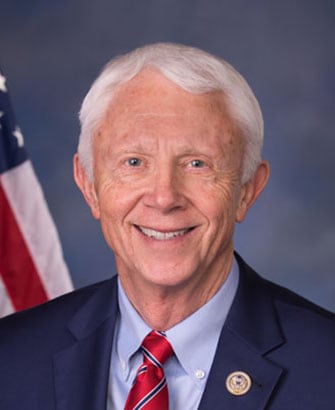
Jack Bergman
R Republican nominee for U.S. House, MI-01
Representative since 2017
Other accounts (1)
The same platforms’ other accounts, such as a congressional office’s or an earlier campaign’s.
- On the ballot
- On the general election ballotNov 3, 2026 · Michigan US House 1
- Where to vote
- Find your polling place (opens in a new tab) · More ways to vote
- Top priorities
- Broadband Access
- Veterans' Champion
- Supporting Michigan's Agriculture
- Protecting Life - From Birth to Natural Death
- Strengthening Our National Security
- In Congress
- Representative since 2017 · votes with their party 99% of the time. See the record · Office phone 202-225-4735
- Money
- $2.4M raised, $2.3M spent, $263.1K cash on hand (through Oct 14, 2026). Where it comes from
- Who gives
- 27% of individual money from donors at $200 or less · 49% from Michigan · largest committee giver NATIONAL PROPANE GAS ASSOCIATION PAC, $15K
- Outside groups
- $177.6K supporting, $352.7K opposing Bergman
- Sponsored most in
- Armed Forces and National Security, Health, Government Operations and Politics
8 priorities from bergmanforcongress.com, in the order they are listed there. Every heading and the text under it is copied exactly, as one passage for each page it is from, and links to that place on the page; hover a source to see which passage it opens.
One of the largest broadband investments in Michigan's First District came through the FCC's Rural Digital Opportunity Fund. The program committed approximately
$205.5 million to expand broadband to an estimated 87,503 homes and businesses across MI-01.
Bergman has also supported key federal programs bringing broadband infrastructure to rural communities, including the
USDA ReConnect Program and Distance Learning and Telemedicine Grants, while working with local providers and communities seeking federal support.
Congressman Bergman regularly works directly with broadband providers and the Federal Communications Commission to resolve delays, address grant and payment issues, and help move federal funding to projects serving Northern Michigan communities.
In 2020, as COVID-19 dramatically increased the need for reliable internet access, Bergman supported billions in emergency broadband funding for telehealth, broadband infrastructure, mapping, and keeping families connected.
source ↗ (opens the page at this passage) · bergmanforcongress.com/issues
Bergman has also introduced legislation specifically designed around the challenges of building broadband in Northern Michigan and the Upper Peninsula.
Rural Broadband Window of Opportunity Act, reintroduced in 2025, would require the FCC to prioritize certain broadband applications in areas with shorter construction seasons.
Anyone who has built anything in Northern Michigan knows why that matters - a bureaucratic delay before winter can mean losing an entire year of construction.
Bergman has also introduced the
Big Tech Accountability for Broadband Act, which would require major technology companies that benefit from expanded connectivity to contribute to the Universal Service Fund rather than continuing to place the burden primarily on telecommunications customers.
From supporting broadband infrastructure to cutting federal red tape, Congressman Jack Bergman will continue working to connect rural America and ensure Northern Michigan and the Upper Peninsula aren't left behind.
source ↗ (opens the page at this passage) · bergmanforcongress.com/issues
After 40 years in the United States Marine Corps, Rep. Jack Bergman has continued his commitment to those who served our Nation through his work on the House Committee on Veterans' Affairs.
Bergman has served on the Veterans' Affairs Committee since his first term in Congress and currently serves on both the Health and Oversight and Investigations Subcommittees. He has focused his work on improving Veterans' health care, expanding access to innovative treatments, strengthening community care, preventing Veteran suicide, protecting earned benefits, and holding the Department of Veterans Affairs accountable.
source ↗ (opens the page at this passage) · bergmanforcongress.com/issues
Bergman has helped turn bipartisan Veterans priorities into law.
His IMPROVE Well-Being for Veterans Act established a new VA community grant program designed to connect at-risk Veterans - including those outside the traditional VA system - with local organizations and suicide-prevention services. He also helped advance major reforms expanding Veterans' access to home and community-based care through the Elizabeth Dole 21st Century Veterans Healthcare and Benefits Improvement Act.
That law also included a pilot provision based on Bergman's Gerald's Law, named for Dickinson County Veteran Gerald "Jerry" Elliott. The provision addresses a gap that denied burial benefits to certain terminally ill Veterans who left a VA facility to receive VA-furnished hospice care at home. In 2026, Bergman reintroduced Gerald's Law to make that protection permanent.
source ↗ (opens the page at this passage) · bergmanforcongress.com/issues
Bergman continues to lead bipartisan efforts aimed at improving the quality of care Veterans receive, including:
- BEACON Act - Introduced in 2026 to expand access to innovative, evidence-based, non-pharmacological treatments for Veterans living with traumatic brain injuries.
- Veterans STAND Act - Bipartisan legislation to ensure Veterans with spinal cord injuries and disorders receive comprehensive annual evaluations and are considered for advanced assistive technologies, including powered exoskeletons and other treatments that can improve mobility and independence.
- NOPAIN for Veterans Act - Bipartisan legislation to expand Veterans' access to non-opioid pain management options covered by Medicare, providing additional alternatives to addictive opioid medications.
- RELIEVE Act - Bipartisan legislation aimed at closing a gap in VA community care and protecting Veterans' coverage for emergency medical treatment.
- CHOICE for Veterans Act - Legislation advanced by the House Veterans' Affairs Committee to crack down on unaccredited claims agents who exploit Veterans while establishing stronger safeguards for Veterans seeking assistance with disability claims.
source ↗ (opens the page at this passage) · bergmanforcongress.com/issues
Veteran suicide prevention has remained a central focus of Bergman's work. In 2026, Bergman introduced the bipartisan
Improving Mental Health Support for Servicemembers and Veterans Act, which would require a formal review of federal mental health programs for Veterans and transitioning servicemembers to identify gaps, duplication, and barriers to care.
He also led a bipartisan group of
29 Members of Congress in seeking full funding for VA suicide prevention and treatment programs in the FY27 appropriations process.
Bergman has additionally pushed federal agencies to expand Veterans' access to promising new treatments for mental health conditions and traumatic brain injuries.
source ↗ (opens the page at this passage) · bergmanforcongress.com/issues
Bergman's work extends beyond health care. His
GRACE for Military Survivors Act, introduced in 2026, would give surviving military family members more time and flexibility to make important financial decisions regarding survivor benefits following the loss of a servicemember.
Bergman has also fought to strengthen VA financial accountability, protect Veterans from fraud and predatory actors, and ensure taxpayer dollars intended for Veterans actually reach the men and women who earned those benefits.
From improving care for Veterans with traumatic brain injuries and spinal cord injuries to preventing suicide, protecting survivor benefits, expanding treatment options, and holding the VA accountable, Rep. Jack Bergman has made serving those who served a cornerstone of his work in Congress.
source ↗ (opens the page at this passage) · bergmanforcongress.com/issues
Agriculture is essential to the economy and way of life of Northern Michigan and the Upper Peninsula. Congressman Bergman has worked to support Michigan producers, protect family farms, expand markets, and fight unfair foreign competition.
source ↗ (opens the page at this passage) · bergmanforcongress.com/issues
In 2026, Congressman Bergman voted to pass the Farm, Food, and National Security Act, strengthening the farm safety net, specialty crop programs, crop insurance, agricultural trade promotion, and voluntary conservation programs.
Representing the Cherry Capital of the World, Congressman Bergman has made Michigan's cherry industry a priority. He helped secure more than $60 million in USDA purchases of surplus tart cherries, fought unfair trade practices involving subsidized Turkish cherry products, and pushed for additional assistance and research for Michigan growers.
source ↗ (opens the page at this passage) · bergmanforcongress.com/issues
Congressman Bergman helped lead 74 Members of Congress in introducing the bipartisan Family Farm and Small Business Exemption Act, protecting family farms and small businesses from being unfairly counted against students seeking financial aid.
Following the historic 2025 ice storm, he also worked with USDA and local producers to secure federal recovery assistance for farmers and forest landowners, including Michigan maple syrup producers.
source ↗ (opens the page at this passage) · bergmanforcongress.com/issues
Congressman Bergman strongly advocated for the USMCA, supported the Ocean Shipping Reform Act, and helped secure pandemic-era assistance for Michigan cherry and apple growers.
In 2026, he supported nationwide, year-round E15 ethanol sales to expand domestic demand for American-grown corn. He has also pushed USDA to increase purchases of American-grown specialty crops for schools, food banks, nutrition programs, and the Department of Defense.
source ↗ (opens the page at this passage) · bergmanforcongress.com/issues
Congressman Bergman has supported legislation to prevent entities connected to the Chinese government from purchasing American agricultural land and has fought to return management of the gray wolf to state wildlife professionals.
From cherries and apples to dairy, potatoes, maple syrup, forestry, and specialty crops, Congressman Bergman will continue fighting for Michigan producers, family farms, and the rural communities that feed America.
source ↗ (opens the page at this passage) · bergmanforcongress.com/issues
The first inalienable right recognized in the Declaration of Independence is the right to life. Congressman Bergman believes Congress has a responsibility to protect that right, including for the unborn, while supporting a culture that welcomes children and strengthens families.
Throughout his time in Congress, Congressman Bergman has consistently supported pro-life policies, including efforts to:
- Prevent taxpayer funding of abortion
and protect longstanding federal pro-life provisions. Congressman Bergman has supported legislation to prohibit federal funding for abortion and has fought to preserve the Hyde Amendment.
- Protect infants born alive following an attempted abortion.
In 2025, Congressman Bergman voted for the Born-Alive Abortion Survivors Protection Act, requiring appropriate medical care for children born alive following an attempted abortion.
- Protect conscience rights
for health care professionals who object to participating in abortion procedures.
- Support pro-life protections for families and taxpayers
through legislation and federal funding policy.
Congressman Bergman will continue working to protect life, defend conscience rights, and support policies that strengthen mothers, children, and families.
source ↗ (opens the page at this passage) · bergmanforcongress.com/issues
After 40 years in the United States Marine Corps, including service as a helicopter pilot in Vietnam and ultimately as a Lieutenant General and Commander of Marine Forces Reserve and Marine Forces North, Congressman Jack Bergman understands firsthand the responsibility that comes with sending America's sons and daughters into harm's way.
Congressman Bergman believes America's military must be strong enough to deter our adversaries and ready to decisively defeat any threat to our Nation. When our troops are called upon, they must have the training, equipment, leadership, and support necessary to accomplish their mission and return home safely.
source ↗ (opens the page at this passage) · bergmanforcongress.com/issues
Congressman Bergman serves on the House Armed Services Committee and was selected in 2025 to serve as
Chairman of the Subcommittee on Readiness, putting him in a key leadership position overseeing the readiness of America's Armed Forces.
As Chairman, Congressman Bergman has focused on rebuilding military readiness, improving maintenance of America's aircraft, ships, vehicles, and equipment, strengthening military infrastructure, cutting waste and bureaucracy, and ensuring our warfighters are prepared for the threats of today and tomorrow. In 2026, Congressman Bergman continued pressing military leaders on declining readiness rates and the need to properly maintain and sustain the equipment America already owns.
source ↗ (opens the page at this passage) · bergmanforcongress.com/issues
Congressman Bergman has helped shape and pass annual National Defense Authorization Acts to strengthen America's military and support the men and women who serve.
The
FY26 National Defense Authorization Act included major priorities Congressman Bergman championed as Readiness Chairman, including:
- Supporting a
3.8% pay raise for servicemembers and extending important bonuses and special pays.
- Modernizing America's military capabilities and strengthening the defense industrial base.
- Reforming defense acquisition to get needed technology and equipment into the hands of warfighters faster.
- Strengthening America's missile defense, nuclear deterrent, aircraft, submarine, and autonomous-system capabilities.
- Investing in military housing and quality of life for servicemembers and their families.
- Requiring greater accountability and transparency for PFAS cleanup at military installations, including
Camp Grayling and the former Wurtsmith Air Force Base.
Congressman Bergman has continued that work through the
FY27 NDAA, supporting investments in military readiness, servicemember pay, education, childcare, and America's national defense.
source ↗ (opens the page at this passage) · bergmanforcongress.com/issues
Northern Michigan and the Upper Peninsula play an important role in America's national defense.
Congressman Bergman has consistently fought for
Camp Grayling and Northern Strike, one of the Department of Defense's largest reserve-component exercises, bringing together thousands of servicemembers and partner forces for advanced joint training in Northern Michigan.
He has also worked to address PFAS contamination associated with military installations. In 2025, Congressman Bergman introduced the bipartisan
Military PFAS Transparency Act, requiring greater transparency and accountability from the Department of Defense regarding cleanup efforts at contaminated military sites.
Key provisions of that effort were incorporated into the FY26 NDAA, including requirements for cleanup plans, risk assessments, and safeguards affecting communities around Camp Grayling, Wurtsmith, and military installations nationwide.
source ↗ (opens the page at this passage) · bergmanforcongress.com/issues
Congressman Bergman has pushed to ensure the United States has the capabilities necessary to deter threats from China, Russia, Iran, terrorist organizations, and other adversaries.
As
Chairman of the House Armed Services Intelligence and Special Operations Subcommittee during the 118th Congress, Congressman Bergman oversaw critical national intelligence, counterterrorism, and special operations issues.
He also helped advance the FY25 NDAA, which strengthened America's ability to counter the Chinese Communist Party, enhanced intelligence and counterintelligence capabilities, strengthened biodefense preparedness, and supported Taiwan's ability to defend itself.
Following security breaches involving Chinese nationals at Camp Grayling during Northern Strike, Congressman Bergman also demanded greater accountability and stronger protections for sensitive American military installations.
source ↗ (opens the page at this passage) · bergmanforcongress.com/issues
Having commanded Marine Forces Reserve, Congressman Bergman understands the unique role America's Reserve Component plays in our national defense.
In 2026, Congressman Bergman helped lead the bipartisan
Duty Status Reform Act, legislation designed to simplify the nearly 30 different duty statuses currently affecting National Guard and Reserve servicemembers.
The legislation would streamline those classifications, improve consistency in pay and benefits, reduce administrative confusion, and make it easier for commanders to mobilize forces when America needs them.
source ↗ (opens the page at this passage) · bergmanforcongress.com/issues
Congressman Bergman's approach to national security is rooted in a simple principle:
source ↗ (opens the page at this passage) · bergmanforcongress.com/issues
Congressman Bergman believes every child deserves a quality education and that parents - not Washington bureaucrats - should have the strongest voice in deciding what's best for their children.
That means supporting educational freedom, whether families choose public, private, charter, career and technical education, or homeschooling.
Congressman Bergman has backed that commitment with action. He reintroduced the
School Resource Officer Funding Protection Act to protect school safety funding and helped lead the bipartisan
Family Farm and Small Business Exemption Act to ensure family farms and small businesses aren't unfairly counted against students seeking financial aid.
He has also supported efforts to increase transparency and prevent foreign adversaries like the Chinese Communist Party from influencing American schools.
Congressman Bergman will continue fighting for
parental rights, school choice, safe schools, and greater opportunities for every student to succeed.
source ↗ (opens the page at this passage) · bergmanforcongress.com/issues
America is a welcoming Nation, but we are also a Nation of laws. Congressman Bergman believes securing our borders is essential to protecting our communities, stopping the flow of deadly drugs, combating human trafficking, and defending our national security.
Congressman Bergman has consistently supported stronger border enforcement and immigration laws. He supported the
Secure the Border Act, comprehensive legislation to strengthen border security, reform the asylum process, increase Border Patrol resources, and address loopholes in our immigration system.
In 2025, Congressman Bergman supported the
Laken Riley Act, which expanded federal detention requirements for certain illegal immigrants charged with or convicted of specified crimes. The legislation was signed into law in January 2025.
Congressman Bergman also introduced the
VOICE Restoration Act to restore the Victims of Immigration Crime Engagement Office and provide resources and support to victims and families affected by crimes committed by illegal immigrants.
He also supported the
One Big Beautiful Bill Act, which provided major new investments in border security and immigration enforcement, including resources for border infrastructure, personnel, detention capacity, and efforts to stop fentanyl trafficking.
Congressman Bergman has also supported legislation to strengthen border technology, combat illegal entry, and ensure federal resources are focused on enforcing our Nation's immigration laws.
Congressman Bergman will continue fighting to secure America's borders, enforce our laws, stop the flow of fentanyl, and protect American communities.
source ↗ (opens the page at this passage) · bergmanforcongress.com/issues
We live here for a reason. Northern Michigan and the Upper Peninsula are home to some of the most beautiful land, water, forests, and wildlife anywhere in America. Congressman Bergman believes we have a responsibility to protect these resources while ensuring they remain accessible to the people who live, work, hunt, fish, and recreate here.
Congressman Bergman has consistently fought to protect and strengthen the
Great Lakes Restoration Initiative (GLRI) and helped introduce bipartisan legislation to extend the program through 2031 and increase authorized funding to
$500 million annually.
He has also been a leading voice in the fight to stop invasive carp from reaching the Great Lakes. In 2025, Congressman Bergman pushed to restart the
Brandon Road Interbasin Project, a critical barrier designed to prevent invasive carp from entering Lake Michigan, and continued pressing for federal action to move the project forward.
Congressman Bergman has also worked to:
- Protect Great Lakes fisheries from invasive species, including
sea lamprey and cormorants.
- Return management of the
gray wolf to state wildlife professionals.
- Protect access to
hunting, fishing, and recreational shooting on federal lands.
- Strengthen forest health and reforestation through the bipartisan
RNGR Support Act, including support for the J.W. Toumey Nursery in Michigan's First District.
- Secure assistance for
farmers and forest landowners recovering from the historic 2025 Northern Michigan ice storm.
From protecting the Great Lakes and our fisheries to maintaining healthy forests and defending access to Michigan's outdoors, Congressman Bergman will continue working to preserve our natural resources for generations to come.
source ↗ (opens the page at this passage) · bergmanforcongress.com/issues