Loading this candidate’s profile from the FEC filings and campaign records.
Where They Stand is a nonpartisan guide to everyone running for Congress: their money, their own words and how incumbents voted. Find your ballot →
Candidates › GA-04 race › 2025–2026
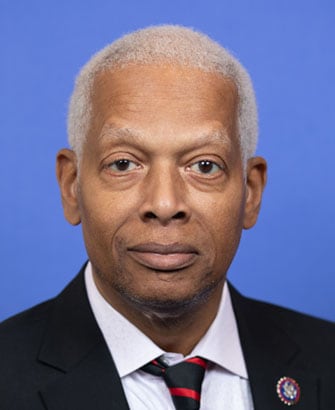
Henry C. "Hank" Johnson, Jr.
D Democratic nominee for U.S. House, GA-04
Representative since 2007
- On the ballot
- Won the general electionNov 3, 2026 · 0 votes (0.0%)
- Where to vote
- Find your polling place (opens in a new tab) · More ways to vote
- Top priorities
- IMMIGRATION
- Hank’s Court Reform Platform
- Armed Services & Veterans' Affairs
- Consumer Protection
- The Economy and Jobs
- In Congress
- Representative since 2007 · votes with their party 97% of the time. See the record · Office phone 202-225-1605
- Money
- $514.4K raised, $500.6K spent, $125.4K cash on hand (through Oct 14, 2026). Where it comes from
- Who gives
- 23% of individual money from donors at $200 or less · 70% from Georgia · largest committee giver AMERICAN FEDERATION OF STATE COUNTY & MUNICIPAL EMPLOYEES P E O P L E, $10K
- Outside groups
- $10 supporting Johnson,
- Sponsored most in
- Law, Health, Transportation and Public Works
12 priorities from hankforcongress.com, in the order they are listed there. Every heading and the text under it is copied exactly, as one passage for each page it is from, and links to that place on the page; hover a source to see which passage it opens.
Congressman Johnson is a staunch supporter of DACA, TPS, refugees and immigrants who come to America for a better life for themselves and their children.
source ↗ (opens the page at this passage) · hankforcongress.com
Congressman Johnson is an ally and champion of the immigrant community. He is a staunch supporter of DACA, TPS, refugees and immigrants who come to America for a better life for themselves and their children. He has zero tolerance for children being held in cages at detention centers, where they sleep on the cold floor. Congressman Johnson has zero tolerance for children being jailed and deprived of a human touch. He opposed a Trump policy that deprives children of ever being reunited with their parents. Hank also opposes the Trump administration’s militarization of ICE, which has terrorized immigrant communities and murdered people in the streets. Congressman Johnson believes we are a nation of laws, but we are also a nation of immigrants. Most Americans have parents or grandparents who immigrated to this country, and we know the hardships they faced, from learning the language to dealing with prejudice. He also believes we must secure our borders, require employers to comply with common-sense laws that benefit our country, and expect immigrants who want to stay here to do what people who have come to our shores in search of a better life have always done: obey our laws, learn our language, and pay taxes, while earning the chance to become tax-paying American citizens.
source ↗ (opens the page at this passage) · hankforcongress.com/congressman-hank-johnson-on-the-issues/immigration
Justice under the law is a fundamental tenet of our Democracy. That is why the framers of our Constitution established the Judicial Branch as a co-equal branch of our government. In their wisdom and as part of the checks and balances that exist between the Legislative, Executive and Judicial branches, the framers assigned to the legislature the task of establishing the federal court system and funding its operations. The President, upon the advice and consent of the Senate, appoints the justices and judges who apply the rule of law to do justice.
The justice system of our country has worked well over the centuries, but today public approval and confidence in our judiciary is down to historically low numbers. Only 54% of Americans have “a great deal” or “a fair amount” of trust in the judicial branch. The number is even lower for the United States Supreme Court, where only 40% approve of the job it is doing. The recent revelations about Justice Clarence Thomas and his wife Ginni will no doubt drive those numbers lower.
My fellow citizens, the time has come for Congress to take action to build public confidence in our judiciary. That is why I have a comprehensive plan to reform our courts and restore justice, accountability and trust.
To protect access, I introduced, and the House passed the H.R. 963, the FAIR Act, which stops the enforcement of forced arbitration clauses that have blocked workers and consumers from having their day in court in front of a jury.
If you agree that everyday people should have the right to a trial by a jury of their peers, then sign our petition demanding that the Senate pass the FAIR Act. Visit CourtReformNow.com.
To ensure justice and accountability, I have introduced H.R. 4766, the Supreme Court Ethics Act. No longer can we accept the fact that U.S. Supreme Court Justices should be exempt from being covered by the same Code of Conduct that all other federal judges are bound to follow.
To ensure civil rights for the 30,000 employees of the federal judiciary, I have introduced H.R. 4827, the Judiciary Accountability Act, which extends civil rights laws to the very judiciary that enforces the civil rights laws on everyone else. The Judicial Branch should not be exempt from the civil rights laws that apply to everyone else, and we must ensure that our judiciary employees have strong statutory rights and protections against discrimination, sexual harassment, retaliation, and other forms of workplace misconduct.
Over the past 30+ years, the nation’s population has markedly increased, the internet has led to globalization of our economy, and life has become much more complicated. Despite the explosion of civil and criminal litigation, Congress has failed to pass legislation creating more judgeships to keep up with demand, resulting in justice delayed and justice denied. That is why I introduced H.R. 4886, the District Court Judgeships Act, which will alleviate the backlog by creating 203 new district court judgeships.
Article III, Section 1 of the Constitution empowers Congress to set the size of the Supreme Court with a simple bill. In fact, Congress has set the size of the Court seven times before. Thomas Jefferson added a seat to undo his predecessor’s partisan bid to steal one. Abraham Lincoln, Ulysses S. Grant, and the Reconstruction Congress changed the Court’s size three times to help defeat white supremacy. Expanding the Court is the only way to ensure that the American people get to choose the world we want to live in. Anything less leaves the future of our nation, our planet, and our fundamental civil rights at the whims of a far-right supermajority that is hostile to democracy itself. That is why I introduced H.R. 2584, the Judiciary Act to expand the size of SCOTUS to 13, so that there is one justice to preside over 1 of 13 Circuits, so.
One of the reasons why public confidence in the work of SCOTUS is so low is because of the dark money interest groups that have driven the Court to the extreme right. To get at this problem, Rep. Johnson is working with Senator Sheldon Whitehouse in filing H.R. 6266, the AMICUS Act, which will bring transparency to amicus-based judicial lobbying for the first time.
While the words “equal justice under law” might be written in stone above the Supreme Court, these recent events have made clear that we can’t take those words for granted. That is why I introduced H.R. 7426, the 21st Century Courts Act, which would significantly enhance the accountability and transparency of the federal judiciary by instituting a comprehensive suite of reforms.
I’ve also introduced H.R. 5844, the bipartisan The Open Courts Act, which would modernize and secure the federal judiciary’s court records system (called CM/ECF) and make federal court records freely available to the public.
I introduced H.R. 7647, The Supreme Court Ethics, Recusal, and Transparency (SCERT) Act, which requires justices of the Supreme Court to adopt and follow a code of ethics, places transparency standards on gifts and travel, codifies recusal standards and requires the court to disclose lobbying and dark money interests before it. That bill passed the Judiciary Committee and will be voted before the full House of Representatives soon.
Lastly, in an effort to restore legitimacy and independence to the nation’s highest court, I recently introduced The Supreme Court Tenure Establishment and Retirement Modernization (TERM) Act, which would establish term limits for Supreme Court justices while preserving constitutional protections for judicial independence in decision making. Under the TERM Act, a new justice would take the bench every two years and spend 18 years in active service.
source ↗ (opens the page at this passage) · hankforcongress.com/hanks-court-reform-platform
Congressman Hank Johnson believes in honoring and supporting the men and women who serve in the U.S. military. He consistently advocates for diplomacy first while ensuring that American forces are fully equipped and that veterans receive the best possible support. Hank has voted to sustain critical services for veterans, introduced legislation to honor military families, and supported bills extending benefits to veterans and their families. His ongoing work includes championing legislation to provide access to services and funding that reflect the sacrifices of our service members.
source ↗ (opens the page at this passage) · hankforcongress.com/congressman-hank-johnson-on-the-issues/armed-services-veterans-affairs
Congressman Johnson has always been a champion for “the little guy.” From his post on the Judiciary Committee, he continues to introduce legislation designed to level the bargaining and legal playing field between consumers and service and product providers. In March 2022, his bipartisan Forced Arbitration Injustice Repeal (FAIR) Act (H.R. 963) that re-establishes everyday Americans’ 7th Amendment right to seek justice and accountability through the court system, passed the House of Representatives. Congressman Johnson supports increasing funding of and oversight on the part of the Consumer Product Safety Commission (CPSC). He has called for quality control and safety assurance mechanisms in any trade agreements.
source ↗ (opens the page at this passage) · hankforcongress.com/congressman-hank-johnson-on-the-issues/consumer-protection
Hank has delivered over $350 million of federal investment in Fourth District job creation since January 2009, including $98 million to save over 1,000 teaching jobs in DeKalb, Rockdale, Newton and Gwinnett counties.
source ↗ (opens the page at this passage) · hankforcongress.com
Congressman Hank Johnson has consistently championed policies to strengthen the economy and uplift working Americans. He’s supported job-creating legislation, including the Bipartisan Infrastructure Package and investments in projects and training programs for local industries in Georgia’s 4th District. Hank led efforts to increase wages by voting for the Raise the Wage Act and co-sponsored critical job-supporting bills like the Summer Jobs Act and the Federal Jobs Guarantee Development Act. He has also backed legislation that protects consumers, ensures fair wages, and safeguards families from financial exploitation. Congressman Johnson opposes the Trump administration’s arbitrary mass firing of federal employees. Going forward, he remains committed to creating jobs, extending unemployment benefits when needed, protecting workers’ rights, and supporting middle-class tax relief.
source ↗ (opens the page at this passage) · hankforcongress.com/congressman-hank-johnson-on-the-issues/economy-and-jobs
Congressman Johnson believes that high-quality education should be a right, not a privilege, for all Americans. He is committed to addressing inequalities within the education system, increasing funding for public schools, and making higher education more affordable and accessible. Hank has introduced and supported legislation to secure resources for schools, protect students from abusive loan practices, and enhance access to arts, music, and technical education programs. Congressman Johnson strongly opposes the Trump administration’s cuts to the Department of Education and the attempts to dismantle it. Moving forward, he will continue to advocate for increased teacher pay and equitable funding for under-resourced schools to ensure every student has the chance to succeed.
source ↗ (opens the page at this passage) · hankforcongress.com/congressman-hank-johnson-on-the-issues/education
Congressman Hank Johnson is committed to advancing a clean, sustainable energy future by advocating for investments in renewable energy, strengthening energy infrastructure, and ensuring equitable access to affordable and reliable power for all Americans.
source ↗ (opens the page at this passage) · hankforcongress.com/congressman-hank-johnson-on-the-issues/energy
Hank will fight the GOP at every step as they attempt to take access to affordable healthcare away from millions of Americans and stand his ground to protect consumers and empower ordinary Americans seeking affordable health insurance.
source ↗ (opens the page at this passage) · hankforcongress.com
Congressman Johnson is committed to ensuring that every American has access to affordable, quality health care. Throughout his career, he has championed legislation to expand access to health services, protect public health, and uphold consumer protections. He has consistently advocated for the Affordable Care Act (ACA), which expanded Medicaid, provided coverage for young adults, and capped lifetime health benefits limits, bringing critical resources to Georgians. The ACA has funded millions in grants for maternal and child health, school-based health centers, and family health information services across Georgia. Congressman Johnson also supports efforts to combat PFAS contamination, protect vulnerable communities for parasitic diseases, and pursue additional funding for Georgia’s PeachCare program. Congressman Johnson strongly opposes the Medicaid cuts in the Big, Ugly Bill, which cut access to healthcare for 17 million Americans. Congressman Johnson also opposes the Trump administration’s attacks against the CDC, which endanger the health of the American public. Looking ahead, he will continue to advocate for a public health insurance option, push for greater consumer protections, and support increased investments in health care research. Congressman Johnson strongly believes healthcare is a human right, not a privilege.
source ↗ (opens the page at this passage) · hankforcongress.com/congressman-hank-johnson-on-the-issues/health-care
As the former chair and now ranking member of the Judiciary Subcommittee on Courts, Intellectual Property, Artificial Intelligence, and the Internet, Congressman Johnson is the leading voice in the House on court reform — particularly the Supreme Court. Even before the 6-3 right-wing supermajority took control of the court, Rep. Johnson proposed legislation to expand the Supreme Court (Judiciary Act); require that the justices follow a code of ethics, transparency, and recusal standards (SCERT Act); and establish term limits for justices (TERM Act). Rep. Johnson has also introduced legislation to ensure that employees of the federal judiciary have strong statutory rights and protections against discrimination and workplace misconduct (JAA).
source ↗ (opens the page at this passage) · hankforcongress.com/congressman-hank-johnson-on-the-issues/justice-civil-liberties-government-accountability
Congressman Johnson is dedicated to strengthening national security, supporting service members, and protecting democratic values at home and abroad. He has been a vocal advocate for congressional oversight of military actions, voting to limit unauthorized use of military force. Congressman Johnson supports an end to Trump’s war in Iran, believing it to be a senseless, unconstitutional war. His focus on human rights is reflected in initiatives like his recognition of Israel’s campaign in Gaza as a genocide and his support for recognizing the rights of refugees. Congressman Johnson supports sustaining Ukraine’s fight to protect its democracy and sovereignty. Congressman Johnson also cosponsored legislation to combat sex trafficking globally, support the 9/11/ Commission’s recommendations, and hold North Korea accountable. Congressman Johnson will continue promoting diplomatic solutions, transparent governance, and policies that address climate change’s impact on security.
source ↗ (opens the page at this passage) · hankforcongress.com/congressman-hank-johnson-on-the-issues/national-security-foreign-policy
Congressman Johnson believes safeguarding the environment is essential to securing a high quality of life for future generations. He acknowledges the urgent need to combat climate change, protect clean water, and curb harmful industrial practices. Hank has consistently earned top marks for his environmental record and cosponsored bills to fund environmental justice, improve infrastructure, and conserve public lands. He remains committed to advancing legislation that protects ecosystems, enhances EPA regulation, and promotes clean energy independence.
source ↗ (opens the page at this passage) · hankforcongress.com/congressman-hank-johnson-on-the-issues/the-environment
Congressman Hank Johnson is a staunch advocate for seniors, supporting legislation to reduce prescription drug costs and protect Social Security. His vote for the Inflation Reduction Act empowers Medicare to negotiate drug prices, caps monthly insulin costs at $35, and limits out-of-pocket expenses to $2,000 annually, offering affordable payment options and free vaccines for seniors. Congressman Johnson also supported expanding Medicare assistance for low-income individuals. He has helped thousands of constituents secure benefits for housing, health care, and veterans’ services, recovering over $59.5 million in benefits for Georgia’s 4th District. He co-sponsored bipartisan bills like the Protecting Seniors Access to Medicare Act and the Medicare Part B Improvement Act, which improve Medicare services and reduce costs.
source ↗ (opens the page at this passage) · hankforcongress.com/congressman-hank-johnson-on-the-issues/seniors-and-social-security