Loading this candidate’s profile from the FEC filings and campaign records.
Where They Stand is a nonpartisan guide to everyone running for Congress: their money, their own words and how incumbents voted. Find your ballot →
Candidates › VA-04 race › 2025–2026
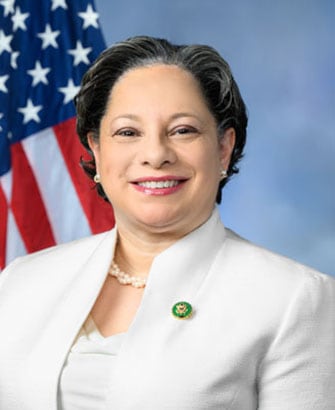
Jennifer L. McClellan
D Democratic nominee for U.S. House, VA-04
Representative since 2023
Other accounts (2)
The same platforms’ other accounts, such as a congressional office’s or an earlier campaign’s.
- On the ballot
- On the general election ballotNov 3, 2026 · Virginia US House 4
- Where to vote
- Find your polling place (opens in a new tab) · More ways to vote
- Top priorities
- Economic Opportunity
- Education and Childcare
- Energy & Environment
- Healthcare Is a Right. Not a Privilege.
- National Security
- In Congress
- Representative since 2023 · votes with their party 99% of the time. See the record · Office phone 202-225-6365
- Money
- $1.5M raised, $1.4M spent, $222.8K cash on hand (through Oct 14, 2026). Where it comes from
- Who gives
- 15% of individual money from donors at $200 or less · 78% from Virginia · largest committee giver AMERICAN CRYSTAL SUGAR COMPANY POLITICAL ACTION COMMITTEE, $10K
- Outside groups
- $2.1K supporting McClellan
- Sponsored most in
- Health, Science, Technology, Communications, Environmental Protection
6 priorities from jennifermcclellan.com, in the order they are listed there. Every heading and the text under it is copied exactly, as one passage for each page it is from, and links to that place on the page; hover a source to see which passage it opens.
Lower Costs. Real Results. ↗ (opens jennifermcclellan.com/issue/economic-opportunity at this heading)
Hardworking Americans shouldn’t have to choose between keeping the lights on, filling a prescription, or putting food on the table. Jenn believes a strong economy works for everyone. She’s been fighting to bring costs down and build an economy that works for everyone.
Lowering Health Care Costs for Every Virginian: Everyone deserves the peace of mind that when they get sick, they can get the care they need when they need it without going bankrupt. No one should skip an appointment or dose because they can’t afford it. Jenn has consistently fought to lower health care costs for everyone. She cosponsored legislation to lower prescription drug prices for American families and rein in pharmaceutical price gouging, voted to strengthen price transparency across the healthcare system, fought to extend enhanced premium tax credits under the Affordable Care Act and prevent millions of Americans from losing their health insurance.
Keeping Utility Bills in Check: Rising energy costs impact everyone, and hit low-income families hardest. As a member of the House Energy & Commerce Committee, Jenn pushes for clean energy and energy-efficiency investments that reduce household utility bills and fights back against shortsighted policies that spike costs today. As a Virginia state senator, she authored the bipartisan Affordable Energy Act to the State Corporation Commission’s authority to lower electric rates when utilities would otherwise overcharge customers. In Congress, Jenn cosponsored the Power for the People Act to protect consumers from the rising energy costs caused by data centers and the rapid demand for AI.
Expanding Housing Options: Virginia’s housing shortage drives up rent and pushes families out of the communities they’ve built their lives in. Jenn has worked at the state and federal level to expand the supply of affordable housing. Through the annual appropriations process, she secured $1,666,279 for YWCA Richmond’s Transforming Lives project, funding the construction of at least 40 new residential units with wraparound services for domestic violence survivors facing housing insecurity. Jenn cosponsored the Make Housing Affordable and Defend Democracy Act, which rescinds $175 billion in unaccountable slush funds from President Trump’s draconian immigration crackdown and redirects them to tackle America’s housing affordability crisis.
Putting Money Back in Families’ Pockets: Jenn voted for the bipartisan Tax Relief for American Families and Workers Act, which expanded the Child Tax Credit to provide direct financial relief to working families. She has also fought Republican efforts to gut SNAP benefits that over 447,000 Virginia families depend on to put food on the table.
source ↗ (opens the page at this passage) · jennifermcclellan.com/issue/economic-opportunity
Every Child Deserves a Strong Start ↗ (opens jennifermcclellan.com/issue/education-and-child-care at this heading)
Jenn’s mom was the 12th of 14 children and the first member of her family to go beyond the 8th grade and graduate college. She went on to become an early childhood educator and college counselor. Jenn’s dad was a third-generation educator. Jenn’s parents taught her that a good education is the key to economic opportunity, thriving communities, and a healthy democracy. Jenn has carried those values with her throughout her life and career in public service, from the General Assembly to the halls of Congress. Now as a mother to school-age children, she has made expanding access to early learning and supporting students at every stage of their education a defining priority of her work in Congress.
Expanding Access to Affordable Childcare The childcare crisis is an economic crisis. Jenn co-introduced the Child Care Infrastructure Act and the Child Care Workforce Development Act alongside Democratic Whip Katherine Clark. These two bills would build new early learning facilities, increase the supply of qualified childcare providers, and directly lower costs for families. The Workforce Development Act would fund student loan repayment of up to $6,000 annually for early childhood educators, incentivizing more people to enter and stay in this critical field. Jenn has also championed legislation to expand access to short-term childcare for mothers and their families during pregnancy, birth, and the postpartum period.
Defending Public Education When the Trump Administration signed an executive order effectively dismantling the Department of Education, Jenn pushed back immediately. She has fought Republican efforts to cut Head Start and Title I funding that Virginia schools depend on, and she will continue to oppose any effort to defund the public education system that millions of Virginian children rely on.
Supporting Students from Preschool Through College Jenn voted for the bipartisan Tax Relief for American Families and Workers Act, which expanded the Child Tax Credit to give families more financial breathing room. She introduced the ACCESS Act to improve the affordability of college students’ transportation, and the GRAD Act to support graduate-level STEM programs at Historically Black Colleges and Universities (HBCUs), like Virginia State University and Virginia Union University in her district, and Predominantly Black Institutions (PBIs) by expanding their access to federal funding.
Investing in Education in Virginia’s Fourth Jenn puts her appropriations work to use for students in the district. She secured funding for Southside Virginia Community College’s technical training programs and the Commonwealth Center for Advanced Manufacturing, investments that connect Virginia students to in-demand careers. She also secured millions for Virginia Commonwealth University and Virginia State University to enhance AI research infrastructure, cybersecurity curriculum, and more.
source ↗ (opens the page at this passage) · jennifermcclellan.com/issue/education-and-child-care
Cleaner Energy. Healthier Communities. A Livable Planet.
The choices we make today about energy and the environment will shape the world our children inherit. Jenn believes we can meet growing energy demand while building a cleaner, more sustainable future, lowering energy costs, protecting public health, and ensuring no community is left behind. She’s been fighting for that future throughout her time in public office.
Fighting for Clean Energy and Lower Bills As a member of Energy & Commerce’s Energy Subcommittee, Jenn is on the frontlines of the fight to expand clean energy and energy efficiency, reduce pollution, and protect consumers. She has consistently opposed Republican legislation designed to roll back clean energy and energy efficiency investments and hand polluters a free pass. While in the General Assembly, she championed the Virginia Clean Economy Act to make Virginia the first state in the South with a 100% clean energy standard.
Protecting Communities from Toxic Contamination Jenn has fought to tackle PFAS, or “forever chemicals,” in communities across Virginia. Jenn introduced the Department of Defense PFAS Discharge Prevention Act to require military installations to stop PFAS from reaching ground and drinking water systems, before leading a bipartisan push to include it in the FY2025 National Defense Authorization Act. Jenn has also used the appropriations process to bring millions in federal funding back to Virginia’s Fourth Congressional District to address PFAS contamination in Henrico County and asbestos in Prince George County’s water systems.
Preserving Our Communities and Public Lands Jenn fought to protect Virginia communities and public lands from the Mountain Valley Pipeline Southgate Extension and called on the U.S. Department of Energy to incorporate climate, environmental justice, and public health considerations into liquified natural gas (LNG) export decisions. She continues to oppose Republican efforts to prioritize corporate polluters over the health and safety of Virginia families. In Congress, she co-led the introduction of the FERC Greenhouse Gas and Environmental Justice Policy Act of 2025 to require the Federal Energy Regulatory Commission (FERC) to assess and mitigate the impacts that natural gas pipelines approved by FERC under the Natural Gas Act (NGA) will have on climate change and Environmental Justice communities.
source ↗ (opens the page at this passage) · jennifermcclellan.com/issue/energy-and-environment
Every Virginian deserves access to quality, affordable healthcare without fear of losing coverage or drowning in medical debt. Jenn has spent her career protecting and expanding access to care and defending the programs millions of Virginians depend on. That fight continues in Congress every single day.
Defending the Affordable Care Act Jenn has been a fierce defender of the Affordable Care Act (ACA), voting against every Republican effort to gut it and pushing to extend ACA enhanced premium tax credits to keep coverage affordable for millions of Americans. When Congressional Republicans let those credits expire, Jenn sounded the alarm, anchoring Congressional Black Caucus Special Order Hours, cosponsoring legislation, and refusing to let the story go untold. She voted against the Republican funding bill that failed to protect those credits.
Protecting Medicaid Jenn knows Medicaid is a lifeline. She helped lead the fight to expand Medicaid in Virginia during her time in the General Assembly, delivering coverage to 400,000 Virginians. When Congressional Republicans caved to the Trump Administration’s bidding and pushed their Big Ugly Law to cut $880 billion from Medicaid over 10 years, Jenn was on the frontlines on the Energy and Commerce Committee. She fought back during a 26-hour markup to protect healthcare coverage for hundreds of thousands of Virginians, keep our rural hospitals open, and protect Virginia’s state budget from millions in additional costs.
Advancing Maternal and Public Health As a member of the Energy & Commerce Committee, Jenn works daily on the health issues that matter most to Virginians: maternal and infant health, mental health, substance use disorders, and more. After nearly losing her life during childbirth, she brings personal urgency to the fight against maternal mortality, introducing legislation, building coalitions, and refusing to let these disparities be ignored.
Safeguarding Reproductive Justice Jenn believes how, when, and whether to become parents should be left to patients and their providers. Throughout her time in elected office, she has fought to ensure her constituents have the ability to make their own decisions in consultation with their healthcare providers. In the General Assembly, she led passage of the Reproductive Health Protection Act, the first proactive expansion of abortion rights in Virginia’s history. In Congress, she chairs the Reproductive Freedom Caucus’ Abortion Rights and Access Task Force and cosponsored the federal version of her landmark state legislation.
source ↗ (opens the page at this passage) · jennifermcclellan.com/issue/healthcare
Heading as listed on jennifermcclellan.com/issue/healthcare ↗ (opens jennifermcclellan.com/issue/healthcare at this heading) · “Healthcare” on jennifermcclellan.com/2022-legislative-agenda ↗ (opens jennifermcclellan.com/2022-legislative-agenda at this heading)
Protecting American Servicemembers and National Security Interests ↗ (opens jennifermcclellan.com/issue/national-security at this heading)
Jenn is honored to represent many military servicemembers and veterans in the 4th Congressional District. Jenn served on the House Armed Services Committee during the 118th Congress, where she was responsible for ensuring the United States Military and our servicemembers had what they needed. She continues that work in Congress, focusing on crucial policy intersections between her committee’s jurisdiction and national security considerations, including in energy, technology, and more.
Keeping Our Commitments to Allies Jenn believes that America’s strength is amplified by our alliances. She was the driving force behind a resolution prohibiting any president from withdrawing the United States from NATO without congressional approval, which was signed into law as part of the FY2024 National Defense Authorization Act. She has also been an outspoken critic of the Trump Administration’s haphazard approach to conflicts around the globe, including its latest war of choice in Iran.
Improving Quality of Life for Servicemembers and Their Families As a member of the House Armed Services Committee, Jenn secured all seven of her amendments in the FY2025 NDAA markup, including the Improving TAP for Guard and Reserve Servicemembers Act, which creates a dedicated transition pathway for Guard and Reserve members returning to civilian life. She has consistently pushed the Department of Defense to provide more affordable childcare, mental health services, and housing for military families.
Strengthening Defense Without Partisan Games Jenn believes the National Defense Authorization Act should be a national defense bill, not a vehicle for culture war politics. Every year, she has fought back against Republican amendments to strip DEI programs from the Armed Forces, restrict servicemembers’ access to reproductive healthcare, and abandon our global allies.
source ↗ (opens the page at this passage) · jennifermcclellan.com/issue/national-security
Voting Rights Are Personal. Every Voice Matters.
Jenn grew up hearing firsthand accounts from her parents and grandparents growing up in the Jim Crow South. Those stories have driven her commitment to protecting and expanding voting rights her entire career, from her first bill in the Virginia House of Delegates to her work in Congress today.
Fighting to Protect Voting Rights Jenn is a proud cosponsor of the John R. Lewis Voting Rights Advancement Act to restore the full protections of the Voting Rights Act of 1965, which has been gutted by decades of court decisions, including Shelby v. Holder and the most recent Louisiana v. Callais decision. Jenn also serves on the Task Force on Strengthening Democracy, where she fights to protect voting rights, ensure election integrity, reduce dark money in politics, and combat voter suppression.
Calling Out Modern-Day Voter Suppression When House Republicans advanced the SAVE Act, legislation requiring burdensome and expensive documents to register to vote, Jenn called it out as a modern-day poll tax. She led the Congressional Black Caucus’s Special Order Hour to expose the bill’s voter suppression intent, pointing out that eligible ID documents cost anywhere from $12 to over $1,000. Jenn will keep up the fight to combat voter suppression and protect Virginians’ rights at the ballot box.
Fighting for Our Democratic Principles Jenn’s commitment to voting rights runs the length of her career. She introduced her first voting rights bill in 2006 to make absentee voting easier in Virginia. As a state senator, she championed the Voting Rights Act of Virginia to make Virginia the first state in the South to enact its own comprehensive voting rights law. In Congress, she has co-led a package of eight bills to strengthen our democracy, including measures to expand language access at the polls and protect the voting rights of unhoused Americans. She also led her colleagues in introducing the Deceptive Practices and Voter Intimidation Prevention Act to address the rise in deceptive voter suppression, misinformation practices and intimidation in federal elections.
source ↗ (opens the page at this passage) · jennifermcclellan.com/issue/voting-rights