Loading this candidate’s profile from the FEC filings and campaign records.
Where They Stand is a nonpartisan guide to everyone running for Congress: their money, their own words and how incumbents voted. Find your ballot →
Candidates › HI-02 race › 2025–2026
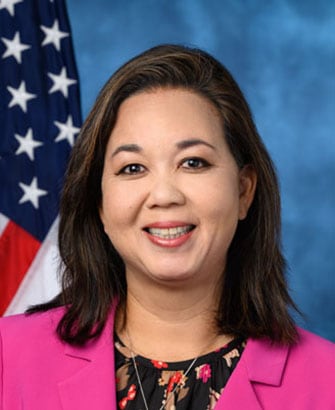
Jill N. Tokuda
D Democratic nominee for U.S. House, HI-02
Representative since 2023
Other accounts (2)
The same platforms’ other accounts, such as a congressional office’s or an earlier campaign’s.
- On the ballot
- Won the general electionNov 3, 2026 · 132,713 votes (55.6%)
- Top priorities
- ACCESS TO QUALITY HEALTH AND MENTAL HEALTH SERVICES
- AFFORDABILITY
- COMBATING CLIMATE CHANGE AND PROTECTING OUR ENVIRONMENT
- DISASTER PREPAREDNESS
- EDUCATION
- In Congress
- Representative since 2023 · votes with their party 99% of the time. See the record · Office phone 202-225-4906
- Money
- $985.9K raised, $982.4K spent, $487K cash on hand (through Oct 14, 2026). Where it comes from
- Who gives
- 13% of individual money from donors at $200 or less · 69% from Hawaii · largest committee giver INTERNATIONAL BROTHERHOOD OF ELECTRICAL WORKERS POLITICAL ACTION COMMITTEE, $10K
- Outside groups
- $10 supporting Tokuda
- Sponsored most in
- Agriculture and Food, Native Americans, Health
10 priorities from tokudaforhawaii.com, in the order they are listed there. Every heading and the text under it is copied exactly, as one passage for each page it is from, and links to that place on the page; hover a source to see which passage it opens.
Our communities need improved access to healthcare and mental health services. Your zip code or the size of your paycheck should not dictate what services you are able to access or the quality of care you receive.
Across Hawaiʻi, there is a need for enhanced healthcare and mental health services. In our rural and neighbor island communities, those needs are even more urgent.
In Congress, I’ve worked collaboratively with colleagues from both sides of the aisle to re-establish the Bipartisan Rural Health Caucus. This initiative is committed to creating solutions to improve healthcare access in underserved areas throughout the country. Traveling across the district, I see time and again the difficulties faced by residents, especially in areas where it may take more than an hour to reach a healthcare facility.
Our efforts are focused on areas like expanding the capacity of rural hospitals and increasing the number of healthcare professionals through innovative approaches, such as mobile health clinics and enhanced telehealth services.
In addition, I was proud to stand with many of my colleagues to sponsor the Medicare for All Act of 2023. Getting sick or injured should never be the reason why someone goes into crippling debt. Healthcare is a human right, and I will continue to fight for this critical legislation until equitable healthcare is a reality for all.
source ↗ (opens the page at this passage) · tokudaforhawaii.com/issues
Heading as listed on tokudaforhawaii.com/issues ↗ (opens tokudaforhawaii.com/issues at this heading)
I’m a working mom raising two teenage sons, and I feel the same urgency so many Hawaiʻi families do. We need relief from the rising cost of living, and our children deserve the chance to build their futures here at home.
Hawaiʻi families are getting squeezed from every direction. I’m taking on Trump’s costly tariffs and fighting to suspend the federal gas tax to save you money at the pump.
For working parents, childcare can cost so much that going back to work simply doesn’t make financial sense. I’m fighting to make childcare more affordable and expand the Child Tax Credit and Earned Income Tax Credit so working families can keep more of what they earn.
And no one who works hard should have to work two or three jobs just to make ends meet. Hawaiʻi’s working families are the backbone of our economy. I’ll fight for higher wages and workers’ rights to organize and collectively bargain. I’ll always stand with Hawaiʻi’s workers.
I support making higher education more affordable, including relief from crushing student loan debt. Because ultimately, this is about more than making ends meet today. I want Hawaiʻi to be a place where my sons, and all of our keiki, can afford to stay, build their futures, and one day raise families of their own.
My commitment to affordability isn’t just a campaign promise, it’s reflected in who I answer to. When politicians cozy up to powerful corporate interests, working families pay the price through higher costs, less competition, and policies that put profits ahead of people. That’s why I don’t take a dime of corporate PAC money.
I answer to the people of Hawaiʻi, and I’ll always put you first.
source ↗ (opens the page at this passage) · tokudaforhawaii.com/issues
Heading as listed on tokudaforhawaii.com/issues ↗ (opens tokudaforhawaii.com/issues at this heading)
Aggressive action needs to be taken to address climate change impacts and increase renewable energy production.
Hawaiʻi is in a climate crisis. Accelerated sea-level rise is threatening our infrastructure, with roads and homes increasingly at risk of oceanic erosion. We’re witnessing continued extreme weather patterns and rising ocean temperatures that are severely impacting our coral reefs and marine life.
Yet, it’s our unique island environment that also provides us with strength and opportunity. Hawaiʻi is ideally situated to be a leader in renewable energy, harnessing resources like solar, wind, and hydropower. The shift to clean energy is not just an environmental imperative; it’s an economic one, offering the potential for job growth in clean energy sectors. Environmental policies can and should be drivers of economic prosperity.
The significant military presence in our islands also presents opportunities through the Biden Administration’s initiative for the Department of Defense to lead in renewable energy and reduce carbon emissions. This creates a chance for local partnership and innovation.
It’s essential to preserve the beauty and sustainability of our islands for both our keiki and our economy.
source ↗ (opens the page at this passage) · tokudaforhawaii.com/issues
Heading as listed on tokudaforhawaii.com/issues ↗ (opens tokudaforhawaii.com/issues at this heading)
I am dedicated to fortifying Hawaiʻi’s disaster preparedness, ensuring our communities are resilient, well-equipped, and ready to face the challenges posed by climate change.
The recent West Maui fires have underscored the critical importance of robust disaster preparedness in Hawaiʻi. As climate change continues to exacerbate extreme weather conditions, including heightened fire risks, it’s imperative that our communities are equipped to respond effectively to these emergencies. My focus is on enhancing our state’s readiness through comprehensive planning, resource allocation, and community education.
I am committed to securing federal funding specifically for disaster preparedness, ensuring that our first responders, state and county governments, and community organizations have the necessary tools and resources to handle such crises. This includes investing in advanced firefighting equipment, improving emergency communication systems, and providing training for emergency personnel.
Moreover, community education and engagement are vital. I advocate for programs that educate residents about preventive measures, emergency response protocols, and recovery resources. Strengthening community resilience involves a collective effort, where every individual is aware and prepared.
In light of the devastating impact of the fires on Maui, I am dedicated to ensuring that Hawaiʻi is not only ready to respond to immediate threats but also equipped to mitigate the long-term risks posed by climate change. Our approach to disaster preparedness must be as dynamic and resilient as the challenges we face, ensuring the safety and well-being of our residents.
source ↗ (opens the page at this passage) · tokudaforhawaii.com/issues
Heading as listed on tokudaforhawaii.com/issues ↗ (opens tokudaforhawaii.com/issues at this heading)
Funding quality public education for students of all ages is one of the most valuable investments for the future of Hawai‘i because a well-educated population is the foundation of a thriving community.
Our families deserve universal access to free, quality public education for children of all ages. This encompasses early childhood and preschool education, community college, four-year universities, and post-secondary workforce training and certification programs.
Investing in education from an early age is crucial. It not only improves student achievement throughout their educational journey but also levels the playing field for all students, leading to higher earned incomes and broader societal benefits.
Job training and workforce pipeline development are essential for nurturing new industries and creating good-paying jobs. These initiatives are key to ensuring that our children can envision and build their future right here in Hawai‘i. To this end, providing universal access to free community college and specialized workforce training programs is vital. These educational pathways are instrumental in shaping tomorrow’s workforce and bolstering our economy. Through these efforts, we can ensure that Hawaiʻiremains a place of opportunity and innovation for all its residents.
source ↗ (opens the page at this passage) · tokudaforhawaii.com/issues
Heading as listed on tokudaforhawaii.com/issues ↗ (opens tokudaforhawaii.com/issues at this heading)
In 2022, over $1.2 million in dark money and negative campaign ads poured into our islands in an attempt to buy this seat. This isn’t what democracy should be about.
Elections must empower people, not money. To demonstrate my commitment to this principle, I have refused to accept corporate PAC money from day one of my campaign. My determination to overturn Citizens United is driven by the clear harm it does to our democracy, enabling unchecked spending by corporations and the wealthy.
I actively support crucial campaign finance reforms at the federal level, including the For the People Act and the DISCLOSE Act. These are comprehensive pieces of legislation that not only ensure elected officials prioritize the public interest, but they also target everything from anti-corruption to voting reforms designed to enhance access and curb the overpowering influence of big money in politics.
My stance is clear: democracy must prioritize every voice equally and protect the electorate’s power from being eclipsed by special interests and deep pockets. This fight for campaign finance reform is more than a policy position; it’s a commitment to the very heart of democracy, ensuring our electoral system represents and serves every citizen fairly.
source ↗ (opens the page at this passage) · tokudaforhawaii.com/issues
Heading as listed on tokudaforhawaii.com/issues ↗ (opens tokudaforhawaii.com/issues at this heading)
Securing every available federal dollar for Hawai‘i is a top priority for me.
In Congres, I work hard every day to ensure Hawai‘i receives its fair share of federal support. This has never been more important than in the wake of the Maui fires. Working alongside county, state, and federal government leaders, we’ve worked hard to maximize these funds to benefit our families, individuals, businesses, and communities.
It’s crucial that we capitalize on every federal opportunity, especially in areas that help families like child nutrition programs, where Hawai‘i has in the past missed out on approximately $200 million. These funds not only support crucial nutrition programs but also have the potential to boost our local agriculture, encouraging the purchase of local produce.
I am committed to continuing to explore every avenue to secure federal funds that can make a real difference for families striving to thrive in Hawai‘i. This effort is more than just bringing money home; it’s about ensuring that every dollar is used effectively to strengthen and support our communities.
source ↗ (opens the page at this passage) · tokudaforhawaii.com/issues
Heading as listed on tokudaforhawaii.com/issues ↗ (opens tokudaforhawaii.com/issues at this heading)
The need for housing our local families can afford is more urgent than ever. That’s why I’m leading the fight to stop outside investors from buying up our homes and farmland and pricing local families out. In Congress, I co-led the Stop Wall Street Landlords Act and introduced the Farmland for Farmers Act to help keep our homes and land in the hands of the people and communities who call these islands home.
But we also need to build and preserve more housing people can actually afford. I’m working to bring home federal resources to expand affordable housing for seniors and essential workers, help families displaced by natural disasters, and work with the military to meet more of its own housing needs and ease pressure on our local housing market.
source ↗ (opens the page at this passage) · tokudaforhawaii.com/issues
Heading as listed on tokudaforhawaii.com/issues ↗ (opens tokudaforhawaii.com/issues at this heading)
How many lives do we have to lose before Republicans in Congress act on gun reform?
As a mother, the epidemic of gun violence in our country deeply affects me. It’s heartbreaking and unacceptable that our children aren’t safe in schools, and that ordinary activities like grocery shopping, attending church, or going to work have become dangerous due to rampant gun violence. The time to end this violence is now.
As a member of the Gun Violence Prevention Task Force, I’ve advocated for nationwide gun reform measures including banning assault weapons and high-capacity magazines, mandating comprehensive background checks for all gun purchases and transfers, addressing the proliferation of “ghost guns,” and implementing Red Flag Laws to enable the removal of guns from individuals in crisis.
As a state senator, I supported legislation banning bump fire stocks and multi-burst trigger activators, making their possession a Class C felony. We also mandated the immediate surrender of firearms and ammunition from individuals disqualified from gun possession due to mental illness or psychiatric admissions, as even a single day can be too long for such individuals to have access to firearms. These are all initiatives I support on the federal level.
My commitment to fighting for safer communities through effective and innovative gun reform legislation remains unwavering. We must take decisive action to ensure public safety and prevent further tragedies caused by gun violence.
source ↗ (opens the page at this passage) · tokudaforhawaii.com/issues
Heading as listed on tokudaforhawaii.com/issues ↗ (opens tokudaforhawaii.com/issues at this heading)
I’m committed to ensuring that our girls do not grow up with fewer freedoms than their mothers and grandmothers had, particularly in terms of their fundamental right to make their own health decisions.
The Supreme Court’s decision to overturn Roe v. Wade remains one of the biggest threats to women across our country. Reproductive decisions are deeply personal and should remain in the hands of women, not dictated by politicians.
In my first term in Congress, I continued that vow and opposed all efforts by the House Republican majority to further restrict women’s healthcare, including by limiting access to mifepristone. I also cosponsored The Women’s Health Protection Act which would codify the right to abortion care and the Right to Contraception Act which prevents federal, state, and local government entities from restricting access to or inhibiting the sale of contraceptives. Everyone should have access to the reproductive healthcare they need, and I will keep fighting until every person has the freedom to make decisions about their own body, life, and future, without interference from politicians.
source ↗ (opens the page at this passage) · tokudaforhawaii.com/issues
Heading as listed on tokudaforhawaii.com/issues ↗ (opens tokudaforhawaii.com/issues at this heading)