Loading this candidate’s profile from the FEC filings and campaign records.
Where They Stand is a nonpartisan guide to everyone running for Congress: their money, their own words and how incumbents voted. Find your ballot →
Candidates › South Dakota U.S. Senate race › 2025–2026
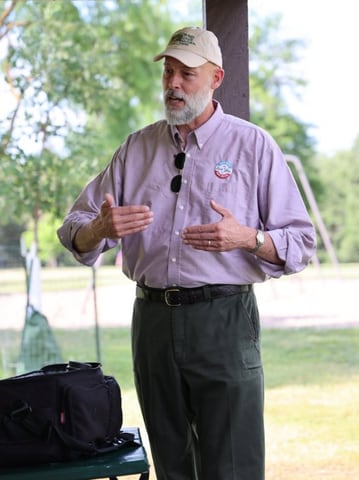
Brian Bengs
I Independent nominee for U.S. Senate, South Dakota
Has not served in Congress
- On the ballot
- On the general election ballotNov 3, 2026 · South Dakota US Senate
- Where to vote
- Find your polling place (opens in a new tab) · More ways to vote
- Top priorities
- My Vision
- Why Independent
- Unrig The Tax Code
- Balance The Budget & Pay Down The Debt
- Target & Eliminate Corruption
- Money
- $1.9M raised, $1.8M spent, $69.7K cash on hand (through Oct 14, 2026). Where it comes from
- Who gives
- 48% of individual money from donors at $200 or less · 19% from South Dakota · largest committee giver NO SURRENDER FUND, $10K
- Outside groups
- $670.8K supporting, $375.5K opposing Bengs
- Polling
- 46% in the latest poll (Emerson College) · trails Mike Rounds by 20.6 points on average. The polls
20 priorities from bengsforsouthdakota.com, in the order they are listed there. Every heading and the text under it is copied exactly, as one passage for each page it is from, and links to that place on the page; hover a source to see which passage it opens.
A state and country where all citizens can fully participate in our democracy and enjoy the liberty to lead a life of meaning and purpose—whatever that means to each of them.
The best way to pursue my vision is through consistent adherence to these bedrock principles:
source ↗ (opens the page at this passage) · bengsforsouthdakota.com/what-i-believe
- Primary Elections Favor Extremism: Closed or low-turnout primaries empower the most dogmatic voters which pushes candidates away from the center and punishes bipartisanship.
- Safe Districts Reduce Accountability: Both parties use gerrymandering to reduce or eliminate the risk of general election loss. Primary challenges are the only actual threat to incumbents which further reinforces extremism. Party leaders use a potential primary challenge to ensure obedience to a national agenda.
- Incentives Reward Obstruction: Party leaders gain politically from blocking the other side’s agenda, even if it leads to dysfunction. Gridlock can be celebrated and framed as proof that the other party “can’t govern.”
- Donor & Activist Pressure: Each party is heavily influenced by donors, interest groups, and activist bases that also benefit from conflict and clear partisan divides instead of reasonable compromise.
South Dakota became the 39th or 40th state in 1889 during the height of the Gilded Age (1870s–1900). During that era, everything may have glittered on the surface but it reeked of corruption below with Big Money controlling the political system. Names like Rockefeller, Carnegie, Morgan, Vanderbilt, and Gould owned the politicians until regular Americans like you and me who were sick of corruption forced changes. The Tillman Act of 1907, America’s first campaign finance law, prohibited corporations and large banks from donating to federal candidates.
Unfortunately, money in politics is like water that eventually finds a way in and starts an internal rot that gets worse over time. Today, it’s all the same, only the names have changed to Musk, Ellison, Thiel, Koch, and Adelson. Instead of the direct bribery of the Gilded Age, the U.S. Supreme Court has consistently supported the indirect bribery of campaign donations, political action committees (PACs), Super PACs, and lobbying. The Tillman Act was challenged unsuccessfully as a First Amendment violation in 1916, but in the 2010 Citizens United decision the Court agreed that corporate money is protected speech and the floodgates opened wide again.
Over a century ago, our forebears made South Dakota the national leader for non-partisan “good government” reforms. Now is the time for us to set aside partisan divisions and reclaim that proud heritage by doing it again. Redesigning the “politics industry” around these principles will break the gridlock and forge a system that truly serves the public interest instead of just Big Money.
source ↗ (opens the page at this passage) · bengsforsouthdakota.com/why-independent
Healthy competition improves outcomes in nature and free markets, and the same is true in politics. The two-party system suppresses genuine competition. A healthy political structure would encourage more candidates who bring different and better ideas. Instead, state law tries to suppress competition by requiring Independent candidates to gather twice as many voter signatures just to get on the ballot.
Shortly after gaining statehood, regular South Dakotans led the way in reclaiming political power from Big Money by increasing the competition of ideas. In 1898, they adopted America’s first ballot initiative and referendum process, the same process our legislature constantly undermines now, as a way for regular people to bypass corrupt legislators.
source ↗ (opens the page at this passage) · bengsforsouthdakota.com/why-independent
The problem is not necessarily bad people, but bad processes. Reform must focus on changing election rules and incentives rather than simply blaming individuals. A century ago, regular South Dakotans voted for candidates who pledged support for major reforms so the government would serve the people instead of Big Money.
Candidates such as our governor and U.S. Senator Coe Crawford, U.S. Representative and U.S. Senator Robert Gamble, as well as President Theodore Roosevelt, championed these reforms.
source ↗ (opens the page at this passage) · bengsforsouthdakota.com/why-independent
Both political parties treat ultra-wealthy donors, corporations, and special interest groups as their primary customers while regular voters are simply tools to win elections. The entire system must be restructured so politicians truly compete to deliver real results for the broad majority of voters.
South Dakota’s initiative and referendum process, along with the later direct election of U.S. Senators, reoriented government around the people by weakening the influence of political party bosses and Big Money interests.
source ↗ (opens the page at this passage) · bengsforsouthdakota.com/why-independent
Closed primaries and winner-take-all elections give disproportionate power to the partisan extremes. Reforms must elevate the influence of the political center and Independents to encourage more candidates with broader appeal.
In 1912, South Dakota voters approved primary elections to prevent party elites from choosing the candidates. Pro-reform candidates were then able to win elections by appealing to farmers, small-town voters, and Independents instead of party elites aligned with Big Money.
source ↗ (opens the page at this passage) · bengsforsouthdakota.com/why-independent
Actual systemic change requires structural fixes such as open primaries and consensus choice voting that partisans oppose because they restore power to regular people. Appeals for “civility” or “bipartisanship” are insufficient. Permanently changing the rules of the game to alter incentives is the only viable solution.
South Dakota was once a national model for structural reform that inspired half of the states to adopt a similar initiative and referendum process. Let’s do it again.
source ↗ (opens the page at this passage) · bengsforsouthdakota.com/why-independent
Big Money bought the ability to create their preferred tax system that helps the rich get richer at the expense of everyday Americans. It’s long past time for the ultra-rich to pay their fair share once again, like they had to in the 1960s. So-called “fiscally responsible” politicians are lying when they say we must choose between programs benefiting regular people or paying down our national debt. Both are possible. Not only that, but we can actually lower taxes for small businesses and people who work for a living. Specifics are available here: https://substack.com/home/post/p-173472009
source ↗ (opens the page at this passage) · bengsforsouthdakota.com/policy-positions
Roughly 50 percent of our national debt is the result of the four tax cuts since 2000 that overwhelmingly benefited the wealthiest 1 percent. The time for talking and budget gimmicks is over. America’s long-term prosperity and security depend upon restoring fiscal responsibility. Balancing the federal budget and paying down the national debt are not just economically prudent actions; they are imperatives. Both conservatives and liberals are guilty of reckless spending without the accountability taxpayers deserve. We must set aside partisan grandstanding and engage in honest budgeting with effects-based investing that strengthens our economy so we don’t pass down a bill to the next generation. To make that happen, members of Congress apparently need repercussions for not doing their job, such as withholding their salary during a government shutdown.
source ↗ (opens the page at this passage) · bengsforsouthdakota.com/policy-positions
Corruption is not a conservative or liberal issue, so eliminating it shouldn’t be partisan. It is a slow rot destroying public trust, weakening America, and screwing over regular people. Big Money relies on both legal and illegal corruption in the Washington swamp to control the government. My experience as a military prosecutor and federal ethics advisor convinced me that governmental integrity requires unimpeachable ethical standards and irreproachable personal conduct by all people in government. For starters, members of Congress and their spouses must be banned from purchasing, selling, or holding individual stocks for the duration of their time in office. Because of their committee assignments, these members have access to nonpublic information enabling them to trade stocks before such information becomes widely known. Insider trading is a crime for regular people, but somehow not for members of Congress. If the government is to actually serve the people, not the powerful, we must constantly push for transparency and accountability in all corners.
source ↗ (opens the page at this passage) · bengsforsouthdakota.com/policy-positions
If you think the government doesn’t do what’s best for regular people, you’re right and researchers have confirmed it. It’s obscenely corrupt that corporate political action committees (PACs) and Big Money mega-donors can spend unlimited money to drown out the voices of everyday Americans. In 2024, a mere 25 mega-donors bought access, power, and preferred policy by contributing $1.4 billion to super PACs. The Supreme Court screwed regular people with the Citizens United (2010) decision, declaring unlimited corporate political spending free speech. Until we reclaim government for the people with a constitutional amendment banning this “legal” corruption, Big Money will always rig the system to keep us divided so their pockets stay full. Specifics are available here: https://substack.com/home/post/p-172312433
source ↗ (opens the page at this passage) · bengsforsouthdakota.com/policy-positions
AI is probably here to stay, which means data centers are probably here to stay, too. Communities have a right to know how they’ll be impacted, a right to know what data center developers and administrators will do to prevent those impacts, and a right to say “no” if they aren’t satisfied with the answer.
I was a National Park Ranger. I know a thing or two about footpaths and making sure that folks don’t stray too far from them, for the safety and longevity of the ecosystem. AI-data centers are the same. We need to put guardrails up to define where the line is, or else it’s going to be us getting walked over.
I’ve officially signed the Independence from AI-Data Center Money Pledge. It’s also why, unlike many data center developers in small communities, I’m giving full transparency on what that means. Here’s what I’ve pledged to:
- I will not accept AI-Data Center money.
- I will return any hidden data center money given through local sources.
- I will oppose any legislation that does not offer local communities a clear and workable opportunity to say “no” to AI-data center development.
source ↗ (opens the page at this passage) · bengsforsouthdakota.com/policy-positions
Affordable living is the foundation of a stable and productive society. If day-to-day requirements like housing, healthcare, food, and education are unaffordable, working families struggle and the American dream shrinks. That dream is already fading when 50 percent of Americans believe there is little chance young people will have better lives than their parents and 32 percent of regular people do not have any emergency savings. Affordability means people working full-time can live with dignity. Good policies like fair wages, targeted subsidies, and tax credits make a difference. The goal is to restructure our economic system so it delivers for regular people, too, not just Big Money that has engineered the status quo. Specifics are available here: https://substack.com/p/its-all-about-affordability
source ↗ (opens the page at this passage) · bengsforsouthdakota.com/policy-positions
The healthcare industry is effectively a monopoly. Big Money owns career politicians who keep the entire system rigged for maximum profit. Healthcare accounted for 27 percent of federal spending in fiscal year 2024, a percentage projected to rise dramatically if nothing changes. Compared to other wealthy countries, the U.S. spends far more per person on healthcare and pays 278 percent higher prescription drug prices. Indeed, since the adoption of the Affordable Care Act, the top 5 for-profit health insurance companies have collected 230 percent more profits while premiums skyrocketed. It’s no wonder medical debt causes over 50 percent of personal bankruptcies. By every measure, regular people are getting the shaft. Completely overhauling American healthcare is a complex challenge that we literally cannot afford to ignore any longer. A 5-stage effects-based process of reinventing our system will simultaneously reduce costs while improving the affordability and accessibility that everyday Americans deserve.
Specifics are available here: https://bengsforsouthdakota.substack.com/p/brian-bengs-healthcare-plan
source ↗ (opens the page at this passage) · bengsforsouthdakota.com/policy-positions
Our immigration system is outdated and broken because it’s more valuable as a perpetual campaign issue. We have the slowest population growth since the 1930s, so immigration is crucial to American economic growth and prosperity. To remain globally competitive and keep Social Security strong, effects-based reform must include a strong border security component and increased legal immigration. Specifics are available here: https://substack.com/home/post/p-171833263
source ↗ (opens the page at this passage) · bengsforsouthdakota.com/policy-positions
Over 85 percent of Americans support term limits, and 79 percent support a maximum age for lawmakers, yet Congress refuses to send a constitutional amendment to the states. It’s time to end the era of career politicians prioritizing themselves over the people they claim to represent. That disconnect is typically the result of too much time in the Washington swamp. Term limits will restore accountability and reduce corruption by encouraging fresh ideas. No senator should be in office more than two terms (12 years), and no representative more than six terms (12 years). I pledge to advocate for those standards and lead by example in serving no more than two terms. It’s time to return power to the people and make the government work for everyone again.
source ↗ (opens the page at this passage) · bengsforsouthdakota.com/policy-positions
The two-party system incentivizes and rewards extremism and hyperpartisanship while shortchanging regular people. Our political system suffers from the same problem as our economy for the same reasons: too little competition because of too much money involved. Gerrymandering—when politicians choose their voters instead of voters choosing their representatives—is practiced by both parties. Congress is in a state of dysfunctional gridlock because gerrymandering ensures the most ideological extreme members only have to worry about a primary election, not a competitive general election. The Supreme Court again screwed regular people with the Rucho v. Common Cause (2019) decision, declaring the federal courts unable to prevent partisan gerrymandering. Since that judicial green light, gerrymandering has become more common and more extreme. Federal redistricting reform will take map-drawing out of the hands of diehard partisans trying to rig congressional districts for their preferred party. This common-sense reform will make Congress more accountable, more balanced, and more responsive to regular people as our founders intended.
source ↗ (opens the page at this passage) · bengsforsouthdakota.com/policy-positions