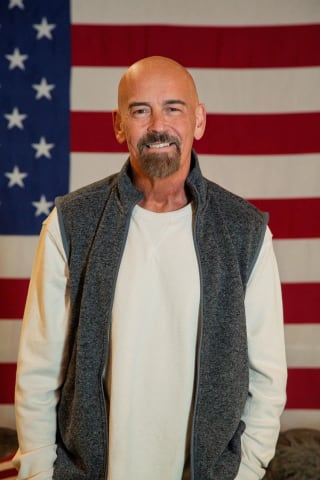
31.8% in the latest poll (Suffolk University) · trails Ed Markey by 24.6 points on average. The polls
Their wordsWhat does Deaton say they will do?
13 priorities from johndeatonforsenate.com, in the order they are listed there. Every heading and the text under it is copied exactly, as one passage for each page it is from, and links to that place on the page; hover a source to see which passage it opens.
13 priorities · 34 quoted statements
No one should go broke to stay healthy. I believe access to affordable healthcare is a human right for every American citizen.
Three vertically integrated insurance conglomerates now control over 90% of American healthcare, and three pharmacy benefit managers control over 80% of every prescription filled in this country. That is not a market — it's a cartel, and Americans pay the price in premiums, deductibles, and drug costs that keep climbing no matter which party is in charge. I will fight to break up these vertically integrated insurers and break up the PBM monopoly so patients, doctors, and pharmacists — not middlemen — decide what care looks like.
I will work to lower prescription drug costs, expand telehealth so families don't have to drive an hour or wait weeks to see a doctor, and demand full transparency in drug pricing — including clear, upfront disclosure of the difference between the cash price and the insurance price for the same prescription, so patients can actually shop for the best deal. All of this can be done without growing Washington's bureaucracy or raising taxes.
Owning a home in Massachusetts should not be out of reach. I will fight for policies that lower costs, encourage smart development, and help families build wealth without punishing success or driving up prices.
That starts with cutting the red tape that adds months and thousands of dollars to every project before a single shovel goes in the ground. I support permitting reform that sets real deadlines for local and state approval, and I oppose green-energy mandates that force builders to absorb costs that get passed straight on to buyers and renters in the form of higher prices.
I also support exploring real estate tokenization — using blockchain-based ownership structures to let more people buy fractional stakes in property — as a way to open up real estate investment and wealth-building to families who can't put together a traditional down payment or six-figure investment, not just institutional buyers and the already-wealthy.
Families should not have to choose between keeping warm and putting food on the table. As an independent voice, I will oppose extreme policies like the Green New Deal and support balanced solutions that lower energy costs, protect jobs, and move us toward cleaner, affordable American energy.
That means an all-of-the-above energy transition, not a mandate that picks winners and losers by government fiat. I support building out solar, wind, geothermal, and hydro alongside a serious recommitment to nuclear power — including small modular reactors (SMRs), like the ones I've proposed for Brayton Point, paired with data center growth and backed by real ratepayer protections and community benefit agreements so host communities share in the upside. Long-term, I support investing in fusion as the next generation of clean baseload power.
I also support amending the Jones Act to fix the archaic shipping restrictions that make it harder and more expensive to move LNG and other energy resources within the United States — restrictions that drive up costs for New England families who already pay some of the highest energy prices in the country. A responsible transition off fossil fuels has to be built on reliability and affordability first, or it won't survive contact with a New England winter.
A healthy democracy requires that every eligible citizen can vote and that every legitimate vote is counted — and that the public has confidence in the result. I will fight to protect the integrity of our elections through common-sense measures such as free voter identification and transparent processes. At the same time, I reject any effort that makes voting harder for eligible citizens. Term limits, an end to insider trading by members of Congress, and real ethics enforcement are essential so that government serves the people rather than itself. Democracy works best when leaders are held to the highest standards of integrity and when voters can trust both the process and the people they elect.
I will fight to secure the border, end catch-and-release, and reform the asylum process while expanding legal immigration. Most people coming here seek a better life, but the status quo is unsustainable and undermines those who follow the law. I reject both blanket amnesty and mass deportation. I support a bipartisan border bill - something Ed Markey has continuously opposed.
Common-sense parameters that distinguish between those who have built lives here and those who recently entered illegally are essential.
Young people who were brought to this country as children, grew up here, have no serious criminal record, and have contributed through work, education, or service deserve a fair and orderly process. I support a targeted, earned pathway to legal status and ultimately citizenship for DACA recipients and similarly situated Dreamers who meet rigorous standards — while simultaneously securing the border, ending catch-and-release, reforming asylum abuse, and expanding legal immigration so that future arrivals come through the front door. We should not reward law-breaking, but neither should we punish those who had no choice in coming here and have known only America as home.
Washington was never meant to be a career. My Clean Hands Act starts with cleaning up Congress and will be the first bills I introduce as Senator.
The plan's key reforms include:
Congressional Term Limits — Push for a constitutional amendment limiting service to 3 House terms and 2 Senate terms.
No-Trade Zone — Ban stock, crypto or commodities trading by Members of Congress.
Lifetime Lobbying Ban — Prohibit former Members from ever lobbying.
End Regulatory Capture — Bar high-level agency officials (e.g., FDA, SEC, EPA) from taking board or executive roles at regulated companies for at least 5 years.
Single Issue Bill Act — Require all bills to address one topic only, ending omnibus packages loaded with unrelated pork.
Read the Bill Mandate — Make final bill text public and searchable for at least 72 hours before any vote.
No Pay for No Budget — Withhold congressional pay (non-recoverable) if budgets and appropriations bills aren't passed on time.
Dark Money Transparency — Require 48-hour disclosure of contributions over $500 to Super PACs or politically active non-profits.
Ban on Foreign Lobbying & Contributions — Prohibit former Members or senior officials from ever working for foreign governments/entities; close loopholes for foreign-owned subsidiaries influencing U.S. elections.
Truth in Legislating Audit — Create an independent, non-partisan ethics commission with subpoena power to investigate pay-to-play allegations.
End Leadership PAC Slush Funds — Abolish Leadership PACs that allow special-interest funds for personal lifestyle expenses like luxury travel and dinners.
Conflict of Interest Recusal Mandate — Require Members to recuse from votes or sponsorships affecting companies/industries where they, their spouse, or close family hold significant financial interests.
Mandatory Tax Disclosures — Require federal candidates to release at least 10 years of tax returns.
Truth in Spending — End budget gimmicks like "emergency" designations to bypass caps.
Inflation Impact Statement — Require independent analysis of inflation effects for bills spending over $1 billion (or $100 million at state level).
Full Disclosure of Shadow Lobbying — Require registration and client disclosure for anyone paid over $1,000 to influence federal officials.
Universal Foreign Influence Disclosure — Mandate foreign agent registration for anyone pushing foreign agendas (e.g., from Israel, China, Saudi Arabia, Qatar), with no loopholes.
End NGO Funding — Prohibit government funding of activities the government itself cannot undertake.
My bold reforms stand in stark contrast to Senator Ed Markey's 50-year career in Congress, highlighting the need for fresh, accountable leadership.
Americans owe more in student loans than credit cards. I believe in offering real solutions to reduce that burden, such as eliminating usury in the form of compound interest. Reduce the impact of student loans during bankruptcy proceedings. Allow for reasonable caps on student loans while challenging universities who accept public dollars to reduce administrative bloat.
I also believe universities should share responsibility for the debt they help create. I support a system of shared risk, where colleges and universities have skin in the game on the loans their own students take out — when a student defaults, the institution feels it too, through a defined share of the loss. That accountability will give schools a direct incentive to invest in job placement, career counseling, and academic programs that actually lead to employment, rather than simply collecting tuition and walking away from the outcome.
Students must also be offered flexible financing alternatives such as committing portions of their future salary to repaying their loans, and tying those commitments to their economic background, the financial future of their degrees, and other factors until a market rate of degree plus fixed interest is covered.
I support a "pay as you work" repayment option: borrowers pay 3-5% of their income toward their loans, and pay nothing in months they are not working. No income, no payment.
American foreign aid and military support must always serve the clear interests of the United States and the people of Massachusetts. I will not write blank checks. Every dollar spent overseas must be justified with verifiable facts that it advances American security and does not risk drawing us into a wider conflict. Caution and accountability, not open-ended commitments, should guide our decisions.
Over the past five years, the United States has sent nearly $400 billion in non-military aid to foreign countries — $400 billion in cash and assistance to foreign nations while Americans struggle to make rent and pay their electric bills. I will not vote for another single dollar to go to any foreign country unless I am convinced it is in the interest of America and the people of Massachusetts.
Every woman in America should have the right to make decisions about her own body. Unfortunately, that is not the world we live in today.
Since the fall of Roe in 2022, I've consistently supported codifying the protections of Roe into federal law, and I strongly disagree with the Supreme Court's decision in Dobbs. As I said in my last campaign, if national Republicans try to bring a federal abortion ban to the floor (as Attorney General Todd Blanche has promised) I will switch parties and vote with Democrats to stop it.
I support late-term abortions in the case of fatal fetal anomalies and protecting the life of the mother but believe these cases should remain safe, legal, and rare.
Washington cannot wait until it's too late to regulate the most consequential technology of our lifetimes. We need a federal standard that includes a three year "safe harbor" law giving AI companies a consistent standard to meet before additional requirements are implemented at the state level. This would not prevent state Attorneys General from retaining the authority to enforce existing consumer protection laws.
Large AI operators, such as OpenAI and Anthropic must be held to a different standard than small, open-source developers. This includes disclosure requirements before high-risk thresholds involving their models are exceeded. The federal government must set the standard for a safety reporting framework that states can adopt and build upon after the "safe harbor" period expires. National security agencies would be tasked with establishing clear incident-reporting protocols.
Finally, Congress must crack down on the non-consensual use of imagery, artwork, and other content that has been stolen to train large AI models. In addition to civil remedies, AI companies must be encouraged to pursue voluntary, industry-standard cryptographic provenance for synthetic media, rather than adopting government-mandated content controls.
If and when AI encroaches on specific jobs and industries, every option—from professional retraining to universal basic income—must be on the table to ensure that large swaths of Americans continue to benefit from domestic AI production.
The omnipresence of cameras and surveillance systems in modern life must balance community security with individual civil liberties. Any AI-powered system such as Flock must be governed by federal requirements to standardize enforcement. These requirements should include:
Purge unmatched footage within days if it is not matched to an active criminal case or hotlist.
Complete prohibition on the construction of searchable location databases.
Restricting real-time alerts to the most serious crimes including violent felonies, armed robbery, stolen vehicles, active arrest warrants, and Amber and Silver alerts. Minor traffic violations, civil infractions, and debt collection must remain outside AI-powered surveillance in perpetuity.
Requiring a court order or signed judicial warrant to search historical database records, except under immediate, documented exigent circumstances.
Eliminate warrantless fishing expeditions or exploratory queries into specific license plates without reasonable articulable suspicion.
Mandating public annual reporting on system use, including query counts, hit rates, criminal case outcomes, and third-party data requests.
Conducting annual compliance audits by an independent oversight board to verify that unauthorized queries are caught and sanctioned.
Ban nationwide out-of-state database sharing without explicit local authorization, preventing out-of-state entities or private organizations from harvesting local travel patterns.
Prohibit the sale or monetization of data to private entities, insurance providers, or commercial aggregators.
MoneyWho pays for the campaign, and where does it go?
Raised
$1.7M
$1,674,460
Spent
$1.2M
$1,186,303
Cash on hand
$488.2K
$488,156
FEC filings, Oct 1, 2025 to Oct 14, 2026 · Official FEC bulk data · committee C00926139 ↗
Raised, spent and cash over time by FEC report
71¢ of every dollar raised has been spent across 6 reports ($1.2M of $1.7M). Cash on hand went from $1.2M on Dec 31, 2025 to $488.2K on Oct 14, 2026.
Raised in the period
Spent in the period
Cash on hand at its close
$500K$1M$1.5M
Dec ’25
Mar ’26
Jun ’26
Aug ’26
Sep ’26
Oct ’26
Raised, spent and cash on hand by FEC report
Report
Raised in the period
Spent in the period
Cash on hand at its close
YEAR-END 2025 through Dec 31, 2025
$1,262,515
$97,997
$1,164,517
APRIL QUARTERLY 2026 through Mar 31, 2026
$137,626
$473,570
$828,574
JULY QUARTERLY 2026 through Jun 30, 2026
$98,420
$200,391
$726,604
PRE-PRIMARY 2026 through Aug 12, 2026
$62,799
$76,985
$712,417
OCTOBER QUARTERLY 2026 through Sep 30, 2026
$86,743
$128,486
$670,675
PRE-GENERAL 2026 through Oct 14, 2026
$26,356
$208,874
$488,156
Each report’s own period, as filed with the FEC; a report filed again counts once, as its latest copy.
Where the money came from $1,674,460 reported receipts
LoansMoney the campaign borrowed this cycle, from the candidate or a lender, which it may repay.$1,000,00060%
Who lent it
John Deatonthe candidate’s own money · lent Dec 17, 2025 · $1M not yet repaid$1,000,000
Each loan as the campaign’s report through Oct 14, 2026 lists it, with what is still owed. A loan from an earlier cycle can appear here, and one repaid in full drops off the report, so the list need not add up to the row.
Itemized (over $200)Donors who have given more than $200 this cycle, so the FEC itemizes (names) them.$485,24829%
Largest donors
John E. Deaton9 contributions, latest Dec 19, 2025 · LAWYER · DEATON LAW FIRM · BOLTON, MA$53,411
James Akmakjian3 contributions, latest Apr 10, 2026 · DENTIST · SELF-EMPLOYED · LONG GROVE, IL$7,000
Max Avery3 contributions, latest Feb 27, 2026 · PRINCIPAL · EMPYRUS INTERNATIONAL LLC · FORT SMITH, AR
EndorsementsWho does Deaton’s campaign say backs them?
1 endorser listed on John Deaton’s own campaign site.
This is the campaign's claim, checked by an editor against its page; the endorsers have not confirmed it to us. Each name opens the campaign’s page with that name highlighted.
“John Deaton understands the challenges facing our officers every day,” said a spokesperson for the New Bedford Police Union. “He has consistently stood with law enforcement and will be a reliable ally in the U.S. Senate. We are proud to endorse him.”
Every contest for this seat that named this candidate, most recent last; a result is shown once the race is called. Election dates and results from civicAPI (civicapi.org). civicAPI aggregates results from Secretaries of State and equivalent election bodies, and makes its own race calls. civicapi.org ↗
Chris LarsenOne contribution on Nov 10, 2025 · EXECUTIVE CHAIRMAN · RIPPLE INC · SAN FRANCISCO, CA$7,000
James MurphyOne contribution on Dec 20, 2025 · CONSULTANT · LUDLOW STREET ADVISORS LLC · GLEN ALLEN, VA$7,000
Norman ReedOne contribution on Nov 25, 2025 · CEO · BINANCE US · SAN FRANCISCO, CA$7,000
Anthony ScaramucciOne contribution on Dec 5, 2025 · FOUNDER · SKYBRIDGE CAPITAL · MANHASSET, NY$7,000
A donor who gave several times appears once. The 12 largest donors by total given are listed. In all, 808 itemized contributions were filed this cycle, totaling $449K.
Unitemized ($200 or less)Donors who have given $200 or less this cycle, so the FEC does not itemize (name) them.$94,6435.7%
The candidateMoney the candidate gave their own campaign.$53,4143.2%
Other receiptsInterest, dividends and other income the committee files on a line of its own.$28,1971.7%
PACs and other committeesPolitical action committees and other candidates' committees. Corporations and unions cannot give directly.$9,9750.6%
The Guardian Fund1 receipt, latest Oct 12, 2026 · PAC (qualified)$1,000
The 2 largest committees by total given are listed. In all, 2 committee contributions were filed this cycle, totaling $6K. Counted from the givers' own filings, which can run above the total the campaign itself reports.
Refunds and rebatesMoney coming back to the campaign: rebates and refunds of what it spent.$2,9830.2%
Total reported receipts $1,674,460
Every dollar the committee reported receiving this cycle, split by the source the FEC filing attributes it to. Open a source marked + to see who gave. FEC filings through Oct 14, 2026.
Who donated: where they live, their employers and jobs
Where the donors live $448,048 placed by state
Loading the map
Tap or hover over a state, or focus the map and use the arrow keys, to read its total. Ctrl or ⌘ and scroll to zoom.
under $6.8K
$6.8K+
$27.3K+
$61.4K+
$109.2K+
none
Outlined: Massachusetts, home state
Home state and away
Massachusetts 38%MA 38%Elsewhere 62%
38% of the money placed by state came from inside Massachusetts: $170.6K of $448K.
Top states
Top donor states
Name
Amount
Massachusetts home266 contributions · 38%
$170,577
California60 contributions · 9%
$40,180
Florida96 contributions · 8.1%
$36,449
New York30 contributions · 5.1%
$22,989
Texas38 contributions · 3.8%
$17,181
Puerto Rico3 contributions · 2.3%
$10,327
New Jersey7 contributions · 2.2%
$9,661
Illinois17 contributions · 2.1%
$9,297
By the state each donor wrote on the filing, across 45 states and territories. Donors who have given $200 or less this cycle are not itemized, so they cannot be placed on a map. The FEC’s grouping also counts joint-fundraising memo lines, so these rows can add up to more than the itemized total.
Donors’ employers as filed
Donors’ employers
Employer as filed
Amount
RetiredWritten instead of an employer · 323 contributions · 23% of ranked
$100,147
Self-employedWritten instead of an employer · 110 contributions · 14% of ranked
$61,261
Deaton LAW Firm9 contributions · 12% of ranked
$53,411
Ripple3 contributions · 4.1% of ranked
$17,629
StudentWritten instead of an employer · 2 contributions · 1.7% of ranked
$7,208
Digital Ascension Group2 contributions · 1.7% of ranked
$7,182
Binance US1 contribution · 1.6% of ranked
$7,000
BOX Counsel1 contribution · 1.6% of ranked
$7,000
A further $17,002 came from donors whose answer names no employer (blank), so it is not ranked. Itemized gifts over $200, grouped by the words donors filed: not an industry classification, and a gift from an employee is not a gift from the employer. The FEC’s grouping also counts joint-fundraising memo lines, so these rows can add up to more than the itemized total. Gifts of $200 or less ($94,643) are not itemized, so no employer or occupation is filed for them.
Outside spending $2,286,817 across this race
Money groups spent on their own, not through a campaign. Each ad is filed against the candidate it names, so money attacking an opponent shows on the opponent’s row. Open a candidate to see who spent it.
Support and oppose are each group’s own labels, not a judgment made here.
$1,703,817 of the race total was filed about other candidates, so it would not show on Deaton’s own record.
Independent expenditures (Schedule E) only. Electioneering communications and corporate or union member communications file separately; they are counted for Deatonunder “Other outside spending” in the full finance detail, but not for the rest of the field, so every other row is a floor.
What the payments were for $1,057,317 itemized
The campaign also refunded $750 in contributions, which the categories below do not include.
Consulting and strategyStrategic, political, legal, and compliance consulting, and campaign management.$246,93123%
Filed as
DIGITAL CONSULTING$220,061
LEGAL CONSULTING$11,277
DIGITAL CONSULTING, DIRECT MAIL SERVICES$5,299
IN-KIND: DIGITAL CONSULTING$4,570
COMMUNICATIONS CONSULTING$3,500
FIELD CONSULTING$2,224
Paid to
Conversion Creative$131,004
Ascent Strategic Inc$66,690
Campaign Engine Group LLC$30,165
Holtzman Vogel$11,277
Errichetti Media$3,500
Guerriero, Priscilla$2,224
Field and canvassingDoor-to-door canvassing, phone banks, petition and signature gathering, and get-out-the-vote work.$185,00017%
Filed as
SIGNATURE GATHERING$185,000
Paid to
SIGNATUREDRIVE.COM, Inc$185,000
Fundraising and eventsThe cost of raising money: finance consultants, donor list rental and acquisition, event venues, catering, and donor processing.$155,47315%
Filed as
FUNDRAISING CONSULTING$152,946
EVENT SPONSORSHIP$1,000
CATERING SERVICES$840
EVENT EXPENSE: FACILITIES$687
Paid to
ACE Campaign Consulting LLC$43,994
Tautkus, Emma$37,815
Campaign Engine Group LLC$28,138
Ascent Strategic$21,628
SCR & Associates, LLC$16,600
Moulton, Griffin$2,771
Advertising and mediaBroadcast, digital, and print advertising, and the media buying behind it.$142,50013%
Filed as
PLACED MEDIA$121,500
MEDIA CONSULTING$21,000
Paid to
Conversion Creative$112,500
Errichetti Media$21,000
Sevone Media$7,500
Howie Carr Show$1,500
Polling and researchSurveys, opposition research, voter file work, and analytics.$124,00912%
Filed as
POLITICAL SURVEY$79,700
COMPLIANCE CONSULTING & DATA PROCESSING SERVICES$33,306
DATA MANAGEMENT SERVICES$7,510
COMPLIANCE CONSULTING AND DATA PROCESSING SERVICES$3,299
DATA PROCESSING SERVICES$189
DATA ANALYTICS$5
Paid to
Cygnal$79,700
RED Curve Solutions, LLC$36,794
Rankin, Tracie$7,500
Numinar$15
Taxes, fees, and bank chargesPayroll and income taxes, filing fees, bank and merchant processing charges.$61,6995.8%
Filed as
FUNDRAISING FEES$21,882
MERCHANT FEES$18,182
PAYROLL TAXES$18,145
EVENT REGISTRATION FEES$975
EVENT REGISTRATION FEE$827
EXCHANGE FEES$678
PAYROLL FEES$396
SMS FEES$380
BANK FEES$187
TRAVEL: PARKING FEE$47
Paid to
Gusto$18,541
WinRed Technical Services LLC$15,199
Campaign Engine Group LLC$14,937
TMA Direct$3,635
Anedot$2,822
Better Mousetrap Digital$1,128
Payroll and staffSalaries, wages, benefits, and payroll services.$41,8064%
Filed as
PAYROLL$41,806
Paid to
Peterson, Amanda$21,635
Steffen, Mark$12,275
Galey, Mark$5,534
Love, Andrew$2,363
OtherPayments whose filed description does not match any category above. Every one is listed so it can be read directly.$36,7243.5%
Filed as
7000 USDC RECEIVED, LIQUIDATED$6,999
2745 XRP RECEIVED, LIQUIDATED$6,987
0.06 BTC RECEIVED, LIQUIDATED$6,307
MMS MESSAGING$6,224
DRIVING SERVICES$1,635
1000 XRP RECEIVED, LIQUIDATED$1,415
500 XRP RECEIVED, LIQUIDATED$1,118
1097.21693 XRP RECEIVED, LIQUIDATED$1,103
1001 USDC RECEIVED, LIQUIDATED$1,001
325 XRP RECEIVED, LIQUIDATED$798
0.0069 BTC RECEIVED, LIQUIDATED$529
264.953269 XRP RECEIVED, LIQUIDATED$501
Paid to
Hoffman, Carl$6,999
Garlinghouse, Brad$6,987
Walker, Scott$6,307
Engagement Strategies Inc$6,224
Cyganiewicz, Scott$1,635
Schwartz, David$1,415
Digital and technologyWebsites, hosting, software subscriptions, databases, email, and texting platforms.$26,4482.5%
Filed as
SMS MESSAGING$25,155
SOFTWARE$704
SUBSCRIPTION$425
SOFTWARE SUBSCRIPTION$160
SUBSCRIPTIONS$5
Paid to
Engagement Strategies Inc$23,668
Numinar$983
Zeffy$666
Campaign Engine Group LLC$503
Slack Technologies, LLC$419
Whitepages Inc$144
TravelAirfare, lodging, mileage, and ground transport.$12,8461.2%
Filed as
TRAVEL: MILEAGE$11,653
TRAVEL: RAIL$751
TRAVEL: LODGING$375
TRAVEL INSURANCE$40
TRAVEL: GROUND TRANSPORTATION$19
TRAVEL: FOOD$8
Paid to
Steffen, Mark$6,565
Love, Andrew$4,899
Amtrak$751
Residence INN$375
Peterson, Amanda$190
AGA Service Co.$40
Printing, mail, and shippingPrinted literature, direct mail, postage, design, and delivery.$10,5801%
Filed as
YARD SIGNS$6,365
PRINTING EXPENSE$4,030
PRINTING AND DESIGN SERVICES$151
POSTAGE$34
Paid to
AGE Graphics$6,365
Conversion Creative$3,530
J & S Business Products, Inc$500
Printify$151
Fedex$34
Given to othersContributions to other candidates, party committees, and PACs.$7,5000.7%
Filed as
CONTRIBUTION TO COMMITTEE$7,500
Paid to
Massachusetts Republican Party$7,500
Office and administrativeRent, utilities, phones, supplies, equipment, security, food, and campaign merchandise.$5,8000.5%
Every itemized payment the committee reported this cycle, sorted by what it said each one was for. The categories are ours; the wording they are matched against is the committee’s own. Open a category to read the filed descriptions and who was paid. FEC filings through Oct 14, 2026.
All 775 itemized payments filed this cycle. Spending below the itemization threshold is not filed line by line.
8 payments were reported as a lump sum, such as a card or payroll bill, with the detail filed underneath as memo entries. Those entries, $52,344 in all, are counted under the payee and purpose they name rather than under the processor that was paid. The total is the same either way.
Largest vendors
Largest vendors
Name
Amount
Conversion Creative16 payments · 19% of all spending
$223,983
SIGNATUREDRIVE.COM, Inc3 payments · 16% of all spending
$185,000
Cygnal1 payment · 6.7% of all spending
$79,700
Campaign Engine Group LLC159 payments · 5.7% of all spending
$68,079
Ascent Strategic Inc12 payments · 5.6% of all spending
$66,690
Deaton, John9 payments · 4.5% of all spending
$53,414
ACE Campaign Consulting LLC8 payments · 3.7% of all spending
$43,994
Tautkus, Emma7 payments · 3.2% of all spending
$37,815
The people, firms and committees paid the most, across every kind of payment. Each share is of everything the committee reported spending this cycle, not only the itemized payments above. A payee that is itself a committee links to its own profile.
Donors’ occupations as filed
Donors’ occupations
Occupation as filed
Amount
RetiredWritten instead of an occupation · 323 contributions · 23% of ranked
$100,147
Lawyer17 contributions · 13% of ranked
$58,221
CEO25 contributions · 11% of ranked
$45,527
Attorney27 contributions · 3.4% of ranked
$14,755
Consultant16 contributions · 3% of ranked
$12,776
Real Estate4 contributions · 2.4% of ranked
$10,250
Dentist16 contributions · 2.3% of ranked
$9,946
Founder2 contributions · 1.7% of ranked
$7,260
A further $17,002 came from donors whose answer names no occupation (blank), so it is not ranked. Itemized gifts over $200, grouped by the words donors filed: not an industry classification, and a gift from an employee is not a gift from the employer. The FEC’s grouping also counts joint-fundraising memo lines, so these rows can add up to more than the itemized total. Gifts of $200 or less ($94,643) are not itemized, so no employer or occupation is filed for them.