Loading this candidate’s profile from the FEC filings and campaign records.
Where They Stand is a nonpartisan guide to everyone running for Congress: their money, their own words and how incumbents voted. Find your ballot →
Candidates › New Jersey U.S. Senate race › 2025–2026
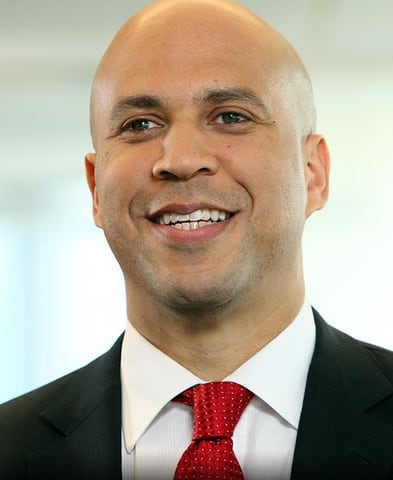
Cory A. Booker
D Democratic nominee for U.S. Senate, New Jersey
Senator since 2013
Other accounts (3)
The same platforms’ other accounts, such as a congressional office’s or an earlier campaign’s.
- On the ballot
- Won the general electionNov 3, 2026 · 1,835,557 votes (57.4%)
- Where to vote
- Find your polling place (opens in a new tab) · More ways to vote
- Top priorities
- Health Care
- Criminal Justice
- Foreign Policy & National Security
- Economic Opportunity
- Environment
- In Congress
- Senator since 2013 · votes with their party 94% of the time. See the record · Office phone 202-224-3224
- Money
- $21.3M raised, $9.6M spent, $22.9M cash on hand (through Oct 14, 2026). Where it comes from
- Who gives
- 60% of individual money from donors at $200 or less · 11% from New Jersey · largest committee giver HAWAII PAC, $10K
- Outside groups
- $135 supporting Booker
- Sponsored most in
- Health, Crime and Law Enforcement, Education
10 priorities from booker.senate.gov, in the order they are listed there. Every heading and the text under it is copied exactly, as one passage for each page it is from, and links to that place on the page; hover a source to see which passage it opens.
Cory believes that health care is a human right – nopersonshould go without the quality, affordable care they need and deserve. Throughout his time in the Senate, he has been a leader in the fight to protect the Affordable Care Act, while also championing proposals to build upon the law, increase access to care, and lower costs. Cory has been advocating for greater integration of Food as Medicine – programs that integrate the power of food to prevent and treat diet-related diseases – into healthcare. He is also committed to improving maternal health, leading the Black Maternal Health Momnibus in the Senate and advocating for permanent postpartum Medicaid coverage.As a staunch supporter of access to reproductive health, Cory has introduced the Protecting National Access to Reproductive Care Act, which would affirm the FDA’s long standing preemptive authority over state law for all FDA-approved reproductive health products, including drugs used in medication abortion, helping to ensure that every American has access to the medication they need.As one of the Senate’s strongest proponents for improving health equity, Cory has advanced efforts to expand research and public health activities for sickle cell disease, and increase access to addiction treatment.
source ↗ (opens the page at this passage) · booker.senate.gov/about/issues/health-care
Dating back to his time as a tenants' rights lawyer, City Council Member, and Mayor of Newark, Cory has seen firsthand the devastating effects of our broken criminal justice system. In the Senate, Cory has worked to eliminate racial disparities in our criminal justice system and improve reentry outcomes for returning citizens. He authored and helped passinto lawthelandmark, bipartisanFirst Step Actin 2018—a sweeping set of criminal justice reforms—and the Fair Chance Act, which makesit easier for people to find jobs after they’ve been released from prison. Cory continues to lead on criminal justice issues and has introduced numerous reform proposals, including the EQUAL Act, Marijuana Justice Act, Eliminating Debtor’s Prison for Kids Act, CARERS Act, MERCY Act, Dignity for Incarcerated Women Act, Second Look Act, George Floyd Justice in Policing Act, Cannabis Administration and Opportunity Act, Reverse Mass Incarceration Act, Smart Sentencing Adjustment Act, the Sentencing Commission Improvements Act, the Quality Defense Act, REDEEM Act, and bills to end unfair and abusive labor practices in correctional facilities.
source ↗ (opens the page at this passage) · booker.senate.gov/about/issues/criminal-justice
As a member of the Senate Foreign Relations Committee, Cory hasworked to champion American democracy and bring attention to the most vulnerable people on the planet, including those suffering from ongoing conflict, famine, human rights abuses, and the effects of climate change. He is vocal in urging the international community to protect human rights, and during an unprecedented global food crisis, he has been a strong advocate for more robust food security assistance to those suffering from malnutrition and famine. He has spearheaded efforts to increase the diversity of our diplomatic corps and ensure our diplomats have all the tools they need to represent American values abroad. As chair of the Senate Foreign Relations Subcommittee on Africa and Global Health Policy, Cory will focus on taking lessons learned from the COVID-19 pandemic to improve access to health services and strengthen health systems around the world. He will also work to deepen and expand our relationships with countries across Africa to create opportunities and progress towards a sustainable future.
source ↗ (opens the page at this passage) · booker.senate.gov/about/issues/foreign-policy-and-national-security
Cory believes in economic justice and the fundamental promise that if you work hard in America, America should work for you. His work as a Mayor and U.S. Senator has focused on the singular goal of fostering greater economic mobility and opportunity for all Americans. Toward this end, Cory has advocated for innovative policy measures to reward work through higher wages and better benefits, advance entrepreneurship and innovation in every corner of the country, and crack down on the soaring cost of rent and predatory practices like overdraft fees and outsourcing, that disproportionately hurt low-income Americans. He is also the author of landmark “baby bonds” legislation to fight intergenerational poverty and the enormous racial wealth gap by providing every American seed money at birth.He championed the expansion of theEarned Income Tax Credit and the Child Tax Credit, which benefited tens of millions of everyday American families, covering almost 90 precent of children, and cut child poverty nearly in half.
source ↗ (opens the page at this passage) · booker.senate.gov/about/issues/economic-opportunity
Cory believes all Americans should have access to clean water, clean air, and a healthy environment, which is why he is a leader in developing federal policies that protect all communities from pollution, particularly low-income communities, indigenous communities, and communities of color, which disproportionately bear the burden of environmental pollution and exploitation. He has introduced landmark environmental justice legislation and secured millions in federal funding to modernize wastewater and drinking water systems to address contaminants in drinking water, install water filtration systems, and replace lead pipes that poison children. The existential threat of climate change is a threat to all and will exacerbate existing inequities unless we act boldly, which is why Cory is an original cosponsor of the Green New Deal. He has also worked on numerousinitiatives to combat climate change, from expanding nature-based climate solutions to reducing fossil-based plastic production and consumption. He is also a champion for biodiversity protection, and has led multiple efforts to protect and conserve iconic wildlife and ecosystems.
source ↗ (opens the page at this passage) · booker.senate.gov/about/issues/environment
Driven by Martin Luther King Jr’s declaration that "Injustice anywhere is a threat to justice everywhere," Cory has dedicated his public service career to protecting and advancing the rights of all Americans, especiallythe most vulnerable. He is committed to ensuring all people can live free from discrimination, regardless of their race, ethnicity, national origin, sex, religion, sexual orientation, gender identity, age, or immigration status. Cory has championed numerous pieces of legislation affirming these rights, including the Do No Harm Act, CROWN Act, Equality Act, and HOME Act. He authored legislation to prevent workplace discrimination against family caregivers who are currently ineligible for any form of protection under federal law. In 2022, he authored thebipartisanEmmett Till Anti-Lynching Act, which was signed into law after Congressional attempts to pass an anti-lynching bill for 100 yearshad failed. He also led colleagues in successfully urging the U.S. Department of Health and Human Services to remove barriers that prevent DACA recipients from accessing health insurance through the ACA and CHIP.
source ↗ (opens the page at this passage) · booker.senate.gov/about/issues/civil-rights
Cory believes that a student’s zip code should not determine the educational and economic trajectory of their lives. During his time in the Senate, Cory has worked to ensure that all students have access to a high quality education. Cory believes our nation’s teachers and early childhood educators must be given the resources and support they need to ensure educational outcomes forall students, particularly vulnerable students. He introduced the RAISE Act, which would boost teacher compensation by as much as $15,000 through refundable tax credits. He also introduced the Advanced Coursework Equity Act which would increase enrollment and performance of underrepresented students in advanced courses and programs. In the Senate, Cory will continue championing initiatives that support teachers and bring our nation closer to educational equity.
source ↗ (opens the page at this passage) · booker.senate.gov/about/issues/education
Cory has made fighting for New Jersey’s service members, veterans, and their families a priority during his time in public office. When he was first elected to the U.S. Senate, his very first meeting was with New Jersey veterans. From passing legislation to enhance accountability at the Department of Veterans Affairs to closing critical gaps in education benefits and increasing access to timely, quality, and inclusive healthcare options, Cory is committed to ensuring our veterans receive the benefits they’ve earned. Most recently, he introduced legislation to expand access to VA housing assistance programs, provide better quality maternal health care for expecting veterans, and improve access to mental health services. While we can never repay the immeasurable debt that we owe to our service members and veterans, we must always endeavor to honor their sacrifice. Cory is committed to making it easier for veterans to access the care and resources they deserve.
source ↗ (opens the page at this passage) · booker.senate.gov/about/issues/veterans
Cory believes we need to substantially increase the federal investment in our nation’s transportation infrastructure in order to help rebuild New Jersey’s aging roads, bridges, rail systems, airports, and seaports.Doing so will create jobs and grow the economy.In the Senate, he has been a leader in advancing the critical Gateway Project, which will rebuild the crumbling rail linesunder the Hudson Riverbetween New Jersey and New York’sPenn Station. Cory also worked with his colleagues to pass the bipartisan Infrastructure Investment and Jobs Act of 2021 that includes billions of dollars in funding to modernize rail and transit systems and update drinking water infrastructure. With increased risk of adverse weather due to climate change, Cory has secured millions of dollars in federal funding to strengthen our nation’s infrastructure against future natural disasters.
source ↗ (opens the page at this passage) · booker.senate.gov/about/issues/infrastructure
Cory believes that our food system is deeply broken. Family farmers are struggling to survive while big agriculture conglomerates get bigger and enjoy greater profits. Meanwhile, healthy, fresh food is hard to find and even harder to afford in rural and urban communities alike. In the richest country on the planet, over 35 million Americans are food insecure. That’s why, as a member of the Committee on Agriculture, Nutrition, and Forestry, Cory is fighting to invest in small, regenerative, and socially disadvantaged farmers, to reign in the abuses of factory farms and the largest agribusinesses, and expand access to healthy foods.
He has spearheaded efforts to empower family farmers, improve the affordability and availability of nutritious foods, protect workers, and safeguard the environment. Key legislative priorities include theFood and Agribusiness Merger Moratorium and Antitrust Review Act, theIndustrial Agriculture Accountability Act, theProtecting America’s Children from Toxic Pesticides Act, theClimate Stewardship Act, theJustice for Black Farmers Act, and theFarm System Reform Act. Cory has also brought national attention to our country’s nutrition crisis by calling on the FDA to use its authority to address ultra-processed foods, by pushing for the integration of healthy food into our healthcare system, and by championing solutions that connect fruit and vegetable farmers with people struggling with hunger and nutrition insecurity.
source ↗ (opens the page at this passage) · booker.senate.gov/about/issues/food-and-agriculture