Loading this candidate’s profile from the FEC filings and campaign records.
Where They Stand is a nonpartisan guide to everyone running for Congress: their money, their own words and how incumbents voted. Find your ballot →
Candidates › TX-33 race › 2025–2026
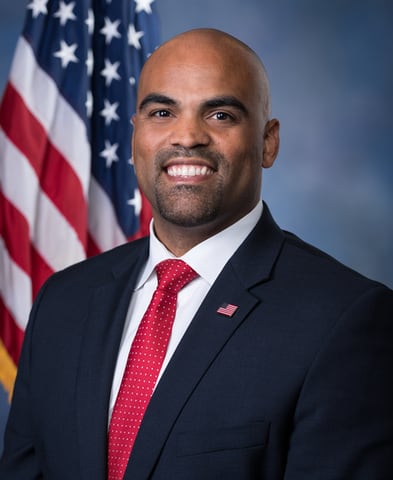
Colin Z. Allred
D Democratic nominee for U.S. House, TX-33
Served in Congress 2019–2025
- On the ballot
- On the general election ballotNov 3, 2026 · Texas US House 33
- Where to vote
- Find your polling place (opens in a new tab) · More ways to vote
- Top priorities
- Immigration
- Affordability
- Corruption
- In Congress
- Served in Congress 2019–2025. See the record
- Money
- $8.1M raised, $7.8M spent, $298.4K cash on hand (through Oct 14, 2026). Where it comes from
- Who gives
- 48% of individual money from donors at $200 or less · 54% from Texas · largest committee giver SMART TD PAC, $10K
- Sponsored most in
- Government Operations and Politics, Armed Forces and National Security, International Affairs
3 priorities from colinallred.com, in the order they are listed there. Every heading and the text under it is copied exactly, as one passage for each page it is from, and links to that place on the page; hover a source to see which passage it opens.
Across Texas, children of immigrants are not showing up to school because their families are too scared to send them. Families are tracking ICE activity on Facebook to warn each other. Pulgas sit empty, businesses have lost their workers, and communities feel the Texas they love slipping away. This is a crisis, which is why Colin will fight to abolish ICE and build a just immigration system in Congress.
America is a nation of immigrants, and our diversity has always been our strength. But right now, the federal government's immigration enforcement is out of control – tearing families apart, imprisoning and deporting people without due process, and funneling billions of taxpayer dollars to private corporations that profit from cruelty.
Colin's connection to this issue is personal. His grandfather was a Customs Officer in Brownsville, and his mother and aunt were born and raised there. He spent his summers growing up visiting his grandmother in the Rio Grande Valley, and his family traditions like tamales and poinsettias at Christmas are rooted in the Valley.
Representing Dallas for three terms meant sitting across the table from small business owners who depend on immigrant workers, and helping real families navigate a system that was never designed with them in mind. Immigration isn't a wedge issue for Colin. It never has been. It is a policy problem, and he intends to fix it.
Section I: Overhaul the Immigration Enforcement System ↗ (opens colinallred.com/immigration at this heading)
- Abolish ICE and Transfer its Functions
- Guarantee Due Process and the Right to Counsel
Section II: Hold Bad Actors Accountable ↗ (opens colinallred.com/immigration at this heading)
- Shut Down the For-Profit Immigration Enforcement Industry
Section III: Build a System That Actually Works ↗ (opens colinallred.com/immigration at this heading)
- Create a Real Path to Citizenship
- Manage the Border with Order and Humanity
- Reform the Visa System to Reflect our Values and Strengthen our Economy
The Bottom Line ↗ (opens colinallred.com/immigration at this heading)
What Trump has built is not immigration enforcement. It is a system designed to generate fear and funnel money to corporations that profit from locking people up. It does not reduce illegal immigration. It creates chaos. And it makes us less safe.
ENFORCEMENT: Abolish ICE and redistribute its functions to agencies bound by real standards and accountability.
ACCOUNTABILITY: Expose and prosecute bad actors who have broken the law and corporations profiteering from this inhumane regime.
DUE PROCESS: Every person on American soil deserves their day in court with real legal representation.
REFORM: Millions of people already part of our communities deserve a real path to citizenship.
THE BORDER: Order and humanity are not opposites. A well-funded, well-staffed legal system is the real answer.
Colin Allred's immigration agenda starts with honesty: the current system is broken by design, the bad actors must be held accountable, and we owe it to this country to build something better. Less cruelty. More order. An America that finally lives up to its promise.
source ↗ (opens the page at this passage) · colinallred.com/immigration
Heading as listed on colinallred.com ↗ (opens colinallred.com at this heading)
Section I: Cutting Everyday Costs for Every Texan ↗ (opens colinallred.com/affordability at this heading)
Colin grew up with a single mom who stretched every dollar at the grocery store. He knows what it means when prices jump, bills rise, or paychecks don’t go far enough. For Colin, lowering everyday costs is about making sure Texas families don’t have to make impossible choices between groceries, gas, and medicine.
1: Repeal Trump’s Tariff Tax
- The Problem: Trump’s tariffs are the largest tax hike on working families in modern history, costing households an average of $2,300 this year — hitting everything from bananas and coffee to auto parts and clothing.
- The Solution: Repeal Trump’s tariffs with targeted exceptions for national security and reassert the constitutional authority of Congress over trade policy. Pass the Small Business Liberation Act to exempt 34 million small businesses from tariffs immediately.
- The Impact: Families save hundreds of dollars at the grocery store, small businesses get breathing room, and every Texan keeps more of their paycheck.
2: Ban Price Gouging On Groceries and Consumer Goods
- The Problem: Grocery prices are rising faster than overall inflation, and we know big chains exploit market turmoil to rake in “excessive profits.” Families see it every week in the checkout line.
- The Solution: Pass the Price Gouging Prevention Act to prohibit price gouging on groceries and other consumer goods like toilet paper and cleaning supplies, nationwide, with real penalties for violations. Pass the Stop Price Gouging in Grocery Stores Act to end “surveillance pricing” and empower the FTC to hold big corporations accountable.
- The Impact: Texans shouldn’t have to pay extra so corporations can pad their profits. This will stop unfair markups, support local farmers and ranchers, and bring prices back to earth.
3: Lower Utility Bills by Restoring Texas Renewables
- The Problem: Household energy bills have jumped 10% since Trump’s re-election. His budget gutted low-cost renewable energy that keeps Texas power affordable, raising prices and risking 100,000 energy jobs.
- The Solution: Reverse Trump’s cuts to renewable power and eliminate costly energy tariffs. Keep Texas #1 in energy production.
- The Impact: The average Texas family would save nearly $480 a year on utilities — almost $5,000 over the next decade — while protecting good-paying jobs.
4: Cut Rx Drug Costs through Universal Negotiation and Expanded Generics
- The Problem: Americans pay three to four times more than other countries for the same drugs, even when our tax dollars funded the research; and Big Pharma reaps outrageous profits charging Texans for those same drugs. Trump’s Tariff Tax will worsen the crisis, potentially worsening shortages and raising prices.
- The Solution: Require Medicare and Medicaid to negotiate prices on all drugs – and require pharmaceutical companies to license the production of generic versions of certain expensive, taxpayer-funded drugs (so called "march-in" rights).
- The Impact: Prescription drugs priced fairly, billions saved in taxpayer dollars, and Texans no longer forced to choose between groceries and medicine.
5: Lower Housing Costs
- The Problem: For too many Texans, the dream of homeownership has become a nightmare. In Texas, a six-figure income is now required to afford a home. Renters — nearly 40% of Texans — face costs outpacing wages.
- The Solution: Expand the Low-Income Housing Tax Credit to spur construction of affordable housing. Provide a refundable tax credit for first-time homebuyers. Reform the Rural Housing Service to help small towns build more homes. And ban companies from using anti-competitive algorithms to gouge renters.
- The Impact: More homes built, rents stabilized, and first-time buyers supported with up to $50,000 in tax relief — so every Texan can afford a roof over their head.
Section II: Supporting Families, Kids, and Seniors ↗ (opens colinallred.com/affordability at this heading)
Colin was raised by his mom and grandmother, and later became the first member of Congress to take paid paternity leave when his son was born. He’s lived what millions of Texans live — caregiving for older relatives, trying to afford child care, paying the rent, and working to build a secure retirement. That’s why he’s fighting to make sure every Texan family can count on the support and security they need at every stage of life.
1: Expand and Protect Social Security for Seniors, Future Generations
- The Problem: 80% of older adults are financially struggling or at risk in retirement. Too many depend on Social Security as their only lifeline and are finding it won’t cover the cost of basic necessities as the costs of essentials climb. And a majority of US adults believe the program will not be there in their retirement.
- The Solution: Pass the Social Security Expansion Act — extend solvency 75 years, require the wealthiest Americans to pay in at the same rate as everyone else, and expand benefits by $2,400 a year for every senior.
- The Impact: Texans who worked hard their whole lives can retire with dignity and confidence that Social Security will be there for them — and every worker has a real path to retirement security.
2: Paid Family Medical Leave and Caregiver Tax Credit
- The Problem: Millions of Texans face impossible choices — go to work or care for a new baby, aging parent, or sick spouse. Caregivers already spend an average of $7,200 a year out-of-pocket.
- The Solution: Pass the Family Act to provide 12 weeks of paid family and medical leave. Enact the Credit for Caring Act to provide a tax credit up to $5,000 for working family caregivers.
- The Impact: Parents can take leave without going broke, and caregivers get financial relief while supporting loved ones. Families are stronger, healthier, and more secure.
3: Affordable Childcare Now
- The Problem: Childcare costs have risen 29% since 2020, even outpacing inflation. In more than half of Texas counties, there are three children under the age of five for every available childcare slot. Texas parents spend more on child care for two kids than on rent.
- The Solution: Expand the Child Tax Credit to 2021 levels — with fully refundable monthly payments of $3,600 for young children and $3,000 for older kids.
- The Impact: Immediate relief for parents struggling with bills today.
4: Make Higher Education Affordable
- The Problem: For many families and students, the dream of higher education is feeling more and more out of reach as tuition and student loans have soared, leaving graduates with nearly $30,000 in debt on average, and shutting too many young people out.
- The Solution: Guarantee two years of free community college for every student, increase Pell Grants, and expand affordable federal loan programs so no Texan has to choose between getting ahead and going into debt.
- The Impact: Young Texans can train for good-paying jobs, graduate with less debt, and contribute to our economy without being crushed by loans.
The Bottom Line ↗ (opens colinallred.com/affordability at this heading)
- Groceries: Tariffs and price gouging raise the cost of basics.
- Utilities: Trump’s cuts to renewables stick Texans with higher power bills.
- Healthcare: Big Pharma charges families three times more than other countries.
- Childcare: Families spend more than their rent just to give kids a safe place to learn and grow.
- Seniors: Retirees on fixed incomes are left behind as costs rise.
Colin Allred’s A More Affordable Texas Agenda is simple: end the price gouging, repeal the bad policies, and put Texans first. That means lower costs, more opportunity, and a government that finally works for working families again.
source ↗ (opens the page at this passage) · colinallred.com/affordability
Heading as listed on colinallred.com ↗ (opens colinallred.com at this heading)
Section I: Clean Up Campaigns ↗ (opens colinallred.com/corruption at this heading)
Texans are sick of a system where billionaires and special interests buy elections while families pay the price. Colin’s plan will end the pay-to-play culture and make sure every Texan has an equal voice.
1: End Gerrymandering
- The Problem: Politicians in Texas carve up districts to protect themselves, disenfranchise Black and Latino communities, and silence voters. That lets incumbents avoid accountability while families’ real needs go unmet. Instead of competing to serve their constituents, too many politicians are rewarded for chasing the loudest extremes.
- The Solution: Right now, we’ll fight fire with fire — organizing and winning even under rigged maps, and doing what must be done to level the playing field. But when we retake power, we must fix the system once and for all. We will pass a federal redistricting law requiring independent, non-partisan commissions that draw maps to represent communities, not to favor either political party, with transparent criteria that comply with the Voting Rights Act. And we will ban mid-decade redistricting schemes designed to entrench partisan power.
- The Impact: With fair maps, politicians will have to earn votes and deliver for their communities — by lowering health care costs, fixing schools, and investing in infrastructure — not just fighting to be the most extreme voice in a primary to protect their own seats.
2: Overturn Citizens United
- The Problem: The Supreme Court’s Citizens United decision unleashed unlimited corporate and billionaire spending in our elections, drowning out the voices of ordinary Texans. Politicians now answer more to their donors than their voters.
- The Solution: Pass the Democracy for All Amendment to overturn Citizens United and restore Congress’ ability to limit corporate and dark money in politics.
- The Impact: Texans will know their representatives are accountable to them and their bottom lines — not to billionaires and corporate interests trying to buy power.
3: Expose Dark Money
- The Problem: Texans see attack ads and political campaigns backed by “dark money” groups with no ability to know who is footing the bill. That secrecy allows corporations and special interests to manipulate elections without accountability.
- The Solution: Pass the DISCLOSE Act to require all political groups to reveal their donors and spending, no exceptions.
- The Impact: Texans will know exactly who’s trying to influence their votes — and can hold those special interests accountable when they try to sell the public a bill of goods.
4: Ban Corporate PAC Contributions
- The Problem: Our nation’s largest corporations curry favor with politicians by raising millions through their special-interest PACs. By accepting corporate PAC money, candidates place corporate priorities ahead of the public interest — and Texans end up paying more while insiders profit.
- The Solution: Pass the Ban Corporate PACs Act to prohibit members of Congress and federal candidates from accepting contributions from corporate PACs.
- The Impact: Texans will know their representatives are accountable only to voters — not to corporations looking to buy influence in Washington and price-gouge our families.
5: Strengthen the FEC
- The Problem: The Federal Election Commission (FEC) is a watchdog without teeth. It’s underfunded, deadlocked, and unable to enforce campaign finance laws.
- The Solution: Pass the Restoring Integrity to America’s Elections Act to restructure the FEC to require equal party representation on the commission, open a pathway for judicial review and provide sufficient resources to investigate violations.
- The Impact: Texans will know their elections are safe — with real penalties for candidates and special interests who break the rules. Corruption in campaigns will no longer run on the “honor system” — it will finally be met with accountability.
6: Automatically Register Eligible Voters
- The Problem: Too many states erect barriers to voting, making it harder for young people, seniors, and working Texans to participate in our democracy. Low turnout means politicians can ignore whole communities. Worse yet, working folks who can’t afford to tune in until late in the election often miss the registration deadline before it’s time to make their voices heard.
- The Solution: Pass the Automatic Voter Registration Act to require states to register every eligible American to vote, while still allowing individuals to opt out if they choose.
- The Impact: Millions of young Texans will be empowered to vote without jumping through bureaucratic hoops — ensuring every voice is heard, not just those who can navigate complicated rules or afford the time to overcome those barriers.
Section II: Clean Up Congress ↗ (opens colinallred.com/corruption at this heading)
Congress should work for Texans — not for stock portfolios, corporate boards, or the next lobbying gig. Colin’s plan will restore integrity and accountability to a broken system.
7: Ban Individual Stock Trading by Members
- The Problem: Members of Congress and their families regularly trade stocks in industries they regulate, creating conflicts of interest. Meanwhile, everyday Texans watch their retirement accounts struggle while lawmakers’ portfolios thrive.
- The Solution: Pass the Ban Congressional Stock Trading Act to prohibit members, their spouses, and dependent children from buying or selling individual stocks while in office. They can either move their stocks into a blind trust or divest, limiting personal investment to conflict-free mutual funds and Treasury bonds.
- The Impact: Texans can trust that when their representatives vote to lower drug prices or regulate energy companies, they’re doing it for the public good — not their own financial gain.
8: Expand Bribery Definition
- The Problem: A recent Supreme Court ruling narrowed the legal definition of bribery to only “official acts” like casting votes. That loophole allows politicians to sell access and influence with no repercussions.
- The Solution: Pass the Closing Bribery Loopholes Act to broaden the definition of bribery so that selling access, favors, or influence is illegal — not just trading votes.
- The Impact: Texans won’t have to wonder if their representatives are giving special treatment to donors while stalling bills that would lower costs — corruption will be illegal in all its forms.
9: Pass a Lifetime Lobbying Ban
- The Problem: Too many lawmakers cash out of Congress to become lobbyists, trading on their insider knowledge to enrich themselves and their corporate clients.
- The Solution: Pass the Close the Revolving Door Act to impose a lifetime lobbying ban on members of Congress and expand the cooling-off period for senior staff to six years.
- The Impact: Texans will know their representatives aren’t treating public service as a stepping stone to a high-paying lobbying gig — they’re in it for the people.
10: Prohibit Members from Serving on Corporate Boards
- The Problem: Some members of Congress hold side gigs serving on corporate boards in industries they are overseeing.
- The Solution: Pass the Restoring Integrity in Democracy Resolution to ban members of Congress and senior staff from serving on corporate boards.
- The Impact: Texans will have representatives who are full-time public servants — not part-time politicians moonlighting for corporations.
11: Strengthen the Office of Congressional Ethics
- The Problem: The Office of Congressional Ethics (OCE) is under-resourced and lacks enforcement power. Violations often go unpunished, and the Senate has no comparable office.
- The Solution: Reform and expand OCE to cover both chambers of Congress, give it subpoena power, and authorize it to refer violations directly to law enforcement.
- The Impact: Texans will know there are real consequences for corruption — no more politicians policing themselves with a wink and a nod.
12: Reform the Filibuster
- The Problem: Senators can quietly block legislation without ever taking the floor, grinding Congress to a halt. The filibuster was historically used to block civil rights, and today it’s used to stop bills that would lower costs for working families.
- The Solution: Reform Senate rules to end the “silent filibuster” and require Senators who want to block a bill to actually stand on the floor and explain themselves to the American people.
- The Impact: Texans will see a government that works again. Senators won’t be able to hide behind procedure — they’ll have to defend their obstruction in public while families pay the price.
The Bottom Line ↗ (opens colinallred.com/corruption at this heading)
Corruption isn’t abstract — it shows up in Texans’ bills every month.
- Health care: Big Pharma keeps drug prices high by buying influence.
- Tariffs: Big donors get tariff exemptions while household bills rise beyond control.
- Taxes: Lobbyists carve loopholes that leave working families paying more.
Colin Allred’s plan is simple: stop corruption, lower costs, and make government work for Texans — not for the powerful few. This 12-point Anti-Corruption Plan is a strong foundation — practical reforms we can act on now to start unrigging the system. And it’s only the beginning. Colin also knows that we need additional reforms to take on corruption in the courts, the executive branch, and every place where special interests tilt the playing field against Texans.
source ↗ (opens the page at this passage) · colinallred.com/corruption
Heading as listed on colinallred.com ↗ (opens colinallred.com at this heading)