Loading this candidate’s profile from the FEC filings and campaign records.
Where They Stand is a nonpartisan guide to everyone running for Congress: their money, their own words and how incumbents voted. Find your ballot →
Candidates › TX-07 race › 2025–2026
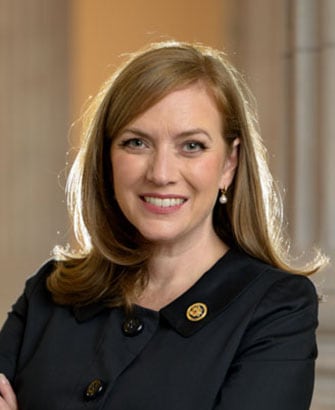
Lizzie Fletcher
D Democratic nominee for U.S. House, TX-07
Representative since 2019
- On the ballot
- On the general election ballotNov 3, 2026 · Texas US House 7
- Where to vote
- Find your polling place (opens in a new tab) · More ways to vote
- Top priorities
- Flooding
- Transportation & Infrastructure
- Jobs & Economy
- National Security & Foreign Policy
- Voting Rights
- In Congress
- Representative since 2019 · votes with their party 95% of the time. See the record · Office phone 202-225-2571
- Money
- $1.8M raised, $1.7M spent, $1.5M cash on hand (through Oct 14, 2026). Where it comes from
- Who gives
- 12% of individual money from donors at $200 or less · 75% from Texas · largest committee giver OVINTIV USA INC. PAC, $10K
- Outside groups
- $10 supporting Fletcher
- Backed by
- Animal Wellness Action · EMILY’s List · Latino Labor Leadership Council of Southeast Texas and 20 more. As the campaign lists them
- Sponsored most in
- Energy, Health, Environmental Protection
13 priorities from lizziefletcher.com, in the order they are listed there. Every heading and the text under it is copied exactly, as one passage for each page it is from, and links to that place on the page; hover a source to see which passage it opens.
Managing the threat of flooding and improving our water infrastructure are vital to our community’s future.
To succeed, we need to work together to strengthen existing systems while implementing new projects and smart policies:
- Improving existing structures, including the Addicks and Barker Reservoirs;
- Expediting the projects recommended following the Buffalo Bayou Resiliency Study;
- Identifying additional detention areas;
- Revising the floodplain maps;
- Devising and installing a system for coastal surge protection;
- Incentivizing public-private partnerships;
- Coordination and communication among key stakeholders; and
- Ensuring federal projects are completed on time and on budget.
These matters are critical to residents across our district and across our region.
In Congress, I have worked with city, county, and federal leaders on both sides of the aisle to prioritize our region and to secure the resources, information, and direct assistance our district needs to rebuild and to be better prepared for the next storm.
I led the bipartisan effort to release $4 billion in federal disaster relief funds, which was signed into law by President Trump. Working with our local leaders, I wrote the Hazard Eligibility and Local Projects (HELP) Act, a bill to cut through federal red tape to allow disaster relief projects to begin sooner, and built a bipartisan coalition to pass the bill in the House and the Senate. It passed with overwhelming bipartisan support, and President Biden signed it into law. I have also introduced the Reinvesting in Shoreline Economies and Ecosystems (RISEE) Act to create a new stream of funding and provide a more permanent funding source for coastal infrastructure and flood resiliency projects while helping incentivize new clean energy projects.
I advocated for our community and worked to deliver nearly $10 million to design and construct the Meyergrove Detention Basin, a stormwater detention basin to protect homes and businesses in our district. I have worked closely with the Army Corps of Engineers’ Galveston District on the projects in our district and region. Building on the Corps’ work, I advocated and voted for the authorization of the Texas Coastal Study—also known as the Ike Dike—in the Water Resources and Development Act of 2022, to mitigate storm surge at the coast and protect us from catastrophic damage.
source ↗ (opens the page at this passage) · lizziefletcher.com/flooding
As a place that welcomes newcomers from across the country and around the world, the greater Houston region has grown rapidly in recent years—it is one of the fastest-growing metropolitan areas in the country.
But our roads and transit system have not grown at the same pace, which makes it harder to transport goods, commute to work, get to school, and attract new businesses. Improving the infrastructure to support our growing region is one of my top priorities.
In Congress, I have actively partnered with local governments, agencies, and businesses to identify and advocate for needed resources and improvements in our district and our region.
One of the first things I did when I got to Congress was remove existing prohibitions on federal funding for Houston METRO and our mobility infrastructure. We need to make sure that Houston receives its fair share of federal transportation dollars, and that was a critical first step. I have also worked to support our infrastructure in comprehensive legislation for our federal highway, transit, and safety programs through the INVEST in America Act, securing five amendments important to our region in the final bill that passed the House of Representatives.
As a member of the authorizing committee, I worked with a bipartisan coalition to ensure investment in Houston’s water infrastructure and to secure authorization for the Port of Houston Expansion Channel Improvement Project, a project of great importance for the economy of our region and of the entire country in the Water Resources Development Act of 2020. Once the project was authorized, I continued to advocate for the Port and helped secure $142.5 million to modernize the Barbour’s Cut Channel and ensure PortHouston remains a strategic gateway for trade.
I voted in support of the Infrastructure Investment and Jobs Act, which President Biden signed into law and which has already provided $42.5 million for George Bush Intercontinental Airport and $15.4 million for William P. Hobby Airport for infrastructure development. It will also help modernize public transit and can fund local projects like METRONext.
Working with local leaders, I helped deliver $2,500,000 in federal funding to replace approximately 2,400 linear feet of pre-1939 cast iron potable water distribution lines in West University Place, $782,000 for the City of Bellaire’s waterlines to improve water distribution and wastewater collection in Bellaire, as well as $5,000,000 for Houston METRO to make improvements to the 82 Westheimer bus route, which has the highest ridership in Texas. I am actively working to deliver funding for more transportation and infrastructure projects, including intersection improvements throughout our community.
source ↗ (opens the page at this passage) · lizziefletcher.com/transportation-infrastructure
Houston is a hard-working city. A leader in invention. The energy capital of the world. Home to the world’s largest medical center, one of the world’s largest ports, and scientific, medical, and technological innovation. We work hard, and we work together.
Trade plays an essential role in Houston’s economy. As Co-Chair of the New Democrat Coalition Trade Task Force, I worked across the aisle to help pass the United States-Mexico-Canada Agreement (USMCA) in the House. Trade with Mexico and Canada accounts for billions of dollars and thousands of jobs across our city and our state. The USMCA modernizes the North American Free Trade Agreement (NAFTA), bringing it into the 21st century, and improving trade with two of Texas’ most important partners.
I have led efforts to urge the Biden administration to reach agreements with some of our closest allies—including the European Union, the United Kingdom, and Japan—to eliminate the Section 232 steel and aluminum tariffs.
Understanding the vital role of energy exports and the activities of the Port, I worked to secure authorization for the Houston Ship Channel Expansion Improvement Project—Port Houston’s project to widen and deepen the channel to accommodate modern vessels. Once the project was authorized, I advocated for funding and helped deliver $142.5 million for the project. The Port is an economic driver for our city and country, an important gateway to the world, and generates thousands of jobs.
As our city has grown, our economy has diversified—and new initiatives and partnerships make possible continued development. From commercializing research to incubating startups, the possibilities and the talent in our community are unmatched. In Congress, I am working to support vocational and retraining programs that help people connect their interests and skills with good, high-paying jobs. And I co-sponsored and voted for the Paycheck Fairness Act in Congress to help eliminate the gender wage gap.
In response to the COVID-19 pandemic, I supported legislation in Washington to help our small businesses survive and recover, and worked closely with small business owners here in Houston to improve these programs, especially the Paycheck Protection Program. I was proud to work with local residents to introduce the LIFT UP Act to help businesses with disaster loans get equal relief. I fought to make sure energy jobs were included in the critical lending programs. And I supported the RESTAURANTS Act to help our local restaurants survive. Through it all, I have been in constant contact with the people who live and work here to understand and respond to the new challenges before us.
In Houston, we work together. And I have been proud to take that approach in Washington, earning the U.S. Chamber of Commerce’s Abraham Lincoln Leadership for America Award, which honors the top 20 members of the House of Representatives and top 10 Senators who “demonstrate the leadership needed to advance policies that support American business.”
source ↗ (opens the page at this passage) · lizziefletcher.com/jobs-economy
We are facing serious threats both abroad and at home, and nothing is more important than keeping our country safe. We must work to repair our reputation and secure our alliances. And we must maintain our focus on stopping terrorist and other threats at home and around the globe, including providing law enforcement the resources and training needed to prevent terrorism.
At the same time, we must prioritize support for our men and women who serve us in our military. Our troops put their lives on the line every day, and they deserve a government that honors them and the sacrifices they make for us all. This includes taking all necessary steps to protect them abroad and making sure that they are supported at home. We must ensure their access to quality health care, educational opportunities, claim resolution, and housing.
In Congress, I have worked to strengthen our national security and restore America’s leadership in the world. In supporting the National Defense Authorization Act, I supported our troops and national defense, including the largest pay raise for our troops in a decade. I introduced the Advancing Uniform Transportation Opportunities (AUTO) for Veterans Act to help disabled veterans access vehicles modified for their disabilities. I have also supported legislation in the House to expand job training opportunities for veterans, to ensure pay parity for the Coast Guard, and to discharge education loan debt for veterans. I was also proud to support the Sergeant First Class Heath Robinson Honoring our Promise to Address Comprehensive Toxics (PACT) Act, which is the biggest expansion of benefits and services for veterans exposed to toxins in more than 30 years.
I have also worked to protect those who have provided vital support to U.S. missions, including Afghan interpreters, contractors, and security personnel. I co-sponsored and voted for the Averting Loss of Life and Injury by Expediting SIVs (ALLIES) Act of 2021 to increase visa caps for Afghan interpreters and expedite the visa process, as well as the HOPE for Afghan SIVs Act of 2021, both of which passed the House on an overwhelmingly bipartisan basis.
In working to defend democracy, I voted for the Funding for the People Act and the Additional Ukraine Supplemental Appropriations Act to provide critical military aid and humanitarian assistance to defend against President Putin’s war on Ukraine. I have and will continue to support sanctions against Russia for its unprovoked, unjustified, and unconscionable war against Ukraine.
The January 6 attack was an unprecedented and unimaginable attack on our Capitol, our Constitution, and our country. We must not allow anyone to rewrite history or diminish the gravity of what took place that day. Our democracy remains at risk and we must do all we can to ensure such an assault on our democracy never happens again.
source ↗ (opens the page at this passage) · lizziefletcher.com/national-security-foreign-policy
We should be enacting and enforcing laws that make it easier, not harder, for citizens to exercise their constitutional right to vote. We must fight for a better system to determine our representation, eliminate partisan bias, and work for an equitable voting process.
In Congress, I have worked to ensure that we are enacting legislation and enforcing laws that make it easier, not harder, for citizens to vote, cosponsoring several pieces of legislation to secure both the right to vote and access to the ballot box. A member of the Voting Rights Caucus, I cosponsored H.R. 1, the For the People Act, which increases access to voting by creating automatic voter registration, simplifying absentee voting, and expanding early voting. I also cosponsored the Voter Empowerment Act to protect the voting rights of Americans by ensuring equal access to the ballot for every eligible voter, modernizing voter registration, and helping to eliminate deceptive practices that deter people from voting. I am an original cosponsor of H.R. 4, the John Lewis Voting Rights Advancement Act, to restore the protections and enforcement of the Voting Rights Act following the 2013 Shelby County, Alabama v. Holder decision. I also voted for the Freedom to Vote: John R. Lewis Act, which combines elements from both H.R. 1 and H.R. 4 to protect voters from discrimination, including making Election Day a national holiday; establishing online and automatic voter registration and protect same-day voter registration; improving poll and ballot access for disabled, military, and overseas voters by prohibiting states from restricting the ability to vote by mail; requiring all states to allow at least two weeks of early voting with accessible and uniform hours at polling places; providing recruitment and training for nonpartisan poll workers; prohibiting partisan gerrymandering of congressional districts; and authorizing grants to states to secure election systems.
source ↗ (opens the page at this passage) · lizziefletcher.com/voting-rights
Social Security is a promise we made to seniors who have paid into these programs with every paycheck. Medicare is the promise of health care coverage for millions of seniors and people with disabilities. We have an absolute obligation to keep these promises and protect Social Security and Medicare.
People across our community have paid into the Social Security and Medicare programs for decades, understanding that these programs would provide health and financial security later in their lives. We can—and we must—ensure the long-term viability of these programs.
In Congress, I oppose efforts to privatize Social Security and Medicare, and I oppose efforts to cut benefits for seniors or the disabled. To ensure the long-term viability of these programs we need to make government work more efficiently by cutting wasteful spending, fraud, and abuse, but not by cutting these programs.
I voted for the historic Inflation Reduction Act of 2022, which addresses the issue of high prescription drug costs by allowing Medicare to negotiate prices for high-cost drugs. It also provides seniors and people with disabilities who have Medicare coverage with new protections against unaffordable prescription drug bills, and puts money back in the pockets of seniors.
Medicare beneficiaries are some of the most vulnerable for contracting COVID-19 and other diseases, and should not be forced to choose to forgo regular care or risk exposure. In Congress, I led a bipartisan effort to expand telehealth services during the public health emergency, ensuring Medicare patients would not have to make this risky choice.
I also co-sponsored legislation to ensure benefit guarantees and to address the Windfall Elimination Provision (WEP) that unfairly impacts many in our community, especially our teachers.
source ↗ (opens the page at this passage) · lizziefletcher.com/social-security-medicare
The health and safety of half of the population is under attack. Access to reproductive health care is essential to all Americans’ ability to control their lives. It is a matter of health. It is a matter of economics. It is a matter of justice. And it is not negotiable.
Protecting women’s access to safe and affordable reproductive health care is one of my top priorities. I have been an advocate for this issue for more than 25 years. When I was in high school, I stood outside a Houston Planned Parenthood clinic in the August heat to stop protestors who threatened to chain themselves to the doors and prevent women from entering the clinic. After college, I co-founded Planned Parenthood Young Leaders to build a new generation of supporters for this important community partner and served on its Houston affiliate Board of Directors.
For decades, Republican legislators have warned that if given the chance, they would do everything in their power to overturn Roe v. Wade. That day has come. Texas and states across our country have banned abortion, stripping women of their freedom, dignity, privacy, and autonomy.
Soon after the Supreme Court overturned Roe v. Wade, I wrote the Ensuring Women’s Right to Reproductive Freedom Act to reaffirm the right to travel across state lines for an abortion. My bill received overwhelming support and was endorsed by 13 organizations, including Reproductive Freedom for All (formerly NARAL Pro-Choice America), the American Civil Liberties Union (ACLU), and the Planned Parenthood Federation of America and passed the House in 2022. To help ease the financial burden of people forced to travel for abortion, I also helped introduce the Reproductive Health Travel Fund Act.
I have co-sponsored and voted for the Women’s Health Protection Act to legalize abortion across the country and the Right to Contraception Act to codify the right for Americans to access contraception. I am also fighting to protect the Title X Family Planning Program, which was introduced in the Congress by my TX-07 predecessor, then-Congressman George H.W. Bush.
As the Whip of the Congressional Pro-Choice Caucus, I am standing up for the right for all Americans to have access to the full range of reproductive health care and to make their own health care decisions.
source ↗ (opens the page at this passage) · lizziefletcher.com/reproductive-rights-health-care
Houston is a city of immigrants. It is at the core of our very identity, and an essential part of what makes the Houston area a great place to live.
There is no doubt that we need to fix our immigration system. It will not be easy to do. But instead of meaningfully addressing it, Congress has played politics for decades, using scare tactics to win elections instead of doing what’s best for our country.
We need comprehensive immigration reform with a pathway to citizenship. It should be thoughtful, practical, and fair. It should include strengthening our border security, cracking down on employers who break the law, and ensuring law enforcement, including immigration and customs enforcement, can do its job to keep our communities safe. It should not include building a wall between us and our state’s top trading partner or dehumanizing those who seek asylum at our borders.
In Congress, I have worked to address our broken immigration system and provided practical solutions toward comprehensive immigration reform. I led an effort requesting that Congress make it possible to hire more highly qualified immigration judges to accelerate the process and help reduce the nearly 1.7 million pending immigration cases, improve our immigration system, and ensure due process.
I co-sponsored and voted for the American Dream and Promise Act to protect DACA and TPS recipients, and the National Origin-Based Antidiscrimination for Nonimmigrants (NO BAN) Act, outlawing discrimination in the entry of immigrants or nonimmigrants based on religion, in addition to the protections against discrimination based on race, sex, nationality, place of birth, and place of residence already in place.
I have spoken out against white supremacist terrorism and anti-immigrant rhetoric. And I have focused on addressing the unprecedented delays at the United States Citizenship and Immigration Services (USCIS) that are hurting families and businesses as well as other matters at the agency.
source ↗ (opens the page at this passage) · lizziefletcher.com/immigration
Houston is a world leader in advances in medicine, home to the largest medical center in the world. From the first heart transplant to the cutting-edge research in the Texas Medical Center today, we have led the way for decades. Yet many in our community do not have access to quality, affordable health care. We have an obligation to make sure they do.
The Affordable Care Act (ACA), passed more than a decade ago, was a strong first step toward addressing real obstacles to care and making health care accessible, but we have work ahead of us to improve it. It is critical now that we defend the protections of the ACA, especially for Texans with pre-existing conditions, against partisan attempts to repeal it.
In Congress, I have worked to develop and advance policies to improve our health care system, lower costs, increase choices, reduce burdens for small businesses, eliminate junk plans, expand coverage, and bring down the cost of prescription drugs.
I introduced the Expand Medicaid Now Act–which was signed into law as part of the American Rescue Plan Act–and which incentivizes states like Texas to expand Medicaid by increasing the amount of federal funding to any state that chooses to expand Medicaid access in the future. Texas is one of 10 states that have not expanded Medicaid and an estimated 1.4 million Texans would be eligible for coverage under expansion.
I have also worked in Congress to bring down the cost of prescription drugs. I have co-sponsored and voted for the Protecting Americans with Preexisting Conditions Act, the Strengthening Health Care and Lowering Prescription Drug Costs Act, and the Elijah Cummings Lower Prescription Drug Costs Now Act, to give Medicare the ability to negotiate the price of prescription drugs and provide dental and vision benefits to Medicare recipients. I also voted for the Inflation Reduction Act, which was signed into law and addresses the issue of high prescription drug costs by allowing Medicare to negotiate prices for high-cost drugs. It also provides seniors and people with disabilities who have Medicare coverage with new protections against unaffordable prescription drug bills. And it builds on the success of the American Rescue Plan Act, by extending the health insurance premiums tax credits for hundreds of thousands of Texans. On average, these tax credits reduced health insurance costs by $560 per year, while expanding coverage to about 370,000 Texans. Lowering health care costs continues to be one of my top priorities.
source ↗ (opens the page at this passage) · lizziefletcher.com/health-care
Gun violence in America doesn’t have to be inevitable. We can prevent gun violence with thoughtful, data-driven, common-sense policy solutions.
People across our community have shared with me their concerns about the gun violence epidemic in our country, and in our own community. They are Republicans. They are Democrats. They are Independents. They are gun owners. They are parents. They are students. They are teachers. They are faith leaders. They are colleagues. They are friends. And they are worried. They are worried about the safety of our neighbors here at home and across the country. They know that common-sense efforts to reduce gun violence are consistent with our Texas traditions of hunting and fishing and responsible gun ownership. And they want leaders who will stand up to the corporate gun lobby, to address the root causes of this problem, to understand the public health effects of this epidemic, and to put the safety of our communities first.
Our district has seen too many incidents of gun violence in recent years. From the Memorial Day shooting on Memorial Drive, to the September 2016 shooting on Weslayan Street, to the September 2019 shooting of Harris County Sheriff’s Deputy Sandeep Singh Dhaliwal. And, sadly, there are many more acts of gun violence in our community, across our state, and across our country each day.
In Congress, I have worked to support common-sense gun safety legislation and to support efforts to study and understand the root causes of gun violence and the steps we can take to keep our communities safe, including serving as a member of the Gun Violence Prevention Task Force.
I voted for the largest federal gun safety legislation in more than 20 years, the Bipartisan Safer Communities Act, which President Biden signed into law. But there is much more that must be done. To that end, in Congress, I have co-sponsored and voted for the Bipartisan Background Checks Act of 2019 and the Bipartisan Background Checks Act of 2021 to require universal background checks and close the loopholes in our country’s background check systems that enable domestic abusers and convicted felons to buy guns. I voted to pass the Enhanced Background Checks Act, which would close the Charleston Loophole. I also co-sponsored and voted for the Assault Weapons Ban of 2019 and the Assault Weapons Ban of 2022 as well as the Protecting Our Kids Act, which raises the purchasing age for certain semi-automatic gun weapons from 18 to 21 years old, and the Extreme Risk Protection Order Act. In the 116th and 117th Congresses, I voted to fund gun violence prevention research at the Centers for Disease Control and Prevention (CDC) and National Institutes of Health (NIH) for the first time in decades.
I will continue to fight to keep our children, our families, and our communities safe.
source ↗ (opens the page at this passage) · lizziefletcher.com/gun-violence-prevention
I am proud to represent the energy capital of the world. Here in Houston, we know about energy. We know the last decade has brought an energy renaissance that has reduced costs and increased investment here and around the world. We know that domestic production of oil and natural gas is critical to our national security, our economy, and our energy future. And we know that renewable energy is an increasingly important part of the energy mix. We also know that climate change represents a real and growing threat. We know we are already experiencing its effects.
To meet this dual challenge, we need the U.S. leading the way to an energy future that is safer, cleaner, and more efficient. To do that, we need big ideas. And there is no better place to find them than here in Houston.
When it comes to energy innovation, this is its home. And people across the district are working to make sure Texas is the leader in developing wind energy in the U.S. We have installed more wind power than any other state. Research and development of new energy technologies for carbon capture are happening here, and creative natural infrastructure ideas like carbon sequestration through a market-based system are Texas-based proposals.
Most important, in the last decade, the advances in technology that have transformed our energy economy have substantially reduced U.S. carbon emissions. Replacing coal-fired plants with natural gas plants has contributed more to the reduction of domestic carbon emissions than any other effort. And reducing emissions is key to addressing climate change.
We need the input of a diverse and broad coalition of stakeholders who have energy expertise to chart our path forward. Our plan and our process must be focused on working together, not casting blame or delaying action. In Congress, I bring this unique and important perspective.
I have advocated for policies that address the need for clean, reliable energy at home and around the world, the reality and urgency of climate change, and the concerns for our environment and our communities. I am also focused on the question of how we develop modern energy infrastructure that both lowers carbon emissions and delivers low-cost energy to consumers which allows the economy to thrive.
I have spoken up in favor of thoughtful policies that will help us reach our shared goals, and I have spoken out against proposals that I believe are misguided. I have helped ensure authorization and funding for critical energy research and development and pilot programs for innovative safety and other innovations. In 2019, I voted for the Climate Action Now Act, recommitting the United States to the Paris Agreement and ensuring that we are leading the efforts on climate and leading in energy production and technology, while introducing an amendment that our plan to do so remains technology-neutral. At the same time, I have opposed efforts to ban fracking, to ban offshore drilling, and to curtail use of natural gas, which has been a key driver in reducing greenhouse gas emissions.
I introduced the Revive Economic Growth and Reclaim Orphaned Wells (REGROW) Act, which President Biden signed into law as part of the Infrastructure Investment and Jobs Act, to establish a program to plug and remediate orphaned wells across the U.S. The State of Texas will receive nearly $350 million because of this legislation, which will reduce environmental hazards and public health risks and create good jobs. I also worked on key provisions of the Inflation Reduction Act that help reduce emissions.
source ↗ (opens the page at this passage) · lizziefletcher.com/energy-environment
Quality education is essential to our democracy. Good schools are the foundation for an informed community, better jobs, and a strong economy.
All children—no matter where they live—deserve the opportunity to reach their full potential. We must invest in public education and work to ensure its success. Teachers need to be able to teach. We need programs designed to close the achievement gap. We need to end the school-to-prison pipeline. We need to make sure that all of our schools offer the Science, Technology, Engineering and Math (STEM) curriculum that helps build the skills our students will need for the jobs of the future and also a curriculum that encourages them to think, to create, and to find their own voices.
For the college-bound population, we must address the rising costs of tuition. For those who have graduated, we must find relief from crushing student debt. I support the Biden administration’s efforts to deliver relief to millions of student loan borrowers by launching income-driven repayment plans and lowering monthly payment amounts. Community colleges should be expanded, and access to technical and vocational programs should be encouraged.
Failures in our education system will affect every aspect of our community, from the strength of our economy to the strength of our democracy itself. Educating all of our citizens should always be our priority.
In Congress, I am working to ensure that every child can receive a high-quality education and the opportunities that a good education affords. I introduced the JROTC Cyber Training Act, to enhance the preparation of students in the Junior Reserve Officers’ Training Corps (JROTC) for careers in computer science and cybersecurity. I have also supported the IDEA Full Funding Act, School Food Modernization Act to support nutritional programs in schools, the College Transparency Act, the Resident Education Deferred Interest (REDI) Act for interest-free deferment on student loans for medical or dental residents, and the FREED Vets Act to automatically discharge federal student loan debt for eligible, permanently disabled veterans.
source ↗ (opens the page at this passage) · lizziefletcher.com/education