Loading this candidate’s profile from the FEC filings and campaign records.
Where They Stand is a nonpartisan guide to everyone running for Congress: their money, their own words and how incumbents voted. Find your ballot →
Candidates › TX-07 race › 2025–2026
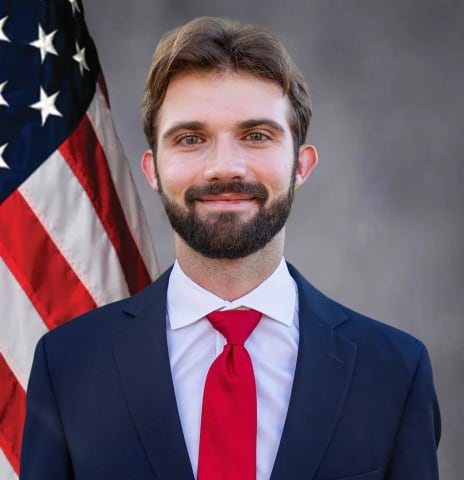
Alexander Hale
R Republican nominee for U.S. House, TX-07
Has not served in Congress
- On the ballot
- On the general election ballotNov 3, 2026 · Texas US House 7
- Where to vote
- Find your polling place (opens in a new tab) · More ways to vote
- Top priorities
- Houston's Energy Economy
- Increasing Affordability
- Lowering Healthcare Costs
- Public Safety
- Fiscal Responsibility
- Money
- $115.7K raised, $96.6K spent, $19.1K cash on hand (through Oct 14, 2026). Where it comes from
- Who gives
- 6.2% of individual money from donors at $200 or less · 93% from Texas · largest committee giver TARGA RESOURCES CORP. FEDERAL PAC, $2.5K
- Backed by
- Conservative Coalition of Harris County · The "C" Club of Houston · Young Republicans of Houston and 22 more. As the campaign lists them
6 priorities from halefortexas.com, in the order they are listed there. Every heading and the text under it is copied exactly, as one passage for each page it is from, and links to that place on the page; hover a source to see which passage it opens.
Focusing on the issues that matter most to TX-07 families. ↗ (opens halefortexas.com at this heading)
TX-07 deserves a representative who will fight for our energy companies - not subsidize inefficient competitors. I'll champion Houston's energy industry and protect the families that depend on it.
source ↗ (opens the page at this passage) · halefortexas.com
TX-07 deserves a representative who will fight for our energy companies, protect the families that depend on them, and reject mandates that punish Houston workers.
Where Alexander Stands ↗ (opens halefortexas.com/priorities/energy at this heading)
- Defend Houston's role as the energy capital of America.
- Fight federal mandates that hand jobs to foreign producers.
- Champion an all-of-the-above strategy: oil, gas, nuclear, refining, and innovation.
Jump to sources (24) ↓Houston is the energy capital of the western world, and TX-07 is right at the center of it. The energy workers and engineering talents that power our country are not abstractions — these are the paychecks, the pensions, the small businesses, and the people that hold this district together. When Washington treats American energy as a problem or burden to be managed rather than an industry to be unleashed, the cost lands in Houston first: and on the families who watch their job security become a political bargaining chip. Alexander's first commitment in Congress is simple. Houston's energy economy (and specifically, CD7's energy economy) is not a liability to be apologized for. It is a national asset, and it will be defended and promoted like one.
That defense begins with energy exports. American energy exports — crude oil, refined products, LNG, NGLs, and petrochemicals — are a powerful economic and geopolitical tool the United States has, and Houston is the city that finances, engineers, refines, manages, and ships them. Every cargo that leaves the Gulf Coast displaces a barrel of Russian crude in Europe, a ton of Iranian fuel oil in Asia, or a coal-fired megawatt in a foreign economy. Every export deal anchors an allied country to American molecules instead of an adversary's supply. And every dollar of export revenue flows back through the same Houston companies, engineers, and trading desks that built this industry from the ground up. The job of the federal government and the U.S. Congress is not to pick which barrel goes where, which technology wins, or which buyer is worthy. It is to clear the runway and let the free market do what it has already proven it can do — make America the dominant energy supplier of the twenty-first century. To use a recent example, the Biden administration's pause on new LNG export approvals was a foolish strategic error11U.S. Department of Energy, "The Temporary Pause on Review of Pending Applications to Export Liquefied Natural Gas" (January 2024) — DOE announcement on January 26, 2024 of a temporary pause on review of pending applications to export LNG… — and Representative Lizzie Fletcher's record on it tells you everything about how poorly Houston's CD-7 has been represented. In February 2024, with President Biden in the White House and the LNG export pause as official Democratic policy, she voted against H.R. 7176 — the Unlocking Our Domestic LNG Potential Act.22U.S. House of Representatives, Clerk of the House, Roll Call 52, 118th Congress, 2nd Session — vote on passage of H.R. 7176, the Unlocking Our Domestic LNG Potential Act, February 15, 2024. Bill passed 224-200. Representative Lizzie Flet… Twenty-one months later, in November 2025, with a new administration in office and the pause overturned, Fletcher voted yes on H.R. 1949 — substantively the same bill from the same sponsor, doing the same thing.33U.S. House of Representatives, Clerk of the House, Roll Call 304, 119th Congress, 1st Session — vote on passage of H.R. 1949, the Unlocking Our Domestic LNG Potential Act of 2025, November 20, 2025. Bill passed 217-188. Representative Li… The policy didn't change. The politics did…Houston's energy industry needs a representative who supports it when it costs something, not just when it's safe to do so. Alexander refuses to wait for the political weather to be favorable before standing up for constituents in industry that built this city.
Energy projects in America today face an absurd review gauntlet. The average federal permit now takes four to five years.44Council on Environmental Quality, Environmental Impact Statement Timelines (2010-2018) (June 12, 2020), Executive Office of the President — based on review of 1,276 EISs, CEQ found that "across all Federal agencies, the average (i.e., me… Even after a permit is issued, any subsequent legal challenge takes on average another four years to resolve.55Breakthrough Institute, "Understanding NEPA Litigation" (2024), analysis of 387 NEPA appellate cases 2013-2022 — found that on average 4.2 years elapsed between publication of an Environmental Impact Statement or Environmental Assessment… Agencies win roughly 80% of those legal challenges, meaning most of the delay produces no policy change at all: it's just lost time.66Breakthrough Institute, "Understanding NEPA Litigation" (2024) — found that federal agencies prevailed in approximately 80 percent of NEPA appellate cases reviewed over the 2013-2022 period. Independent confirmation in Institute for Prog… Mckinsey and industry analysts estimate $100 to $140 billion in delayed investment every year as a direct result.77McKinsey & Company, Unlocking US federal permitting: A sustainable growth imperative (July 2025) — estimates that the four-to-five-year federal permitting timeline results in $100 billion to $140 billion in unrealized annual returns on p… Alexander will champion permitting reform to put a clock on federal review, restore judicial deference to agency approvals,88Seven County Infrastructure Coalition v. Eagle County, Colorado, 605 U.S. ___ (2025) (No. 23-975, decided May 29, 2025), 8-0 decision — Supreme Court held that federal agencies are entitled to "substantial judicial deference" in NEPA rev… and end the practice of using process as a substitute for policy. Permitting reform is not a technical issue. It is jobs policy. Faster pipelines, faster transmission lines, and faster export terminals mean more middle-class jobs in TX-07.
An honest energy strategy is all-of-the-above. Alexander will defend the oil and gas industry without flinching, but he will also push hard for the next generation of firm, reliable power: advanced nuclear, modernized natural gas, and a hardened electric grid built for the demand decade we are already living in. And with regards to financing and building our energy future and unfolding demand decade: federal energy subsidies should support American energy production, not pick winners and losers. The Inflation Reduction Act's energy tax credits were originally scored by the Joint Committee on Taxation to cost $270 billion over a decade.99Joint Committee on Taxation, "Estimated Budget Effects of the Revenue Provisions of Title I — Committee on Finance, of an Amendment in the Nature of a Substitute to H.R. 5376, the 'Inflation Reduction Act of 2022,'" JCX-18-22 (August 9, … By early 2024, the Congressional Budget Office had revised that estimate to roughly $870 billion through 20311010Committee for a Responsible Federal Budget, "IRA Energy Provisions Cost Could Double With New Emissions Rule" (February 2024), citing updated Congressional Budget Office baseline projections — energy-related provisions of the Inflation R… — more than double the original cost — driven by looser-than-expected regulatory implementation, surging EV credit uptake, and aggressive Treasury guidance that expanded eligibility well beyond what Congress originally contemplated.1111The Hill, "Greater-than-expected investment in EVs, wind, solar swells cost of Inflation Reduction Act: CBO" (February 9, 2024), reporting on Congressional Budget Office Director Phillip Swagel's testimony attributing the cost increase t… The lesson we can learn from this is straightforward: subsidies on open-ended tax-credit autopilot will always cost more than advertised. Future federal energy policy should be technology-neutral, time-limited, and judged by whether it lowers costs for American families — not by how much capital it can route to politically favored sectors.
But let's end this by going back to the basics: we can't talk about energy dominance and population growth in Houston without talking about Texas's water infrastructure — and the crisis unfolding alongside the boom. The Texas Water Development Board projects the state's population will grow by 73 percent — from 29.7 million to 51.5 million — by 2070, while existing water supplies decline by roughly 18 percent over the same period.1212Texas Water Development Board, 2022 State Water Plan, Chapter 4 (Future Population and Water Demand) — projects Texas population growth of 73% from 29.7 million in 2020 to 51.5 million by 2070, and existing water supply decline of approx… The Texas Comptroller estimates the state would face a 6.9 million acre-foot annual shortage during a repeat of the drought of record,1313Texas Real Estate Research Center / Texas A&M, "Texas Water Planning: Preparing for Future Droughts" (January 2026), summarizing TWDB 2022 State Water Plan projections — 6.9 million acre-feet annual shortage during a drought-of-record sc… and the most recent draft of the 2027 State Water Plan now puts the price tag of the projects needed to avoid that crisis at $174 billion.1414Houston Public Media, "Texas needs at least $174 billion to avoid water crisis, state says" (April 17, 2026), reporting on the draft 2027 Texas State Water Plan released by the Texas Water Development Board. Governor Abbott has taken this seriously: he named water infrastructure an emergency legislative item in February 2025 — the first time a sitting Texas governor has done so in forty years1515Texas 2036, "The 'Texas-Sized' opportunity for water" (February 7, 2025) — confirms Governor Abbott's February 2, 2025 State of the State designation of water infrastructure as an emergency item and notes this was the first such designat… — and signed a $20 billion generational water investment into law that June.1616Office of the Texas Governor, "Governor Abbott Signs Largest Generational Water Investment In Texas History In Lubbock" (June 18, 2025) — announces signing of Senate Bill 7 by Senator Charles Perry and Representative Cody Harris, providi… Now Texas needs Washington to be a partner, not an obstacle. The need is not abstract: Texas's Clean Water State Revolving Fund is nine times oversubscribed,1717Water Environment Association of Texas, Executive Director's Corner (July 8, 2025), testimony before Texas Senate Water, Agriculture, and Rural Affairs Committee — in 2024, the Clean Water State Revolving Fund disbursed approximately $46… and Houston faces billions of dollars in court-mandated wastewater system repairs that the city has limited financing tools to address on its own.1818Water Environment Association of Texas, Executive Director's Corner (July 8, 2025), testimony before the Texas Senate Water, Agriculture, and Rural Affairs Committee — documents Houston among five Texas cities currently operating under f… Alexander will fight for federal water investment that flows flexibly to Texas — through the EPA's Clean Water and Drinking Water State Revolving Funds,1919U.S. EPA, "Clean Water State Revolving Fund (CWSRF)" program overview, and "Drinking Water State Revolving Fund (DWSRF)" program overview, Established 1987 and 1996 respectively; administered in Texas by the Texas Water Development Board. U.S. Army Corps of Engineers civil works projects,2020U.S. Army Corps of Engineers, Galveston District, Addicks and Barker Reservoirs Flood Control Project — Corps-operated flood control infrastructure approximately 17 miles west of downtown Houston, sited at the confluence of Buffalo Bayou… federal hazard-mitigation grants,2121Federal Emergency Management Agency, hazard-mitigation grant programs including the Hazard Mitigation Grant Program (Section 404 of the Stafford Act), Flood Mitigation Assistance, and successor programs to the Building Resilient Infrastr… and HUD Community Development Block Grant Disaster Recovery funds2222U.S. Department of Housing and Urban Development, Community Development Block Grant Disaster Recovery (CDBG-DR) program — administered in Texas by the Texas General Land Office (GLO). HUD allocated $5.676 billion to Texas for Hurricane H… — so Harris and Fort Bend counties can build the infrastructure they need without Washington dictating how. He will support reauthorizing the State Revolving Funds at their expanded Bipartisan Infrastructure Law levels,2323Infrastructure Investment and Jobs Act of 2021 (Public Law 117-58, signed November 15, 2021) — appropriated more than $50 billion to EPA over five years (FY2022–FY2026) for drinking water, wastewater, and stormwater infrastructure, inclu… prioritizing Texas's share of Corps civil works appropriations, and the bipartisan Reforming Disaster Recovery Act now moving in the Senate,2424Reforming Disaster Recovery Act — included in the 119th Congress as S.Amdt. 4308 and as Division I, Title LV, Section 5505 of S. 2296, a bipartisan housing legislative package. Would authorize CDBG-DR as a standing program with a dedicat… which would finally authorize CDBG-DR as a standing program with dedicated Treasury funding so Houston is not waiting years after the next storm for Washington to act. Energy and water are the foundations under everything else. Get them right, and Houston's growth story continues. Get them wrong, and the city we love starts to wobble. Alexander is running to get them right.
source ↗ (opens the page at this passage) · halefortexas.com/priorities/energy
Heading as listed on halefortexas.com ↗ (opens halefortexas.com at this heading)
Houston families are paying more for the things they cannot skip: a home, insurance, health care, and electricity. Alexander will go after the costs Washington actually controls.
source ↗ (opens the page at this passage) · halefortexas.com
Increasing Affordability and Lowering the Cost of Living ↗ (opens halefortexas.com/priorities/affordability at this heading)
- Build more, faster. Cut the federal red tape that makes it more expensive to build a house, a power plant, or a pipeline in Houston.
- Attack the four bills that eat a Houston paycheck: housing, insurance, health care, and electricity.
- Stop financing inflation. Bring down the deficits that keep mortgage rates near 7 percent.
Jump to sources (20) ↓Houstonians do not need a lecture about inflation. They need someone in Washington who understands what actually happened to their budgets. Consumer prices are about 28 percent higher than they were in January 2021.11BLS, "Consumer Price Index — July 2026" (August 12, 2026): CPI-U, not seasonally adjusted, up 3.4 percent over the last 12 months to an index level of 333.918. January 2021 index for the same series: 261.582. 333.918 ÷ 261.582 = +27.7 pe… The average paycheck, after inflation, has gained almost nothing over that stretch, and this year it is falling behind again: inflation ran 3.4 percent in July while real hourly earnings fell 0.2 percent over the past twelve months, the fourth straight month in which prices outran pay.22BLS, "Real Earnings — July 2026" (August 12, 2026), Table A-1: real average hourly earnings for all employees, constant 1982–84 dollars, were $11.30 in July 2026 (preliminary); the same table in the January 2021 release showed $11.43. Th… Here at home, the average Houston worker earns less per hour, after inflation, than the national average, even with the energy industry's high wages in the mix, and the metro added almost no jobs over the past year.33Federal Reserve Bank of Dallas, Houston Economic Indicators (January 2026 edition, published February 13, 2026): Houston real average hourly earnings $36.44 in December 2025 vs. $36.91 nationally. Houston Economic Indicators (February 20… The 2026 Kinder Houston Area Survey found residents naming the economy as the region's biggest problem, confidence in job opportunities at its lowest point since the 1980s, and more than half of respondents worried they will be priced out of where they live within a year.44Kinder Institute for Urban Research, Rice University, The 45th Kinder Houston Area Survey (April 27, 2026): economy named the region's "biggest problem"; job optimism at its lowest since the 1980s. Rice News (July 6, 2026), reporting on … Harris County lost roughly 19,000 homeowning households in 2024 while adding nearly 30,000 renters.55Kinder Institute, The 2026 State of Housing in Harris County and Houston (June 16, 2026): about 19,000 fewer Harris County owner households and nearly 30,000 more renter households in 2024; affordability gap remains near recent records. That is what "cost of living" means in TX-07: not an abstract index, but a household that works full time and is still losing ground.
The honest diagnosis has two parts. First, Washington spent roughly five trillion dollars on pandemic relief in 2020 and 2021, capped by a $1.9 trillion package passed into an economy that was already recovering, while the Federal Reserve held interest rates near zero into 2022. Economists at the Federal Reserve Bank of San Francisco estimated that this fiscal support alone added about three percentage points to inflation by the end of 2021, on top of the supply shocks from shutdowns and the war in Ukraine.66Òscar Jordà, Celeste Liu, Fernanda Nechio, and Fabián Rivera-Reyes, "Why Is U.S. Inflation Higher than in Other Countries?" FRBSF Economic Letter 2022-07 (March 28, 2022): fiscal support measures may have raised inflation by about 3 perc… The supply shocks faded. The fiscal legacy did not: the gross national debt crossed $40 trillion on August 18, interest payments exceed $1 trillion a year, and that borrowing is a major reason the 30-year mortgage rate sits at 6.65 percent rather than the roughly 3 percent Houston buyers saw five years ago.77Debt: CRFB, "Q&A: Gross Debt Versus Debt Held by the Public" (August 20, 2026): gross national debt exceeded $40 trillion for the first time on August 18, 2026, roughly 126 percent of GDP. Interest figures: see Works Cited — Fiscal Respo… Second, the prices that hurt most are not the ones that show up in a headline inflation number. Houston's overall consumer price index rose less than one percent over the past year, but energy prices rose more than 14 percent,88BLS, "Consumer Price Index, Houston-The Woodlands-Sugar Land area — June 2026" (July 14, 2026): all-items CPI-U up 0.8 percent over the 12 months ending June; energy up 14.4 percent. home insurance premiums have climbed more than 55 percent statewide since 2019,99Texas 2036, "Voter Poll: Texans feel the pinch of rising insurance premiums" (2025), citing S&P Global data: Texas homeowners policy costs increased 55.4 percent between 2019 and 2024. Federal Reserve Bank of Dallas, Southwest Economy (2… and Texas electricity rates are up roughly 40 percent since 2020.1010EIA data (via ElectricChoice and EIA-based rate compilations): Texas average residential rate roughly 11.7¢/kWh in 2020 rising to 16.1–16.4¢/kWh in 2026, an increase of roughly 38–40 percent. Primary series: EIA Electric Power Monthly, T… A family can survive a slightly more expensive grocery cart. It cannot easily absorb a $5,600 insurance bill, a $700 summer power bill, and a health plan that costs as much as a second mortgage. Alexander's approach starts from that reality: go after the specific costs, one by one, using the levers a member of Congress actually holds.
Housing: Houston builds more housing than almost any big city in America because it never adopted the zoning codes that strangle supply elsewhere. Washington's job is to stop making that housing more expensive to build and finance. This summer Congress passed the 21st Century ROAD to Housing Act by lopsided bipartisan margins, and it became law on July 11.1111H.R. 6644, 21st Century ROAD to Housing Act, 119th Congress — Senate 85–5 (June 22, 2026), House 358–32 (June 23, 2026), became Pub. L. 119-101 on July 11, 2026 without presidential signature. Sec. 208 authorizes the Innovation Fund at u… That is a real accomplishment, and it is also unfinished: the law authorizes up to $200 million a year in grants for communities that actually increase housing supply, and appropriates nothing. Its final section says so. The money will be decided in the next appropriations bill, then written into rules at HUD, then awarded to the cities that apply. Alexander will fight for appropriations and press HUD to write the rules simply and quickly, so the program rewards regions like Houston that build rather than cities that block construction and then ask for federal help. And because mortgage rates track federal borrowing, every vote Alexander casts for a smaller deficit is a vote for a cheaper mortgage in Houston.
Insurance: Houston has the highest homeowners insurance premiums of any major metro in Texas, averaging about $5,653 a year.1212Insurify analysis reported by the Houston Chronicle (April 11, 2026): Houston average homeowners premium $5,653 in 2025, highest of any major Texas metro; Texas average $4,380 in 2024, up 14 percent. The drivers are not mysterious: the 2021 freeze, the May 2024 derecho, Hurricane Beryl, and the rising cost of rebuilding.1313Federal Reserve Bank of Dallas, Southwest Economy (2026): storm severity (February 2021 freeze, May 2024 Houston derecho) plus supply-chain and labor cost pressures. Congress cannot set insurance rates, and Alexander will not pretend otherwise; that is the Texas Department of Insurance's job. But Congress controls three things that move premiums. It controls the National Flood Insurance Program, which has been patched with 35 short-term extensions since 2017, lapsed outright during last fall's shutdown, and expires again on September 30; it needs a long-term reauthorization that rewards mitigation.1414Congressional Research Service, "What Happens If the National Flood Insurance Program (NFIP) Lapses?" (IN10835, February 6, 2026): 35 short-term reauthorizations enacted since the end of FY2017; current authorization expires September 30… It controls the Army Corps of Engineers budget that funds the flood-control projects protecting Brays and Buffalo bayous. And it controls the incentives for home-hardening: fortified roofs earn real premium discounts, Alabama's grant program has proven the model, and Governor Abbott has now proposed a $400 million version for Texas; Washington's job is to reinforce that work, not complicate it.1515Kinder Institute / Texas 2036 homeowners insurance report coverage (2026): the Texas House passed bipartisan roof-fortification grant legislation last session that died in the Senate, and Gov. Abbott announced a $400 million roof-fortifi…
Health care: The average employer family health plan now costs nearly $27,000 a year, and most of that comes out of what would otherwise be wages.1616KFF, 2025 Employer Health Benefits Survey (October 22, 2025): average annual family premium $26,993, worker contribution $6,850, up 6 percent from 2024. This is the single largest reason paychecks feel smaller than they should: employers are paying more for workers every year, but a growing share goes to insurers, hospitals, and middlemen rather than to the worker. In February, Congress finally passed bipartisan reform of pharmacy benefit managers, requiring them to pass through 100 percent of drug rebates and ending compensation tied to list prices.1717Consolidated Appropriations Act, 2026, H.R. 7148, Pub. L. 119-75 (signed February 3, 2026): PBM reforms including delinking Part D compensation from list prices and 100 percent rebate pass-through for group health plans, effective 2028–2… Alexander will fight to see those rules implemented on time and extended. Next on the list: site-neutral payment, so Medicare pays the same price for the same service whether it is delivered in a doctor's office or a hospital-owned clinic across the parking lot; real enforcement of the hospital price transparency rules that took effect in 2021 and that many hospitals still do not fully follow; and expanded health savings accounts so families can shop for care with their own money.
Energy and electricity: Energy is the master price. When it moves, everything moves, and this spring's conflict in the Middle East sent Houston gasoline prices up 58 percent between January and mid-April.1818Federal Reserve Bank of Dallas, Houston Economic Indicators (February 2026 edition, published April 27, 2026): "gasoline prices in Houston have increased 58 percent from January through mid-April." Houston is the one city in America that can do something about that, and Alexander's energy agenda (Priority 01) is also his affordability agenda: faster permits for pipelines, export terminals, and power plants, and an end to the regulatory pauses that leave American supply on the sidelines while prices spike. The next front is the power bill. ERCOT is fielding 474 gigawatts of new connection requests, more than five times the grid's peak demand, and 90 percent of them are data centers.1919Office of the Governor of Texas data, as reported by KLTV/KTRE (August 10, 2026): ERCOT tracking 474 gigawatts of connection requests, 90 percent data centers. Texas S.B. 6, 89th Legislature (2025): large-load interconnection, cost-alloc… Texas has already moved to make those large loads pay their own way and accept curtailment in emergencies. Alexander will push federal regulators to apply the same principle to interstate transmission and interconnection rules, streamline licensing for new natural gas and nuclear generation, and make sure the AI buildout that Houston can power does not land on the monthly bills of the families who live here.
Wages: Cost of living is a ratio, and the denominator is a paycheck. Houston's oil and gas sector shed 5,000 jobs over the past year even as prices rose, and most of the metro's recent hiring has come in lower-wage sectors.2020Federal Reserve Bank of Dallas, Houston Economic Indicators (February 2026 edition): oil and gas employment down 6.7 percent year over year (−5,000 jobs); growth concentrated in education and health services, leisure and hospitality, and… The federal government cannot set Houston's wages, but it can stop suppressing them. Permitting reform puts high-wage construction and energy jobs back on the calendar. Health-cost reform returns compensation to cash. And the small-business provisions of the 2025 tax law, which Alexander supports keeping intact, let the employers who create most of Houston's jobs keep hiring.
Alexander will not promise that a single vote in Congress lowers the price of eggs. No honest candidate can. What he will promise is that every vote he casts will be measured against one question: does this make it cheaper to build, insure, heal, and power a life in Houston? Washington has spent five years making the answer no. TX-07 deserves a representative who will spend the next two making it yes.
source ↗ (opens the page at this passage) · halefortexas.com/priorities/affordability
Heading as listed on halefortexas.com ↗ (opens halefortexas.com at this heading)
Your health care bill did not get this expensive by accident. Somebody built it this way. Alexander will put patients back in charge of the price.
source ↗ (opens the page at this passage) · halefortexas.com
Where Alexander Stands ↗ (opens halefortexas.com/priorities/healthcare at this heading)
- Make every price visible before care is delivered, and enforce it.
- Break the middleman economy: the drug-benefit managers, the hospital monopolies, and the private committee that sets Medicare's physician prices.
- Let families pay their doctor directly with pre-tax dollars, and keep insurance for real emergencies.
Jump to sources (18) ↓The average employer family health plan now costs $26,993 a year. The worker sees $6,850 of that taken out of the paycheck; the employer pays the other $20,000, which is compensation the worker earned and never sees.11KFF, 2025 Employer Health Benefits Survey (October 22, 2025): average annual family premium $26,993; average worker contribution $6,850. In the decade before the pandemic, family premiums grew roughly twice as fast as wages, and they rose another 6 percent last year, $1,408 in a single jump, while wages today are growing barely 3 percent.22KFF 2019 Employer Health Benefits Survey news release: since 2009, family premiums up 54 percent and worker contributions up 71 percent, versus wages up 26 percent and inflation up 20 percent. KFF 2025 news release: premiums up 6 percent… Texas has the highest uninsured rate of any state, 16.7 percent, and nearly one in five Houston-area residents lacks coverage.33U.S. Census Bureau, 2024 American Community Survey (released September 11, 2025): Texas uninsured rate 16.7 percent, highest in the nation, via SHADAC. Houston metro uninsured rate 18.7 percent (analysis of the same data). In 2019 the Ho… This year Texas families who buy their own coverage were hit again: insurers requested an average 24 percent premium increase for 2026, and national marketplace enrollment fell by roughly a quarter.44Texas Tribune (August 21, 2025): insurers requested an average 24 percent increase for 2026 Texas ACA plans. KFF (July 15, 2026): effectuated marketplace enrollment fell to about 17.5 million, consistent with CBO's projected ~25 percent … Every one of those numbers lands on a family in TX-07 as the same thing: a bill they cannot understand, cannot shop around, and cannot avoid.
The disease: the person paying is never the person choosing. In a normal market the buyer and the payer are the same person, so everyone has a reason to find value. In American health care that link has been cut. Your employer picks the insurer. The insurer negotiates with the hospital. The hospital prices from a "chargemaster," an internal list with almost no relationship to what anything costs: the average hospital's charges run 3.4 times its Medicare-allowable costs, the fifty highest-markup hospitals charge roughly ten times, and hospitals bill medicines at nearly five times what they paid to acquire them, with about one in twelve marking up drugs more than tenfold.55Ge Bai and Gerard F. Anderson, "Extreme Markup: The Fifty US Hospitals With The Highest Charge-To-Cost Ratios," Health Affairs 34:6 (June 2015): national average charge-to-cost ratio of 3.4 (2012 Medicare cost reports); the 50 highest-ma… Almost nobody pays the full sticker, but the sticker still drives everything: the uninsured are billed at it, insurers negotiate "discounts" off it, and some contract terms are literally a percentage of it. The higher the sticker, the bigger the "savings" your insurer prints on your statement. By the time a bill arrives, four or five parties have already made every decision, and each of them has built a business around the complexity. Simplifying it would threaten their margins.
How a drug that really costs $90 gets billed at $300. Follow one prescription. A manufacturer sets a list price of $300 a month. A patient who has not met the deductible fills it in January and pays roughly $300 at the counter. Months later, the manufacturer sends the pharmacy benefit manager, the middleman that decides which drugs a plan covers, a rebate of about $210 on that prescription, because the drug sits on the plan's preferred list. The drug's real price, list minus rebate, turns out to be about $90. The $210 never returns to the patient who paid $300; it goes into the plan's general fund, and historically part of it stayed with the middleman. And because the patient paid the whole $300 inside the deductible, the plan collected a $210 rebate on a prescription it paid nothing for.66Rebate mechanics: FTC, Pharmacy Benefit Managers: The Powerful Middlemen Inflating Drug Costs and Squeezing Main Street Pharmacies (interim staff report, July 9, 2024). U.S. Senate Committee on Finance, Insulin: Examining the Factors Dri… Manufacturers learned the lesson quickly: raise the list price to fund a bigger rebate, keep the preferred spot, and let the uninsured and the insured-in-their-deductible pay the sticker. The three largest benefit managers handle nearly 80 percent of the roughly 6.6 billion prescriptions Americans fill each year, each is owned by an insurer, and federal investigators found that they marked up specialty generic drugs dispensed at their own pharmacies by hundreds, sometimes thousands, of percent, collecting $7.3 billion above acquisition cost between 2017 and 2022.77FTC interim staff report (July 2024): the three largest PBMs processed nearly 80 percent of the approximately 6.6 billion prescriptions dispensed by U.S. pharmacies in 2023; each is vertically integrated with a major insurer; affiliated …
The private committee: It goes deeper than most Houstonians have ever been told. The prices Medicare pays physicians, which set the baseline for how nearly every private insurance contract in America prices physician services, are recommended by a private committee convened by the American Medical Association: 31 physicians, no congressional oversight, no transparency requirement, and a federal agency that has historically accepted roughly seventy to ninety percent of their recommendations, depending on the year.88RUC composition and acceptance rates: the RUC is a panel of 31 physicians; CMS has normally agreed with 69 percent of its recommendations and in some years adopted nearly all of them (Axios, 2017). Historical acceptance near 90 percent: … The values rest on surveys in which specialty societies estimate how long their own procedures take. When the Washington Post compared those estimated times with state records of how many procedures physicians actually performed in a day, it found that some doctors would have to be averaging more than 24 hours a day to perform everything they were billing.99Peter Whoriskey and Dan Keating, "How a secretive panel uses data that distorts doctors' pay," Washington Post (July 20, 2013): physicians "would have to be averaging more than 24 hours a day to perform all of the procedures that they ar… A past chairman acknowledged on the record that the numbers were not fine-tuned, and the economist who designed the original system has called what the process became incredibly political.99Peter Whoriskey and Dan Keating, "How a secretive panel uses data that distorts doctors' pay," Washington Post (July 20, 2013): physicians "would have to be averaging more than 24 hours a day to perform all of the procedures that they ar… Because the fee schedule is budget-neutral by law, every inflated value for a procedure is paid for by cutting something else, usually the primary-care visit. Congress delegated the most consequential pricing decision in American health care to a private body with a direct financial interest, and then walked away.
The insurer: Then the insurer steps in. It negotiates a discount off the chargemaster and would like you to believe that discount is the insurer fighting for you. Under federal rules, an insurer's allowable profit is a percentage of total spending, so when hospital prices rise and premiums rise with them, the insurer's dollars rise too; it has little financial reason to fight the hospital.1010Affordable Care Act §2718, 42 U.S.C. § 300gg-18: medical loss ratio requirement (80–85 percent of premium revenue spent on care), so allowable margin scales with total spending. Nearly one in five in-network claims on the federal marketplace is denied; of the denial reasons insurers disclose, only six percent involve a judgment of medical necessity; and fewer than one percent of denied claims are ever appealed.1111KFF, Claims Denials and Appeals in ACA Marketplace Plans in 2023 (January 2025): HealthCare.gov insurers denied 19 percent of in-network claims; only 6 percent of disclosed denial reasons cited lack of medical necessity; fewer than 1 per… Every party in the chain is extracting money from a system in which the patient has been systematically removed from the negotiation.
Alexander's plan follows from the diagnosis.
First, make prices visible, and make it hurt not to. Hospitals have been required since 2021 to post their real, negotiated prices. The federal penalty tops out at $5,500 a day for the largest hospitals, about $2 million a year, and the hospital lobby's own numbers show that of more than 7,500 enforcement reviews, fewer than one in ten thousand has produced a fine.1212Current penalties: 45 C.F.R. Part 180; CMS civil monetary penalties of $300 per day for hospitals with 30 or fewer beds and up to $5,500 per day for larger hospitals. Enforcement record: American Hospital Association comment letter to Se… Two bipartisan bills moved through committee this July: the Senate's Patients Deserve Price Tags Act, which requires a hospital's CEO or CFO to personally attest to the accuracy of its prices, adds penalties of $500,000 to $10 million for knowing repeat violators, bars HHS from waiving them, and ends the practice of counting a price "estimator" as compliance; and the House's Lower Costs, More Transparency Act of 2026, which extends disclosure to surgery centers, labs, imaging, insurers, and drug middlemen.1313S. 2355, Patients Deserve Price Tags Act (119th Congress), advanced by Senate HELP 21–1 on July 22, 2026: CEO/CFO attestation deemed material to federal payment; daily penalties scaled by bed count, escalating after one year; $500,000–$1… Alexander will cosponsor and push for floor votes, and he will fight for three additions. Penalties should scale with revenue, not bed count; twenty-five dollars a bed is a rounding error to a billion-dollar system. Effective dates should be 2027, not 2028. And Congress should finish the sentence Texas started: Texas law already says a hospital may not collect from a patient until it provides an itemized, plain-language bill. Alexander would add, as Colorado did in 2022 with bipartisan sponsors, that a hospital may not collect at all for care it delivered while it was not posting its prices as required.1414Texas: Health and Safety Code Chapter 327 (Disclosure of Prices), enacted 2021 (HB 2090, 87th Leg.) and expanded 2025 (SB 331, 89th Leg.); Texas SB 490 (88th Leg., 2023), requiring an itemized, plain-language bill before a provider may a… No audit needed; the rule enforces itself at the moment the hospital tries to get paid.
Second, pay for what the work actually takes. Medicare's physician prices should rest on actual time-stamped data from operating rooms and electronic records, independent economists, and transparent review, not on the estimates of the people being paid. Alexander will also push site-neutral payment, so Medicare pays the same price for the same service whether it is delivered in a doctor's office or a hospital-owned clinic across the parking lot. Independent estimates put the federal savings around $150 billion over a decade, with another $137 billion for beneficiaries in lower premiums and cost-sharing, and the idea has been recommended by Medicare's own advisory commission and proposed by presidents of both parties.1515Committee for a Responsible Federal Budget, Health Savers Initiative, Equalizing Medicare Payments Regardless of Site-of-Care (February 23, 2021): an estimated $153 billion in net Medicare savings over a decade, plus $137 billion in bene…
Third, break the middlemen, all the way down the chain. In February, Congress finally enacted bipartisan reform of pharmacy benefit managers as part of the annual funding law. In Medicare's drug program, benefit managers may now be paid only a flat, fair-market fee for work actually performed, ending compensation tied to a drug's list price. For employer and union plans, they must pass through 100 percent of rebates, discounts, and fees to the plan that pays for coverage and file standardized reports so employers can audit them, and the law defines "benefit manager" broadly enough to reach the rebate aggregators and purchasing groups through which margin had been routed.1616Consolidated Appropriations Act, 2026, H.R. 7148, Pub. L. 119-75 (signed February 3, 2026): Medicare Part D delinking (bona fide service fees only); 100 percent pass-through and standardized reporting for group health plans; broadened PB… Those rules do not take effect until 2028 and 2029. Alexander will fight to see them implemented on schedule, and to extend the same discipline to every link: public justification for list-price increases above a threshold; disclosure of wholesaler fees; a ban on "spread pricing," where a middleman charges the plan $100 for a generic and pays the pharmacy $20, in every market rather than only Medicaid; cost-sharing calculated on the real net price at the pharmacy counter, which is the provision a patient would feel; and reporting by the hospitals that profit from the 340B drug-discount program so its benefits reach patients rather than margins.1717Models for the extension: the FTC interim reports (sources 6–7); the 340B reporting provisions of H.R. 5378 (118th Congress); and existing state spread-pricing bans. Specific bill vehicles to be pinned when legislation is drafted. He will support antitrust scrutiny of hospital mergers that turn regional health systems into local monopolies.
Fourth, give the power back to patients. There is a model already working across Houston called Direct Primary Care. You pay your doctor a flat monthly fee, directly, with no insurer in the middle. The practice carries a few hundred patients instead of a few thousand. When you are sick, you call, they answer, you are seen that day. Pair that with a lean catastrophic plan for real emergencies, and the whole arrangement costs a fraction of traditional coverage. Last year's tax law took the first step: as of January 1, Direct Primary Care memberships up to $150 a month can be paid from a health savings account without costing you HSA eligibility, and bronze and catastrophic plans are HSA-compatible for the first time.1818One Big Beautiful Bill Act, Pub. L. 119-21 (July 4, 2025), Secs. 71306–71308, with IRS guidance in Notice 2026-05: telehealth safe harbor made permanent; direct primary care arrangements up to $150 per month for an individual ($300 for m… Alexander will build on it: larger HSA contribution limits, HSAs that can pay a catastrophic premium, and an end to the rules that punish families for choosing a simpler, cheaper way to see a doctor.
None of this is what usually sells in a campaign. "Free health care for all" fits on a sign; a plan to dismantle the middleman economy does not. But single-payer does not eliminate the middlemen; it consolidates their leverage. When the government is the only buyer, hospitals stop competing for patients and start competing for congressional favor, a game the American Hospital Association is very good at, and the three drug-benefit giants become federally sanctioned administrators of the whole system. The answer to high costs is not for the government to pick up more of the tab. It is to fix the market so the tab is lower to begin with.
The health care system is not broken by accident. It was built by people who benefit from the confusion. Alexander believes you deserve to know what is actually on your bill, and why, and he intends to be the member of Congress who finally does something about it.
source ↗ (opens the page at this passage) · halefortexas.com/priorities/healthcare
Heading as listed on halefortexas.com ↗ (opens halefortexas.com at this heading)
Houston has one of the highest crime rates in America. I'll fight to secure Houston the federal resources needed to catch criminals, solve crimes, and empower local authorities to do their jobs well.
source ↗ (opens the page at this passage) · halefortexas.com
Houston needs federal resources that help local authorities catch criminals, solve crimes, and keep neighborhoods safe.
Where Alexander Stands ↗ (opens halefortexas.com/priorities/safety at this heading)
- Back the blue with the resources, training, and respect they earn.
- Lock up violent and repeat offenders. End revolving-door justice.
- Restore order to Houston neighborhoods that have been left behind.
Jump to sources (7) ↓Public safety is the bedrock contract between citizens and their government. When that contract breaks down — when neighborhoods stop feeling safe, when small businesses board up windows, when homeowners install second deadbolts and triple their security camera count — everything else fails with it. Houston has spent the last several years climbing back from a post-COVID crime spike, and there has been real progress. Homicides and robberies in Houston fell to five-year lows in 2024,11Fox 26 Houston, "Houston crime stats: Some violent crimes increased, others decreased in 2024" (February 11, 2025), reporting on Houston Police Department's year-in-review presentation to the Houston City Council Public Safety Committee … and HPD and the Harris County Sheriff deserve credit for it. But overall violent crime in Houston rose 4.57 percent from 2023 to 2024, with rape and aggravated assault each up roughly 9 percent.22Houston Police Department, 2024 Year-in-Review presentation to the Houston City Council Public Safety Committee (February 2025), and Axios Houston, "Houston homicides fell in 2024, prelim data shows" (February 20, 2025), citing Major Cit… That rate remains elevated compared to historical norms,33NeighborhoodScout, Houston, TX Crime Rates and Statistics (reflecting 2024 FBI Uniform Crime Reporting data, released October 2025) — based on a national meta-analysis of FBI-reported crime data, NeighborhoodScout calculates that the cha… and organized retail theft and cartel-linked activity continue to strain local resources. Alexander believes the federal role in public safety is to support local law enforcement with resources, training, and intelligence — and then get out of the way.
That starts with the Edward Byrne Memorial Justice Assistance Grant program. Byrne JAG is the workhorse of federal-to-local law enforcement funding44Bureau of Justice Assistance, U.S. Department of Justice, Edward Byrne Memorial Justice Assistance Grant (JAG) Program — Byrne JAG is the leading source of federal justice funding to state and local jurisdictions, providing flexible form… — formula-based, flexible, and trusted by police chiefs and sheriffs across the country to pay for equipment, training, and personnel. Alexander will fight to restore full Byrne JAG funding and oppose any effort to condition those grants on the adoption of progressive policing mandates dressed up as reform. Federal money should support law enforcement, not be used as a lever to dictate operational decisions from Washington. The same principle applies to DOJ consent decrees: federal oversight has its place in cases of clear constitutional violations, but the wholesale use of consent decrees to impose political policing mandates on local departments has hamstrung law enforcement in cities across the country.55Charles Fain Lehman, Manhattan Institute, "Is the Chicago Consent Decree Working? Consent Decrees for Police Reform: The Chicago Experience" (July 2023) — finds that across measures from police killings to complaints against officers, th… Alexander will push back hard against that overreach.
Houston sits at the nexus of Gulf Coast cartel logistics routes, which means federal resources for anti-gang, anti-cartel, and anti-trafficking task forces have an outsized impact here. Alexander will fight to expand FBI and DEA task force capacity in the Houston metro and push to designate the major Mexican drug cartels as Foreign Terrorist Organizations so that intelligence and law enforcement coordination can be brought to bear on the supply networks. Fentanyl killed more than 48,000 Americans in 2024 alone, with the synthetic opioid supply still overwhelmingly sourced from Mexican cartel networks using precursors trafficked through the Southern border. It deserves to be treated as the national crisis it is.
Repeat violent offenders are a small fraction of the population responsible for a disproportionate share of serious crime — a finding that has been replicated across criminological research for more than fifty years. And yet the policy response — at the federal level and in too many local jurisdictions — has drifted in exactly the wrong direction. Cashless bail policies, charging-decline practices for "low-level" felonies, and the systematic release of repeat offenders back into the same neighborhoods they prey on have produced predictable results. Harris County itself has become a national example of what happens when the bond system fails: local television investigations have documented case after case of repeat violent offenders released on personal recognizance or nominal bonds — including one defendant granted sixteen separate bonds by a single judge — going on to commit new violent crimes while awaiting trial.66Fox 26 Houston, Breaking Bond investigative series (2022-2025), documenting Harris County cases in which judges granted personal recognizance bonds or nominal bonds to repeat violent offenders who subsequently committed additional violen… According to the Houston Police Officers' Union, 162 homicides have been committed in Harris County since 2021 by defendants who were out on bond at the time of the murder.77Houston Police Officers' Union, public statement on Judge Hilary Unger's grant of bond to capital murder suspect Dremone Francis (February 26, 2025), as reported in Fox News, "Houston police union slams 'rogue' judge for letting man accu… The Texas Legislature passed bipartisan bail-reform legislation in 2021, and Houston's own Senator Joan Huffman led a follow-on reform package in the 2025 session — recognition that the existing framework is failing the public. Alexander will support federal legislation that holds repeat violent offenders accountable, restores meaningful pretrial detention for serious felonies, and provides federal support — not mandates, but support — for state and local efforts to break the revolving-door cycle. There is nothing compassionate about a justice system that protects criminals at the expense of their next victim.
Most importantly, Alexander will reject the policy framework that hollowed out American policing in the first place. No defund-adjacent legislation. No mandatory de-escalation standards that expose officers to liability for doing their jobs. No federal mandates that treat police departments as the problem rather than the solution. The men and women who put on a badge in Houston deserve the training, the equipment, the respect, and the legal protection to do the job — and they deserve a representative in Congress who has their back, on the record, every time. Alexander will be that representative.
source ↗ (opens the page at this passage) · halefortexas.com/priorities/safety
Heading as listed on halefortexas.com ↗ (opens halefortexas.com at this heading)
Washington's spending addiction is crushing American families with inflation and fueling the national debt. I'll fight to cut wasteful spending and ensure your tax dollars aren't spent on failed programs.
source ↗ (opens the page at this passage) · halefortexas.com
Washington's spending addiction fuels inflation and debt. Alexander will fight to cut waste and protect taxpayers.
Where Alexander Stands ↗ (opens halefortexas.com/priorities/fiscal at this heading)
- Cut waste, fraud, and abuse in every federal agency.
- Reject continuing resolutions that lock in bloat.
- Pursue real reforms that stabilize the dollar and the federal balance sheet.
Jump to sources (7) ↓The United States now carries more than $39 trillion in national debt11Committee for a Responsible Federal Budget, "Gross National Debt Reaches $39 Trillion" (press release, March 18, 2026), citing U.S. Treasury data — the gross national debt of the United States crossed $39 trillion on March 17, 2026, havi… and will spend more than $1 trillion this fiscal year on interest payments alone — more than the federal government spends on national defense.22Congressional Budget Office, The Budget and Economic Outlook: 2026 to 2036 (January 2026), and Peter G. Peterson Foundation, Interest Costs on the National Debt (April 2026) — CBO projects net interest payments of approximately $1.0 tril… That trajectory is not abstract. It is a tax on every paycheck through inflation, a drag on every interest rate, and a transfer of wealth from younger Americans to bondholders and entitlement structures that no one in Washington has been willing to honestly reform. The 2026 Kinder Houston Area Survey found that 79 percent of Houston households earning less than $25,000 cannot cover an unexpected $400 expense — and that even among households earning $150,000 or more, the share saying they are "just getting by" or "finding it difficult to get by" doubled in a single year.33Kinder Institute for Urban Research, Rice University, The 45th Kinder Houston Area Survey: The Economy, the Environment, and the Importance of Social Connections (April 27, 2026), Daniel Potter et al. — survey of approximately 8,800 resi… Washington's spending addiction is not a moral or theoretical issue. It is the central reason the cost of living is breaking American families. Alexander will treat fiscal responsibility as the precondition for everything else.
The first job is to be honest with voters about the math. The Government Accountability Office estimates federal agencies made approximately $162 billion in improper payments in FY 2024 and $186 billion in FY 202544U.S. Government Accountability Office, Improper Payments: Information on Agencies' Fiscal Year 2024 Estimates, GAO-25-107753 (March 11, 2025), reporting $162 billion in improper payments across 68 programs and 16 federal agencies in FY 2… — duplicative programs, fraud, ghost payroll, and waste that modern audit tools could surface in months if Congress demanded it. Alexander supports a DOGE-style deployment of auditing across federal agencies,55The White House, "Establishing and Implementing the President's 'Department of Government Efficiency'" (Executive Order, January 20, 2025), and subsequent executive actions of February 26, 2025, directing federal agencies to review contr… paired with a Texas Sunset Commission-style rolling re-authorization requirement: every federal agency and program should have to justify its existence on a defined cycle or be automatically wound down.66Texas Sunset Advisory Commission, established by the Texas Sunset Act of 1977 — reviews state agencies on a recurring 12-year cycle, with each agency required to justify its continued existence or be automatically abolished unless the Le… This is not ideological. It is basic management. No properly-run public or private company would operate without quarterly cost-per-output reporting and periodic program review. The federal government should not get a pass on the discipline every other well-run organization in the country lives by.
On taxes and regulation, the path is clearer. Keep marginal rates low, the standard deduction high, and the small-business pass-through provision intact. Cut the regulatory cost of doing business. Lower taxes and lighter regulation are not gifts to the wealthy. They are how middle-class families keep more of what they earn and how the economy grows fast enough to outrun the debt.
Finally, Alexander will push back on continuing resolutions that lock in bloated baselines. The pattern in Washington — pass a CR at the eleventh hour, lock in last year's spending plus inflation, repeat indefinitely — is a polite way of saying Congress has stopped doing its job.77Congressional Research Service, Continuing Resolutions: Overview of Components and Recent Practices, R42647 — Congress has relied on continuing resolutions to fund some or all federal operations at the start of every fiscal year since FY… The appropriations process exists for a reason. Members are supposed to read the bills, debate the priorities, and vote on the line items. Alexander will be a vote for regular order, for honest budgeting, and for the difficult conversations Washington has been avoiding for years. The debt our generation inherits is not someone else's problem. It is the central economic question of our time — and TX-07 deserves a representative willing to treat it that way.
source ↗ (opens the page at this passage) · halefortexas.com/priorities/fiscal
Heading as listed on halefortexas.com ↗ (opens halefortexas.com at this heading)
Noble bureaucratic solutions found in large, confusing federal bills aren't the answer. We should enable and empower state / local authorities to resolve the local issues they understand best.
source ↗ (opens the page at this passage) · halefortexas.com
Large federal bills cannot solve every local problem. State and local leaders should be empowered to solve the issues they understand best.
Where Alexander Stands ↗ (opens halefortexas.com/priorities/local at this heading)
- Push power, money, and decisions back to states and cities.
- Stop one-size-fits-all federal mandates that ignore Texas's needs.
Jump to sources (1) ↓The Tenth Amendment is not a historical footnote. It is the operating principle of the American constitutional order: the federal government does what the Constitution assigns to it, and everything else belongs to the states and the people. Education policy, zoning, policing, public health, and the day-to-day management of communities are not federal responsibilities, and they never were. Yet over the last several decades, Washington has steadily expanded its reach into every corner of state and local life — usually through the tool of categorical grant programs that come with strings, mandates, and reporting requirements that turn state agencies into compliance offices for Washington bureaucrats. Alexander believes the federal government has gotten too big, too slow, and too presumptuous, and that the path back to functional governance runs through pushing decisions back to the places closest to the problem. Texas knows TX-07 better than Washington ever will.
The clearest lever Congress has to do this is block grants. Categorical grants tell states exactly how to spend federal dollars; block grants give states a budget and let them figure out how to deploy it for their own constituents. This is not a new idea,11Bipartisan Policy Center, "U.S. Department of Education 101: What are Block Grants?" (2024) — Chapter 2 of the Education Consolidation and Improvement Act of 1981 (passed as part of the Omnibus Budget Reconciliation Act of 1981, Public L… and the principle has been bipartisan in moments of seriousness ever since. Alexander will push to apply the block-grant model across the board: in education, in housing, in workforce development, in transportation, and in law enforcement.
Federal resources should flow flexibly to Harris and Fort Bend counties so that local engineers and local elected officials can design and execute the infrastructure projects that fit Houston's specific geography. What we do not need is Washington dictating bayou-by-bayou design standards from a desk in D.C. The job of Congress is to fund and unblock the work. The job of Houston is to do it.
Alexander will strengthen Houston's voice in Washington — not Washington's voice in Houston — and trust the people of TX-07 to govern their own communities.
source ↗ (opens the page at this passage) · halefortexas.com/priorities/local
Heading as listed on halefortexas.com ↗ (opens halefortexas.com at this heading)