Loading this candidate’s profile from the FEC filings and campaign records.
Where They Stand is a nonpartisan guide to everyone running for Congress: their money, their own words and how incumbents voted. Find your ballot →
Candidates › KY-01 race › 2025–2026
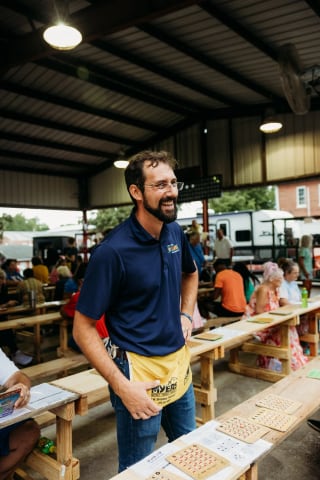
Drew Williams
D Democratic nominee for U.S. House, KY-01
Has not served in Congress
- On the ballot
- On the general election ballotNov 3, 2026 · Kentucky US House 1
- Where to vote
- Find your polling place (opens in a new tab) · More ways to vote
- Top priorities
- NUCLEAR ENERGY ONLY WORKS IF COMMUNITIES ARE PROTECTED
- INSURANCE COMPANIES HAVE RIGGED THE SYSTEM LONG ENOUGH
- GET MONEY OUT OF POLITICS
- Frontier AI Review Act
- Independent AI Evaluators Act
- Money
- $223.2K raised, $213.9K spent, $8K cash on hand (through Oct 14, 2026). Where it comes from
- Who gives
- 58% of individual money from donors at $200 or less · 70% from Kentucky · largest committee giver UAW - V - CAP (UAW VOLUNTARY COMMUNITY ACTION PROGRAM) 'INT'L UNION UNITED AUTOMOBILE AEROSPACE & AGRICULTURAL IMPLEMENT WORKERS OF AMERICA UAW, $5K
- Outside groups
- $466 supporting Williams
- Backed by
- United Auto Workers · International Brotherhood of Electrical Workers Boilermakers Local 40 · Western Kentucky Building and Construction Trades Council and 7 more. As the campaign lists them
143 priorities from williamsforky.com, in the order they are listed there. Every heading and the text under it is copied exactly, as one passage for each page it is from, and links to that place on the page; hover a source to see which passage it opens.
Clean energy done right: independent oversight, full transparency, and community benefits before corporate profits.
source ↗ (opens the page at this passage) · williamsforky.com/policy
Heading as listed on williamsforky.com/policy ↗ (opens williamsforky.com/policy at this heading)
End insurance denials, hidden costs, and corporate interference so every American gets the care they were promised.
source ↗ (opens the page at this passage) · williamsforky.com/policy
Heading as listed on williamsforky.com/policy ↗ (opens williamsforky.com/policy at this heading)
Every qualified candidate deserves a seat at the table. Debates and endorsements shouldn’t be bought.
source ↗ (opens the page at this passage) · williamsforky.com/policy
Heading as listed on williamsforky.com/policy ↗ (opens williamsforky.com/policy at this heading)
Requires independent approval before frontier AI models or major upgrades reach the public.
- Defines covered models through adjustable capability, computing, and public-risk thresholds.
- Requires testing (dependent on AI model) for cybersecurity, biological or chemical access, autonomous actions, deceptive practices, and self-preservation issues.
- Allows regulators to approve, condition, delay, or prohibit deployment based on demonstrated risk.
source ↗ (opens the page at this passage) · williamsforky.com/ai-safety
Prevents AI developers from controlling or compromising the safety reviews they undergo.
- Establishes accreditation, competency, independence, and conflict-of-interest requirements for evaluators.
- Funds reviews through an independent fee pool rather than direct developer payments.
- Requires transparent evaluation methods, regulatory audits, and penalties for falsified findings.
source ↗ (opens the page at this passage) · williamsforky.com/ai-safety
Requires advanced AI systems to be trained around safety, rights, and human dignity.
- Establishes training standards grounded in civil rights, privacy, child safety, truthfulness, and human autonomy.
- Requires independent ethicists, workers, educators, disability advocates, and public-interest experts to review training practices.
- Tests models for manipulation, dehumanization, discrimination, dangerous guidance, and circumvention of established safeguards.
source ↗ (opens the page at this passage) · williamsforky.com/ai-safety
Protects workers who expose concealed AI dangers, misconduct, fraud, or regulatory violations.
- Prohibits firing, demotion, intimidation, blacklisting, and other retaliation against protected whistleblowers.
- Establishes secure and confidential reporting channels independent of company management that are required for every company employee or subcontractor.
- Provides reinstatement, lost wages, damages, legal expenses, and civil penalties for retaliation.
source ↗ (opens the page at this passage) · williamsforky.com/ai-safety
Requires frontier developers to protect AI models from theft, sabotage, or misuse, and to provide clear “surfaces” for model inspection.
- Establish cybersecurity standards for model weights, computing systems, sensitive research, and development infrastructure.
- Requires strong inspection access controls, employee safeguards, supply-chain security, and continuous threat monitoring.
- Mandates independent security audits and immediate reporting of AI breaches or attempted model theft.
source ↗ (opens the page at this passage) · williamsforky.com/ai-safety
Establishes safeguards for AI systems capable of independently taking consequential real-world actions.
- Requires clear human authorization before agents move money, access accounts, or control systems.
- Mandates secure identification, activity records, spending limits, access restrictions, and emergency shutdown controls.
- Requires testing against consumer or operator manipulation, engaging unauthorized actions, and attempts to evade supervision or shutdown.
source ↗ (opens the page at this passage) · williamsforky.com/ai-safety
Creates heightened safeguards for future AI controlling services utilized on public safety and survival systems.
- Establishes regulations on AI in energy, water, communications, transportation, health care, finance, emergency services, and defense.
- Requires continuous human supervision, manual operating options, and reliable fail-safe systems.
- Mandates independent testing, emergency exercises, incident response plans, and recovery procedures.
source ↗ (opens the page at this passage) · williamsforky.com/ai-safety
A Business qualifies for the smallest category it meets based on either employee count OR average Salary+Benefits
”Improving Business classifications will give more breathing room to small business”
- Microbusiness : Expanded from 10 to 20 Employees or $50,000 Salaries
- Small Enterprise : New Class, 21 - 100 Employees or $100,000 Salaries
- Small Business : 101 - 500 Employees or $200,000 Salaries
- Large Enterprise : 501 - 2500 Employees or $500,000 Salaries
- Large Business : 2501+ or +$500,000 Salaries
Prevent billion-dollar firms from siphoning resources meant for smaller business classifications, local economies, and true small business.
source ↗ (opens the page at this passage) · williamsforky.com/businessreform
Eliminates misclassification, fraud, and loopholes in federal contracting to ensure fair competition and accountability.
”Improving Business classifications will give more breathing room to small business”
- All businesses receiving federal contracts must recertify their business size annually through a simple electronic report of total payroll and employee count.
- Creates a public database listing all businesses with federal contracts and their classifications
- Mandates annual audits of 10% of federal contractors near business-size thresholds, conducted by the GAO, SBA, and Inspector Generals.
- Enforces heavy penalties for falsifying employment records; repeat offenders barred from receiving federal contracts for 5 years.
Prevent billion-dollar firms from siphoning resources meant for smaller business classifications, local economies, and true small business.
source ↗ (opens the page at this passage) · williamsforky.com/businessreform