Loading this candidate’s profile from the FEC filings and campaign records.
Where They Stand is a nonpartisan guide to everyone running for Congress: their money, their own words and how incumbents voted. Find your ballot →
Candidates › CA-03 race › 2025–2026
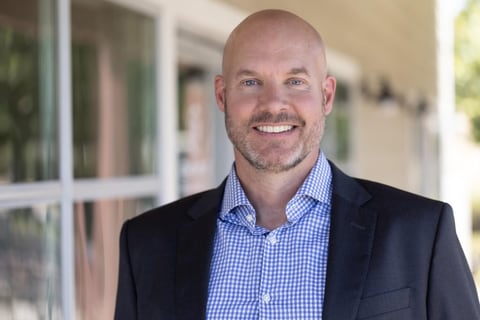
Robb Tucker
R Republican nominee for U.S. House, CA-03
Has not served in Congress
- On the ballot
- Lost the general electionNov 3, 2026 · 129,253 votes (45.8%) · 2 of 2
- Where to vote
- Find your polling place (opens in a new tab) · More ways to vote
- Top priorities
- Local Control and Federal Accountability
- Public Safety, Fentanyl, and Federal Law Enforcement
- Homelessness, Treatment, and Public Order
- Wildfire, Forests, and Disaster Resilience
- Water, Agriculture, and Working Lands
- Money
- $304.7K raised, $288.2K spent, $16.5K cash on hand (through Oct 14, 2026). Where it comes from
- Who gives
- 16% of individual money from donors at $200 or less · 93% from California · largest committee giver YUBA COUNTY REPUBLICAN PARTY (FED. ACCT.), $5K
- Outside groups
- $200 supporting, $6.1K opposing Tucker
- Backed by
- Kevin Kiley · James Gallagher · Tom McClintock and 37 more. As the campaign lists them
13 priorities from robbtucker.com, in the order they are listed there. Every heading and the text under it is copied exactly, as one passage for each page it is from, and links to that place on the page; hover a source to see which passage it opens.
Federal agencies keep writing rules as if rural Northern California were Los Angeles or San Francisco. Those one-size-fits-all mandates look fine on paper, but on the ground they mean years of delay on forest work, water projects, housing, broadband, roads, bridges, and emergency access, while local communities wait for something, anything, to move.
County government is where federal ideas either work or fall apart, and Robb has watched that play out firsthand as a County Supervisor. Washington needs to listen earlier, move faster, and stop treating rural communities as an afterthought. That means keeping decisions close to the people, cutting unfunded mandates, and holding federal land and money managers to the same urgency as the residents who live with the consequences.
- Early County Consultation Mandates: Requiring federal agencies to consult counties early before making major land, water, habitat, forest, or infrastructure decisions.
- Rural-Impact Reviews: Creating a formal rural-impact review process for major federal rules affecting housing, roads, water, fire risk, public lands, energy, or emergency services.
- Streamlined Funding Compliance: Giving small and rural jurisdictions simpler compliance rules and transforming rigid federal grant programs into flexible local block grants.
source ↗ (opens the page at this passage) · robbtucker.com/platform
Heading as listed on robbtucker.com/platform ↗ (opens robbtucker.com/platform at this heading)
Public safety takes more than slogans. It takes the federal government actually doing its job on border security, federal prosecution, interstate crime, drug networks, and human trafficking. When it doesn't, Northern California absorbs the fallout: a fentanyl crisis, organized retail theft, and rural sheriff's offices stretched thin trying to cover huge stretches of territory with too few deputies.
The federal government can't replace local law enforcement, but it does have a duty to back it up instead of pushing costs down to the counties. Every time Washington fails to secure the border or coordinate offender releases, local deputies absorb the burden. Robb wants federal dollars going to the tools deputies actually use, like radios, vehicles, and forensic equipment, instead of sitting in Washington bureaucracy.
- The Agent Raul Gonzalez Officer Safety Act (H.R. 35): Robb supports this bill to establish strict penalties for intentionally fleeing a pursuing federal officer in a vehicle, directly protecting law enforcement and enhancing border safety.
- The Subterranean Border Defense Act (H.R. 495): He backs this legislation to require annual reporting on illicit cross-border tunnel operations, forcing a clearer understanding of how criminal networks move drugs, weapons, and human cargo.
- Rural Deputy Recruitment and Retention Grants: Robb will fight to expand flexible federal grants to help rural counties fund deputy hiring, retention, vehicles, radios, body cameras, and local crime lab backlogs.
source ↗ (opens the page at this passage) · robbtucker.com/platform
Heading as listed on robbtucker.com/platform ↗ (opens robbtucker.com/platform at this heading)
Unsafe encampments, trash, and untreated mental illness on California's sidewalks and in its parks and flood zones aren't just an eyesore. They're proof the current approach has failed. Business owners clean up the mess, and police and outreach workers cycle through the same individuals again and again, because federal dollars keep funding the same failing programs without asking for results.
Robb calls his approach “compassion with standards.” Letting people live and die outside in squalor isn't compassionate, and pretending untreated addiction and mental illness aren't damaging public spaces isn't honest either. Every federal homelessness dollar should be tied to results: fewer unsheltered encampments, more treatment beds, and real pathways to long-term stability.
- Compassion with Standards Grant Rules: Amending federal funding streams to allow local governments to use housing dollars for safe, orderly shelters that enforce rules, case management, and mandatory treatment paths.
- Public Land and Waterway Cleanup: Authorizing federal funds to directly support the cleanup and restoration of federally connected waterways, transportation corridors, and public lands impacted by encampments.
- Strict Non-Profit Accountability: Legislation to hold agencies and non-profits strictly accountable, cutting off federal funding if they receive public money but fail to deliver reductions in unsheltered homelessness.
source ↗ (opens the page at this passage) · robbtucker.com/platform
Heading as listed on robbtucker.com/platform ↗ (opens robbtucker.com/platform at this heading)
Wildfire shapes daily life in Northern California: defensible space, evacuation routes, insurance premiums that keep climbing, public safety power shutoffs. The federal government owns and manages most of the forest land in the region, and its permitting rules routinely stall the fuel reduction, timber work, prescribed fire, and biomass projects that would actually keep communities safer.
Robb's principle is simple: manage the forest before it burns. The federal government should be an urgent partner in fire safety, not an obstacle to it. That means letting counties, tribes, and local partners clear hazardous fuels instead of waiting for an unmanaged federal forest to go up.
- The Fix Our Forests Act (H.R. 471 / S. 1462): Robb strongly supports this legislation because it introduces faster forest work tools, stronger federal land management authority, and speeds up permitting near communities, roads, and power lines.
- The Federal Disaster Assistance Coordination Act (H.R. 152): He backs this measure to eliminate redundancies and accelerate coordination between disaster response agencies.
- The Post-Disaster Assistance Online Accountability Act (H.R. 153): Robb supports this act to mandate transparent online tracking of disaster funds, ensuring small rural towns receive their fair share of assistance.
- Good Neighbor Authority Expansion: Fighting to expand stewardship contracting so counties and local agencies can clear overgrown federal land directly.
source ↗ (opens the page at this passage) · robbtucker.com/platform
Heading as listed on robbtucker.com/platform ↗ (opens robbtucker.com/platform at this heading)
Water is the lifeblood of California, and federal agencies keep mismanaging it: burdensome wetlands rules, endangered species decisions made with no local input, restrictive water contracts. It all threatens local reservoirs, canals, flood control systems, and the family farms, ranches, and timber operations that keep the rural economy running.
Real environmental stewardship doesn't mean locking people off the land. Robb wants to expand infrastructure, storing more water in wet years and planning ahead for dry ones, and to protect local water rights and area-of-origin principles from federal overreach. Local irrigation districts, farms, and water agencies should have the dominant voice in decisions about land they actually manage.
- Permitting Reform for Water Storage: Streamlining federal environmental permitting for new water storage, groundwater recharge, recycled water, stormwater capture, and conveyance improvements.
- Sound-Science Mandates for Habitat Decisions: Requiring federal agencies to use rigorous sound science and mandatory local consultation before making species or habitat designations that impact local water supplies.
- Rural Water System Reliability Grants: Funding targeted upgrades for small, rural water systems struggling to meet strict public health and reliability standards.
source ↗ (opens the page at this passage) · robbtucker.com/platform
Heading as listed on robbtucker.com/platform ↗ (opens robbtucker.com/platform at this heading)
Housing affordability is a genuine crisis, made worse by federal taxes, complex financing rules, and environmental reviews that drag projects out for years. State and federal mandates often try to force high-density urban housing models onto rural communities without funding the infrastructure to support them, ignoring wildfire risk and evacuation routes that just don't work at that density.
Robb's family developed and operated the Forest Springs Mobilehome Community, so he knows firsthand that manufactured housing, mobile home communities, modular units, and starter homes are a real part of the affordability answer, not an afterthought. Federal policy needs to respect local control and fire risk. It doesn't make sense to mandate housing in places without the roads, water, sewer, or fire protection capacity to keep new residents safe.
- Infrastructure-Linked Housing Funds: Directing federal infrastructure dollars explicitly to communities that approve housing but completely lack the utility, broadband, or fire safety infrastructure to support it.
- Financing Reform for Lower-Cost Housing: Reforms to federal financing and mortgage guidelines that artificially raise costs or make it harder to build and preserve manufactured or modular homes.
- Fast-Track Environmental Reviews: Speeding up federal environmental reviews for locally approved infill, rehabilitation, and workforce housing projects.
source ↗ (opens the page at this passage) · robbtucker.com/platform
Heading as listed on robbtucker.com/platform ↗ (opens robbtucker.com/platform at this heading)
Small businesses don't have compliance departments or legal teams on staff, yet they're the ones buried under federal paperwork, sudden regulatory changes, and permitting delays. When Washington raises taxes or changes the rules without warning, it's the independent business owner, their employees, and their customers who pay for it.
Robb ran a family business, so he thinks about economic policy in terms of real-world cash flow, not theory. An economy only works if it lets people work hard, build something, raise their kids, and stay rooted in the community they love. That means the economy should serve main street families over massive institutions, which requires cutting red tape and rebuilding American self-reliance.
- The Protect Small Businesses from Excessive Paperwork Act (H.R. 736): Robb strongly supports this bill to insulate independent employers from being trapped by confusing, overly burdensome federal financial reporting rules.
- The Rural Small Business Resilience Act (H.R. 804): He backs this legislation to ensure rural small businesses, which face the same natural disasters but have fewer immediate resources, can rapidly access SBA disaster assistance.
- Mandatory Small-Business Impact Assessments: Forcing federal agencies to explicitly account for and publish plain-language estimates of how any proposed rule will impact small businesses before it can take effect.
source ↗ (opens the page at this passage) · robbtucker.com/platform
Heading as listed on robbtucker.com/platform ↗ (opens robbtucker.com/platform at this heading)
Education is a local and parental responsibility first, but the federal government keeps using student aid and funding strings to push top-down, one-size-fits-all rules onto local schools. Federal programs have also long overemphasized expensive four-year degrees while shortchanging the technical trades and vocational paths that lead to stable, high-paying jobs.
This one is personal. Robb went through local public schools, his mother served for years on the school board, he's coached local youth, and he and his wife are raising their own kids in the community. He wants the federal role limited, practical, and pro-parent, and he believes honest work deserves equal respect whether a student ends up in college or decides to wire, weld, fly, farm, or go into public safety.
- The Protection of Women and Girls in Sports Act (H.R. 28): Robb supports this bill to clarify Title IX protections, ensuring fairness in women's and girls' athletics and protecting sex-based privacy in schools.
- Expanded Trade and Technical Aid: Legislation to allow federal student aid to follow students into high-quality, short-term credential programs, trade schools, and technical apprenticeships.
- Parental Rights and Transparency Mandates: Protecting parents' rights and demanding absolute transparency regarding school curricula and costs wherever federal education dollars are involved.
source ↗ (opens the page at this passage) · robbtucker.com/platform
Heading as listed on robbtucker.com/platform ↗ (opens robbtucker.com/platform at this heading)
Rural health care is broken by geography: long travel distances, chronic provider shortages, and emergency call volumes too low to keep an ambulance district solvent. Despite all that, the federal government still forces small rural hospitals and clinics to operate under reimbursement rules written for massive urban medical systems, pushing local facilities toward closure.
Robb's guiding principle: don't wait until someone is living on a sidewalk, sitting in an emergency room, or cycling through county jail before treatment becomes available. Rural health care needs flexible federal rules, reimbursement rates that account for low patient volumes, permanent telehealth access, and real capacity for mental health and substance-use recovery.
- The No Wrong Door for Veterans Act (H.R. 1969): Robb supports this bill to reauthorize and improve VA suicide-prevention grant programs, ensuring veterans can access care without getting lost in a dense bureaucracy.
- Permanent Telehealth Flexibilities: Fighting to make temporary emergency telehealth flexibilities permanent under Medicare and Medicaid for rural areas.
- EMS Distance-Funding Reform: Rewriting federal emergency medical funding guidelines to recognize rural distances and low call volumes, keeping local ambulance districts fully funded.
source ↗ (opens the page at this passage) · robbtucker.com/platform
Heading as listed on robbtucker.com/platform ↗ (opens robbtucker.com/platform at this heading)
Infrastructure isn't glamorous until it fails. A rural road washes out, a power shutoff closes a small business, a fire station loses its communication feed. Federal broadband funding, meanwhile, keeps getting mismanaged, sending taxpayer dollars to already-overbuilt suburban areas while rural families deal with dropped connections, kids can't finish homework, and patients can't get to a telehealth appointment.
For Robb, infrastructure is about survival and function: these are the basic systems that keep a rural county running. Energy and infrastructure policy needs to stay realistic: power that's affordable, cleaner where it makes sense, and above all reliable when families and first responders need it most.
- Rural-First Broadband Mapping: Forcing accurate mapping and requiring federal broadband funds to be directed to unserved and underserved rural communities first, rather than overbuilt areas.
- Dig-Once and Permitting Speedups: Implementing strict federal "dig-once" policies to coordinate broadband installation with road work, while slashing permitting timelines for transmission, culverts, and local generation.
- Grid Hardening and Local Energy Recognition: Providing federal backing to harden energy infrastructure against wildfire ignition, while formally recognizing reliable local energy sources like biomass, small hydro, and geothermal.
source ↗ (opens the page at this passage) · robbtucker.com/platform
Heading as listed on robbtucker.com/platform ↗ (opens robbtucker.com/platform at this heading)
National security isn't an abstract concept out here. A weak, unenforced southern border means fentanyl on rural streets and cartels embedding in local communities. A hollowed-out domestic industrial base leaves the country dependent on hostile foreign supply chains, and a bloated VA bureaucracy routinely bounces veterans around when they try to access the benefits and mental health care they earned.
Robb grew up around military service: both his grandfather and father flew for the Air Force. He sees keeping faith with veterans as a direct local and national responsibility, and a government that can't secure its border or its strategic manufacturing supply chains is failing one of its core constitutional duties.
- Absolute Border Enforcement and Barrier Funding: Fighting for direct funding for physical border barriers where appropriate, advanced surveillance technology, increased staffing, and an immediate end to sanctuary policies that block cooperation on serious criminal offenders.
- Strategic Supply Chain Reshoring: Pushing federal mandates and purchasing power to rebuild domestic production of critical defense materials, medicines, energy equipment, and strategic minerals to end dependence on the Chinese Communist Party.
source ↗ (opens the page at this passage) · robbtucker.com/platform
Heading as listed on robbtucker.com/platform ↗ (opens robbtucker.com/platform at this heading)
Washington runs on a financial and ethical double standard. The federal government borrows and spends trillions with no consequences, buries infrastructure projects in litigation for years, and lets billions go to improper payments and fraud. Worst of all, members of Congress can still use confidential briefings and committee access to trade individual stocks and build their own portfolios while in office.
Robb ran an independent business, and he knows the numbers are real: families and employers have to live within their means, and the government should too. Public service should be public service, not a platform for insider financial advantage. If everyday Americans have to play by the rules and balance their books, so should the people writing those rules.
- The Stop Insider Trading Act (H.R. 7008): Robb strongly supports this measure to bar Members of Congress, their spouses, and dependent children from buying individual stocks while in office. It's a bill that passed the House even though Nancy Pelosi and Ami Bera both voted no.
- Balanced Budget Amendment: Pushing for a federal balanced budget amendment or enforceable, long-term fiscal spending rules to curb rampant inflation and national debt.
- Congressional Regulation Approval: Requiring formal congressional approval for major federal regulations with large economic impacts, alongside mandatory plain-English public reporting of regulatory costs.
source ↗ (opens the page at this passage) · robbtucker.com/platform
Heading as listed on robbtucker.com/platform ↗ (opens robbtucker.com/platform at this heading)