Loading this candidate’s profile from the FEC filings and campaign records.
Where They Stand is a nonpartisan guide to everyone running for Congress: their money, their own words and how incumbents voted. Find your ballot →
Candidates › NC-10 race › 2025–2026
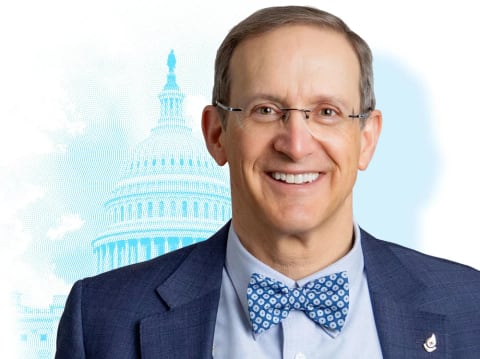
Steve Feldman
L Libertarian nominee for U.S. House, NC-10
Has not served in Congress
- On the ballot
- Lost the general electionNov 3, 2026 · 11,435 votes (4.1%) · 3 of 3
- Where to vote
- Find your polling place (opens in a new tab) · More ways to vote
- Top priorities
- Responsibility
- Friendship
- Liberty
- Principles In Action
- Government Spending
- Money
- $48.8K raised, $64.7K spent, $1.3K cash on hand (through Oct 14, 2026). Where it comes from
- Who gives
- 9.1% of individual money from donors at $200 or less · 99% from North Carolina
24 priorities from stevefeldmanforcongress.com, in the order they are listed there. Every heading and the text under it is copied exactly, as one passage for each page it is from, and links to that place on the page; hover a source to see which passage it opens.
We desperately need to get our fiscal house in order. Our national debt continues to balloon regardless of which party is in charge. It's already more than $100,000 for every American! Neither party should claim the economy was good on their watch when they achieved some growth by sinking every taxpayer $3,000 deeper in debt every year. We must spend less and pay down the debt.
source ↗ (opens the page at this passage) · stevefeldmanforcongress.com
All of the candidates in this race are caring people with good values, and we all want to make the world a better place. We only differ on how to get there. We inherited a great country, in many ways the greatest country. I believe the best way to leave our children a secure country and a better world is to promote individual freedom and international peace, to build on our foundation of shared values, and to seek reasonable compromise where we disagree. As your congressman, I will advocate and work to implement policies that will achieve those goals.
source ↗ (opens the page at this passage) · stevefeldmanforcongress.com
Favor policies that minimize government's intrusion into our lives. All of us should be free to live as we want as long as we don’t hurt others. When policy makers create regulations that force individuals to make “healthier” or “more responsible” life choices, they certainly intend to make things better. However, those regulations often have secondary effects and unintended consequences that only make matters worse.
source ↗ (opens the page at this passage) · stevefeldmanforcongress.com
Focus our military on defense. Work to achieve peace by peaceful means.
War is immoral, counterproductive, and costly. By using violence to achieve peace, we get conflict, more violence, and war. Neither side gets what it wants. Getting the peace we all cherish begins by rejecting violence. The best way to defeat our enemies is to make them our friends.
Focus on our shared goals and values.
We aren’t so far apart in our views. We all want peace, prosperity, and the freedom to live as we choose. We all value decency, kindness, fairness, and respect.
In Colossians 3:12, the Apostle Paul advises us to, “clothe yourselves with compassion, kindness, humility, gentleness and patience.”
While we may disagree–sometimes passionately–on the best way to achieve our shared goals, there are good human beings on all sides of every issue, across the entire political spectrum. We cannot make progress by tearing each other down and questioning each other’s motives.
I respect people who hold different political views. I recognize their motivations are good. I will not encourage anyone to think ill of them.
As your congressman, I will build on the foundation of our shared values of decency, kindness, fairness, and respect. I will carefully work to understand and consider the positions held by members of all parties and political persuasions. I will seek compromise to resolve our differences and achieve our shared goals. I will encourage us to try different approaches in different places, and I will advocate for the approaches that prove most successful in practice.
Find solutions that empower people, not government.
Stories, for better or worse, are far more moving than data. Moved by powerful stories, and meaning well, we sometimes craft policies to create happier endings. Unfortunately, policies crafted in response to stories may have sweeping, unintended negative effects.
For example, moved by a story about a hungry family, policy makers may institute food subsidies in a well-meaning attempt to alleviate hunger. However, the subsidies may only increase food prices, making food less affordable and making more families hungry.
I favor solutions that give individuals and families responsibility for their own lives and well-being. It is always better to create opportunity than to foster dependency.
source ↗ (opens the page at this passage) · stevefeldmanforcongress.com/my-platform
The big problem with the Federal government is too much spending.
Reducing it should be our number one priority.
Things like regulating which sports teams trans girls play on may seem critically important to some people, but it's not like the Federal debt crisis.
When I view these issues as a physician, I see the Federal debt as a serious disease; like lung cancer, it needs to be addressed now, before it spreads any further and kills the patient.
In comparison, regulating participation in sports, or which bathrooms people use, is like a small, common skin cancer.
Sure, it may be very bothersome to some people, but rarely is it life-threatening.
The question of who gets to participate in which sports is not going to bankrupt our country or cause the collapse of our nation.
Let's not be distracted from the mortal danger.
Our massive and growing national debt is a threat to our nation and the future of our children.
The government must spend less and pay down the debt.
We need market forces to reduce the costs of Medicare and Medicaid.
We need changes in Social Security—including increasing the age of eligibility for healthy working Americans—to make sure it will be there for the people who need it.
As our debt must be paid in the future, it is an unfair tax on our children.
Today, that burden stands at $100,000 for every man, woman, and child in America.
Unless we change, it will be more tomorrow.
Printing more money is no solution.
It is a tax on everyone because it causes inflation, making our money worth less, and this makes all of us, especially the poor, worse off.
As noted by Manhattan Institute senior fellow Brian M. Riedel in the Wall Street Journal, raising taxes on the wealthiest Americans won’t nearly be enough to solve our debt crisis.
source ↗ (opens the page at this passage) · stevefeldmanforcongress.com/my-positions
Simplify the system
A simpler system, with minimal rates and no deductions, would promote confidence by being more transparent. One simple, transparent approach would be a flat tax and sales tax, with a full rebate for everyone on all income up to the poverty level–and no other taxes.
source ↗ (opens the page at this passage) · stevefeldmanforcongress.com/my-positions
Our military should defend our borders, not tell others how to live
We must defend our country, and we must always have the military strength our defense requires.
We will be more secure at home if we kill fewer people abroad. If we focus on defending our borders and get our military out of the business of forcing people in other countries to live as we do, we can maintain a strong defense and reduce the cost of government.
We will have fewer enemies, if we stop doing to others what we wouldn’t want done to us:
- Stop imposing sanctions that kill their children
- Stop supporting dictators in their countries
- Stop supporting Israel's mistreatment and killing of Palestinian families; as an American Jew who lost family in the Holocaust, I passionately believe that the Israeli government's current policy is morally and strategically wrong
We can better influence how other people live by being the best role model we can be. Spending some of what we save by focusing our military on defense, we can use our Peace Corps as a role model for peace. In addition to improving our relations with other countries, this will improve our human capital by training our young people in productive skills–such as construction, teaching, and health care–rather than teaching them how to kill. Over the long term, this will lead to economic growth that is consistent with our values and can reduce our federal debt.
source ↗ (opens the page at this passage) · stevefeldmanforcongress.com/my-positions
We can better influence how other people live by being the best role model we can be. Spending some of what we save by focusing our military on defense, we can use our Peace Corps to be a role model for peace. In addition to improving our relations with other countries, this will improve our human capital by training our young people in productive skills–such as construction, teaching, and health care–rather than teaching them how to kill. Over the long term, this will lead to economic growth that is consistent with our values.
source ↗ (opens the page at this passage) · stevefeldmanforcongress.com/my-positions-longform
Build a solid financial foundation to ensure the future of these programs
Both programs are going broke. Once they are out of money, they won’t work for anyone. Let’s work together to find and implement the best solution to keeping them viable.
People live longer, healthier lives than they used to. We should consider raising the eligibility age for Medicare and Social Security, particularly for healthy, working people.
In The Dispatch, Manhattan Institute senior fellow Brian M. Riedel makes the case that, if we want to get serious about balancing the federal budget, we have to consider changes to Social Security and Medicare.
In a white paper for the Manhattan Institute, senior fellow Chris Pope outlines a plan to keep Medicare affordable.
source ↗ (opens the page at this passage) · stevefeldmanforcongress.com/my-positions
Put the power of markets to work
There is no best healthcare system because we don’t have unlimited resources. Our current third-party payment system can provide miracles, but it is extraordinarily costly and not accessible to everyone.
As a physician caring for patients, I see how the limitations of our current system lead to higher costs and restricted access. Patients don’t have an incentive to choose low cost options. They do have an incentive to choose high cost care, and so costs rise. In the face of these higher costs, insurers, lacking unlimited resources, are forced to ration care; this restricts access.
A government-imposed single-payer system that provides “free” care does assure care for everyone but limits choice and makes government ration care. Plus, it isn’t free; it’s paid for by taxes or, worse, by laying more debt on future generations.
My preference is to encourage market-based care. Markets give people incentives to choose lower cost options, create competition that would reduce health care prices, and give providers incentives to improve quality.
On day one, I’d like to introduce legislation giving Americans back their freedom to purchase medications from wherever they want, without government restriction. Some of the medications my patients need are generic, yet still are very, very costly. These same medications are very affordable in Canada and Mexico.
Instituting high-deductible plans with health savings accounts would give people an incentive to seek lower cost care. It would also create competition to reduce healthcare prices and costs.
I would free the states to try different approaches to regulating health insurance and care. This would allow us to see the pluses and minuses of each approach and base our future decisions on facts.
The FDA is well meaning, but its rules and restrictions add unnecessary time and costs to the development of medications. I would like to introduce legislation that changes the FDA from a compulsory organization to an advisory one. This would give companies greater freedom to innovate and give us the information we need to make informed choices about our healthcare.
Some people advocate Medicare for all. This is a great idea, as long as it’s paid for. Let’s allow people who want Medicare to pay the premium and use Medicare.
While these are my preferences, they will not create a perfect system. Some people might choose less care than others think best. That should be their right. There is no perfect system.
source ↗ (opens the page at this passage) · stevefeldmanforcongress.com/my-positions
Government should restrict people from hurting others, but let them live their own lives as they choose.
Legalizing or decriminalizing drugs at the federal level would:
- • Allow us to rely on personal & family responsibility, rather than government force
- • Reduce imprisonment and its associated costs
- • Save tens of billions of dollars in direct government spending on the drug war, plus hundreds of billions of indirect costs
- • End the destruction of communities caused by illegal drug traffic and government efforts to control it
- • Reduce the violence involved in drug prosecution
- • Drive enforcement decisions to the local level, where people have a better understanding of their community’s situation and needs
- • Eliminate drug cartels and drug violence
- • Reduce problems at our southern border
High taxes on recreational drugs are not the solution.
The experience in Colorado shows that high taxes create a black market.
Our experience with alcohol has shown that legalization is better than prohibition.
By eliminating the prohibition on drugs we can expect to dramatically reduce drug cartels, drug related violence, and the cost of drug crime.
In addition, legalization and decriminalization allow us to address addiction and overdose more effectively.
When drugs are illegal, sellers (illegal drug pushers) have an economic incentive to create addicts among their friends, and the resulting close interpersonal pressures are very difficult to reject.
Plus, the variable quality and purity of illegal drugs can lead to overdose and death.
When drugs are legal, corporations have strong incentives to promote well tested, consistent, safer, lower-dose products.
Legalizing drugs would reduce fentanyl deaths by helping people avoid illegal opioids that have been adulterated with fentanyl.
Plus, it would allow us to address overdose at the point of sale.
For example, NARCAN® (naloxone nasal spray) is an approved over-the-counter opioid overdose treatment.
If drug use were legal, fentanyl and other opioids could be sold in a package with Narcan, reducing the number of deaths by overdose.
source ↗ (opens the page at this passage) · stevefeldmanforcongress.com/my-positions
Work together to create a balanced policy
Abortion or reproductive rights is an issue for which there is no reasonable compromise. The government should—absolutely—not try to control women’s bodies. The government—absolutely—should not condone murder. These two “no compromise is possible” principles are at odds, and some balance must be found.
I encourage people on both the pro-Choice and pro-Life sides of this issue to advocate for their positions respectfully and to understand each other’s point of view. I respect the beliefs of people who think that a fetus is a baby, and I recognize that people of good will disagree as to whether a fetus is a baby. People who want to protect unborn babies do not want to control women’s bodies; they just want to prevent the murder of unborn babies. People who don’t want the government to force every woman to carry every pregnancy to term don’t want to kill babies; they just want women to have control over their bodies.
I agree with the pro-Choice position that the government should not be in the business of forcing women to give birth, at all times, in all situations. I agree with the pro-Life position that the rights of the fetus must also be considered; a woman does not have the right to indiscriminately end a pregnancy (kill her baby) at any time, for any reason.
Clearly, we should minimize the number of unwanted pregnancies. Once a pregnancy has occurred, I don’t think there’s any one correct answer. I do think we could craft a reasonable, balanced policy that includes
- Keeping government out of funding abortions
- Making abortion illegal after a certain period of gestation, with proper consideration for the health of the mother
- Allowing different states to adopt different regulations, based on the views of the people in those different states
source ↗ (opens the page at this passage) · stevefeldmanforcongress.com/my-positions
The government has no place telling individuals who they can marry or telling religious organizations who they must marry
For some of us, marriage is sacred. Religious institutions should be free to define marriage as they please and choose who to marry without government interference.
Personally, I respect the marriages of all people equally. With my Jewish background and having had family members killed in the Holocaust, I am particularly sensitive to discrimination and don’t want to make life harder than it already is for anyone. Any two people who wish to marry should be able to do so without government interference.
source ↗ (opens the page at this passage) · stevefeldmanforcongress.com/my-positions