Loading this candidate’s profile from the FEC filings and campaign records.
Where They Stand is a nonpartisan guide to everyone running for Congress: their money, their own words and how incumbents voted. Find your ballot →
Candidates › GA-14 race › 2025–2026
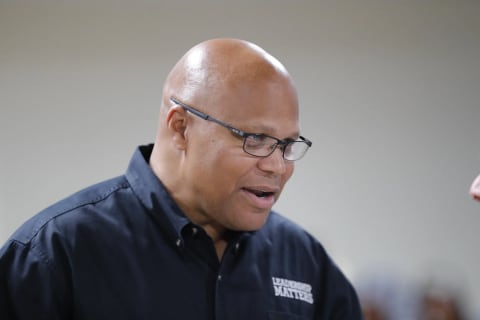
Shawn Harris
D Democratic nominee for U.S. House, GA-14
Has not served in Congress
- On the ballot
- On the general election ballotNov 3, 2026 · Georgia US House 14
- Where to vote
- Find your polling place (opens in a new tab) · More ways to vote
- Top priorities
- Accountability and Corruption
- Cost of Living
- Jobs
- Farming
- Education
- Money
- $8.4M raised, $8.4M spent, $59.3K cash on hand (through Oct 14, 2026). Where it comes from
- Who gives
- 75% of individual money from donors at $200 or less · 14% from Georgia · largest committee giver VOTEVETS, $10K
- Outside groups
- $18K supporting, $445.6K opposing Harris
- Backed by
- Mary L. Trump · PETE BUTTIGIEG · HEALTHCARE FOR ACTION PAC. As the campaign lists them
9 priorities from shawnforgeorgia.com, in the order they are listed there. Every heading and the text under it is copied exactly, as one passage for each page it is from, and links to that place on the page; hover a source to see which passage it opens.
I hear the same thing everywhere I go: voters are tired of the cycle of unkept commitments, tired of the corruption.
During campaign cycles, candidates come to Northwest Georgia pledging to be accountable, crack down on corruption, and refocus government on the needs of everyday citizens. Once they win, these promises are forgotten. The political establishment has created a system that prioritizes themselves. The elite use the idea of accountability as a tool to get support while ignoring the loopholes that keep them in power. After four decades of military service, I will not tolerate public office being utilized for personal gain. We need leadership with resolve. My focus in Washington will center on the following essential accountability reforms:
Basic Openness/Transparency
- Every bill will be publicly listed on my website in everyday language along with how I’m intending to vote and why
- Monthly town halls, in person and virtual, with no screened questions. Everyone is welcome.
- Regular office hours in the district so you can easily meet with me and my staff.
Enforce the Epstein Files Transparency Act
- Ensure all Epstein files are fully released with redactions to protect victims but not perpetrators. Prosecute offenders wherever possible.
Term Limits
- Three 2-year terms in the US House
- Two 6-year terms in the US Senate
Ban Stock Trading
- Support the ETHICS Act which bans members, spouses and dependent children from owning or trading individual stocks, bonds, commodities, or cryptocurrencies.
- Alternatively, support mandatory Qualified Blind Trusts where the elected official hands control of their money over to an independent financial manager, and they have zero knowledge or say in what is being bought or sold.
Ban Betting on Politics and Policy
- Currently, US House Members and senior aides can use non-public, internal polling or legislative scheduling details to place highly lucrative, guaranteed bets on their own policy decisions, none of which is required to be reported on their financial disclosure filings.
Independent Ethics Investigations
- Under current rules, if a member of Congress is facing an intense, damning ethics investigation, they can simply resign or retire. The moment a politician leaves office, the Ethics Committee instantly loses all legal jurisdiction. The investigation is permanently dropped, the findings are often buried, and the former lawmaker can immediately transition into a multi-million-dollar corporate consulting role without facing formal penalties. Investigations should be run by independent third parties who can continue the investigation even if an official resigns.
Ban Shadow Lobbying
- Close the “consulting” loophole in federal lobbying law to ensure that former Members of Congress are abiding by the prohibitions on lobbying and influencing policy once they are no longer representing a voting constituency.
source ↗ (opens the page at this passage) · shawnforgeorgia.com/on-the-issues/accountability-and-reform
Hard-working northwest Georgians are facing a brutal affordability crisis, and the empty promises from career politicians haven’t changed the reality at the grocery store or the gas pump.
While Washington focuses on partisan finger-pointing and economic jargon, the math for everyday households simply no longer adds up. It is a betrayal to hear speeches about inflation from those who simultaneously protect Wall Street firms buying up competitors and residential housing and oil giants collecting record profits from global instability. My priority in D.C. will be making sure working people here in Georgia can build a good life. To restore public trust and lower costs, I am proposing the following policy actions:
Protect Social Security
- No privatization. Period.
- Set the rules fairly, so all Americans pay the same rate for the same guarantee, by scrapping the payroll tax cap. This means that high net worth earners, including millionaires and billionaires, would continue to pay into the system throughout the year.
- Update the cost-of-living formula to reflect modern day costs and index it to keep up with inflation.
Housing
- Get Wall Street out of the housing market
- Strip federal tax incentives (interest and depreciation) from corporate entities, making it less lucrative for them
- -Block federal financing and securitization (no loans from Fredie Mac or Fannie Mae), leveling the field for financing. I support the Executive Order Trump signed around this issue.
- -30-day First Look for individual buyers on foreclosed properties (generally sold in bulk to finance companies) giving individual home buyers the first chance to buy
- Modernize the USDA Rural Development Housing Program
- Raise the maximum loan amounts and income caps so that more low- and medium-income families have access to the 1% interest rate
- Funding to digitize and speed up the application and approval process
- Raising the population limits in the Farm Credit System from 2500 to 10,000 so that local agricultural lenders can offer low mortgage options to more families in rural communities
Food
- Stop price gouging
- Ban algorithmic surveillance and electronic shelf tags in large retailers (Algorithmic surveillance is the practice of using your shopping habits (web browser, app, loyalty card, etc.) and location (high net worth zip code, food desert) to determine not what a product is worth but how much you are willing to spend for it)
- Mandate margin disclosures and SEC sunshine rules which would require publicly traded companies to detail profits so that the public can see profit was used to cover higher input costs and what was purely to drive up the stock price
- Regionalize the supply chain
- Removes the middleman along with artificial choke points used by large corporations to inflate prices
- Lowers the impact of fuel costs as food travels a shorter distance and arrives fresher
- Market stabilization in both the price to the consumer as well as a resilient baseline for the local economy as the money remains local (wages, farm equipment) retaining its purchasing power even in hard economic times
Fuel
- Renewable Natural Gas for Commercial Fleets
- Removes the dependence on diesel which takes a huge burden off the petroleum market, lowering prices across the board
- Reduces both the amount and impact of agricultural waste
- Temporarily suspend the Federal Excise Tax
- This immediately reduces the cost of gas by 18 cents per gallon and 24 cents per gallon on diesel.
- War Profiteering Tax
- Temporary tax aimed at the mega oil companies of up to 50% of their war windfall (the cost of the drilling itself doesn’t change)
- Americans receive a quarterly “Gas Rebate” check quarterly as the money collected from the tax is returned 100% to the consumer
source ↗ (opens the page at this passage) · shawnforgeorgia.com/on-the-issues/affordability
Northwest Georgia deserves high-paying, generational jobs for everyone from a GED to a PhD.
Northwest Georgians work hard. Too many are working multiple jobs just to make ends meet, driving into Atlanta every day for a paycheck, or watching their kids move away because they cannot build a life here. That is not Shawn’s vision for us. When he gets to Washington, he will make sure Northwest Georgia has a seat at the table.
Aerospace and defense manufacturing:
- Use federal manufacturing opportunities, including the CHIPS Act, to bring long-term production work to Northwest Georgia.
- Work with community and local leadership to build an industrial foundation that creates jobs for generations to come.
Apprenticeship programs:
- Partner with unions and skilled-trades programs that offer paid apprenticeships.
- Help workers earn while they learn, graduate without debt, and move into jobs that start at more than $50,000 a year.
Tech hubs:
- Secure grants designed to align local education with high-demand, tech-adjacent industries.
- Make sure workers do not have to leave their hometowns for high-paying careers.
Remote work access:
- Fight for Northwest Georgia’s fair share of Broadband Equity, Access, and Deployment (BEAD) program funding.
- Bring reliable fiber-optic access to unserved rural valleys so education and work-from-home opportunities are real options.
source ↗ (opens the page at this passage) · shawnforgeorgia.com/on-the-issues/jobs
When I talk about the future of farming in America, these are my priorities:
Bring small and medium-sized farms to the front and giving them equal access to opportunities provided to corporate farms:
- Support for farmers who grow the food that every day Americans consume instead of focusing only on commodity crops.
- Provide growth options for farmers who are focused on food to table through “non-traditional” farming methods such as container/warehouse farming, vertical farming, soilless farming (hydro/aquaponics)
Shielding SNAP:
- Making SNAP part of the “mandatory spending” program (like Social Security) that ensures payment during a government shutdown. This includes classifying those responsible for processing SNAP payments as essential workers.
Protecting Farmland:
- PFAS Mitigation as designed by the American Farmland Trust
- Pesticide disclosures with state as well as federal labeling to ensure farmers can make educated decisions about the products they use
- Ensure small and medium sized farms have the same access to EQIP dollars for traditional farm maintenance projects like fencing and wells
Water Infrastructure:
- Upgrades to aging infrastructure in rural communities for long term sustainability and safety
- Infrastructure improvements that allow for community growth in housing and job opportunities
- Relief for private well owners (a large percentage of rural community water access) facing contamination (PFAS) and drought
- Funding for the Army Corps of Engineers to work with states to ensure that natural waterways (creeks, rivers, etc.) are free flowing and unblocked, mitigating flooding and allowing for easy fish movement
Vocational Educational Opportunities:
- Youth programs that provide paid internships for high school and college students in the agricultural space
- Modernize the 4-H and FFA (Future Farmers of America) curriculum to include today’s key issues about supply, security and global agriculture
Decentralize the Food Supply Chain:
- Create more regional food hubs for processing and manufacturing
- Expand LAMP (Local Agriculture Market Program) to help create more local food access
- Grow the “Farm to School” program to include more underserved, rural communities to help local farmers and local schools work together on access to high quality, healthy food.
Spay and Neuter Support:
- Provides livestock producers with additional health and safety support for their animals by reducing the number of “roaming” animals, particularly dogs, on their land
- Stabilizing the animal population protects animals and humans from disease outbreaks such as rabies, thereby making the community and food supply safer.
Large Animal Veterinarian Access:
- Increased student loan repayment for those who agree to practice a certain number of hours/years in a high shortage area
- Practice building incentives that provide access to needed equipment, including mobile clinics
Include the seafood industry as part of farming:
- Redefine commercial fishermen and processers as farmers
- Provide the same access to USDA programs that are granted to land farmers
- Improve disaster and emergency relief for fisheries and fishermen
source ↗ (opens the page at this passage) · shawnforgeorgia.com/on-the-issues/agriculture
Throughout Northwest Georgia, our academic institutions are quietly struggling while federal leaders prioritize rhetoric over results.
While many utilize students for political visibility, the reality on the ground tells a different story: educators working multiple jobs and administrators wrestling with outdated funding frameworks. We continue to lose top-tier talent to more affluent areas due to low local wages, while rural students face increasing disparities. Specifically, the federal government has failed to honor its 1975 pledge to fund 40% of disability education, currently providing only 13% and shifting the burden to local taxpayers. Instead of focusing on ideological disputes, we must implement practical solutions such as educator tax credits and permanent Workforce Pell Grants for debt-free certifications. Our community deserves more than empty lectures; it is time for Washington to fulfill its financial commitments and prioritize the development of our teachers, vocational programs, and students.
HeadStart (This program should be moved from Health and Human Services to the Dept. of Education as it’s where a child’s education begins)
- Currently only 22% of pre-school aged children who qualify for Headstart can participate. For infants and toddlers. it’s only 7%. That’s a lot of families left out. There are also a lot of moving pieces within Headstart that need to be addressed.
- Teacher salaries need to be equal to those of elementary school teachers. They are required to have credentials in early childhood education and should be paid accordingly. This will also help ensure our children are ready for Georgia Pre-K which is open to all 4-year-olds.
- Review the guidelines necessary to receive HeadStart funding so that smaller non-profits in more rural areas can bring the program closer to home, eliminating the nearly one hour plus drive some participants face.
- Make HeadStart an essential service to protect it from government shutdowns.
Kindergarten through 12th grade
- Restore the Department of Education
- Amend Title I funding to
- Mandate a percentage be spent on teacher salaries
- Require “educational consultant” spending is maxed at 5% of the total budget
- Increased allocations for districts that create a competitive local wage floor in line with the community’s cost of living
- Live up to our 1975 promise to fund 40% of the additional costs required to assist those with disabilities
- Reconfigure the “Grants for Buses and Bus Facilities” program to focus more on rural areas so that missing the bus doesn’t mean missing the day of school, a factor that largely contributes to high absenteeism in rural districts
- Develop “Learn and Earn” grants that allow students to work during the day at an apprenticeship while earning graduation credit. This gives students more time to study in the evening and on weekends as they aren’t working a job during those hours.
- Expand the Federal E-Rate program to equip all public-school buses with commercial grade wi-fi. The ride home is long in many rural districts. This will allow them to get some work done with traveling and partially address the gap for those who do not have reliable broadband at home.
College/University/Trade/Vocational Schools
- Modernize the Federal Work Study program by shifting the focus away from low-wage campus desk jobs to work based learning and apprenticeships in the student’s field of study.
- Expand the Workforce Pell Grant program to permanently include low-income students the opportunity to train for high skill, in demand jobs (logistics, commercial driver, welder) in months instead of years and graduating with zero student debt.
- Support the “Open Textbooks” program that allows faculty to create, download and distribute Open Educational Resources which are peer-reviewed textbooks that are free to students. This removes over $1000 per year for every student.
- Standardize the transfer of credits for general education courses so that any college or university has to give you credit for that passed course. This eliminates the retaking of classes and extending the student’s time in school as well as removing redundant costs.
- Pass the EATS Act to allow time spent in class to count for the work requirement required for SNAP benefits. Hunger lowers academic success and raises the likelihood of dropping out.
- Update the National Apprenticeship Act so that small and medium sized businesses, not just large corporations, can receive the tax benefits of having “learn and earn” workers on their team.
- Standardize vocational training credentials to establish national standards in fields like advanced manufacturing, cybersecurity, and healthcare so that the credentials are recognized throughout the entire industry, not just for one particular company or program
- Increase focus on the “Youth Registered Apprenticeship” allowing 11th and 12th grade students to work with local unions and private businesses learning the skills they need to exit high school with professional experience and training
- Subsidize "Dual Enrollment programs. This allows high schoolers to take vocational courses at local community colleges for free, graduating with both a high school diploma and an industry-recognized associate degree or certificate.
source ↗ (opens the page at this passage) · shawnforgeorgia.com/on-the-issues/education
- Currently only 22% of pre-school aged children who qualify for Headstart can participate. For infants and toddlers. it’s only 7%. That’s a lot of families left out. There are also a lot of moving pieces within Headstart that need to be addressed.
Your health should not be determined by your zip code.
As you may know, I am a combat vet, and my wife is a local family doctor. I have a lot of respect for people on the front lines of our healthcare system, making what are often life and death decisions to serve their patients. I don’t want to see healthcare used by politicians to score political points. This is a kitchen table survival issue.
I see firsthand through my wife’s work that our local civilian clinics are already desperately understaffed, maxed out on space, and facing severe doctor shortages. Real healthcare reform means fiercely protecting and expanding our local medical infrastructure, cutting the red tape that keeps new doctors out of underserved areas, and ensuring folks don’t have to drive for hours to get the care they need, including specialized care or mental health counseling. True community readiness means taking care of the people who keep our country running, and I am fighting to ensure that no rural family in our community is left isolated.
Defend Medicaid and Medicare
- No vouchers. Vouchers would only shift the financial risk and burden to seniors.
- Fight against block grants that lack the flexibility to address health crises.
- Expand Medicare to include nursing homes for long-term care.
- Expand price negotiation opportunities to ensure the lowest possible drug costs.
Bring More Healthcare Providers to Northwest Georgia
- Support the Rural Residency Planning and Development Act (RRPD). This bipartisan legislation ensures long-term funding for rural hospitals that want to create residency programs of their own, bringing doctors, particularly specialists, into underserved rural areas.
- Invest in the National Health Service Corps (NHSC). The NHSC sends medical professionals into rural and underserved communities, with several in the 14th District. Currently, doctors who want to work in rural communities are being turned away. We need to expand, not reduce the funding for these programs so that your healthcare options are not determined by your zip code.
- Build a Consortium Funding Table. Bring regional health hubs, like Atrium or AdventHealth, together with smaller, independent clinics so they can apply for funds together, giving rural areas more opportunities to host resident doctors.
- Fix the Medicare Graduate Medical Education (GME) funding caps. Correct the funding error in the “Big, Beautiful Bill” that only provides recruitment resources.
source ↗ (opens the page at this passage) · shawnforgeorgia.com/on-the-issues/healthcare
After 40 years of service, Shawn knows what it means to leave no one behind.
After 40 years of service, Shawn knows firsthand what it means when we say we leave no one behind. Washington is failing too many veterans, and he will fight to protect the VA, cut wait times, expand local care, and turn military service into lasting economic opportunity.
Protect the VA and rural care:
- Stop arbitrary budget cuts and oppose the push to privatize veterans’ healthcare.
- Make sure rural veterans in Northwest Georgia do not have to drive for hours just to see a specialist.
- Restore support staff so doctors can focus on treating veterans and clinics can cut wait times.
Congressional office support:
- Place a dedicated VA specialist in each of Shawn’s three offices to assist veterans and their families, especially spouses.
- Host quarterly clinics throughout the district.
Transitioning out support:
- Modernize the GI Bill to include emerging technical fields, trade schools, and flexible online learning platforms.
- Revamp the Transition Assistance Program so service members get localized career counseling, resume support, and financial literacy training months before they hang up the uniform.
Slashing red tape:
- Integrate military and VA medical records to provide a seamless transfer of medical data and avoid treatment delays.
- Prioritize hiring claims processors to reduce wait times for claims and benefits determinations.
Crisis support:
- Expand 24/7 crisis resources, including the 988 Veterans Crisis Line.
- Increase funding for evidence-based treatments for PTSD, Traumatic Brain Injury (TBI), and military sexual trauma (MST).
- Grow local trauma care, peer-support networks, and suicide prevention programs so no veteran has to struggle alone.
Family and spousal support:
- Increase access to transitional information for spouses whose service member is leaving active duty.
- Enhance stipends, legal aid, and mental health respite care for family members who sacrifice their own careers to care for severely wounded or aging veterans at home.
Women veterans’ care and equipment:
- Overhaul the “male default” equipment and prosthetics practice by requiring gender-specific equipment and prosthetics that match female anatomical proportions.
- Mandate and fund full-time women’s health clinics, specialized mammography equipment, and full-time OB/GYN staff at every regional VA hub.
Job training and opportunity:
- Invest in job training that turns real-world military skills into lasting economic opportunity.
- Support active duty, National Guard, Reserve forces, and veterans alike with the dignity they have earned.
source ↗ (opens the page at this passage) · shawnforgeorgia.com/on-the-issues/veterans
I support the Second Amendment 100%. I own guns. I carry daily.
I have no interest in taking anyone’s gun. What I want is for gun owners to be responsible — trained on the firearms they own, and storing them safely. As a gun owner myself, I know we can defend our rights and act responsibly at the same time. The job is to balance our freedom as individuals with the safety of the community we all share.
The Rights I’ll Defend
- I do not support bans on the firearms Americans use for hunting, sport, and self-defense.
- I support the right of law-abiding citizens to carry firearms in public.
Responsibility and Community Safety
- I support armed security in our schools when the school district and the community decide together that it is necessary.
- I do not support arming teachers. As a former teacher and principal, I know the balance a classroom needs — a firearm is far more likely to undermine a teacher’s ability to teach and a student’s ability to learn.
- I support a community’s right to set temporary, agreed-upon limits at events like parades and protests, when local organizers and officials together decide that firearms would create a real risk to public safety.
source ↗ (opens the page at this passage) · shawnforgeorgia.com/on-the-issues/second-amendment
Strong communities depend on caring for the people who hold them together — yet our healthcare system is leaving rural women behind.
My wife, Karla, is a family physician, and she sees firsthand how closed delivery rooms and limited specialty care force women in Northwest Georgia to drive for hours, or miss work, for basic and essential medical attention. In Congress, I’ll cut through the political noise to protect and fund rural health infrastructure, bring specialists directly to our communities, and keep healthcare decisions a matter of personal freedom and privacy between a patient and her doctor.
Support the “Momnibus” Bill
- Grow the maternal workforce. When small-town maternity wards close for lack of funding, young families move away. These grants help recruit, train, and employ a wider array of maternal care professionals — prioritizing doulas, certified nurse-midwives, and lactation consultants.
- Address maternal health deserts. Too many women in rural Georgia drive an hour or more to reach OB-GYN care or a hospital equipped for childbirth, and our state has one of the highest maternal mortality rates in the country. This legislation invests in the high-tech tools, WIC expansion, emergency housing, and mental health support that help moms be moms.
Support the Women’s Health Protection Act This legislation establishes a nationwide right to provide and receive abortion care. This is a health care issue, and the decision belongs between a woman and her doctor — not politicians.
Close the Research Gap
- Ninety-five percent of clinical trials for drugs and treatment protocols don’t account for how a patient’s sex affects the result. I support requiring any pharmaceutical or medical-device company that receives federal tax credits or FDA fast-tracking to publish fully disaggregated sex data, so we understand how everyone is affected.
- Diseases that kill women at staggering rates — like cardiovascular disease and Alzheimer’s, where women make up two-thirds of patients — have long been under-researched for sex-specific differences. I will support legislation that mandates balanced, 50-50 research.
- Increase funding for women-specific conditions like PCOS, endometriosis, and menopause to support earlier diagnosis and treatment.
source ↗ (opens the page at this passage) · shawnforgeorgia.com/on-the-issues/womens-health