Loading this candidate’s profile from the FEC filings and campaign records.
Where They Stand is a nonpartisan guide to everyone running for Congress: their money, their own words and how incumbents voted. Find your ballot →
Candidates › NC-02 race › 2025–2026
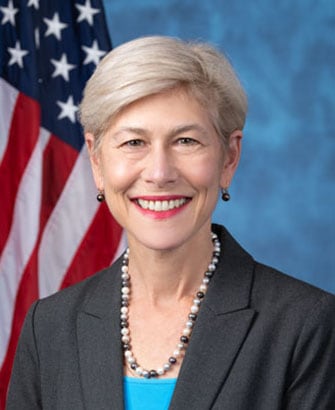
Deborah K. Ross
D Democratic nominee for U.S. House, NC-02
Representative since 2021
Other accounts (3)
The same platforms’ other accounts, such as a congressional office’s or an earlier campaign’s.
- On the ballot
- On the general election ballotNov 3, 2026 · North Carolina US House 2
- Where to vote
- Find your polling place (opens in a new tab) · More ways to vote
- Top priorities
- Equality & Justice
- Access to Affordable Health Care
- Education & Opportunity
- Affordable Housing
- Retiring with Dignity
- In Congress
- Representative since 2021 · votes with their party 99% of the time. See the record · Office phone 202-225-3032
- Money
- $2M raised, $1.5M spent, $1.3M cash on hand (through Oct 14, 2026). Where it comes from
- Who gives
- 7.1% of individual money from donors at $200 or less · 71% from North Carolina · largest committee giver AMALGAMATED TRANSIT UNION - COPE, $10K
- Outside groups
- $314 supporting Ross
- Backed by
- Alliance for Retired Americans · American Federation of Government Employees · Amalgamated Transit Union and 34 more. As the campaign lists them
- Sponsored most in
- Government Operations and Politics, Health, Science, Technology, Communications
10 priorities from deborahross.com, in the order they are listed there. Every heading and the text under it is copied exactly, as one passage for each page it is from, and links to that place on the page; hover a source to see which passage it opens.
I have spent my career in public service fighting for equality, justice, and progress. I came to North Carolina to attend law school and later became an attorney, civil rights advocate, and state legislator. As a progressive leader in Raleigh, I worked to pass the South’s first anti-racial profiling bill, fought to reform juvenile justice programs, passed bills to expand voting rights, and opposed laws that would take our state backward, including anti-LGBTQ Amendment One. In Congress, I’m honored to serve as the Vice Ranking Member of the House Judiciary Committee.
Since coming to Congress, I have worked hard to protect and expand voting rights, combat partisan and racial gerrymandering, enhance judicial ethics and transparency, support survivors of sexual assault and domestic violence, and more.
The right to vote is the cornerstone of our democracy. It’s imperative that we work to strengthen voting rights—not make it more difficult for North Carolinians to cast a ballot. That’s why I have been working with my colleagues to combat gerrymandering—a tool employed by North Carolina Republicans to increase their political power by diluting the voices of voters who disagree with them. I have introduced legislation that would reform North Carolina’s partisan, secretive redistricting process as well as a bill that would end the harmful, undemocratic practice of prison gerrymandering.
In Congress, I have led efforts to enhance trust and transparency in our judicial process. In my first term, President Biden signed my legislation into law to enhance financial disclosure requirements for federal judges and ensure they are held to the same disclosure standards as the legislative branch. On the House Judiciary Committee, I continue to work with my colleagues to address serious concerns about impartiality and conflicts of interest on the Supreme Court. To strengthen our justice system, I have also introduced bicameral legislation to curb the dangerous practice of judge shopping, where litigants seek specific judges to guarantee their preferred outcome in a case.
source ↗ (opens the page at this passage) · deborahross.com/priorities/equality-justice
Heading as listed on deborahross.com/priorities ↗ (opens deborahross.com/priorities at this heading)
Our fight for affordable, accessible health care is more important than ever. Deborah works hard to make affordable health care more accessible to all North Carolinians.
source ↗ (opens the page at this passage) · deborahross.com/priorities
Our fight for affordable, accessible health care is more important than ever. No one should ever have to decide between life-saving care and paying their household bills, yet many North Carolinians still face this devastating choice every day.
For more than 10 years in the General Assembly, I fought to pass Medicaid expansion. I am grateful that after more than a decade, North Carolina finally became the 40th state to expand Medicaid, delivering life-saving health care to 600,000 North Carolinians. I fought for billions of dollars in federal funding in the American Rescue Plan that helped incentivize leaders to finally get expansion over the finish line.
In my first term, I was proud to help pass the Inflation Reduction Act, historic legislation that capped the cost of insulin at $35 per month for seniors and empowered Medicare to negotiate prescription drug prices. But we must do more to put affordable health care within reach for every North Carolinian.
For example, access to affordable mental health care is a critical and growing problem in our community. To help address this acute need, I was proud to secure $6 million in federal funding for WakeMed’s new Mental Health and Well-Being Hospital.
I’ve also passed PBM reforms to crack down on abusive middlemen, increase transparency, and lower prescription drug costs for patients, and I’ve fought to extend enhanced Affordable Care Act tax credits to help keep health insurance affordable for North Carolinians.
source ↗ (opens the page at this passage) · deborahross.com/priorities/access-to-affordable-health-care
Heading as listed on deborahross.com/priorities ↗ (opens deborahross.com/priorities at this heading)
Deborah supports public education for all, reducing class sizes, raising teacher pay, investing in early childhood education, alleviating student loan debt—and more.
source ↗ (opens the page at this passage) · deborahross.com/priorities
Heading as listed on deborahross.com/priorities ↗ (opens deborahross.com/priorities at this heading)
Deborah fights to protect our most vulnerable residents—and advocates for policies aimed to make housing more affordable for working people nationwide.
source ↗ (opens the page at this passage) · deborahross.com/priorities
I am committed to ensuring that everyone in Wake County has an affordable place to call home.
Unfortunately, because of inflation in the rental and housing markets, many North Carolina residents are now facing increased rents and the inability to purchase a home.
To help meet this growing need, I secured $2 million in federal funding to support construction of an apartment community in Raleigh designed to end homelessness for over 100 Wake County families and individuals as well as $1 million to support youth transitioning out of foster care. I also obtained funding to support a new 127-unit development in Cary that will provide quality, affordable, mixed-income rental units at below-market rents. I continue to seek additional federal resources to address this problem locally, especially for our most vulnerable residents.
In addition, in Congress, I strongly support and advocate for policies aimed at making housing more affordable for working people nationwide, including expanding housing choice vouchers and boosting block grants to state and local governments to help provide housing to low-income families.
source ↗ (opens the page at this passage) · deborahross.com/priorities/affordable-housing
Heading as listed on deborahross.com/priorities ↗ (opens deborahross.com/priorities at this heading)
Every American should be able to enjoy a comfortable and secure retirement. Deborah works to protect hard-earned benefits.
source ↗ (opens the page at this passage) · deborahross.com/priorities
Every American should be able to enjoy a comfortable and secure retirement. Our seniors have paid into Social Security and Medicare over a lifetime of hard work, and I won’t stop fighting to protect these hard-earned benefits.
That’s why I fought to pass the Inflation Reduction Act, once-in-a-generation legislation that is already lowering health care and prescription drug costs for seniors on Medicare. In Congress, I’m working to strengthen Social Security and will strenuously oppose any attempt to turn Medicare into a voucher program. I also support lowering the Medicare eligibility age from 65 to 60.
I will always strenuously oppose any and every effort to roll back the benefits that our seniors need to retire with dignity.
source ↗ (opens the page at this passage) · deborahross.com/priorities/retiring-with-dignity
Heading as listed on deborahross.com/priorities ↗ (opens deborahross.com/priorities at this heading)
Deborah is fighting for an economy that works for everyone. She is a champion for working people and is proudly supported by workers and unions.
source ↗ (opens the page at this passage) · deborahross.com/priorities
I am fighting for an economy that works for everyone. As a state legislator during the Great Recession, I advocated for an earned income tax credit aimed at returning tax dollars to working families, supported raising the minimum wage, and sponsored paid sick leave legislation. I also supported tax breaks for small businesses and passed legislation to spur economic development here in Raleigh. I have always been a champion for working people, and I am proud to have the support of workers and unions.
One of my first acts as a new member of Congress was passing the historic American Rescue Plan, which brought our country back from the depths of the COVID-19 pandemic and delivered urgently needed relief to Wake County’s small businesses, restaurants, and more.
Wake County is home to a vibrant small business community that drives our state’s economy. I will continue fighting for policies that will create jobs, lower costs, and support our innovative businesses in Wake County and beyond.
source ↗ (opens the page at this passage) · deborahross.com/priorities/supporting-our-economy-and-workers
Heading as listed on deborahross.com/priorities ↗ (opens deborahross.com/priorities at this heading)
Climate change represents an existential threat to our people and our planet. Deborah supports clean energy alternatives, opposes fracking, and fights to preserve NC’s environmental heritage.
source ↗ (opens the page at this passage) · deborahross.com/priorities
As a state legislator, I voted to support clean energy alternatives, halt fracking, and implement measures to reduce emissions in North Carolina. In Congress, I was proud to vote to pass the Inflation Reduction Act, the largest investment in clean energy in American history. This transformational legislation will reduce carbon pollution, bolster community resilience, and create good-paying American jobs. In fact, according to some projections, the IRA will put America back on track to meet the ambitious goal set by President Obama of reducing our greenhouse gas emissions 40 percent from 2005 levels by the end of the decade.
However, there are additional steps that the federal government should take in the face of this existential threat. Specifically, Congress should revisit a proposal passed by the House as part of an earlier version of the IRA to incentivize utilities to reduce emissions through a set of regulatory carrots and sticks. We must also continue the urgent process of building out a nationwide network of charging stations to facilitate the transition to electric vehicles.
In addition, offshore wind energy is one the best resources in our toolbox to combat climate change and unleash the power of American clean energy. I was proud that my provision to overturn the previous administration’s 10-year moratorium on offshore wind leasing in North Carolina and other states in the Southeast was included in the historic Inflation Reduction Act.
North Carolina’s economy and way of life are rooted in our natural environment. Our state depends on a pristine coastline and a clean and healthy marine ecosystem to support robust tourism, recreation, and fishing economies—the lifelines of our coastal communities. I proudly introduced the Defend Our Coast Act to prevent offshore oil and gas drilling along the mid-Atlantic seaboard, and I will never stop fighting to protect North Carolina’s priceless environmental heritage for future generations.
source ↗ (opens the page at this passage) · deborahross.com/priorities/combating-climate-change
Heading as listed on deborahross.com/priorities ↗ (opens deborahross.com/priorities at this heading)
Deborah strongly believes women should be able to make decisions about their bodies and health care. She also champions equal pay and supports legislation combating gender-based violence—and more.
source ↗ (opens the page at this passage) · deborahross.com/priorities
In June 2022, the Supreme Court did what many believed was unthinkable for nearly half a century. By overturning Roe v. Wade, the conservative majority stripped American women of a cherished constitutional right and triggered the enactment of extreme abortion laws in states across the country.
Like the vast majority of Americans, I strongly believe that women should be able to make their own decisions about their own bodies and their own health care. I am committed to ensuring that reproductive health is – and always will be – a private matter between a woman and her doctor. I won’t stop fighting until the protections of Roe are enshrined in law.
It is shameful that women in America are still paid less than men for the same work. As a state representative, I cosponsored the 2013 Equal Pay Act, a bill that would have allowed women in the workforce to receive retroactive pay for up to two years and prohibited retaliation against employees seeking equal pay. In Congress, I am working to enact the Paycheck Fairness Act to eliminate gender-based wage discrimination and ensure that women in America receive equal pay for equal work.
I also championed the Violence Against Women Reauthorization Act of 2021 (VAWA). This bill made critical improvements to programs and laws aimed at combating gender-based violence and included my legislation to expand access to care from sexual assault nurse examiners (SANE nurses) following sexual assault.
No parent should have to choose between putting food on the table and paying for quality care for their children. Unfortunately, the cost of child care is increasing at double the rate of inflation. This is a crisis that we cannot afford to ignore any longer. As the daughter of an early childhood education teacher, I know that outstanding, affordable child care is essential for the development and future success of the next generation. That’s why I’m a proud cosponsor of the Child Care for Working Families Act, legislation that will make child care affordable by ensuring that no middle class family in America pays more than seven percent of their income on child care.
source ↗ (opens the page at this passage) · deborahross.com/priorities/women-and-families
Heading as listed on deborahross.com/priorities ↗ (opens deborahross.com/priorities at this heading)
At a time when more and more families and businesses are choosing to call the Triangle home, we need better transportation options to help residents get to the places where they live, work, learn, and play. We must invest in smart, sustainable, and—most importantly—accessible public transportation to connect our people with job opportunities, health care services, housing, education, and more.
When I first started as an attorney, I specialized in municipal bond law to help local governments fund critical infrastructure and public work programs. I later went on to work for our regional transit agency.
In Congress, I am working to drive investment in transportation and infrastructure projects and increase renewable energy options in pursuit of a cleaner, greener future for our children. I proudly voted to pass the Bipartisan Infrastructure Law, a transformational investment in our nation’s aging infrastructure which is already creating good-paying jobs in North Carolina. This historic legislation is funding transportation projects that will improve the everyday lives of Wake County residents, providing fully $1.2 trillion in dedicated funding for projects in our state to update our roads, bridges, water systems, high-speed internet, and electric vehicle charging infrastructure.
To meet the transportation needs of our community, I worked to successfully secure a U.S. Department of Transportation grant for a new passenger rail route between Raleigh and Richmond, VA. This line will connect local residents to Washington, DC and the Northeast corridor. I also delivered $900,000 in federal resources to make critical improvements in accessibility and safety to GoTriangle bus stops, $800,000 to improve access to regional transit service in Eastern Wake County, and more than $12 million to upgrade the passenger experience at RDU airport. In addition, I brought home more than $1 million for new bike and pedestrian routes in Cary and Apex.
source ↗ (opens the page at this passage) · deborahross.com/priorities/infrastructure
Heading as listed on deborahross.com/priorities ↗ (opens deborahross.com/priorities at this heading)
My district is home to a large immigrant population. These students, families, and workers contribute to our communities, our culture, our economy, and our institutions of higher education. In Congress, I am committed to passing comprehensive immigration reform to keep families together, enhance border security, provide a fair pathway to citizenship, and meet our nation’s economic needs.
I am committed to defending the Dreamers, undocumented young people brought to this country as children. They attend American schools, work for American companies, and run businesses and raise families in American communities. In short, they are American in every respect except on paper.
I am a proud original cosponsor of the American Dream and Promise Act, a bill that offers protection from deportation and a fair path to citizenship for eligible Dreamers. These talented young people deserve a secure future here in America—the country they love and call home.
Another top priority for me in Congress is passing legislation to enable the so-called Documented Dreamers to remain in the United States. North Carolina is home to thousands of children and young adults who came to the United States at an early age as dependents of work visa holders. Unfortunately, once they turn 21, their dependent visas expire and they can be forced to self-deport to countries they often don’t even remember.
I introduced the America’s CHILDREN Act to protect Documented Dreamers from aging out of temporary protections and becoming vulnerable to deportation by providing a pathway to permanent residence. Passing this bill will protect more than 200,000 young adults and ensure all families are treated with dignity and respect/
In addition, I am working to support the guest farm workers who keep our nation’s agriculture industry strong. I voted to pass the Farm Workforce Modernization Act, which establishes a program for agricultural workers to earn legal status through continued employment in the agricultural sector. This bipartisan bill will help stabilize our farm workforce and promote fair wages and working conditions for the guest workers who contribute so much to our nation.
source ↗ (opens the page at this passage) · deborahross.com/priorities/comprehensive-immigration-reform
Heading as listed on deborahross.com/priorities ↗ (opens deborahross.com/priorities at this heading)