Loading this candidate’s profile from the FEC filings and campaign records.
Where They Stand is a nonpartisan guide to everyone running for Congress: their money, their own words and how incumbents voted. Find your ballot →
Candidates › Mississippi U.S. Senate race › 2025–2026
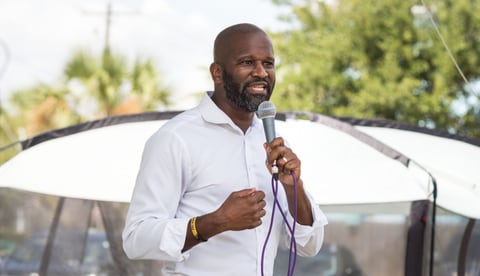
Ty Pinkins
I Independent nominee for U.S. Senate, Mississippi
Has not served in Congress
- On the ballot
- On the general election ballotNov 3, 2026 · Mississippi US Senate
- Where to vote
- Find your polling place (opens in a new tab) · More ways to vote
- Top priorities
- Jobs & Economy
- Healthcare Is a Right—Not a Privilege
- Every Mississippian Deserves a Safe, Affordable Place to Call Home
- A Quality Education for Every Child
- Standing Up for Women’s Health, Freedom, and Dignity
- Money
- $104.3K raised, $105.1K spent, $4.9K cash on hand (through Sep 30, 2026). Where it comes from
- Who gives
- 67% of individual money from donors at $200 or less · 39% from Mississippi
9 priorities from typinkins.com, in the order they are listed there. Every heading and the text under it is copied exactly, as one passage for each page it is from, and links to that place on the page; hover a source to see which passage it opens.
I was raised in the Mississippi Delta, where I learned the value of hard work early in life. My family depended on farming to get by, and like many kids in our community, I spent my teenage years chopping cotton to help my parents make ends meet.
Mississippi is an agricultural state, and I know firsthand that it’s our family farmers who keep this economy going—not the big corporate monopolies that have spent decades buying up land and shipping profits out of state. The strength of our farming communities has always come from hardworking families who put in the hours, season after season.
Our family farms aren’t looking for handouts—they just want a fair shot. A fair shot to earn a living, to turn a profit, and to pass something down to their kids and grandkids.
As your next U.S. Senator, I’ll make sure that federal farm bills are written with small family farmers in mind. For far too long, federal policy has favored big corporations with deep pockets and powerful lobbyists. That has to change. I’m not a lobbyist—I’m an advocate for Mississippi’s farmers and farm workers. I’ll make sure our family farms have a voice at the table and the support they deserve.
Mississippi has some of the most fertile soil in the country—we can grow just about anything here. That’s why I’ll fight to protect our environment, so future generations of Mississippi farmers can continue working this land and feeding our communities.
Our farmers should be rewarded for their work—not punished by bad trade deals. I’ll stand against any agreement that undercuts Mississippi farmers, and I’ll fight for trade deals that put our farmers and our economy first.
Mississippi has built a proud reputation in agriculture, growing crops like corn, cotton, soybeans, rice, and more. I know how critical our family farmers are to this legacy, and I’ll always have their backs.
source ↗ (opens the page at this passage) · typinkins.com/issues-1/jobs-economy
Like so many of you, I’m tired of seeing Mississippi ranked last or next-to-last—whether it’s income, health, education, or opportunity. But here’s what we do have going for us: Mississippi is affordable, and our people know how to work hard. That’s something we can build on.
We need to attract new industries and businesses to invest in our communities—because their dollars will go further here, and they’ll find a workforce eager to train, grow, and succeed. When we give people a real chance to improve their lives, they show up and put in the work.
As your next Senator, I’ll focus on bringing good-paying jobs to every corner of Mississippi—especially the areas that have been left behind. Here’s how I plan to do it:
- Encourage business investment in Mississippi communities to create stable, good-paying jobs.
- Support federal legislation that lowers our unemployment rate and delivers economic opportunities to working families.
- Invest in education and skills training, especially in trades and frontline careers that power today’s global economy.
- Launch a Year 10 Apprenticeship Program (YTAP) to give high school students the chance to gain practical work experience. Under this program, 15- and 16-year-olds would work with local businesses in summer apprenticeships—building skills and receiving real feedback that can shape their futures.
We have the talent, the determination, and the heart to build a better Mississippi. Now we just need leadership that believes in us—and I do.
source ↗ (opens the page at this passage) · typinkins.com/issues-1/jobs-economy
Heading as listed on typinkins.com ↗ (opens typinkins.com at this heading)
I believe healthcare is a fundamental human right—not a privilege based on your job, your ZIP code, or your luck. That’s why I support the Medicare for All Act—because it’s time we guarantee every American access to high-quality, affordable healthcare, no matter where they live or what they earn.
This idea isn’t new. The first Medicare for All bill was introduced in Congress in 2003, and since then, Congress has considered it again and again—17 times across both the House and the Senate. And the evidence in its favor keeps growing.
According to Physicians for a National Health Program, Medicare for All would save more than $350 billion a year right away by cutting wasteful bureaucracy and bloated insurance overhead. A major 2020 study published in The Lancet found that we could reduce total national health spending by roughly 13%—over $450 billion a year—and save about 68,000 lives annually.
So the problem isn’t that we don’t know the solution—we do. The problem is politics. Too often, when one party puts forward a real fix, the other side blocks it—not because it’s wrong, but because they don’t want to give the other team a win. That’s exactly why I’m running as an Independent.
I’m not beholden to either political party or to the lobbyists who profit off our broken healthcare system. If we want real solutions—if we want a Congress that actually delivers—we need people in office who can’t be bullied by party leadership and won’t be bought by special interests.
For me, this fight is personal.
When I was growing up in the Mississippi Delta, I saw what happened when families couldn’t afford care. Years later, my father—once a healthy, active athlete and a mentor in our community—lost both legs and most of his vision to untreated diabetes. He was forced to stop working, we lost our vehicle, and we nearly lost the only home we had. That kind of devastation happens every day in Mississippi and across this country, and it’s preventable.
We already pay more than any country on Earth for healthcare. We spend over 14% of our GDP—and yet we rank far behind dozens of other nations in actual health outcomes. That’s not just unfair—it’s bad business.
We can do better. And as your next U.S. Senator, I’ll fight every day to make sure that we do.
source ↗ (opens the page at this passage) · typinkins.com/issues-1/healthcare
Heading as listed on typinkins.com/issues-1/healthcare ↗ (opens typinkins.com/issues-1/healthcare at this heading) · “Healthcare” on typinkins.com ↗ (opens typinkins.com at this heading)
Growing up, my family moved from plantation to plantation—wherever my dad could find work as a tractor driver. One of the houses we lived in was nothing more than a shack on a dirt road beside a cotton field. When we first moved in, there wasn’t even an indoor bathroom. Eventually, the plantation owner knocked a hole in the wall and pulled up a portable bathroom to cover the opening. That’s how we made it work.
That experience taught me something I’ve never forgotten: housing is more than just a roof over your head—it’s the foundation for everything else in life. It determines what kind of jobs you can access, which schools your children can attend, and what kind of community you live in. That’s why we must get housing policy right—at both the state and federal level.
My first priority is making sure that every Mississippian has access to safe, affordable housing—housing that provides basic comforts, dignity, and access to opportunity. Whether you live on the Gulf Coast, in the Delta, or anywhere in between, you should be able to find a decent home and afford your rent or mortgage without fear of losing everything.
Right now, the United States faces a shortage of over 7 million affordable rental homes for extremely low-income families. Here in Mississippi, for every 100 families in need, there are only 58 affordable and available rental homes. That means too many of our neighbors are living in unsafe, overcrowded, or unstable conditions—or at risk of homelessness altogether.
That’s unacceptable. I know what it means to live in housing that’s falling apart, and I won’t accept that reality for any Mississippi family.
As your next U.S. Senator, I’ll fight to:
- Ensure access to affordable housing that provides safety and essential comforts for all Mississippi families.
- Update FEMA rules so that homeowners along the Gulf Coast can repair and upgrade their homes to meet safety codes and better withstand storms.
- Support new construction, infill development, and the rehabilitation of older homes—so that more people will be encouraged to move to Mississippi or return home to take advantage of our state’s affordability.
I’ll also work to cut taxes for middle-class families and push for increased federal funding for affordable housing—because no one should have to choose between paying rent and putting food on the table.
We can—and we must—build a Mississippi where every family has a safe place to call home.
source ↗ (opens the page at this passage) · typinkins.com/issues-1/housing
Heading as listed on typinkins.com/issues-1/housing ↗ (opens typinkins.com/issues-1/housing at this heading) · “Housing” on typinkins.com ↗ (opens typinkins.com at this heading)
I’m a proud product of the Mississippi public school system. My parents—hardworking folks who didn’t have much—instilled in me the importance of getting a good education. I graduated from Rolling Fork High School, then went on to Tougaloo College before joining the U.S. Army.
While serving on four different continents, I earned my bachelor’s degree in political science from the University of Maryland’s Global Campus. Later, using the GI Bill, I attended law school and graduated from Georgetown University Law Center, where I earned both my Juris Doctor and a Master of Law in National Security Law.
Education opened doors for me—and I believe every child deserves that same opportunity.
But for too long, education has been politicized. Too many lawmakers are more interested in pushing political agendas than helping our kids succeed. Instead of banning books and censoring curriculum, we should be focused on what truly matters: giving every student access to the tools they need to thrive.
As your next U.S. Senator, I’ll work to ensure every child has access to a high-quality public education, no matter their ZIP code or background. That starts with fully and fairly funding our schools and supporting the people who make education possible—our teachers, counselors, and staff.
We must focus on the fundamentals: reading, critical thinking, real-world skills, and honest, accurate education that prepares our children to succeed in a diverse society. If we put politics aside and focus on kids, we can build a stronger future for Mississippi—and for our nation.
As your senator, I’ll fight to:
- Expand literacy and reading programs to help struggling students catch up and succeed.
- Increase access to career and technical education (CTE) and vocational programs that prepare students for good-paying jobs.
- Address the teacher shortage by raising salaries and ensuring schools can hire qualified educators, counselors, social workers, and nurses.
- Reduce class sizes, especially in early grades, to allow more individualized instruction and better outcomes.
- Strengthen mental health and counseling services in public schools—for both students and staff.
- Modernize school buildings, including improving ventilation systems, to ensure safe, healthy learning environments.
- Invest in affordable pre-K and early childhood education, so every child starts school ready to learn.
We have a responsibility to give every student a real shot at success. That starts with supporting our public schools—not tearing them down—and ensuring our children are prepared not just for tests, but for life.
source ↗ (opens the page at this passage) · typinkins.com/issues-1/education
Heading as listed on typinkins.com/issues-1/education ↗ (opens typinkins.com/issues-1/education at this heading) · “Education” on typinkins.com ↗ (opens typinkins.com at this heading)
Mississippi ranks among the states with the highest rates of infant and maternal mortality—a tragic and urgent reminder that our healthcare system is not working for too many families, especially women. No matter where you stand politically, we should all agree that every woman deserves access to high-quality, compassionate healthcare.
I believe strongly in a woman’s right to make personal decisions about her health and her future. That includes access to contraception, prenatal care, and yes, when necessary, abortion care. These are deeply personal decisions that should be made by women—not politicians.
As an Independent, I don’t take cues from party platforms. I take them from people—mothers, daughters, families—who are struggling with a healthcare system that too often denies them the support and respect they deserve. I believe government should focus on empowering women, not controlling them.
That's why I support efforts to protect reproductive freedom while also addressing the root causes of Mississippi’s maternal health crisis. That means:
- Expanding access to prenatal and postpartum care,
- Supporting family planning services,
- Increasing investments in maternal mental health,
- And ensuring that decisions about pregnancy remain private and protected.
We should be making it easier—not harder—for women to raise healthy families and pursue their futures with dignity. Policies that criminalize reproductive healthcare don’t just erode individual freedom; they deepen the healthcare divide and put lives at risk.
This isn’t about ideology. It’s about trusting women, saving lives, and fixing a broken system. I will always stand with Mississippi’s women—and fight for their right to access the care they need, when they need it.
source ↗ (opens the page at this passage) · typinkins.com/issues-1/women's-reproductive-freedom
Heading as listed on typinkins.com/issues-1/women's-reproductive-freedom ↗ (opens typinkins.com/issues-1/women's-reproductive-freedom at this heading) · “Women's Access to Healthcare” on typinkins.com/issues ↗ (opens typinkins.com/issues at this heading)
I grew up chopping cotton in the Mississippi Delta, living and working on farms throughout the region. I’ve seen firsthand how rich and fertile our land is. The Delta can grow just about anything. That’s why I believe our environment isn’t just a natural treasure—it’s one of our most valuable economic resources. And protecting it means protecting our way of life, our jobs, and our future.
Farming built the backbone of Mississippi’s economy, and I know how critical it is to the families who depend on it. That’s why I’ll fight to protect our agricultural environment—because when we invest in healthy soil, clean water, and a stable climate, we’re investing in Mississippi’s long-term prosperity.
For decades, science has made it clear: climate change is real, it’s man-made, and we’re running out of time to act. We’re already seeing the effects here in Mississippi—record-breaking floods, stronger hurricanes, and more frequent, deadly tornadoes. These disasters don’t just destroy property—they take lives, devastate communities, and cost billions in damage. And they hit our most vulnerable residents the hardest.
So why aren’t we doing more? Because too many politicians are bought and paid for by the fossil fuel industry. Instead of putting people first, they protect the profits of corporations that pollute our air, poison our water, and fuel climate chaos. Meanwhile, those same oil companies rake in billions in subsidies—paid for by hardworking Americans.
As your next U.S. Senator, I won’t be in anyone’s pocket. I’ll stand up to Big Oil and put a stop to massive tax giveaways that hurt our environment and rob our future. It’s time to stop mortgaging our children’s futures for short-term profits.
Instead, I’ll focus on:
- Investing in sustainable, resilient infrastructure that meets our energy needs today and lays the foundation for a cleaner, more reliable system our kids and grandkids can count on.
- Supporting our farmers in adopting climate-smart agricultural practices—methods that reduce emissions, restore soil health, and help sequester carbon in crops and the land.
- Promoting global cooperation by backing economic policies that pressure other countries to cut their emissions and join us in the fight against climate change.
Mississippi deserves a leader who will protect our land, our air, and our water—not sell it out. With smart investments and bold action, we can build a future that’s cleaner, stronger, and more just for everyone.
source ↗ (opens the page at this passage) · typinkins.com/issues-1/environment
Heading as listed on typinkins.com/issues-1/environment ↗ (opens typinkins.com/issues-1/environment at this heading) · “Environment” on typinkins.com/issues ↗ (opens typinkins.com/issues at this heading)
Our democracy is a precious gift—and a serious responsibility. At this moment in our history, it’s facing real challenges. As President Lincoln warned, the greatest threats to our republic often come from within, not beyond our borders.
We’ve seen efforts to undermine faith in our elections, spread disinformation, and manipulate the system through tactics like extreme gerrymandering. These trends—regardless of which party engages in them—erode trust and divide Americans at a time when we need to come together.
I served in the U.S. Army for 21 years, including three tours in combat. I earned the Bronze Star, but more importantly, I had the honor of leading and serving alongside men and women from every background and political belief—united by a common oath to defend the Constitution of the United States. That oath wasn’t to a political party—it was to the country we love.
After my military service, I pursued a Master of Laws in National Security Law at Georgetown University. I’ve continued to study how we protect our nation—not just from foreign threats, but also from the erosion of trust in our own institutions.
As your next U.S. Senator, I will work to restore civility, strengthen our democratic norms, and ensure that America remains a beacon of stability and freedom.
That means standing up for:
- Free and fair elections, where all eligible Americans can make their voices heard—and where those results are respected.
- Peaceful political discourse, rejecting violence and extremism no matter where it comes from.
- Bipartisanship and accountability, because putting country before party is the only way we move forward.
We may not always agree on everything—but I believe most Americans share a commitment to truth, fairness, and the rule of law. I’m not running to score points for any party. I’m running to represent the people of Mississippi and defend the ideals that make this country worth fighting for.
We all want a safer, stronger, freer America. Let’s work together to protect it.
source ↗ (opens the page at this passage) · typinkins.com/issues-1/national-security
Heading as listed on typinkins.com/issues-1/national-security ↗ (opens typinkins.com/issues-1/national-security at this heading) · “National Security” on typinkins.com/issues ↗ (opens typinkins.com/issues at this heading)
The right to vote is one of the most fundamental freedoms we have as Americans. It’s how we make our voices heard, choose our leaders, and shape the direction of our communities and our country.
But too often, barriers are placed in the way of eligible voters—barriers like long lines, limited early voting options, complex registration processes, and outdated voting infrastructure. These challenges don’t just affect one group or party—they impact hardworking citizens across Mississippi, especially those in rural and under-resourced areas.
We should all be able to agree that elections should be free, fair, and accessible, and that every eligible voter should have an equal opportunity to cast a ballot and have it counted. Making voting more efficient and more secure can go hand-in-hand.
I also believe we must show respect for the everyday Americans—Republicans, Democrats, and Independents alike—who serve as poll workers and election officials. They dedicate their time to ensuring elections run smoothly and that results reflect the will of the people. We owe them our thanks—not suspicion.
As someone who served our country for over two decades in the U.S. Army, I take seriously the duty to protect the values that define our democracy. That includes ensuring that every citizen’s voice can be heard at the ballot box.
As your next U.S. Senator, I will:
- Support common-sense federal voting protections that strengthen election security while preserving access for all eligible voters.
- Back legislation like the Preventing Election Subversion Act, to ensure elections remain in the hands of trusted, nonpartisan professionals—not political appointees.
- Work to pass the Freedom to Vote Act, which sets fair, nationwide standards for voter access and transparency while respecting local control.
- Advocate for Independent Redistricting Commissions, so voters choose their representatives—not the other way around.
- Support overturning Citizens United, to rein in the influence of unlimited dark money in our elections and return power to the people, not corporate interests.
- Propose making Election Day a national holiday, aligning it with Veterans Day to honor those who fought for our freedom by encouraging civic participation.
Voting isn’t about politics—it’s about patriotism. Whether you live in a Delta farm town or a Gulf Coast neighborhood, you deserve a fair voice in shaping your future. I’m running to protect that voice.
source ↗ (opens the page at this passage) · typinkins.com/issues-1/voting-rights
Heading as listed on typinkins.com/issues-1/voting-rights ↗ (opens typinkins.com/issues-1/voting-rights at this heading) · “Voting Rights” on typinkins.com/issues ↗ (opens typinkins.com/issues at this heading)
Our criminal justice system is broken. The United States imprisons more people than any other country in the world, and here in Mississippi, the problems are especially urgent. We’ve built a system that too often criminalizes poverty, disproportionately targets people of color, and focuses more on punishment than on rehabilitation or public safety.
I believe that serious crimes deserve serious consequences. But I also believe in second chances. As a community organizer, I’ve worked to ensure that every Mississippian—no matter their background—has equal access to the protections of the justice system. Justice should not be reserved for the wealthy or the well-connected. It should work for everyone.
After someone has served their time and paid their debt to society, they should have a real opportunity to rebuild their life and contribute to their community. That means removing unnecessary barriers to reentry—whether that’s finding work, securing housing, or getting an education. Supporting rehabilitation doesn’t just benefit the individual—it strengthens families, reduces recidivism, and makes communities safer.
We also need to make sure our prison system is focused on rehabilitation, not just retribution. While not everyone can or will be rehabilitated, many people are ready to turn their lives around—if given the tools and support to do so. That’s just common sense—and it’s good policy.
At the same time, we need to support responsible policing by ensuring law enforcement has the training and resources needed to serve communities effectively and safely. That includes building trust between police departments and the people they serve. Respect, accountability, and cooperation are key to safer neighborhoods.
As your next U.S. Senator, I will fight for a criminal justice system that reflects our values and our common sense. That includes:
- Responsibly funding police, focused on community safety—not militarization.
- Building strong, trust-based relationships between law enforcement and local communities.
- Appointing independent prosecutors to handle police-involved shootings, ensuring accountability and fairness.
- Ending the profit motive in incarceration by eliminating incentives for private companies to run prisons—and working to phase out private prison contracts entirely.
A justice system should do more than punish—it should protect, rehabilitate, and treat all people with dignity. That’s how we create justice that works—for everyone.
source ↗ (opens the page at this passage) · typinkins.com/issues-1/criminal-justice
Heading as listed on typinkins.com/issues-1/criminal-justice ↗ (opens typinkins.com/issues-1/criminal-justice at this heading) · “Criminal Justice” on typinkins.com/issues ↗ (opens typinkins.com/issues at this heading)