Loading this candidate’s profile from the FEC filings and campaign records.
Where They Stand is a nonpartisan guide to everyone running for Congress: their money, their own words and how incumbents voted. Find your ballot →
Candidates › PA-04 race › 2025–2026
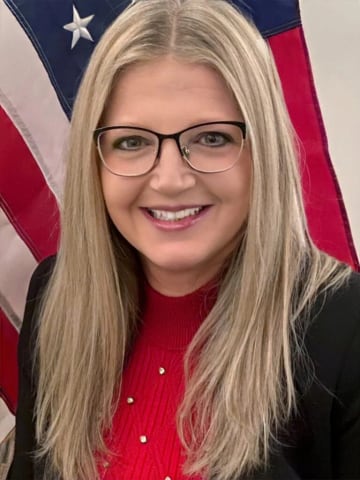
Aurora Stuski
R Republican nominee for U.S. House, PA-04
Has not served in Congress
- On the ballot
- On the general election ballotNov 3, 2026 · Pennsylvania US House 4
- Where to vote
- Find your polling place (opens in a new tab) · More ways to vote
- Top priorities
- Safer Food, Stronger Farms, Healthier Families
- A Platform for Strong Families, Safe Communities, and Responsible Growth
- Lower Costs, Stronger Economy
- Safe Communities
- Secure Border, Secure Pennsylvania
- Money
- $9.8K raised, $10.1K spent, $2.4K cash on hand (through Oct 14, 2026). Where it comes from
- Who gives
- 35% of individual money from donors at $200 or less · 100% from Pennsylvania
- Outside groups
- $97 supporting Stuski
13 priorities from aurora4pa.com, in the order they are listed there. Every heading and the text under it is copied exactly, as one passage for each page it is from, and links to that place on the page; hover a source to see which passage it opens.
American families deserve food that is safe, nutritious, honestly labeled, and produced here at home. Recent federal food-safety initiatives are working to remove harmful artificial dyes, strengthen inspections, improve infant-formula safety, promote healthier foods, and provide clearer “Product of the USA” labeling. At the same time, we must support American farmers, ranchers, and small food producers by eliminating unnecessary regulations that raise costs without improving safety. I believe we can protect our food supply, give consumers greater transparency, and strengthen American agriculture—without expanding needless government bureaucracy.
- Making America's food supply safer: The Administration is taking a renewed approach to food safety by increasing scrutiny of food additives and contaminants, strengthening inspections, improving infant-formula safety, and working to reduce children's exposure to harmful substances in food.
- Getting harmful artificial dyes out of our food: The FDA has taken action to remove outdated petroleum-based color additives and is working toward replacing unnecessary artificial dyes with safer alternatives.
- Putting real food back on the table: New federal nutrition policies are emphasizing whole, nutrient-dense foods and giving families better information about what they are putting on their tables.
- Supporting American farmers and ranchers: Recent actions are helping small farmers and meat processors compete, reducing unnecessary regulatory burdens, and expanding opportunities for producers to process and sell their own products across state lines—while maintaining strong food-safety standards.
- Giving consumers more information: New "Product of the USA" labeling gives Americans greater confidence about where their meat, poultry, and eggs come from.
I believe we can have both strong food-safety standards and less unnecessary government bureaucracy. Farmers and small food producers should be able to compete, innovate, and sell directly to consumers without being buried in regulations that do nothing to make the food safer. At the same time, Americans deserve confidence that the food on their tables is safe, properly inspected, and honestly labeled.
source ↗ (opens the page at this passage) · aurora4pa.com/safer-food-stronger-farms-healthier-families
Heading as listed on aurora4pa.com ↗ (opens aurora4pa.com at this heading)
I support economic growth, private enterprise, and technological innovation, but I don't believe growth should come at the expense of families, neighborhoods, or the people who built our communities. Markets create opportunity, but they also need guardrails when they leave seniors, children, veterans, or working families behind.
source ↗ (opens the page at this passage) · aurora4pa.com/a-platform-for-strong-families-safe-communities-and-responsible-growth
Heading as listed on aurora4pa.com ↗ (opens aurora4pa.com at this heading)
Fight inflationary spending, support small businesses, and make it easier for families to get ahead.
source ↗ (opens the page at this passage) · aurora4pa.com
Heading as listed on aurora4pa.com ↗ (opens aurora4pa.com at this heading)
Back law enforcement, prosecute violent crime, and protect neighborhoods and our local schools.
source ↗ (opens the page at this passage) · aurora4pa.com
Public safety is also strongest when prevention and accountability work together. Law enforcement, behavioral health professionals, educators, and community organizations each have a role. Supporting one should never mean ignoring the value of the others.
source ↗ (opens the page at this passage) · aurora4pa.com/a-platform-for-strong-families-safe-communities-and-responsible-growth
Heading as listed on aurora4pa.com ↗ (opens aurora4pa.com at this heading)
Enforce immigration law, stop trafficking, and put Pennsylvania’s security first.
source ↗ (opens the page at this passage) · aurora4pa.com
Heading as listed on aurora4pa.com ↗ (opens aurora4pa.com at this heading)
Demand accountability, oppose waste, and make government answer to the public.
source ↗ (opens the page at this passage) · aurora4pa.com
Heading as listed on aurora4pa.com ↗ (opens aurora4pa.com at this heading)
Housing is one example. We need more homes, but we also need to protect the people already living in them. Seniors shouldn't spend a lifetime paying off a manufactured home only to face displacement when large investment firms buy the land beneath them and dramatically raise lot rents. Residents deserve a fair opportunity to purchase their communities, and affordable housing should remain affordable for the people who depend on it.
I believe our veterans deserve more than our gratitude. They deserve access to housing, healthcare, and the opportunity to continue working without unnecessary financial penalties. Seniors who choose to remain active in the workforce shouldn't be punished for doing so, and Social Security should reflect the economic realities facing today's retirees.
One of my strongest priorities is children. Too often, government doesn't intervene until a child is already in foster care, the juvenile justice system, or a psychiatric emergency. I believe we can do better by identifying struggling children and families earlier and connecting them with schools, healthcare providers, behavioral health professionals, and community organizations before problems become lifelong crises. That is the vision behind the Youth Support and Opportunity Network (YSON): a coordinated, prevention-focused system that strengthens families rather than simply reacting after they fall apart.
source ↗ (opens the page at this passage) · aurora4pa.com/a-platform-for-strong-families-safe-communities-and-responsible-growth
I also believe our communities deserve a real voice in how they grow. I am not opposed to artificial intelligence or new technology. Innovation has created tremendous opportunities and will continue to shape our future. But the rapid expansion of enormous data centers into established communities raises legitimate concerns about land use, energy demand, water resources, infrastructure, and quality of life. Local residents shouldn't feel that decisions affecting their neighborhoods are being made without them. If corporations benefit from these projects, they should also bear the costs of the infrastructure and public services they require. Growth should happen with communities, not to them.
Throughout all of these issues, one principle remains consistent: government should be transparent, accountable, and measured by outcomes—not by how much money it spends or how many programs it creates. Success should be measured by whether more children are safe, more seniors remain in their homes, more veterans have opportunities, housing becomes more attainable, and communities retain a meaningful voice over their future.
At its core, this isn't a platform built around ideology. It's built around stewardship. I believe in protecting what is worth preserving, improving what isn't working, and making decisions that leave our communities stronger for the next generation than they are today.
Here's a specific outline:
Guiding Principle ↗ (opens aurora4pa.com/a-platform-for-strong-families-safe-communities-and-responsible-growth at this heading)
Government should protect the vulnerable, expand opportunity, respect local communities, and invest in prevention rather than pay for avoidable crises, all while protecting limited government, liberty, and property rights.
source ↗ (opens the page at this passage) · aurora4pa.com/a-platform-for-strong-families-safe-communities-and-responsible-growth
- Modernize Social Security so seniors are not penalized for continuing to work after reaching retirement age.
- Expand property tax and housing relief for seniors living on fixed incomes.
- Increase affordable housing options for veterans.
- Help seniors age in place with dignity and independence.
- Support caregivers and strengthen access to healthcare and community services.
Goal: Honor those who built and defended our country by ensuring they can live with security and dignity.
source ↗ (opens the page at this passage) · aurora4pa.com/a-platform-for-strong-families-safe-communities-and-responsible-growth
- Give residents the first opportunity to purchase manufactured home communities when they are sold.
- Protect residents from excessive or predatory lot rent increases.
- Encourage resident-owned communities, nonprofit ownership, and community land trusts.
- Support construction of new manufactured housing while protecting existing communities.
- Increase transparency when investment firms acquire manufactured home parks.
Goal: Preserve one of America's largest sources of naturally affordable homeownership.
source ↗ (opens the page at this passage) · aurora4pa.com/a-platform-for-strong-families-safe-communities-and-responsible-growth
- Reduce unnecessary permitting delays.
- Encourage mixed-income housing near existing infrastructure.
- Support adaptive reuse of vacant commercial properties.
- Incentivize affordable housing without sacrificing local character.
- Balance responsible development with community planning.
Goal: Make housing more attainable while respecting the communities where people already live.
source ↗ (opens the page at this passage) · aurora4pa.com/a-platform-for-strong-families-safe-communities-and-responsible-growth
Develop a statewide early intervention network focused on children and families before crises occur.
The YSON model would include:
- Early identification of at-risk youth.
- School-based behavioral health partnerships.
- Mobile crisis response teams.
- Family stabilization services.
- Housing, food, transportation, and employment supports.
- Coordination between schools, healthcare, behavioral health providers, law enforcement, and community organizations.
- Strong privacy protections and outcome-based accountability.
Goals:
- Reduce foster care placements.
- Reduce youth homelessness.
- Reduce juvenile justice involvement.
- Reduce human trafficking risk.
- Improve school attendance and graduation.
- Strengthen families before intervention becomes necessary.
source ↗ (opens the page at this passage) · aurora4pa.com/a-platform-for-strong-families-safe-communities-and-responsible-growth
Invest in solutions that reduce long-term public costs.
Examples include:
- Early behavioral health treatment instead of repeated hospitalization.
- Family support instead of foster care whenever safely possible.
- Stable housing instead of chronic homelessness.
- Prevention programs instead of repeated crisis intervention.
Goal: Spend taxpayer dollars earlier and smarter, instead of later and more expensively.
source ↗ (opens the page at this passage) · aurora4pa.com/a-platform-for-strong-families-safe-communities-and-responsible-growth
Support law enforcement while recognizing that lasting public safety requires multiple partners.
Invest in:
- Community policing.
- Behavioral health crisis teams.
- Victim services.
- Human trafficking prevention.
- School safety partnerships.
- Evidence-based violence prevention.
Goal: Build safer communities through accountability, prevention, and collaboration.
source ↗ (opens the page at this passage) · aurora4pa.com/a-platform-for-strong-families-safe-communities-and-responsible-growth
- Measure programs by outcomes, rather than dollars spent.
- Increase transparency and public reporting.
- Reduce duplication between agencies.
- Encourage bipartisan problem-solving.
- Make government easier for citizens to navigate.
Goal: Restore trust by making government more effective and accountable.
source ↗ (opens the page at this passage) · aurora4pa.com/a-platform-for-strong-families-safe-communities-and-responsible-growth
Support innovation while ensuring that communities have a meaningful voice in how large-scale technology projects are developed.
- Encourage artificial intelligence and technological innovation that benefits society.
- Support responsible economic development without sacrificing neighborhoods, farmland, or natural resources.
- Require meaningful public input before approving large-scale data centers.
- Prioritize data centers in appropriate industrial or commercial locations rather than established residential communities whenever feasible.
- Require developers to address impacts on electric infrastructure, water resources, transportation, emergency services, and the environment.
- Ensure large corporations pay a fair share of infrastructure costs their projects create, rather than shifting those costs to taxpayers.
- Increase transparency in local approval processes and long-term community impact assessments.
Goal: Embrace innovation while ensuring that growth happens with communities—not to them.
The Common Thread ↗ (opens aurora4pa.com/a-platform-for-strong-families-safe-communities-and-responsible-growth at this heading)
Every proposal in this platform follows the same philosophy:
- Protect seniors from displacement.
- Honor veterans with opportunity.
- Keep children out of crisis through early intervention.
- Preserve affordable homeownership.
- Encourage responsible economic growth.
- Hold government accountable.
- Ensure that large corporations—including investment firms and technology companies—operate as responsible partners in our communities.
Core Philosophy ↗ (opens aurora4pa.com/a-platform-for-strong-families-safe-communities-and-responsible-growth at this heading)
Government should solve problems before they become crises, protect the people who built our communities, and ensure that economic progress strengthens—not weakens—the places we call home.
My community stewardship platform promotes the idea that people, families, and communities should remain at the center of public policy, with economic growth, innovation, and government all serving that broader purpose rather than becoming ends in themselves. Smart policy can achieve these goals while protecting limited government, liberty, and property rights.
source ↗ (opens the page at this passage) · aurora4pa.com/a-platform-for-strong-families-safe-communities-and-responsible-growth
Heading as listed on aurora4pa.com ↗ (opens aurora4pa.com at this heading)
Pennsylvania, we must reject Regulation 10-242 as written.
Public health must be protected, but no agency should receive open-ended power to restrict liberty, bypass parents, obtain sensitive medical records, or impose sweeping mandates without clear statutory limits, meaningful due process, and direct accountability to the people.
🚨 Make Your Voice Heard 🚨
The issue: They lost on the statewide mask mandate in court during COVID; they want that power back and more.
In the 2021 case, Corman v. Acting Secretary of the Pennsylvania Department of Health, the Pennsylvania Supreme Court affirmed the lower court’s decision striking down the 2021 statewide school-mask order.
Bureaucrats want to ensure their unchecked power, so the Pennsylvania Department of Health has proposed a 502-page overhaul of 28 Pa. Code Chapter 27 governing communicable and noncommunicable diseases. Proposed Regulation 10-242, IRRC No. 3490, would expand disease reporting and surveillance systems, establish new reporting requirements for immunizations and birth defects, plus rewrite contact-tracing rules and the Commonwealth’s disease-control provisions.
Some updates to decades-old regulations may be reasonable. PA must be able to respond rapidly to truly dangerous outbreaks. But useful technical updates do not justify bundling them with broad grants of coercive power. The Department itself states that federal law or a court order does not mandate the package and that the 2021 decision striking down the statewide school-mask mandate influenced its proposed rewrite.
That history demands heightened scrutiny—not a regulatory end-run around the limits recognized by the courts.
source ↗ (opens the page at this passage) · aurora4pa.com/shapiro-health-regulation-power-grab
The proposal would authorize the Department or a local health authority to use “any other disease control measure” it considers appropriate for the surveillance, prevention, containment, or mitigation of disease. Language that broad is not a narrow emergency tool. It could become the claimed foundation for future mask mandates, distancing, access restrictions, closures, or other mandates affecting schools, businesses, churches, workplaces, and daily life.
Rules with consequences this serious should not rest on an agency’s judgment alone. The General Assembly, not unelected regulators, must establish the scope, triggers, duration, geographic reach, and limits of extraordinary public-health powers. •
One of those powers is expanded entry and contact-tracing authority beyond what the current law allows. The proposal empowers the Department or local health authority to “enter an apartment, building, health care facility, school, college or university, or other location as necessary to carry out contact tracing or partner services,” and requires that persons “not obstruct or interfere with” these efforts. This opens previously restricted access to private and institutional spaces and creates new legal risks for individuals and employees who question the erosion of privacy and property rights.
source ↗ (opens the page at this passage) · aurora4pa.com/shapiro-health-regulation-power-grab
Isolation and quarantine can be necessary ONLY for grave, contagious threats. They are also among the most severe powers government can exercise over a free person’s liberty. The proposal empowers health authorities to determine who must be isolated or quarantined, where that confinement will occur, and which contacts are covered. Yet the text does NOT pair those powers with a complete, modern due-process framework.
Any final policy must require individualized evidence, written notice, prompt access to counsel and judicial review, the least restrictive effective measure, time limits, periodic reassessment, medical necessity supported by objective standards, and reasonable protections for employment, caregiving, medication, food, and family communication.
source ↗ (opens the page at this passage) · aurora4pa.com/shapiro-health-regulation-power-grab
The proposed school contact-tracing provision would require your child’s school to provide state or local health officials access to your child—even during class or a school function—and permit health officials to meet with the student privately without parental knowledge or consent.
The proposal relies on an existing Pennsylvania statute that permits minors to consent to services involving venereal and other reportable diseases. But the regulation does not add a clear parental-notification safeguard or narrowly cabin private access to the circumstances in which existing law truly authorizes minor consent.
Parents are the primary guardians of their children’s health and welfare. Except where a specific statute clearly provides otherwise or where abuse, neglect, or an immediate medical emergency is involved, parents should receive notice and participate in decisions involving interviews, testing, treatment, isolation, quarantine, and disclosure of a child’s medical information.
The expanded power also broadens the school exclusion criteria, making it easier to remove students from educational settings based on the Department’s evolving standards, disrupting education and pressuring families into compliance. The proposal expands the definition of persons “susceptible” to measles and other diseases to include those without two age-appropriate doses of vaccines given at least one month apart after 12 months of age, without documented disease history, without serological evidence of immunity, or born after December 31, 1956, allowing exclusion until vaccination, proof of non-susceptibility, or 21 days without cases.
source ↗ (opens the page at this passage) · aurora4pa.com/shapiro-health-regulation-power-grab
The proposal says the Department or a local health authority “shall have access to” patient medical records during an investigation and may demand electronic copies in a manner acceptable to the government. Even when disease investigations require limited access, the rule should specify necessity, relevance, data minimization, security standards, retention and deletion schedules, access logs, breach notification, and meaningful remedies for misuse.
Pennsylvanians should not have to trust that broad access will always be used wisely. Privacy protections must be written into the law and enforceable against the government.
Instead, this regulation creates for the first time ever in PA, mandatory immunization participation in the state database. Unless a patient knows to opt out in writing, they will be placed in a state database, giving the government enhanced access to your private vaccination information
The regulation also expands the reportable conditions that fall under these expanded powers, adding 73 new diseases, infections, and conditions for health care facilities and providers to track, and 53 more for laboratories. This will result in even more intrusion into your privacy and cause health premiums to rise, along with the cost of monitoring all of this.
source ↗ (opens the page at this passage) · aurora4pa.com/shapiro-health-regulation-power-grab
The proposal would require detailed immunization reporting and create a statewide birth-defects and congenital-anomalies registry. Public-health research can serve legitimate purposes, but centralized databases containing identifiable information about children and families create lasting privacy and cybersecurity risks. The Department estimates more than $1.5 million in first-year staffing costs for the birth-defects registry and expects to seek CDC support.
Before authorizing any such system, lawmakers should require a demonstrated public need, strict limits on data collection and secondary use, transparent costs, independent security audits, parental notice where appropriate, defined retention periods, de-identification standards, and an absolute prohibition on discriminatory or coercive use.
source ↗ (opens the page at this passage) · aurora4pa.com/shapiro-health-regulation-power-grab
The Commonwealth should not impose sweeping new regulations across nearly every sector of society without first demonstrating a clear need, accurately assessing the costs, establishing reasonable exemptions and compliance protections, and requiring legislative review of the economic impact.
The reporting, recordkeeping, exclusion, access, and compliance burdens would affect medical practices, laboratories, schools, childcare providers, employers, and taxpayers—with small organizations hit hardest because they have fewer compliance resources and less capacity to absorb added costs and disruption.
source ↗ (opens the page at this passage) · aurora4pa.com/shapiro-health-regulation-power-grab
Existing § 27.191 authorizes the Department to impose permit and related requirements on the importation of animals and animal products during a public health emergency. The proposal would replace that framework with authority to restrict the movement (imported or not) of animals, animal products, and animal-related materials either during an emergency or to prevent one. Covered materials would include, but not be limited to, animal bedding, carcasses, feed, waste, animal-care equipment, and food products made from animals. Restrictions could be imposed when these animals or products are “suspected" to be contaminated by a pathogen that poses a threat to human health. Because the proposal does not define the evidentiary standard for “suspected,” explain how serious or imminent the threat must be, or specify procedural protections for affected owners and producers; products such as eggs, raw milk, and unpasteurized cheese could potentially be restricted. Clear standards, prompt review procedures, and protections against unnecessary disruption are needed to safeguard farmers, small producers, and consumer choice.
source ↗ (opens the page at this passage) · aurora4pa.com/shapiro-health-regulation-power-grab
Current § 27.87(c) provides that treatment approved by the Department or a local health authority may include care by an accredited practitioner of a well-recognized church or religious denomination that relies exclusively on prayer or spiritual means for healing, provided applicable sanitation, isolation, and quarantine requirements are satisfied. The proposal would delete this provision. The Department describes the change as a clarification, explaining that it relies on evidence-based treatment and would approve religious or spiritual treatment only to the extent that it is evidence-based. Because § 27.87 permits institutional isolation of a person with a communicable disease who refuses approved treatment, removing the regulation’s express recognition of religious treatment could materially limit the accommodation available to people whose sincere religious beliefs prohibit conventional medical care. At minimum, the deletion raises serious religious-liberty and free-exercise concerns and warrants clearer standards explaining how sincere religious beliefs would be accommodated while protecting others from infection.
The proposed regulation is not federal. I am running for Congress, so why have I spent time researching and writing about this proposal? As Pennsylvanians, we should all be alarmed about this power grab from the Shapiro administration.
source ↗ (opens the page at this passage) · aurora4pa.com/shapiro-health-regulation-power-grab
I support focused tools to address serious communicable diseases and call on Pennsylvania officials to withdraw Regulation 10-242 and replace it with narrowly tailored proposals that:
- Require General Assembly approval for statewide mandates, broad closures, or restrictions affecting fundamental rights beyond a short, defined emergency period.
- Use objective, disease-specific triggers and the least restrictive effective intervention.
- Guarantee prompt notice, counsel, judicial review, time limits, and periodic reassessment for involuntary isolation or quarantine.
- Protect parental notice and involvement except where existing law clearly and narrowly provides otherwise.
- Limit medical-record access to information demonstrably relevant and necessary to a specific investigation, with enforceable privacy and cybersecurity safeguards.
- Separate technical disease-list updates from controversial expansions of coercive authority so each can receive an honest public and legislative review.
- Publish a complete fiscal and small-business impact analysis before adoption.
- Preserve religious liberty, free exercise, freedom of association, property rights, and equal protection in every public-health response.
source ↗ (opens the page at this passage) · aurora4pa.com/shapiro-health-regulation-power-grab
Heading as listed on aurora4pa.com ↗ (opens aurora4pa.com at this heading)
I grew up in Philadelphia, and both my uncle and my cousin served as Philadelphia police officers. I’m going to show my age a little here, but I grew up in a time when information wasn’t instantly available at our fingertips. If there was a report on the evening news about an officer being shot or an officer down, families would rush to the phone to make calls and make sure their loved ones were safe.
That’s what law enforcement is to me: family.
As a small business owner, I have worked directly with law enforcement officers in multiple jurisdictions whenever they reached out for assistance or expertise. As a jewelry appraiser, gemologist, and precious metals buyer, I occasionally encountered situations involving stolen property or suspected criminal activity. Whenever possible, I worked with victims and law enforcement to help recover property and support investigations—even when doing so created challenges or backlash for my business.
I have also spoken publicly in support of local law enforcement when they were being unfairly criticized for carrying out their duties or assisting federal agencies in executing lawful warrants.
My respect for law enforcement will never waver. I will continue to speak out in support of the men and women who put on the badge every day, especially when they are unable to speak for themselves.
I am a strong supporter of both law enforcement and the Second Amendment. I support both without reservation.
I believe police officers should be able to do their jobs without constantly worrying about becoming targets of anti-police rhetoric from politicians, activists, or media organizations. Every day, they put their lives on the line to protect our communities. That level of service and sacrifice deserves respect and gratitude—not demonization.
As your representative in Congress, I will support legislation that strengthens and protects law enforcement officers and first responders. They deserve leaders who will stand with them consistently, not only when it is politically convenient.
Congresswoman Madeleine Dean often highlights legislation she has supported that enjoyed broad bipartisan backing. However, I believe true support for law enforcement is demonstrated when difficult votes arise—not just when supporting legislation is politically safe.
For example, Congresswoman Dean has prominently promoted her support for the George Floyd Justice in Policing Act. Among other provisions, the legislation proposed changes to federal standards for prosecuting police misconduct, limitations on qualified immunity in certain civil actions, expanded Department of Justice investigatory authority, and restrictions on no-knock warrants. While supporters viewed these reforms as accountability measures, many law enforcement organizations expressed concerns about their impact on policing.
More recently, Congresswoman Dean voted against the Law Enforcement Officers Safety Reform Act (H.R. 354), legislation strongly supported by the Fraternal Order of Police. The bill would have expanded concealed-carry protections for qualified active and retired law enforcement officers under the Law Enforcement Officers Safety Act (LEOSA).
She also voted against legislation that included additional funding for the Department of Homeland Security and Immigration and Customs Enforcement (ICE).
These votes reflect a different approach to law enforcement than my own.
I believe our police officers, sheriff’s deputies, federal agents, corrections officers, and first responders deserve strong and consistent support. They should have access to every reasonable protection, resource, and tool necessary to keep themselves and our communities safe.
If elected to Congress, it would be my honor to serve those who have dedicated their lives to serving us.
God bless our law enforcement officers and first responders, and God bless America.
What Is LEOSA?
LEOSA, the Law Enforcement Officers Safety Act, is a federal law enacted in 2004 that allows qualified active and retired law enforcement officers to carry concealed firearms across state lines, subject to certain limitations and exceptions.
The LEOSA Reform Act (H.R. 354) was proposed legislation designed to clarify and expand certain protections under LEOSA, addressing concerns raised by active and retired officers regarding where they may legally carry.
Congresswoman Madeleine Dean voted against H.R. 354. The bill passed the House and would have expanded concealed-carry protections for qualified active and retired law enforcement officers in certain locations, including additional public areas and facilities. Her vote was recorded as "No" on the House roll-call vote for the legislation.
source ↗ (opens the page at this passage) · aurora4pa.com/supporting-those-who-serve-why-i-stand-with-law-enforcement
I testified against the proposed PAWC–Essential Utilities water merger because Pennsylvanians deserve transparency, competition, and protection of our natural resources.
Tuesday evening, May 5th, I attended the public hearing on the proposed merger between Pennsylvania American Water (PAWC) and Essential Utilities. As a PAWC customer, I testified on the record against the merger.
One moment stood out to me in particular. The judge asked whether any elected officials were present to testify on behalf of the public.
None were there.
A HUGE failure on their part to stand up for us!
That was deeply disappointing.
For this merger to move forward, it must be proven to be both “necessary and beneficial” to the public. I do not believe it meets that standard.
This merger appears less about improving service for consumers and more about consolidating market power. When fewer companies control critical infrastructure, consumers lose leverage, competition weakens, and accountability suffers.
Supporters claim rates will not increase, yet PAWC already filed for a 15% rate increase in Pennsylvania in December 2025.
At the hearing, I asked whether these companies could independently meet projected future water demands without merging.
That question matters because the real driver behind this proposal appears tied to Pennsylvania’s rapidly expanding data center industry.
Pennsylvania is quickly becoming a major target for AI and cloud computing infrastructure because of our access to water and power resources. Governor Shapiro recently announced a $20 billion agreement with Amazon tied to data center development and AI innovation campuses across the Commonwealth.
As of early 2026, Pennsylvania has approximately 129 data centers, including both operational and planned facilities.
This rapid expansion raises serious concerns about:
- water consumption
- energy demand
- environmental impact
- and the long-term effect on local communities
Large data centers can consume enormous amounts of water for cooling—in some cases, millions of gallons per day. Communities also face concerns about noise, light pollution, strain on electrical infrastructure, and environmental emissions.
I support technological advancement and economic growth. But government has a responsibility to ensure communities, consumers, and natural resources are protected before massive infrastructure expansion takes place, not after.
Unfortunately, Pennsylvania’s leadership appears to be moving faster to incentivize development than to establish meaningful safeguards for residents and local municipalities.
Even more concerning are efforts to weaken local control by limiting counties' and municipalities' ability to regulate data center development within their own communities.
This should not be a partisan issue.
Protecting consumers, preserving competition, safeguarding our water resources, and ensuring local communities retain a voice in development decisions should matter to everyone, regardless of political party.
Pennsylvanians deserve transparency, accountability, and leadership willing to stand up for the public interest before irreversible decisions are made.
Who is protecting Pennsylvania’s water?
source ↗ (opens the page at this passage) · aurora4pa.com/pennsylvania-pay-attention-to-water-merger
My guiding principle: The U.S. government's first responsibility is to protect the American people. ↗ (opens aurora4pa.com/peace-through-strength-accountability-and-responsible-alliances at this heading)
Our foreign policy should defend our national security, protect American service members, strengthen our economy, preserve our independence, and maintain relationships that genuinely serve U.S. interests.
America should be a strong and reliable ally. But being a reliable ally does not mean writing blank checks, accepting unlimited financial obligations, or sending our sons and daughters into foreign wars without a clear and compelling national defense purpose.
I believe in peace through strength, responsible international engagement, and a military capable of defending our country. I also believe our allies must accept their fair share of the financial and security burdens of protecting their own nations.
My priority as a member of Congress will be to put American families, workers, veterans, taxpayers, and communities first.
1. No open-ended foreign wars ↗ (opens aurora4pa.com/peace-through-strength-accountability-and-responsible-alliances at this heading)
American military personnel should not be placed in harm's way without a clearly defined national security purpose.
Before supporting an expanded military operation, I will demand answers to five questions:
What direct threat to American national security are we addressing?
What specific objective are our military personnel expected to accomplish?
What legal authority and congressional oversight govern the operation?
What are the expected financial costs and risks to American service members?
What is the exit strategy, and what conditions will allow our troops to come home?
I support a strong military capable of deterring aggression and defending the United States. I do not support treating military intervention as the default response to every international crisis.
When military action is necessary to defend our country, protect American personnel, or address a genuine and compelling national security threat, the mission must be clearly defined, lawfully authorized, adequately supported, and subject to continuing oversight.
2. Responsible support for Israel and other allies ↗ (opens aurora4pa.com/peace-through-strength-accountability-and-responsible-alliances at this heading)
Israel is an American ally, and I recognize the importance of maintaining relationships that advance American security and stability.
Israel has a legitimate right to protect its people from terrorism. The October 7, 2023, attacks demonstrated the devastating consequences of terrorism against civilians. Hamas and other terrorist organizations must not be permitted to threaten American interests, attack our citizens, or use regional instability to advance their objectives.
However, supporting Israel's security does not require endorsing every action taken by its government.
I do not condone much of what has happened in Gaza, and I believe the United States must carefully evaluate how its financial assistance, weapons transfers, and diplomatic support are being used.
My approach would be to:
Preserve security cooperation that demonstrably advances American national interests.
Distinguish defensive systems and intelligence cooperation from offensive weapons transfers.
Demand transparency and accountability for American military assistance.
Apply existing U.S. legal requirements consistently, including those governing arms transfers and human rights.
Oppose attacks on civilians, hostage-taking, terrorism, and the unlawful use of force, regardless of who commits them.
Support humanitarian assistance for innocent civilians and diplomatic efforts that reduce the likelihood of renewed war.
Reassess assistance when its purposes, conditions, or results cannot be adequately justified.
American support should be based on clearly defined objectives and mutual responsibility, not an assumption that any ally is entitled to unlimited assistance.
3. Allies must carry their fair share ↗ (opens aurora4pa.com/peace-through-strength-accountability-and-responsible-alliances at this heading)
The United States cannot be expected to finance and enforce the security of the entire world indefinitely.
Our allies have their own governments, economies, armed forces, and responsibilities. They should make meaningful contributions to their own defense and to international security arrangements from which they benefit.
This principle applies to Israel, NATO members, and other security partners.
I will support stronger burden-sharing agreements, clearer commitments from our allies, and greater transparency about the costs and results of international security cooperation.
When an ally faces a legitimate threat, the United States should evaluate how best to help without automatically assuming the entire military or financial burden.
Partnership must mean shared responsibility.
4. Protect American service members and avoid unnecessary entanglement ↗ (opens aurora4pa.com/peace-through-strength-accountability-and-responsible-alliances at this heading)
American troops are not a substitute for other countries' armed forces.
I oppose an open-ended American ground combat mission in Gaza or another foreign conflict when there is no compelling U.S. national defense justification.
Any proposed deployment should have a clear mission, a lawful basis, appropriate congressional authorization, defined limits, and a credible plan to transfer responsibilities or bring our personnel home.
I will also demand regular reporting on the number of American personnel involved in overseas missions, their responsibilities, the risks they face, and the costs to American taxpayers, consistent with legitimate operational security.
Our service members deserve more than expressions of gratitude. They deserve a government that takes their lives, their missions, and their return home seriously.
5. Foreign aid must be accountable to American taxpayers ↗ (opens aurora4pa.com/peace-through-strength-accountability-and-responsible-alliances at this heading)
Every dollar of foreign assistance represents resources that American taxpayers worked to earn.
Foreign assistance should not be automatic, unlimited, or exempt from scrutiny simply because it benefits an ally.
I will support rigorous examination of foreign aid, including:
The direct benefit to American national security.
The recipient country's financial contribution.
The intended use of the funds or equipment.
Compliance with applicable American laws and conditions.
Evidence that the assistance is achieving its stated purpose.
Opportunities to reduce waste, improve oversight, or end programs that no longer serve their intended objectives.
I will also distinguish military assistance from humanitarian relief. Helping innocent people obtain food, medicine, clean water, and emergency shelter is a different policy decision from financing military operations, and each deserves its own evaluation.
6. Strong international relationships without sacrificing American interests ↗ (opens aurora4pa.com/peace-through-strength-accountability-and-responsible-alliances at this heading)
Foreign policy affects American jobs, energy prices, trade, supply chains, technology, and national security.
I recognize that the United States cannot ignore the rest of the world. Maintaining constructive relationships with allies and trading partners is important to our prosperity and security.
But diplomacy should advance American interests, not create obligations without a clear purpose.
I support pursuing peaceful solutions where possible, protecting American workers in international trade, securing critical supply chains, strengthening cooperation against terrorism, and building partnerships that produce measurable benefits for the American people.
We should be strong enough to defend ourselves, responsible enough to avoid unnecessary wars, and practical enough to work with other nations when doing so benefits our country.
7. Bring the focus back home ↗ (opens aurora4pa.com/peace-through-strength-accountability-and-responsible-alliances at this heading)
My highest priority is addressing the challenges American families face every day.
Families in Berks and Montgomery Counties are concerned about housing costs, taxes, energy expenses, healthcare, public safety, retirement security, and the opportunities available to their children.
Those concerns deserve the attention, resources, and serious policymaking of their elected representatives.
Every major foreign-policy commitment should be considered alongside our responsibilities at home. That does not mean abandoning the world. It means recognizing that America's strength ultimately depends on the prosperity, security, and confidence of its own people.
We should not neglect American communities while making international commitments that lack clear objectives, adequate accountability, or a credible end point.
My commitment
I believe America should be strong, respected, prepared to defend itself, and reliable in its international relationships.
I also believe our country should never confuse loyalty to an ally with an obligation to endorse every policy that ally pursues.
My standard will be consistent: protect American lives, defend our national interests, spend taxpayer money responsibly, hold our partners accountable, and pursue peace wherever it can be achieved without compromising our security.
America can stand with its allies without surrendering its judgment. We can defend ourselves without entering every war. And we can engage with the world while putting the American people first.
source ↗ (opens the page at this passage) · aurora4pa.com/peace-through-strength-accountability-and-responsible-alliances
Purpose ↗ (opens aurora4pa.com/support-aging-adults-with-disabilities-and-their-families at this heading)
Create a national framework ensuring that an adult with lifelong intellectual or developmental disabilities and significant mental-health or behavioral needs does not lose housing, care, benefits, or community placement simply because an aging parent can no longer provide care.
Families should not have to wait for a parent to become seriously ill or pass away before figuring out where their loved one will live, who will provide care, and how their needs will be met.
The goal is to replace crisis-driven decisions with lifelong planning, stable support, and real choices for individuals and their families.
Lifetime Support Plans ↗ (opens aurora4pa.com/support-aging-adults-with-disabilities-and-their-families at this heading)
Every eligible adult would have the right to develop a voluntary Lifetime Support Plan.
The plan would identify:
- preferred living arrangement;
- medical providers;
- psychiatric and behavioral-health providers;
- medications;
- communication needs;
- daily support needs;
- transportation;
- employment and day activities;
- benefits;
- financial arrangements;
- decision-making arrangements;
- emergency contacts;
- backup caregivers;
- housing preferences;
- crisis procedures;
- long-term arrangements if the primary caregiver dies or becomes unable to provide care.
The plan would belong to the individual, not to a particular agency or provider.
Planning for Aging Caregivers ↗ (opens aurora4pa.com/support-aging-adults-with-disabilities-and-their-families at this heading)
Federal funding would help states identify families in which an adult with significant intellectual or developmental disabilities lives with an aging caregiver who provides substantial daily assistance.
Families would receive transition planning before a crisis occurs.
The program would specifically address situations in which an elderly parent remains the primary caregiver for a middle-aged or older disabled adult.
Families should have time to plan, make choices, visit potential housing, establish support relationships, and prepare for a future transition.
Integrated Disability and Mental-Health Support ↗ (opens aurora4pa.com/support-aging-adults-with-disabilities-and-their-families at this heading)
States would establish specialized community teams for people with co-occurring intellectual or developmental disabilities and significant psychiatric or behavioral needs.
Teams could include:
- developmental-disability specialists;
- psychiatrists;
- psychologists;
- nurses;
- behavioral specialists;
- social workers;
- housing specialists;
- primary-care providers.
The goal would be to prevent people from being passed back and forth between the developmental-disability and mental-health systems.
Individuals with complex needs should receive coordinated care from a system that understands the whole person.
Community Crisis Stabilization ↗ (opens aurora4pa.com/support-aging-adults-with-disabilities-and-their-families at this heading)
States receiving federal funds would establish community crisis-response capacity specifically designed for people with intellectual and developmental disabilities.
When clinically appropriate, the first response to a behavioral crisis should be stabilization and treatment rather than automatic emergency-room use or institutional placement.
When hospitalization does occur, hospitals would receive support for specialized discharge planning to ensure that individuals return to an appropriate community setting whenever possible.
A Continuum of Housing Choices ↗ (opens aurora4pa.com/support-aging-adults-with-disabilities-and-their-families at this heading)
Federal housing and Medicaid programs would be coordinated to expand a range of community-based living options, including:
- supported independent apartments;
- small supported residences;
- shared-living arrangements;
- accessible apartments with visiting support;
- support provided in the family home;
- higher-support community residences.
No individual or family should have to choose between an aging parent continuing to provide unsustainable levels of care and institutional placement.
The objective would be to create meaningful choices that reflect each person's abilities, preferences, and support needs.
Strengthening the Direct-Support Workforce ↗ (opens aurora4pa.com/support-aging-adults-with-disabilities-and-their-families at this heading)
Medicaid home- and community-based services reimbursement would be strengthened to improve compensation, training, recruitment, and retention of direct-support professionals.
Federal funding would support:
- higher reimbursement;
- paid training;
- career advancement opportunities;
- certification;
- respite coverage;
- additional staffing capacity;
- incentives for underserved and rural communities.
States would be required to demonstrate that increased federal funding is translating into improved workforce capacity and more reliable access to services.
A community-based system cannot function without the people who provide daily support.
Respite for Family Caregivers ↗ (opens aurora4pa.com/support-aging-adults-with-disabilities-and-their-families at this heading)
Eligible family caregivers would receive a defined annual respite benefit.
Respite could include:
- in-home support;
- short-term residential care;
- weekend programs;
- emergency backup care.
The purpose would be to give caregivers time to rest, address their own health and responsibilities, and continue providing care without reaching the point of exhaustion or crisis.
Respite should be viewed as prevention, not simply as an additional benefit.
Emergency Backup Care ↗ (opens aurora4pa.com/support-aging-adults-with-disabilities-and-their-families at this heading)
Every participant in a Lifetime Support Plan would have an identified emergency arrangement.
If the primary caregiver:
- becomes hospitalized;
- dies;
- experiences an incapacitating event; or
- otherwise becomes unable to provide care,
the individual would have a predetermined emergency pathway.
Families should never have to discover the available options for the first time in the middle of a medical emergency or after the death of a parent.
Benefits and Financial Protection ↗ (opens aurora4pa.com/support-aging-adults-with-disabilities-and-their-families at this heading)
Federal agencies would establish coordinated assistance for:
- SSI and SSDI;
- Medicaid;
- Medicare, where applicable;
- housing assistance;
- special-needs trusts;
- ABLE accounts;
- guardianship and supported-decision-making arrangements.
Families would receive a coordinated benefits review rather than having to independently navigate multiple agencies and programs.
The objective would be to help families understand the resources available to them and protect the individual's eligibility for essential benefits.
National Accountability and Data ↗ (opens aurora4pa.com/support-aging-adults-with-disabilities-and-their-families at this heading)
States would report standardized information concerning:
- waiting lists;
- caregiver age;
- residential placements;
- emergency placements;
- psychiatric hospitalization;
- institutionalization;
- workforce vacancies;
- workforce turnover;
- service denials;
- unmet housing needs.
The federal government would publish an annual report identifying where the largest service gaps exist.
What gets measured should help determine where resources and reforms are needed most.
A Predictable Transition for Families ↗ (opens aurora4pa.com/support-aging-adults-with-disabilities-and-their-families at this heading)
The central principle of this plan is simple:
A person's lifetime disability support should not collapse because the person who has been holding the system together—the parent—gets old.
Parents should not have to spend their later years wondering what will happen to their son or daughter when they can no longer provide care.
Adults with lifelong disabilities should have a plan that follows them throughout their lives, regardless of which caregiver, agency, or provider is involved.
Building a System Before the Crisis ↗ (opens aurora4pa.com/support-aging-adults-with-disabilities-and-their-families at this heading)
This plan would shift the focus from emergency intervention to advance planning.
Instead of waiting for:
- a caregiver's hospitalization;
- a parent's death;
- a behavioral-health crisis;
- an emergency-room visit;
- a housing loss; or
- an institutional placement,
families and states would have a system for planning ahead.
The goal is straightforward:
Replace predictable crises with predictable systems of support.
Every adult with significant lifelong disabilities deserves stability, dignity, community, and a future that does not depend entirely on how long an aging parent is able to keep going.
Aurora Stuski for Congress
Fighting for Berks and Montgomery Counties
source ↗ (opens the page at this passage) · aurora4pa.com/support-aging-adults-with-disabilities-and-their-families