Loading this candidate’s profile from the FEC filings and campaign records.
Where They Stand is a nonpartisan guide to everyone running for Congress: their money, their own words and how incumbents voted. Find your ballot →
Candidates › OH-14 race › 2025–2026
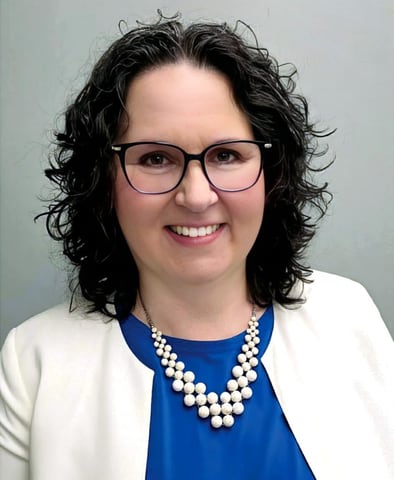
Maria Jukic
D Democratic nominee for U.S. House, OH-14
Has not served in Congress
- On the ballot
- Lost the general electionNov 3, 2026 · 103,142 votes (42.2%) · 2 of 2
- Where to vote
- Find your polling place (opens in a new tab) · More ways to vote
- Top priorities
- 1. A Bipartisan Tax Reform Working Group
- 2. Tax Relief for Working Families
- 3. Close the Carried Interest Loophole
- 4. Make Investment Income Pay Its Fair Share
- 5. End Corporate Tax Avoidance
- Money
- $118.4K raised, $79.9K spent, $38.4K cash on hand (through Oct 14, 2026). Where it comes from
- Who gives
- 34% of individual money from donors at $200 or less
- Backed by
- AFSCME Power In Action · Nurses for America · AFSCME Ohio Council 8. As the campaign lists them
81 priorities from mariajukicforcongress.com, in the order they are listed there. Every heading and the text under it is copied exactly, as one passage for each page it is from, and links to that place on the page; hover a source to see which passage it opens.
Maria will build a coalition of Congress members from both parties who are serious — not just rhetorical — about rewriting the tax code for working Americans. Not another round of tax cuts for the wealthy dressed up as middle-class relief. Real, structural reform that makes the system fairer, simpler, and more honest.
source ↗ (opens the page at this passage) · mariajukicforcongress.com/tax-policy-for-the-paycheck-not-the-portfolio
Most families don’t need a lecture on tax policy — they need a little breathing room. Maria supports tax relief that actually shows up in everyday life. Help with childcare, healthcare, school — the things people are already paying for.
It’s not complicated. When working families have a little more to work with, it makes a difference.
source ↗ (opens the page at this passage) · mariajukicforcongress.com/tax-policy-for-the-paycheck-not-the-portfolio
Hedge fund managers pay a lower tax rate on their earnings than most middle-class workers because of a provision called “carried interest” that allows them to classify their income as investment gains rather than wages. This is indefensible. Maria will fight to close it.
source ↗ (opens the page at this passage) · mariajukicforcongress.com/tax-policy-for-the-paycheck-not-the-portfolio
Big corporations have figured out how to move profits overseas and use loopholes so they pay far less in taxes than most working people. Maria supports closing those loopholes, cracking down on offshore tax shelters, and making sure corporations that profit from American workers and infrastructure actually pay their fair share.
source ↗ (opens the page at this passage) · mariajukicforcongress.com/tax-policy-for-the-paycheck-not-the-portfolio
Tax policy alone cannot fix economic inequality. Maria also supports raising the federal minimum wage so that work pays — reducing the need for government assistance and putting more money into the hands of people who will spend it in their local communities.
source ↗ (opens the page at this passage) · mariajukicforcongress.com/tax-policy-for-the-paycheck-not-the-portfolio
Maria takes the national debt seriously — not as a talking point, but as a real long-term threat to American prosperity. She believes the path to fiscal responsibility runs through a fairer tax code that generates adequate revenue, not through cutting Social Security, Medicare, or programs that working families depend on. You cannot balance the budget by taking from people who have nothing left to give.
source ↗ (opens the page at this passage) · mariajukicforcongress.com/tax-policy-for-the-paycheck-not-the-portfolio
The current administration’s tariff policy is not tax reform — it is a hidden tax on every American family. Tariffs raise prices on goods that ordinary people buy every day, from groceries to appliances to clothing. And these tariffs are being imposed without Congressional approval, in violation of the Constitution. Maria will fight to reassert Congressional authority over trade policy and end the tariff chaos that is driving up costs for families across Ohio’s 14th.
source ↗ (opens the page at this passage) · mariajukicforcongress.com/tax-policy-for-the-paycheck-not-the-portfolio
Agriculture matters in Ohio’s 14th District — from soybean and grain operations to the vineyards, orchards, and specialty-crop growers that make Northeast Ohio what it is. Farmers here are used to managing risk. Weather, pests, equipment that breaks the week before harvest — that’s the job, and they’re good at it. What they can’t out-work is policy that takes away their buyers and raises their costs in the same year.
Washington’s own decisions helped create this problem, and Washington’s answer has been a relief check and a pat on the back. Farmers have been clear that this isn’t what they want. They’d rather earn their income from the market than collect it from the Treasury — a preference you’d think would be easy to accommodate.
Maria’s approach starts there.
source ↗ (opens the page at this passage) · mariajukicforcongress.com/agriculture
Heading as listed on mariajukicforcongress.com/agriculture ↗ (opens mariajukicforcongress.com/agriculture at this heading) · “Standing Up for Ohio Farmers” on mariajukicforcongress.com/wp-content/uploads/2026/08/Maria-Jukic-Issue-and-Priorities-v3.pdf ↗ (opens mariajukicforcongress.com/wp-content/uploads/2026/08/Maria-Jukic-Issue-and-Priorities-v3.pdf at this heading)
Washington’s approach to agriculture right now is pretty simple, and wrong: make the trade decision first, find out what it did to farmers later, and send a check when the phones start ringing. The check covers one season. The lost market doesn’t come back.
The soybean grower whose buyer disappeared didn’t get that buyer back. The winery paying more for every barrel and bottle didn’t see those costs go down. A relief payment doesn’t fix any of that — it just makes it quieter for a while.
Maria thinks farm policy should start with a plainer question: can a family in this district make a living from their land? Everything else follows from that. Trade policy is steady enough to plan around. Input costs a farm can actually carry. Crop insurance that works at the family scale, not just corporate scale. None of that is radical. It’s what farmers had before Washington started spending their markets and calling the checks generosity.
Ohio farmers deserve a representative focused on markets, prices, and survival — not just paperwork.
source ↗ (opens the page at this passage) · mariajukicforcongress.com/agriculture
Restore stable, reliable markets. Maria will push for trade policies that open doors for Ohio agricultural products rather than slamming them shut, and demand that Washington stop treating farmers as bargaining chips in trade disputes, then hand them a check after the damage is done.
Tackle the cost squeeze. Maria will support policies that lower input costs, strengthen competition in seed, fertilizer, and equipment markets, and give family farms real tools — like a strong, affordable crop insurance system — to manage risk without relying on emergency bailouts.
Fight for specialty crops and Ohio’s wine country. Maria will work to modernize shipping and distribution rules that limit market access for Northeast Ohio’s vineyards and wineries and oppose tariff policies that raise costs on the materials and equipment our growers depend on.
Protect farmland for the next generation. Maria supports farmland preservation, smarter land-use planning, and tax policies that don’t reward paving over productive farm ground, so Ohio agriculture has a future, not just a past.
source ↗ (opens the page at this passage) · mariajukicforcongress.com/agriculture
Maria believes AI should serve people — not the other way around.
That means making sure this technology is built and used responsibly, with transparency, accountability, and real protections for everyday Americans — not just for the companies that profit from it.
She’s not against innovation. She’s against a system where innovation moves faster than accountability. And right now, AI is advancing in a space with too few rules and too little oversight.
source ↗ (opens the page at this passage) · mariajukicforcongress.com/artificial-intelligence