Loading this candidate’s profile from the FEC filings and campaign records.
Where They Stand is a nonpartisan guide to everyone running for Congress: their money, their own words and how incumbents voted. Find your ballot →
Candidates › GA-06 race › 2025–2026
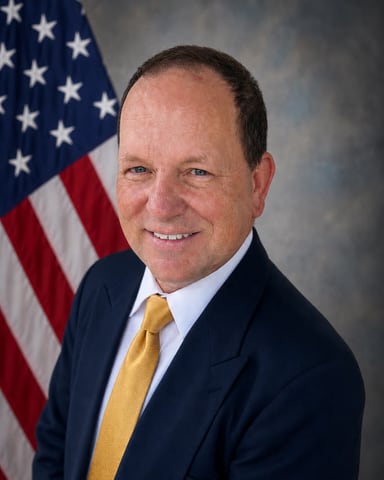
Kevin Martin
R Republican nominee for U.S. House, GA-06
Has not served in Congress
- On the ballot
- Lost the general electionNov 3, 2026 · 0 votes (0.0%) · 2 of 2
- Where to vote
- Find your polling place (opens in a new tab) · More ways to vote
- Top priorities
- Schools
- Jobs and the Trades
- The Federal Budget
- Housing
- Wages and Working Families
- Money
- $10.3K raised, $10.2K spent, $100 cash on hand (through Mar 31, 2026). Where it comes from
10 priorities from kevinmartinforcongress.com, in the order they are listed there. Every heading and the text under it is copied exactly, as one passage for each page it is from, and links to that place on the page; hover a source to see which passage it opens.
We Work for You, So It's Time We Start Listening ↗ (opens kevinmartinforcongress.com at this heading)
Send education money back to Georgia without the federal strings, and let this district raise up its lowest-performing schools rather than pulling down its best.
source ↗ (opens the page at this passage) · kevinmartinforcongress.com/issues
What the issue is ↗ (opens kevinmartinforcongress.com/issues/schools at this heading)
Look at the sixth district's school numbers as a whole and they look fine. Go school by school and you find something else entirely.
We have some of the strongest schools in Georgia here. We also have some of the weakest ones in the state — and they are a short drive apart. Two families paying into the same system, living in the same district, get very different outcomes depending on which side of a line their house sits on.
"This is a critical mass area that we are seeing in the sixth district where we do have tremendous education programs, but at the same time, we also have lowest performing school programs within the state."
That gap is the first domino in the problem Kevin talks about most. Young families don't move somewhere the schools are struggling, so they don't move in. Kids who grow up here finish school and leave. The tax base ages and shrinks, and the people who stay carry more of the bill every year.
What Congress actually controls ↗ (opens kevinmartinforcongress.com/issues/schools at this heading)
Washington does not run your child's school, and it shouldn't. What Congress does control is the money and the conditions attached to it — federal education dollars, the mandates that ride along with them, and the reporting and compliance requirements that come out of the Department of Education.
That is the whole federal footprint: money in, strings attached. And those strings are written by people who have never been inside the school they're writing rules for.
Every hour a principal in Cobb County spends satisfying a federal requirement is an hour not spent on the actual problem in their building.
What needs to change ↗ (opens kevinmartinforcongress.com/issues/schools at this heading)
Send the money back without the strings. Congress can pass education funding through to states and localities without dictating how it gets used. The people who live in a community understand what their children need better than a federal office does, and they answer to the families they affect.
"All funding for education should be maintained and kept at the state and local levels where they are better apt to serve our children in our own community."
Stop writing curriculum from Washington. Congress and the Department of Education should not be determining what gets taught in a Georgia classroom. That authority belongs to the state and the local district.
Shrink the federal education bureaucracy. Kevin's position is that the Department of Education has grown into an expense that produces compliance work rather than better outcomes. The dollars currently consumed administering federal requirements would do more good in the classrooms themselves.
Then let this district solve its own problem. Once the money and the authority are back here, the work is local: find out what's actually wrong in the schools that are struggling, fix it, and bring in the community, churches, local businesses, and families to help. The goal is to raise the bottom, not lower the top.
"We have got to work together to lift those up, not bring the top performers down, but to lift the levels of the lower performing."
Why it matters ↗ (opens kevinmartinforcongress.com/issues/schools at this heading)
Better schools are how a community grows again. Businesses look at school performance before they decide where to build. Young families look at it before they decide where to live.
Right now we have families a few miles apart getting completely different shots at a decent life, while the federal response is another set of requirements written a thousand miles away. Kevin's view is that the money is the useful part and the instructions are not.
source ↗ (opens the page at this passage) · kevinmartinforcongress.com/issues/schools
Federal student aid was built around the four-year degree. Make it work for shorter technical programs, and fund career and technical education like it matters.
source ↗ (opens the page at this passage) · kevinmartinforcongress.com/issues
Not Every Good Job Requires a Four-Year Degree ↗ (opens kevinmartinforcongress.com/issues/trade-jobs at this heading)
We have spent about forty years telling every kid the same thing: get into a good college or get left behind.
The result is a generation carrying debt for degrees that didn't lead where they were promised, while the trades — the work that keeps a community running — cannot find enough people. Try getting a plumber, an electrician, or an HVAC tech out to your house this month and see how long you wait.
There are people in this district who would be excellent at that work, make a good living doing it, and own a home years before their friends finish paying off student loans.
This is one of the places where federal policy directly caused the problem.
Congress writes the rules for the entire federal student aid system — who gets a loan, what a Pell grant can be spent on, which institutions qualify, and how long a program has to run to be eligible. Those rules were built around the traditional four-year degree. A student heading toward a bachelor's has a well-worn federal path. A student who wants to become a welder or a lineman often finds their program doesn't fit the federal boxes.
Congress also funds the federal workforce and career-technical education programs, and sets the rules for federally registered apprenticeships.
In other words: the federal government put its thumb on the scale toward one path, and Congress is what put it there.
What needs to change ↗ (opens kevinmartinforcongress.com/issues/trade-jobs at this heading)
Make federal aid work for the trades. If federal student aid is going to exist, it should be usable for shorter technical and certification programs that lead directly to a job, not only for multi-year degrees. That is a change to eligibility rules, and it is Congress that writes them.
Fund career and technical education seriously. The federal money for workforce training exists. Its share of what Washington spends on education is small compared to what goes toward the four-year track, and it produces graduates who go straight into work that can't be outsourced.
"We need to develop more trade schools to provide an education for those who are not able to afford the more expensive colleges and universities but for them to learn a skill set, a trade."
Get out of the way of employers who want to train people. Companies that need engineers, technicians, and skilled workers should be funding programs and training on the job. Federal policy should make that easier rather than harder.
Use the model that already works, in our own backyard. Georgia Tech built its reputation on students who studied in the morning and applied it in the afternoon and evening across mechanical, chemical, industrial, electrical, and civil engineering. They graduated having done the work. Federal workforce and apprenticeship dollars should be pushed toward programs built that way.
Why it matters ↗ (opens kevinmartinforcongress.com/issues/trade-jobs at this heading)
This is the most direct route to a better living for the largest number of people in this district — and it doesn't require taking on debt to get there.
It is also how you bring business back. Companies go where the skilled workforce is. Build the workforce and the jobs follow, which gives young people who grow up here a reason to stay.
A young person here should have two respectable paths, not one. Federal policy currently funds one of them properly.
source ↗ (opens the page at this passage) · kevinmartinforcongress.com/issues/trade-jobs
Pass an actual budget through regular order, fund the core obligations first, and make every other program justify itself before it gets another appropriation.
source ↗ (opens the page at this passage) · kevinmartinforcongress.com/issues
What the issue is ↗ (opens kevinmartinforcongress.com/issues/budget at this heading)
Every household in this district lives inside a budget. You know what comes in, you know what has to go out, and when those two numbers don't work you make a decision.
The federal government does not do this. It spends, borrows to cover the difference, and passes the bill forward.
Kevin has spent thirty years as a controller — the person who goes through the books line by line and asks why a number moved. When he looks at federal spending, he sees an operation with no budget, no discipline, and nobody asking the question.
"We cannot continue with an open pocketbook policy and continuing to stroke checks for special programs that are not needed in the long run."
"We are for selling the livelihoods of not the next generation or the following generations, but selling the livelihood of five generations from now."
What Congress actually controls ↗ (opens kevinmartinforcongress.com/issues/budget at this heading)
All of it. This is the one issue with no state or local component whatsoever.
Congress holds the power of the purse. Every dollar the federal government spends was appropriated by a vote in the House and the Senate. Every dollar it borrows was authorized the same way. The debt exists because members of Congress voted for it, year after year, in both parties.
There is no one else to point at. This is the job.
What needs to change ↗ (opens kevinmartinforcongress.com/issues/budget at this heading)
Pass an actual budget and hold to it. Not a continuing resolution, not a last-minute omnibus nobody read, not another vote at midnight to avoid a shutdown. A budget, passed through regular order, with the same expectation any business or family operates under.
Fund the core obligations first. National defense. Emergency response when a tornado or a hurricane hits and people need help immediately. Protecting the constitutional rights the country is built on. These come first, and they are not where the waste is.
Audit everything else. Every program should have to answer one question before it gets another appropriation: does this benefit the general population, or does it exist because somebody with access asked for it? Programs that can't answer that shouldn't be funded by default just because they were funded last year.
End earmarks and pork-barrel spending. Special interests have learned the federal government's pocket is the easiest one to reach into, and the mechanism for that is written into the appropriations process itself. Congress can close it.
Stop assuming Washington has to be the one to do it. Private industry has repeatedly done things the federal government called too expensive — space launch being the obvious recent example — faster and cheaper.
Why it matters ↗ (opens kevinmartinforcongress.com/issues/budget at this heading)
Every dollar borrowed is a dollar of somebody's future income already committed. Right now we are committing income from people who haven't been born yet, for spending nobody can fully account for.
It costs you today, too. Federal borrowing at this scale competes with you for credit, and that shows up in the interest rate on your mortgage, your car loan, and your credit card.
Nobody currently in that building is going through this line by line and asking why. That is the job Kevin has done for thirty years.
I Close Books for a Living. Washington Would Not Survive an Audit of How It Passes a Budget.
Congress is supposed to pass twelve appropriations bills by October 1. It almost never does. Kevin Martin, a controller by trade, on why regular order is not a process complaint but the whole ballgame.
Eight Failed Audits in a Row. The Only Agency of Twenty-Four That Has Never Passed.
Kevin Martin on the Pentagon's eighth consecutive failed audit, what a failed audit does and does not mean, and why supporting the military means insisting it can account for the money.
Start With the Inventory, Not the Check ↗ (opens kevinmartinforcongress.com/issues/budget at this heading)
Kevin Martin on why the defense debate should begin with a readiness benchmark and an honest count of what we have, rather than with a number for how much more to spend.
An Audit Is Not an Accusation. It Is How You Find Out Whether the Money Did What You Said It Would.
Kevin Martin on why auditing federal programs is a routine management function, not a partisan weapon, and what should happen when a program cannot show its results.
source ↗ (opens the page at this passage) · kevinmartinforcongress.com/issues/budget
Open unused federal land for people to build on, give mortgage terms a real hearing, and keep lending standards honest so we do not repeat the 2000s.
source ↗ (opens the page at this passage) · kevinmartinforcongress.com/issues
Young People Can't Buy a House Here Anymore ↗ (opens kevinmartinforcongress.com/issues/housing at this heading)
Ask anyone under thirty-five in this district about buying a house and you'll hear the same three things: the down payment is out of reach, the interest rate makes the monthly payment impossible, and nobody ever explained how to get their credit into shape.
"Many young people have not had the experience or knowledge of how to develop and build their credit."
Meanwhile the growth around here has been badly lopsided. North and northeast of Atlanta has boomed. The south and southwest haven't kept pace — and those are the areas with land, lower costs, and real room to grow.
More of this than most people realize.
Federal policy sets the terms of nearly every mortgage in the country. The federal government backs, guarantees, or insures the majority of home loans, and federal rules determine who qualifies, what a lender may offer, and on what terms. Federal law also governs how credit gets reported and scored in the first place.
The federal government is also one of the largest landowners in the country, and Congress decides what happens to that land.
And federal borrowing feeds directly into the interest rate environment that sets your monthly payment — which ties this issue straight back to the budget.
Open federal land for people to build on. This country has done this before, in the 1800s, when the federal government made land available to people willing to go build something on it. There is federal land sitting unused today. Congress can decide to make it available for housing, with incentives for individuals rather than only large developers. More supply is the most direct way to bring prices down.
Look seriously at mortgage terms. Congress, working with Treasury and the Federal Reserve, sets the framework for what home financing can look like. If a thirty-year note no longer puts a house within reach of a young family, the question of what other structures could work deserves a real hearing rather than a shrug.
Keep lending standards honest. We watched what happened in the 2000s when people were approved for loans they could never carry, got locked into adjustable rates, and lost their homes when those rates moved. Federal underwriting rules are what allowed that. Making credit easier is not the same as making housing affordable, and Congress should not repeat it.
Teach young people how credit actually works. Personal finance used to be taught in high school. It largely isn't anymore, in part because so much classroom time is now committed to federally driven requirements. Kevin's view is that this is another argument for pulling federal mandates back and letting local districts teach what young people actually need.
"This is a strong point to get back out of the federal government, the federal mandates on what should be taught into schools, to getting back to the practicality of what we need to teach in schools."
Homeownership is still how most families in this country build anything to pass on. Lock a generation out of it and you have young people who can't start, and who eventually leave for somewhere they can.
That is already happening here. Kids who grow up in this district finish school and go somewhere they can afford to begin. A young person who grew up here should be able to buy a house here.
source ↗ (opens the page at this passage) · kevinmartinforcongress.com/issues/housing
A full-time wage should clear the cost of living and keep pace with inflation, without compressing the ladder that makes taking on more responsibility worth it.
source ↗ (opens the page at this passage) · kevinmartinforcongress.com/issues
What the issue is ↗ (opens kevinmartinforcongress.com/issues/wages at this heading)
There are people in this district working forty hours a week who still can't cover rent, groceries, and getting to work.
That is the part that ought to bother everybody regardless of politics. Someone doing everything that was asked of them — showing up, working the hours — and still coming up short at the end of the month.
At the same time, wages don't exist in isolation. Set them badly and you cause a different problem: if hourly pay climbs to meet what a supervisor or manager earns, nobody has a reason to take on more responsibility, get more training, or move up. The ladder stops working.
Kevin has sat on the payroll side of this for thirty years and has run these numbers for real companies.
What Congress actually controls ↗ (opens kevinmartinforcongress.com/issues/wages at this heading)
The federal minimum wage is set by Congress. So are the overtime rules, and the line between hourly and salaried work that determines who gets paid for the extra hours they put in.
Congress also funds and writes the rules for every major federal program that supports working families who still come up short — food assistance, housing assistance, and the tax credits that go to people with earned income.
So both halves of this are federal: what the floor is, and what happens to the people standing on it.
What needs to change ↗ (opens kevinmartinforcongress.com/issues/wages at this heading)
The federal minimum wage has to clear the cost of living, and keep pace. A full-time wage should put a person above poverty — able to cover basic housing, food, and transportation. If it doesn't move with inflation, people fall behind every year while being told their pay went up.
"The minimum wage needs to keep up with the inflation so that the lesser earners are able to still maintain a livelihood and not have the feeling of being left behind."
Keep the ladder intact. There has to be real distance between an entry wage and what people earn by taking on responsibility, gaining skills, or running an operation. Set the floor too high and you compress that distance, and advancement stops meaning anything — which hurts the same workers the increase was meant to help. Congress has to weigh both, and rarely does.
Aim federal support at people who are working. If someone is putting in the hours and still can't cover the basics, help getting them to stable ground is money well spent. It goes to people carrying their end.
"If you're working and you are struggling, the government should be able to help subsidize to get you above to where you are actually able to afford some basic housing, food, and transportation."
Why it matters ↗ (opens kevinmartinforcongress.com/issues/wages at this heading)
A wage is a real number attached to a real household. When it doesn't cover the basics, something gets dropped — a prescription, a repair, a utility bill — and the hole gets deeper from there.
Work should be a path forward, not a treadmill. That means the floor has to be livable and the ladder has to be climbable. Most arguments in Washington about wages only deal with one of those, and the people living it need both.
Go deeper ↗ (opens kevinmartinforcongress.com/issues/wages at this heading)
Longer reads from Kevin on specific pieces of this issue.
The Federal Minimum Wage Has Not Moved Since 2009. I Am a Republican and I Think That Is Indefensible.
The federal minimum wage has been $7.25 since 2009. The tipped wage has been $2.13 since 1991. Kevin Martin on why a Republican is saying that number has to move.
The Benefit Cliff: Earn One More Dollar, Lose Three Hundred ↗ (opens kevinmartinforcongress.com/issues/wages at this heading)
Kevin Martin on why federal benefit programs can punish a raise, and how to fix the math so working more always leaves a family better off.
source ↗ (opens the page at this passage) · kevinmartinforcongress.com/issues/wages
Stop paying more than every other developed country for the same medication, bring critical drug manufacturing home, and break up the insurer-doctor-pharmacy arrangement.
source ↗ (opens the page at this passage) · kevinmartinforcongress.com/issues
What the issue is ↗ (opens kevinmartinforcongress.com/issues/drug-prices at this heading)
Americans pay more for the exact same medication than people in almost any other developed country. Same drug, same manufacturer, sometimes the same factory — a higher price here.
Then there's what happens inside the doctor's office. Too often the answer to pain is another prescription rather than fixing the thing causing it. Part of that is cost: a procedure that solves the problem is expensive, and a prescription that manages it is cheap. The cheaper path gets taken, over and over, and people end up dependent on medication that was never meant to be permanent.
"Doctors need to start treating what is the root cause of a person's pain and not constantly running to prescription drugs to issue to people."
And most of these medicines aren't made here anymore. We depend on other countries for drugs Americans need to stay alive.
What Congress actually controls ↗ (opens kevinmartinforcongress.com/issues/drug-prices at this heading)
Nearly every lever on this one is federal.
The federal government is the largest purchaser of prescription drugs in the country through Medicare and Medicaid, and Congress sets the terms of that purchasing. Congress writes patent and exclusivity law, which determines how long a drug stays free of competition. It controls the FDA's approval pathway for generics and biosimilars. It sets trade and tax policy that determines where manufacturing happens.
And federal antitrust law — written by Congress and enforced by federal agencies — is what governs whether an insurance company is allowed to own the practice that treats you and the pharmacy that fills your prescription.
What needs to change ↗ (opens kevinmartinforcongress.com/issues/drug-prices at this heading)
Stop paying more than everyone else. If other developed countries pay a lower price for the same medication, that should be the ceiling for what the federal government pays. There is no defensible reason American taxpayers and patients subsidize the rest of the world's prescription costs.
Bring critical drug manufacturing home. Medications Americans depend on should be made in the United States. That is a supply chain question and a national security question at the same time, and the levers — trade policy, tax treatment, FDA approval timelines — are all federal. It has to be done without driving the price back up.
Break up the arrangement. When an insurance company owns the doctor's practice and has a stake in the pharmacy, the person deciding your treatment is working inside a system with its own financial interest in the answer. Congress has broken up concentrated industries before — the phone company being the example Kevin reaches for — and this one warrants it.
Let doctors treat the cause. When fixing the underlying problem is the right medical answer, that should be the option, not the one denied because managing it is cheaper.
Why it matters ↗ (opens kevinmartinforcongress.com/issues/drug-prices at this heading)
This is a bill nearly every family in the district pays, and most people never see why it's so high.
It also connects to something bigger. A great deal of what we call an addiction crisis started in a doctor's office with a legitimate prescription for real pain, written because it was the affordable option rather than the right one.
Nobody should be choosing between a prescription and a grocery bill, and no American should pay triple what someone in another country pays for the same pill.
source ↗ (opens the page at this passage) · kevinmartinforcongress.com/issues/drug-prices
Make federal payment reflect what low-volume community care actually costs, and enforce antitrust against the regional medical monopolies closing these hospitals.
source ↗ (opens the page at this passage) · kevinmartinforcongress.com/issues
What the issue is ↗ (opens kevinmartinforcongress.com/issues/rural-hospitals at this heading)
Across Georgia, community hospitals have closed or been absorbed into large systems and cut down to a single specialized function. The building may still be there. What it can actually do for you at two in the morning is a different question.
Kevin can list them from memory in and around this area — hospitals that used to handle a broken arm, a bad night, a delivery. Some are gone. One is a Home Depot now. Others were bought and converted into an imaging center or an outpatient surgery site.
For the people who live nearby, the nearest place that can actually help is farther away than it used to be. In an emergency, distance is the whole thing.
What Congress actually controls ↗ (opens kevinmartinforcongress.com/issues/rural-hospitals at this heading)
Two things, and together they largely determine whether a community hospital survives.
Reimbursement. Medicare and Medicaid are the largest payers at most community hospitals, and Congress sets what those programs pay and under what conditions. A hospital serving a smaller population lives or dies on those rates. When Washington's payment formula doesn't cover the cost of care in a low-volume community, the hospital closes — and that formula is written by Congress.
Consolidation. Federal antitrust law determines whether two systems are permitted to buy up nearly every hospital in a region. Once they have, closing one becomes a routine business decision made far away by people who will never drive that road.
"The federal government's got to step in and say, look, this is now becoming a monopoly."
What needs to change ↗ (opens kevinmartinforcongress.com/issues/rural-hospitals at this heading)
Make federal payment reflect what rural and low-volume care actually costs. A community hospital cannot generate urban patient volume, and no amount of local effort changes that. If federal reimbursement formulas are going to be the deciding factor, they have to account for it honestly, or Congress should stop pretending it isn't making the decision.
Enforce antitrust against regional medical monopolies. When a region is down to two systems that own the hospitals, the practices, and increasingly the insurance, there is no market left to discipline the price or protect the service. Kevin's position from the start has been that this is a federal responsibility.
Stop rewarding the consolidation with federal money. Federal research funding, trial programs, and grants should not flow preferentially to the systems that built the monopoly.
Guarantee a real path for serious care. Heart problems, major surgery, anything genuinely dangerous — a smaller community can't support that on its own and shouldn't have to. What it needs is a reliable arrangement with a major hospital, in place ahead of time, not something a family figures out during the emergency.
Why it matters ↗ (opens kevinmartinforcongress.com/issues/rural-hospitals at this heading)
Rural and outlying communities aren't asking for special treatment. They're asking not to be written off because the arithmetic didn't work on a spreadsheet in another city.
When the hospital closes, the effect doesn't stop at healthcare. Employers won't locate where there's no medical access. Families with young children and older residents think twice about staying. The place starts emptying out.
How far you live from help shouldn't determine whether you survive something. Congress writes the formula that decides it.
Longer reads from Kevin on specific pieces of this issue.
Congress Put $50 Billion Into Rural Health. Only 15% of It Can Pay Providers for Care.
Congress put $50 billion into rural health. CMS then capped payments to hospitals and other providers for care at 15% of each state's award. Kevin Martin, a controller, on why most of the money cannot pay for the care it was supposed to save.
When One System Owns Every Hospital in the Region, That Is Not a Market. Nobody Is Enforcing It Like One.
Kevin Martin on hospital consolidation, why federal money has rewarded it, and what enforcing antitrust in health care would actually mean.
source ↗ (opens the page at this passage) · kevinmartinforcongress.com/issues/rural-hospitals
Fund law enforcement properly, fix the federal side of the pretrial release problem, and appoint judges who read the law as written rather than legislate from the bench.
source ↗ (opens the page at this passage) · kevinmartinforcongress.com/issues
What the issue is ↗ (opens kevinmartinforcongress.com/issues/crime at this heading)
Most people, when they think about crime, think about police. Kevin thinks about the whole chain — because a system is only as good as its weakest link, and arresting somebody is only the first step.
An officer does the work, makes the arrest, files the case. Then the person is back on the street within days. Everybody in law enforcement has watched it happen. Sometimes it ends the way you'd fear: someone released after a domestic violence arrest, and the next call to that address is a homicide.
That is not a police failure. The officers did their job. It broke somewhere after that.
"It's one thing we can do as much as possible in the policing, arresting, and prosecuting criminals. But when we have judges that are out there saying, oh, well, we're gonna let this guy go out on bail, and wait till something severe happens."
What Congress actually controls ↗ (opens kevinmartinforcongress.com/issues/crime at this heading)
Two things, and it's worth being precise about them, because most people running for Congress talk about crime as though the House can fix your county courthouse. It can't.
The money. Congress appropriates the federal grant funding that flows to state and local police departments — equipment, training, hiring, and the task forces that let local departments work with federal agencies. When a department here can't afford what it needs, that's an appropriations decision made in Washington.
Federal criminal law. Congress writes the federal criminal code, sets the sentencing framework, and sets the standards federal courts use to decide who is held and who is released while awaiting trial.
And the House holds the impeachment power over federal judges — the only direct check Congress has on a judge already on the bench.
What Congress does not control is the bail decision in a Georgia courtroom. That's state law and a state judge. Anyone who tells you a congressman will fix it is selling something.
What needs to change ↗ (opens kevinmartinforcongress.com/issues/crime at this heading)
Fund law enforcement properly, and stop treating it as a bargaining chip. Departments in this district need equipment, training, and the people to do the work. That funding shouldn't be hostage to whatever fight Washington is having that month.
Fix the federal side of the release problem. Where federal law governs who gets released pending trial, the standard should account honestly for what happens when someone with a violent history goes back out. That is a federal statute, and Congress can write it.
Appoint judges who interpret the law rather than write it. Kevin's view is that a judge's job is to read the law as it was written and apply it — not to find room in it for the outcome they wanted.
"They're interpreting the law. They're not setting law. They're basically determining, based on the front face value of the law that's been presented in front of them. And that's the way the judicial system should work."
Follow the money on judicial appointments. Kevin's position is that a judge who publicly aligns with a political party — either party — has told you they'll rule for a side rather than for the text. He'd apply that test regardless of which party benefits.
Why it matters ↗ (opens kevinmartinforcongress.com/issues/crime at this heading)
Public safety isn't a slogan, it's a chain: patrol, arrest, prosecution, sentence. Break any link and the whole thing stops working, and the people who pay for it are the ones who called for help.
Kevin has spent thirty years finding the link in a process where things go wrong. It's the same discipline, applied to something with higher stakes than a payroll ledger.
Go deeper ↗ (opens kevinmartinforcongress.com/issues/crime at this heading)
Longer reads from Kevin on specific pieces of this issue.
An Arrest Does Not Mean Much If the Same Person Is Back Out That Afternoon
Kevin Martin on the federal side of pretrial release, where the data is missing, and why judges cannot make good decisions on incomplete records.
Point Federal Law at the People Who Have Actually Done Something ↗ (opens kevinmartinforcongress.com/issues/crime at this heading)
Kevin Martin on why federal firearms enforcement should concentrate on people with a record of violence rather than on paperwork aimed at everyone else.
Almost Nothing About Policing in This District Is Decided in Washington. Here Is the Part That Is.
Most policing in this district is a local decision, not a federal one. Kevin Martin on the narrow part Congress actually controls, and why it should stop being an annual hostage.
source ↗ (opens the page at this passage) · kevinmartinforcongress.com/issues/crime
Keep federal law focused on people who have actually done something, no national gun registry, and apply the Constitution consistently across every right it protects.
source ↗ (opens the page at this passage) · kevinmartinforcongress.com/issues
What the issue is ↗ (opens kevinmartinforcongress.com/issues/second-amendment at this heading)
Kevin's position on the Second Amendment is straightforward: a citizen with no criminal record and no history of threatening anyone shouldn't have to work through a pile of red tape to buy a firearm.
He isn't absolutist about it. He supports keeping guns away from felons and from people who have shown they're a danger to others. He understands why a firearm is traceable back to its original owner — if a stolen gun turns up at a crime scene, somebody has to be able to follow it back.
Where he draws a hard line is a federal list of who owns what.
"I do not like the idea of having a national list of gun ownership in the federal government. Let it stay at the state level."
His reasoning is historical, and it's the reason the amendment exists at all. British troops came through the colonies, collected the firearms, and wrote down who had them — so they'd know which households were a threat to the crown. The amendment was written by people who had watched exactly that happen.
What Congress actually controls ↗ (opens kevinmartinforcongress.com/issues/second-amendment at this heading)
Federal gun law is written by Congress. Background check requirements, what a federally licensed dealer must do, whether a national registry exists — all of it is congressional.
There's a second piece most voters have never been told, and it matters here.
For most of American history, the Bill of Rights limited only the federal government. A state could restrict speech, or searches, or firearms, and the federal Constitution had nothing to say about it. What changed is that federal courts began applying those protections to state and local governments, one at a time, through the Fourteenth Amendment.
The Second Amendment was one of the last to get there. Until McDonald v. City of Chicago in 2010 — decided five to four — a city could restrict handguns and the federal Constitution offered no protection.
What needs to change ↗ (opens kevinmartinforcongress.com/issues/second-amendment at this heading)
Keep federal law focused on people who have actually done something. Felons and people who have demonstrated they're a threat: keep them from buying firearms. A citizen with a clean record and no history of instability shouldn't be treated as a suspect.
No national gun registry. Traceability from the point of sale is one thing, and Kevin accepts it. A federal roster of who owns what is a different thing, and he opposes it.
Be honest about red flag laws. Kevin's concern is abuse — a process that can strip a constitutional right from someone who hasn't been convicted of anything is a process that will eventually be used badly. Any such law has to clear a high bar for due process, and most of the proposals haven't.
Apply the Constitution consistently. This is the part Kevin wants voters in this district to sit with, and it's aimed directly at the argument they've heard from their current representative.
The rights this district cares about most — speech, protest, protection from unreasonable searches — apply against your state and city government only because federal courts read the Fourteenth Amendment to make them apply. That's the same interpretive path, and the same amendment, that finally extended the Second Amendment to state and local action in 2010.
You can't have it both ways. If the method is legitimate when it protects the rights you like, it's legitimate when it protects the ones you don't. Asking the courts to apply it selectively isn't principle — it's preference.
Why it matters ↗ (opens kevinmartinforcongress.com/issues/second-amendment at this heading)
This district has heard one argument about guns for a long time, delivered by someone with a personal tragedy behind it, and that argument deserves to be met with respect rather than dismissed.
But grief isn't a legal standard. The question in front of Congress is whether the Constitution means the same thing on Tuesday that it meant on Monday — and whether a right gets less protection than the others because it's less popular in certain rooms.
Kevin's answer is that it doesn't work that way. You either read the document consistently or you don't have a document, you have a preference with a robe on.
source ↗ (opens the page at this passage) · kevinmartinforcongress.com/issues/second-amendment
Start with the inventory, not the check. Set a real readiness benchmark, require replenishment when we fall below it, and audit defense like every other line.
source ↗ (opens the page at this passage) · kevinmartinforcongress.com
What the issue is ↗ (opens kevinmartinforcongress.com/issues/defense at this heading)
Ask most candidates about defense and you get a number — spend more, or spend less. Kevin thinks that's the wrong question, and it's the wrong question for a reason he's spent thirty years learning.
You don't start with the check. You start with the inventory.
What do we actually have? Missiles, drones, munitions, ships, the equipment that would matter if it were needed tomorrow. What's the minimum we need to defend the country — the continental United States, Alaska, Hawaii, and our territories? Where are we against that number right now?
Almost nobody in Washington can answer that, which is remarkable given what we spend.
What Congress actually controls ↗ (opens kevinmartinforcongress.com/issues/defense at this heading)
Every dollar. Defense is discretionary spending appropriated by Congress each year, and it is one of the largest single things Congress does.
Congress also sets what the Pentagon must report and how the money can be moved once appropriated. If Congress wanted a hard accounting of readiness and inventory before writing the check, Congress could require one. It hasn't.
What needs to change ↗ (opens kevinmartinforcongress.com/issues/defense at this heading)
Set a real benchmark. Establish the minimum level of supply and readiness required to defend the country, and write it down as a number rather than a feeling.
Put a replenishment requirement in the budget. If we fall below that benchmark — through a conflict, through consumption, through age — funding to get back to it should be automatic, not a fight every year.
"If we drop below it, then there should be a provision in the budget that states we must elevate back up to that benchmark that's been established."
Set the number with the people who know, then check their work. Military leadership should establish what's actually needed, because they know the answer and civilians in Congress don't. But Kevin has been on the other side of enough budget requests to know what happens next.
"You give people an open-ended number to bring forth, they're gonna shoot for the moon."
That's where Congress comes in — not to second-guess the military on what it needs, but to hold the line between a requirement and a wish list.
No open checkbook. Defense gets funded first, and it gets audited like everything else. Those two things are not in conflict, and Kevin doesn't accept that supporting the military means never asking where the money went.
Why it matters ↗ (opens kevinmartinforcongress.com/issues/defense at this heading)
This is what a controller does. Before you approve a purchase, you find out what's already on the shelf, what the minimum has to be, and what it costs to hold that line. Then you fund it and you verify it.
The country currently does none of that with the largest discretionary line in the budget. We fund defense by momentum and argument rather than by inventory, and nobody can say with confidence whether we're above the line or below it.
Supporting the military and auditing the spending are the same job. Anyone telling you otherwise is protecting a contract, not a country.
source ↗ (opens the page at this passage) · kevinmartinforcongress.com/issues/defense
Heading as listed on kevinmartinforcongress.com ↗ (opens kevinmartinforcongress.com at this heading)