Loading this candidate’s profile from the FEC filings and campaign records.
Where They Stand is a nonpartisan guide to everyone running for Congress: their money, their own words and how incumbents voted. Find your ballot →
Candidates › TX-27 race › 2025–2026
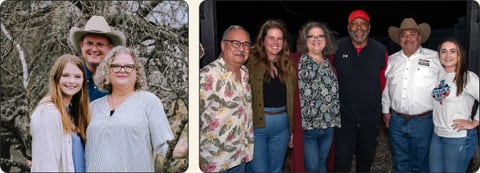
Tanya Lloyd
D Democratic nominee for U.S. House, TX-27
Has not served in Congress
- On the ballot
- On the general election ballotNov 3, 2026 · Texas US House 27
- Where to vote
- Find your polling place (opens in a new tab) · More ways to vote
- Top priorities
- Healthcare
- Economy
- Education
- Farming
- Economy
- Money
- $270.8K raised, $251.3K spent, $19.7K cash on hand (through Oct 14, 2026). Where it comes from
- Who gives
- 69% of individual money from donors at $200 or less · 76% from Texas
6 priorities from tanyafortx27.com, in the order they are listed there. Every heading and the text under it is copied exactly, as one passage for each page it is from, and links to that place on the page; hover a source to see which passage it opens.
Healthcare is a universal right, not a privilege; and people have guaranteed access to abortion and full reproductive rights.
source ↗ (opens the page at this passage) · tanyafortx27.com
Rural Texans face a healthcare crisis. Dozens of rural hospitals have closed, clinics are vanishing, and there is a severe shortage of doctors, nurses, and allied health professionals. Women must travel hours for maternal care, and nearly half of Texas counties are “maternity care deserts”. The overturning of Roe v. Wade has made Texas one of the most dangerous states for reproductive health, with no meaningful exceptions for the life or health of the mother. Women are being forced to carry pregnancies under dire circumstances, turning them into little more than incubators for the state. Meanwhile, Medicaid cuts and low reimbursement rates threaten to close even more hospitals, leaving families without lifesaving care.
- Enact a fully government-funded single-payer healthcare system that covers everyone, including long-term and reproductive care, so no Texan is left behind
- Invest in rebuilding and reopening rural hospitals and clinics, with targeted incentives to recruit and retain doctors, nurses, and allied health professionals in underserved areas
- Restore and expand access to comprehensive reproductive health services, including abortion, contraception, and cancer screenings, to ensure women’s autonomy and safety
- Support innovative models like community paramedicine and cooperative, community-owned health systems to bring preventive and chronic care closer to home
- Guarantee maternal health access, prenatal and postpartum care, and address the maternal mortality crisis in rural Texas.
Healthcare is a fundamental human right, not a privilege reserved for a select few. I fully support a government-funded, single-payer healthcare system that guarantees comprehensive care—including safe, legal abortion and the full spectrum of reproductive rights—for every person in America.
I am committed to codifying Roe v. Wade into federal law, ensuring that everyone has protected access to abortion and reproductive healthcare, free from political interference or state-level restrictions. No one should be denied care or autonomy over their own body, and I will fight to make these rights a reality for all.
source ↗ (opens the page at this passage) · tanyafortx27.com/issues
Heading as listed on tanyafortx27.com ↗ (opens tanyafortx27.com at this heading)
Every job pays a living wage, and families benefit from universal daycare.
source ↗ (opens the page at this passage) · tanyafortx27.com
Our rural economy is being suffocated not only by corporate agribusiness, but also by energy monopolies and outdated infrastructure that favor the largest players at the expense of family farmers and local communities. Big agribusinesses use their lobbying power to consolidate land, squeeze out small producers, and drive up food prices, flooding our tables with unhealthy, highly processed foods. This has led to record inflation, worsening health outcomes, and declining local economies, while energy and water rights remain concentrated in the hands of a few.
By transforming our approach to energy, water, and land, we can give rural Texans the tools and opportunities to become and remain farmers, ranchers, and entrepreneurs—building a future that doesn’t just benefit the top agribusinesses, but lifts up everyone who calls rural America home.
source ↗ (opens the page at this passage) · tanyafortx27.com/issues
Heading as listed on tanyafortx27.com ↗ (opens tanyafortx27.com at this heading)
Public education is fully funded, and all children have access to early education.
source ↗ (opens the page at this passage) · tanyafortx27.com
Rural schools are the heart of our communities, but they are being starved of resources. Teachers are underpaid—Texas ranks last in rural teacher salaries, with many earning less than $52,000 a year. Schools struggle to recruit and retain quality educators, and students are left without access to advanced coursework, technology, or even basic infrastructure. There is no expansive, guaranteed daycare or early childhood education, and with Governor Abbott’s veto of summer lunch programs, children are going hungry when school is out.
- Guarantee equitable funding for rural schools, raise teacher pay, and provide incentives for educators to work and stay in rural communities
- Invest in modern school facilities, technology, and career and technical education that prepares students for the jobs of tomorrow
- Establish universal, high-quality early childhood education and guaranteed daycare for all families, ending “childcare deserts” and supporting working parents
- Restore and expand free school meals year-round, including during summer months, so no child goes hungry
- Support innovative rural school networks and flexible programming to address unique local needs and promote college and career readiness
Fully funding public education and guaranteeing access to early learning for every child is how we move America forward. High-quality schools and universal pre-K give every student a strong start, help parents rejoin the workforce, and strengthen our economy. This is not just the right thing to do—it’s a smart investment that builds a more competitive, innovative, and equitable nation for the next generation.
source ↗ (opens the page at this passage) · tanyafortx27.com/issues
Heading as listed on tanyafortx27.com ↗ (opens tanyafortx27.com at this heading)
Agricultural policy incentivizes conservation, dramatically reduces taxpayer costs,
and requires big agribusiness to pay the farmers' real price for raw goods.
source ↗ (opens the page at this passage) · tanyafortx27.com
Heading as listed on tanyafortx27.com ↗ (opens tanyafortx27.com at this heading)
Rural areas have been left with aging, unreliable electrical grids and high energy costs, limiting opportunities for growth and resilience. But rural Texas is rich in renewable resources—sun, wind, and biomass—that can power a new era of economic development and independence. By investing in local, community-owned renewable energy projects, we can lower electricity bills, create good jobs, and ensure that the benefits of energy production stay in our communities rather than flowing to distant corporate shareholders. I am committed to ensuring that landowners are fairly compensated and included in planning decisions. We must also address local concerns about the impact of renewable energy on farmland and property rights through transparent, community-driven processes.
source ↗ (opens the page at this passage) · tanyafortx27.com/issues
Heading as listed on tanyafortx27.com/issues ↗ (opens tanyafortx27.com/issues at this heading)
In Texas, landowners have vested rights to groundwater and minerals under the rule of capture, but state policy and corporate interests have too often tilted the playing field toward large-scale extraction and export, rather than sustainable local use. We must protect the rights of family farmers and rural landowners, ensuring that water and mineral wealth benefit local communities—not just the top agribusinesses or energy conglomerates. This means supporting local water boards, fair regulation, and environmental stewardship to safeguard these resources for future generations.
source ↗ (opens the page at this passage) · tanyafortx27.com/issues
Heading as listed on tanyafortx27.com/issues ↗ (opens tanyafortx27.com/issues at this heading)
- Break up big agribusiness monopolies and redirect farm subsidies to support small, diverse, and sustainable farms that prioritize land stewardship, healthy food, and local economies.
- Launch an American Rural Revival infrastructure program to build world-class broadband, resilient water and energy systems, and climate-ready transportation—creating thousands of good jobs and empowering rural communities to lead in the economy of the future.
- Invest in clean energy—solar, wind, and biomass—owned and operated by local co-ops, not just corporate giants. This will lower energy costs, provide new revenue streams for farmers, and build resilience against severe weather and market shocks.
- Protect water and mineral rights for family farmers and rural residents, ensuring fair regulation, local benefit, and environmental stewardship.
- Support regenerative agriculture, soil health, and local food systems to improve health, fight climate change, and keep wealth circulating in rural communities.
- Promote co-ops, collective bargaining, and direct-to-consumer models to give small farmers more market power, access to technology, and a fair share of the food dollar.
- Invest in workforce development, technical education, and apprenticeships so rural residents are prepared for new jobs in infrastructure, energy, and agriculture.
- Ensure that all rural communities—including communities of color and those historically left out—have equal access to these opportunities.
Every job in America must pay a living wage so every family can thrive. I support a bold infrastructure plan to rebuild our roads, bridges, energy, and digital networks—creating good union jobs and boosting economic growth nationwide. I will always defend workers’ rights to organize and collectively bargain, because unions are essential for a strong middle class.
source ↗ (opens the page at this passage) · tanyafortx27.com/issues
Heading as listed on tanyafortx27.com/issues ↗ (opens tanyafortx27.com/issues at this heading)
Heading as listed on tanyafortx27.com ↗ (opens tanyafortx27.com at this heading)
The rising cost of food, worsening health outcomes from processed foods, and the decline of rural communities are not accidents—they are the direct result of policies written by and for big agribusiness. It’s time to put people and the land first. By breaking corporate strangleholds, rebuilding rural infrastructure, and supporting family farmers as the true stewards of our land, we can create a food system that is fair, healthy, and sustainable for all Americans.
This is the promise of the American Rural Revival.
Agricultural policy must put conservation and stewardship first—requiring big agribusiness to pay farmers a fair, living price for their goods, not pennies on the dollar. We need bold reforms that make conservation practices the standard, dramatically reduce wasteful taxpayer subsidies for corporate giants, and ensure that public dollars reward environmental responsibility, not reckless expansion.
It's time to end the rigged system where agribusiness profits while family farmers struggle, and instead guarantee that those who care for our land and produce our food are paid what their work is truly worth. By capping subsidies for the largest operations and redirecting support to small, sustainable farms, we can cut taxpayer costs, restore market fairness, and build a resilient agricultural system that benefits everyone—not just the biggest players.
source ↗ (opens the page at this passage) · tanyafortx27.com/issues
Heading as listed on tanyafortx27.com/issues ↗ (opens tanyafortx27.com/issues at this heading)