Loading this candidate’s profile from the FEC filings and campaign records.
Where They Stand is a nonpartisan guide to everyone running for Congress: their money, their own words and how incumbents voted. Find your ballot →
Candidates › ME-01 race › 2025–2026
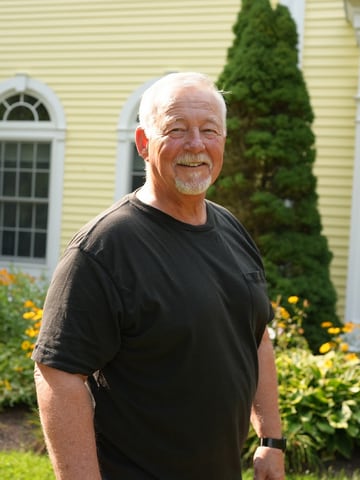
Ronald Russell
R Republican nominee for U.S. House, ME-01
Has not served in Congress
- On the ballot
- Lost the general electionNov 3, 2026 · 104,360 votes (44.4%) · 2 of 2
- Where to vote
- Find your polling place (opens in a new tab) · More ways to vote
- Top priorities
- Reducing Crime & Supporting First Responders
- Education
- Civility, Respect, and Productive Congressional Discourse
- Immigration
- Taxes
- Money
- $214.1K raised, $220K spent, $8.4K cash on hand (through Oct 14, 2026). Where it comes from
- Who gives
- 12% of individual money from donors at $200 or less · 25% from Maine · largest committee giver DIRIGO PAC, $5K
- Polling
- 35% in the latest poll (University of New Hampshire). The polls
8 priorities from ronrussellforcongress.com, in the order they are listed there. Every heading and the text under it is copied exactly, as one passage for each page it is from, and links to that place on the page; hover a source to see which passage it opens.
What We Can Achieve Together ↗ (opens ronrussellforcongress.com at this heading)
Under Joe Biden’s leadership, America has witnessed a disturbing rise in crime rates. This jeopardizes the safety and security of every community across Maine. This administration’s lenient policies have created a culture where America is “soft on crime.” The blatant lack of support for law enforcement and first responders has left Mainers’ feeling vulnerable, while emboldening violent criminals.
We must restore law and order in America. We need to ensure violent criminals serve their sentences, and provide law enforcement with the resources they need to keep our communities safe. First responders risk their lives every day to keep us safe, and they deserve our thanks and support, not a call to “defund the police.”
Nationwide the calls to “defund the police” are not only out-of-touch, but they are dangerous. From my experience in the U.S. Army, I know that more resources lead to better-trained professionals, and ultimately more desirable outcomes. We need to pay our law enforcement and first responders a decent wage so we attract the best and the brightest to the field. Our police departments need enough money to ensure officers are adequately trained to do the best job they can in the field.
Maine is lucky to be home to one of the best police academies in the country. Maine law enforcement has a long history of excellent service. We need to support our men and women in uniform, and thank them for their commitment to keeping our communities safe.
source ↗ (opens the page at this passage) · ronrussellforcongress.com/project/reducing-crime-supporting-first-responders
Heading as listed on ronrussellforcongress.com ↗ (opens ronrussellforcongress.com at this heading)
America’s schools are failing, and our children are paying the price. A strong education system is essential for our nation’s future prosperity and global competitiveness. Every child deserves a high-quality education and the opportunity to meet rigorous standards in core subjects.
Despite ranking fifth in the world for education funding, the United States ranks just 24th in science, 39th in math, and 39th in reading. We must do better if we want our kids to compete and succeed in a global economy.
Parents deserve a stronger voice in their children’s education. They should be treated as partners, not bystanders. We need to get back to the basics: math, science, history, and English, so students graduate ready for college, trade school, or the workforce.
Investing in our children means investing in America’s future. But we can’t just pour more money into a system that isn’t improving. We must measure results, reward what works, and embrace reforms like school choice to ensure every student has the best shot at success.
source ↗ (opens the page at this passage) · ronrussellforcongress.com/project/education
Heading as listed on ronrussellforcongress.com ↗ (opens ronrussellforcongress.com at this heading)
Civility, respect, and productive discourse in Congress are not mere politeness; they are practical tools that make Congress more effective, strengthen democracy, and build public trust. In my view, legislation drawn strictly along party lines wastes time and money, as it is quickly discarded or reversed by executive order when the opposing party takes power.
To achieve bipartisan solutions, we need civil discourse and debate—but Congress has failed the American people on this front. Politicians have become fixated on scoring points against the other side, neglecting the many challenges facing Maine families and small businesses. They must set aside self-interest and remember they serve the people first.
Civility isn’t “niceness”; political civility is about engaging others with integrity, accountability, and a constructive tone so disagreements can be aired, challenged, and refined into workable policy. When hearings and debates devolve into insults, they steal time from substantive work and distract committees from critical issues.
The time has come to end the games and posturing. Congress must restore civility as the norm, prioritize real problem-solving, and get back to serving the American people before themselves or their campaigns.
source ↗ (opens the page at this passage) · ronrussellforcongress.com/project/civility-respect-and-productive-congressional-discourse
Heading as listed on ronrussellforcongress.com ↗ (opens ronrussellforcongress.com at this heading)
Joe Biden’s open border policies have failed America. Our nation faces an unprecedented immigration crisis, jeopardizing our national security and straining local resources. Here in Maine, we’ve seen this happening across our state, specifically when it comes to housing. Too many Mainers are struggling to afford basic necessities such as housing and food, while people continue to flow across our border.
This Biden Administration’s failure to enforce immigration laws has led to a surge in illegal border crossing, overwhelming our local communities and law enforcement. This lack of control at our borders allows dangerous individuals , including drug traffickers and criminals, to exploit the system, threatening the security of American citizens. It is time to prioritize law and order, and to uphold the rule of law.
America is a melting pot and I embrace legal immigration. The United States accepts over a million legal immigrants for citizenship every year. This number is based on our requirement for additional citizens and an adequate labor force to support our economy. We must analyze whether this is an appropriate number of individuals, or whether it should be increased or reduced. Our nation should welcome immigrants into our country who are properly vetted and are upstanding candidates for citizenship. These new citizens must be assimilated into our culture, our economy, our language, and our way of life.
However, the number of LEGAL immigrants pales in comparison to the number of ILLEGAL immigrants. The number of illegal immigrants entering our country are unmanageable, and our towns, citizens, states, and federal resources are stretched too thin.
In addition to illegal border crossings, we must reform our amnesty system. Our amnesty system is filled with individuals who are claiming amnesty without valid reasons. We do not adequately screen amnesty recipients to ensure we know who they are and if they have a valid claim. More importantly, we are not performing adequate background checks on those entering our country.
We must prioritize securing our border to stem the illegal flow of unsustainable numbers of immigrants.
source ↗ (opens the page at this passage) · ronrussellforcongress.com/project/immigration
Maine is a high-tax state already; we face one of the highest overall state and local tax burdens in the country, at roughly 11–12% of income, putting us in the top tier nationally – we cannot afford additional Federal taxes on top of all that.
Maine’s 1st Congressional District median household income is in the mid‑$80,000s, with many families well below that. Our economy is small‑business and wage‑earner driven, and we rely heavily on small employers, service jobs, and seasonal work, so federal tax complexity discourages hiring and investment.
We need to protect the temporary tax relief gains made by passage of the Big Beautiful Bill and make them permanent. We must back extra inflation adjustments for lower and middle brackets so cost‑of‑living increases don’t quietly push Mainers into higher federal tax brackets. And we need to support larger, work‑linked credits for low‑ and moderate‑income workers (like a strengthened Earned Income Tax Credit) instead of growing welfare programs, so work always pays.
source ↗ (opens the page at this passage) · ronrussellforcongress.com/project/taxes
The Biden Administration has implemented policies that are crushing Maine’s middle class. If we do not ease the burden of inflation and reduce our cost-of-living, the middle class will completely disappear.
We must continue to lower taxes for working Maine families and our small businesses. We must take a comprehensive approach to reducing regulation, and ensuring what we’re doing makes good common sense, but doesn’t unnecessarily burden business. We need to focus on reducing government bureaucracy and red-tape.
However, the most important thing we can do to strengthen our economy is to become energy independent. Too many Mainers are struggling to provide basic necessities for their families. Not only will this help lower fuel costs for Americans filling their gas tanks, but it will also aid in reducing the cost of items such as groceries, home heating oil and other commodities that we rely on in our daily lives.
In addition to lowering our cost-of-living, achieving energy independence will strengthen American’s position across the globe. Our European allies will not be held hostage by countries who are not our friends such as Russia. Also, we must stop importing oil from countries that seek to do America harm, such as Iran.
We should embrace renewable energy technology where it is cost-effective and makes sense. Wind, hydropower, solar and nuclear are all examples of renewable energy that we should embrace. However, current technology will not allow those sources of energy to replace fossil fuels, and we should not deprive consumers of their energy choices. We must continue to develop renewable technologies so they are a cost-effective alternative to fossil fuels, but I will not support any efforts to mandate the energy sources that Mainers’ choose to power their vehicles or heat their homes.
source ↗ (opens the page at this passage) · ronrussellforcongress.com/project/energy-and-the-economy
As a lifelong Mainer and a 30-year Army veteran – Airborne Ranger and qualified Green Beret – I am committed to defending the rights and freedoms that define our nation, including the Second Amendment. Following the Lewiston tragedy, many are calling for sweeping new restrictions on responsible gun owners. These measures would only punish law-abiding citizens, not prevent future violence. The failures we witnessed in Lewiston were systemic, spanning mental health systems, data-sharing protocols, and interagency communication.
America faces a worsening mental health crisis, and the systems that connect mental health records to firearm background checks are both inconsistent and incomplete. We must close these information gaps while safeguarding individual privacy, due process, and the rights of responsible gun owners—especially Veterans who seek mental health care.
I support targeted reforms that improve background check integration, expand mental health resources, and strengthen interagency coordination without infringing on constitutional rights. Our policy focus should be on fixing the systems that fail to identify individuals in crisis, ensuring that those who present a real danger receive timely intervention and care. I oppose any effort to impose burdensome gun control measures that criminalize responsible citizens and will continue advocating for meaningful solutions that both protect public safety and preserve the freedoms guaranteed by the Constitution
Protecting public safety and protecting constitutional rights are not opposing goals. By improving data coordination, expanding mental health resources, and reinforcing existing safeguards, we can prevent tragedies like Lewiston without eroding the fundamental liberties of law-abiding Americans.
source ↗ (opens the page at this passage) · ronrussellforcongress.com/project/gun-control
Americans must believe in and trust our elections. Restoring faith in America’s election system is paramount to preserving our democratic principles and ensuring the integrity of our republic. No citizen should ever doubt that any U.S. federal, state or local level is secure. We can ensure the integrity of our elections, without depriving individuals of their right to vote. Reforms such as voter ID are common-sense measures that ensure that every eligible citizen trusts that there vote counts and that the outcomes reflect the true will of the people. All across Maine, I hear stories of how Mainers’ feel like their vote doesn’t matter. I spent a career in the military to ensure that we could hold elections. Restoring faith in our election system is not just about fixing processes; it’s about reaffirming the foundational belief that each American’s voice matters and that our democracy is resilient and just.
source ↗ (opens the page at this passage) · ronrussellforcongress.com/project/election-integrity