Loading this candidate’s profile from the FEC filings and campaign records.
Where They Stand is a nonpartisan guide to everyone running for Congress: their money, their own words and how incumbents voted. Find your ballot →
Loading this candidate’s profile from the FEC filings and campaign records.
Where They Stand is a nonpartisan guide to everyone running for Congress: their money, their own words and how incumbents voted. Find your ballot →
Candidates › AR-04 race › 2025–2026
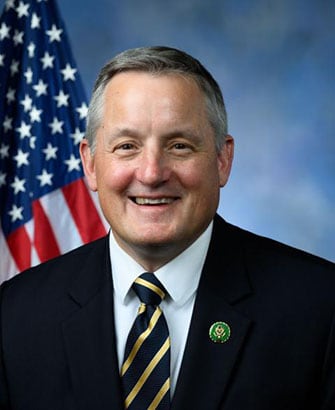
R Republican nominee for U.S. House, AR-04
Representative since 2015
4 priorities from brucewesterman.com, in the order they are listed there. Every heading and the text under it is copied exactly, as one passage for each page it is from, and links to that place on the page; hover a source to see which passage it opens.
As a member of Congress, I have helped roll back more than a dozen job-killing Obama-era regulations and stood up for Main Street in the face of an overreaching federal bureaucracy. As a result, we have not only seen record low unemployment, but real, inflation adjusted, economic growth and increases in the median household income that benefits families right here in Arkansas.
source ↗ (opens the page at this passage) · brucewesterman.com/issues
Heading as listed on brucewesterman.com/issues ↗ (opens brucewesterman.com/issues at this heading)
The last thing we need to do is take more money from taxpayers to fund Washington, D.C. In order to create jobs and grow prosperity, we must keep taxes lower, so that individuals can invest into their small businesses and families can make ends meet. During my years as a Member of Congress, I was a part of the historic tax cuts that now allow Americans to keep more of their hard earned dollars in their own pockets.
source ↗ (opens the page at this passage) · brucewesterman.com/issues
Heading as listed on brucewesterman.com/issues ↗ (opens brucewesterman.com/issues at this heading)
As the only forester in the House of Representatives, I have been dedicated to restoring the health of our national forests. Arkansas is home to some of the most productive forests in the South, and we have to manage them properly. For several years in a row, the House of Representatives passed the Resilient Federal Forests Act, legislation I introduced to address forestry management issues throughout the country. I am proud that several pieces of this large forestry reform package have been signed into law. My policies promote science based management practices to care for our national forests. There are multiple success stories of science based forest management right here in Arkansas and our federal land managers need the freedom to create successes all across our beautiful country. Healthy forests mean both cleaner air and cleaner water...the two very indicators we use to measure environmental stewardship. Taking care of our forests should never be a partisan issue.
source ↗ (opens the page at this passage) · brucewesterman.com/issues
Heading as listed on brucewesterman.com/issues ↗ (opens brucewesterman.com/issues at this heading)
While unemployment is down, income is up, and our economy grows, Americans have been strapped with rising healthcare costs that are significantly outpacing inflation. Not only are citizens being burdened with higher healthcare costs, the federal deficit and debt continue to grow with healthcare being the largest driver of those costs. There is a better way and that is why I introduced the Fair Care Act in 2019 and will release an updated version in 2020. The goal of the Fair Care Act is simple; cover more Americans and lower the costs they pay for healthcare both through their private plans and the public health insurance they fund through their tax dollars. This can be done while ensuring that pre-existing conditions are covered. The Fair Care Act focuses on five areas:
- Private insurance
- Public insurance
- Prescription drugs
- Provider competition
- Innovation
Many of the policies contained in the Fair Care Act are bipartisan, and when the United States Congress gets serious about fixing healthcare and making it work for American citizens then I’m confident many, if not all, the ideas contained in the Fair Care Act will become the law of the land.
source ↗ (opens the page at this passage) · brucewesterman.com/issues
Heading as listed on brucewesterman.com/issues ↗ (opens brucewesterman.com/issues at this heading)
98% of their votes went with their party’s majority; they broke with it 15 times in the 119th Congress.
House Committee on Transportation and Infrastructure
Matching this candidate against the House and Senate voting records…
The CRS policy areas of Westerman’s 46 substantive sponsored measures, Congresses 117, 118, 119; the figure is how many fall in each. Sponsorship indicates legislative focus, not every policy position. GovInfo source ↗
FEC filings, Jan 1, 2025 to Oct 14, 2026 · Official FEC bulk data · committee C00548180
51¢ of every dollar raised has been spent across 9 reports ($1.5M of $3M). Cash on hand went from $3.3M on Mar 31, 2025 to $4.5M on Oct 14, 2026.
| Report | Raised in the period | Spent in the period | Cash on hand at its close |
|---|---|---|---|
| APRIL QUARTERLY 2025 through Mar 31, 2025 | $436,530 | $163,102 | $3,306,988 |
| JULY QUARTERLY 2025 through Jun 30, 2025 | $540,937 | $92,784 | $3,755,141 |
| OCTOBER QUARTERLY 2025 through Sep 30, 2025 | $417,754 | $138,714 | $4,034,181 |
| YEAR-END 2025 through Dec 31, 2025 | $345,241 | $264,827 | $4,114,594 |
| PRE-PRIMARY 2026 through Feb 11, 2026 | $107,969 | $39,893 | $4,182,671 |
| APRIL QUARTERLY 2026 through Mar 31, 2026 | $349,438 | $74,138 | $4,457,971 |
| JULY QUARTERLY 2026 through Jun 30, 2026 | $365,105 | $154,629 | $4,668,447 |
| OCTOBER QUARTERLY 2026 through Sep 30, 2026 | $396,131 | $286,955 | $4,777,623 |
| PRE-GENERAL 2026 through Oct 14, 2026 | $16,128 | $291,928 | $4,501,823 |
Each report’s own period, as filed with the FEC; a report filed again counts once, as its latest copy.
No endorsements page
Advanced · 0 votes (0%) · 1 of 1 · Full results ↗
Election not held yet · Full results ↗
Every contest for this seat that named this candidate, most recent last; a result is shown once the race is called. Election dates and results from civicAPI (civicapi.org). civicAPI aggregates results from Secretaries of State and equivalent election bodies, and makes its own race calls. civicapi.org ↗
Official FEC filing record for the current cycle. The priorities they publish are quoted from their own site, in their order.
Statements are quoted from these pages exactly. Headings, order and wording are the campaign’s; the record marking is ours.
The 12 largest committees by total given are listed. In all, 548 committee contributions were filed this cycle, totaling $1.2M. Counted from the givers' own filings, which can run above the total the campaign itself reports.
A donor who gave several times appears once. The 12 largest donors by total given are listed. In all, 549 itemized contributions were filed this cycle, totaling $645.2K.
Money moved in from the candidate’s other authorized committees, such as a joint fundraising committee. It was raised once and is reported again here on arrival. The 2 largest sources by total given are listed. In all, 12 transfers were filed this cycle, totaling $531.1K.
Total reported receipts $2,975,233
Every dollar the committee reported receiving this cycle, split by the source the FEC filing attributes it to. Open a source marked + to see who gave. FEC filings through Oct 14, 2026.
Loading the map
Tap or hover over a state, or focus the map and use the arrow keys, to read its total. Ctrl or ⌘ and scroll to zoom.
43% of the money placed by state came from inside Arkansas: $280.1K of $645.2K.
| Name | Amount |
|---|---|
| 273 contributions · 43% | $280,145 |
| 55 contributions · 9.5% | $61,300 |
| 34 contributions · 8.7% | $56,338 |
| 27 contributions · 7.4% | $47,803 |
| 36 contributions · 4.6% | $29,750 |
| 9 contributions · 4.3% | $28,000 |
| 8 contributions · 3.6% | $23,000 |
| 8 contributions · 2.4% | $15,800 |
By the state each donor wrote on the filing, across 35 states and territories. Donors who have given $200 or less this cycle are not itemized, so they cannot be placed on a map. The FEC’s grouping also counts joint-fundraising memo lines, so these rows can add up to more than the itemized total.
| Employer as filed | Amount |
|---|---|
| Written instead of an employer · 46 contributions · 12% of ranked | $58,417 |
| 5 contributions · 2.8% of ranked | $14,000 |
| 3 contributions · 2.1% of ranked | $10,500 |
| 3 contributions · 1.6% of ranked | $8,000 |
| 11 contributions · 1.5% of ranked | $7,500 |
| 1 contribution · 1.4% of ranked | $7,000 |
| 2 contributions · 1.4% of ranked | $7,000 |
| 2 contributions · 1.4% of ranked | $7,000 |
A further $115,430 came from donors whose answer names no employer (None, blank), so it is not ranked. Ranked from the largest 200 of 201 employer spellings filed; each share is of the money in those. Itemized gifts over $200, grouped by the words donors filed: not an industry classification, and a gift from an employee is not a gift from the employer. The FEC’s grouping also counts joint-fundraising memo lines, so these rows can add up to more than the itemized total. Gifts of $200 or less ($39,280) are not itemized, so no employer or occupation is filed for them.
No outside spending filed
The campaign also refunded $34,000 in contributions, which the categories below do not include.
Total itemized disbursements $1,181,050
Every itemized payment the committee reported this cycle, sorted by what it said each one was for. The categories are ours; the wording they are matched against is the committee’s own. Open a category to read the filed descriptions and who was paid. FEC filings through Oct 14, 2026.
All 586 itemized payments filed this cycle. Spending below the itemization threshold is not filed line by line.
23 payments were reported as a lump sum, such as a card or payroll bill, with the detail filed underneath as memo entries. Those entries, $48,720 in all, are counted under the payee and purpose they name rather than under the processor that was paid. The total is the same either way.
| Name | Amount |
|---|---|
| 15 payments · 22% of all spending | $332,126 |
| 1 payment · 12% of all spending | $185,741 |
| 17 payments · 8.8% of all spending | $133,059 |
| 2 payments · 5.3% of all spending | $79,605 |
| 9 payments · 3.5% of all spending | $53,119 |
| 1 payment · 2.6% of all spending | $39,058 |
| 19 payments · 2.3% of all spending | $35,050 |
| 3 payments · 2.3% of all spending | $35,025 |
The people, firms and committees paid the most, across every kind of payment. Each share is of everything the committee reported spending this cycle, not only the itemized payments above. A payee that is itself a committee links to its own profile.
| Occupation as filed | Amount |
|---|---|
| Written instead of an occupation · 113 contributions · 15% of ranked | $95,445 |
| 37 contributions · 8.7% of ranked | $54,692 |
| 23 contributions · 7.2% of ranked | $45,275 |
| 29 contributions · 6.5% of ranked | $41,134 |
| 34 contributions · 4.5% of ranked | $28,500 |
| 24 contributions · 4.2% of ranked | $26,500 |
| 10 contributions · 2.8% of ranked | $17,350 |
| 12 contributions · 2.7% of ranked | $16,967 |
A further $14,785 came from donors whose answer names no occupation (blank), so it is not ranked. Itemized gifts over $200, grouped by the words donors filed: not an industry classification, and a gift from an employee is not a gift from the employer. The FEC’s grouping also counts joint-fundraising memo lines, so these rows can add up to more than the itemized total. Gifts of $200 or less ($39,280) are not itemized, so no employer or occupation is filed for them.