Loading this candidate’s profile from the FEC filings and campaign records.
Where They Stand is a nonpartisan guide to everyone running for Congress: their money, their own words and how incumbents voted. Find your ballot →
Candidates › LA-02 race › 2025–2026
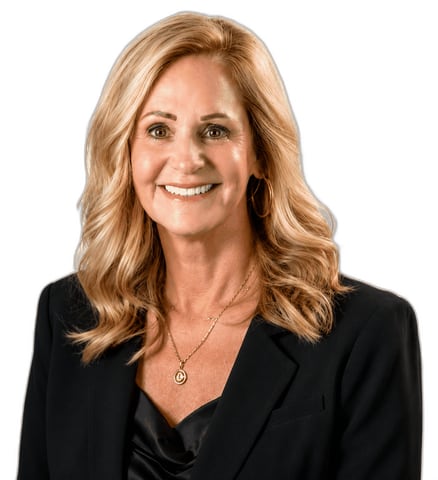
Lisa Ballay
L Libertarian nominee for U.S. House, LA-02
Has not served in Congress
- On the ballot
- Lost the general electionNov 3, 2026 · 8,227 votes (3.3%) · 3 of 5
- Where to vote
- Find your polling place (opens in a new tab) · More ways to vote
- Top priorities
- Three Priorities
- Healthcare & the Cost of Living
- Louisiana’s Future
- Accountability & Your Freedom
- America’s Role in the World
- Money
- $1.1K raised, $500 spent, $610 cash on hand (through Oct 14, 2026). Where it comes from
- Who gives
- 31% of individual money from donors at $200 or less
12 priorities from lisaballayforcongress.com, in the order they are listed there. Every heading and the text under it is copied exactly, as one passage for each page it is from, and links to that place on the page; hover a source to see which passage it opens.
You should know what your care and your prescriptions cost before the bill arrives. Lisa’s answer is more competition, less administrative burden, and prices you can actually see — not another layer of federal bureaucracy. After twenty-five years inside the system, she knows that spending more money is not the same thing as getting better care.
source ↗ (opens the page at this passage) · lisaballayforcongress.com/issues
Housing, insurance, groceries, utilities. Washington cannot tax or spend its way out of a squeeze it helped create. Lisa would go after the government costs and barriers that push prices up, and open up competition in the markets where Louisiana families have too few choices and pay for it.
Louisiana residents are worried about affordability — utility bills, insurance premiums, grocery prices. How can Congress address it?
“Congress has to start by recognizing that families cannot absorb endlessly rising costs.
That means fiscal discipline in Washington. It means removing federal regulations that raise the cost of doing business without making anyone safer. It means real competition in healthcare and insurance markets, where Louisiana families have too few choices and pay for it. And it means supporting domestic energy and an economy that can actually withstand a bad year.
Congress should hold every dollar and every regulation up against one question: is this making life more affordable for the people we represent?
Louisiana families should not be paying for Washington’s inefficiency through higher taxes, higher prices and higher household bills.”
source ↗ (opens the page at this passage) · lisaballayforcongress.com/issues
Louisiana’s insurance crisis is an affordability crisis. Permanent federal price controls do not make risk disappear — they move it somewhere else. Lisa would go after what actually drives premiums. She is specifically worried about older and lower-income homeowners being priced out of houses they already own and already paid for.
source ↗ (opens the page at this passage) · lisaballayforcongress.com/issues
Protect access. Demand responsible administration. Both, at the same time. Medicaid matters enormously in this district — to children, to seniors, to people with disabilities, to working families. Lisa would oppose any approach that shifts costs onto patients or leaves people without a realistic way to see a doctor.
She will not talk about the people who depend on the program as though they are the reason it costs too much.
source ↗ (opens the page at this passage) · lisaballayforcongress.com/issues
Many Louisianans rely on SNAP. How can Congress address food insecurity?
“No child, no senior and no vulnerable Louisiana resident should go hungry. That is the starting point, not a caveat.
SNAP should remain a real safety net for people who need it. At the same time, Congress should be working on the conditions that put families in that position to begin with — low wages, limited job opportunities, transportation that does not reach the work, and the rising cost of food itself.
Protect the assistance. Improve how well the program runs. And build stronger paths to work and better wages for adults who are able to take them.
The measure of success is not how many people we can remove from a list. It is how many families reach real economic security — and how few need the help in the first place because the opportunity is finally there.”
source ↗ (opens the page at this passage) · lisaballayforcongress.com/issues
A country this wealthy can keep the promises it made to people who spent a lifetime paying in. Lisa supports maintaining a meaningful safety net and protecting the dignity of older Americans and of people who genuinely need help.
source ↗ (opens the page at this passage) · lisaballayforcongress.com/issues
Americans should get value for what they pay. Lisa favors a simpler, fairer tax code, restraint in federal spending, and an end to special treatment for politically connected corporations. Her argument is straightforward: you cannot fix this country’s finances by raising taxes forever.
source ↗ (opens the page at this passage) · lisaballayforcongress.com/issues
The solution to expensive housing is more housing. Lisa opposes federal rent and price controls as the primary answer. She would focus on what actually limits supply — construction costs, insurance, financing, and the regulatory pile-up that makes building slow and expensive.
source ↗ (opens the page at this passage) · lisaballayforcongress.com/issues
Louisiana’s coast is not scenery. It is a working landscape, and it is disappearing. Lisa supports protecting the wetlands and estuaries that shrimpers, oystermen and fishing families depend on for a living.
She wants the people who work these waters at the table when decisions get made — not briefed afterward. Louisiana expertise should drive Louisiana’s coastal policy.
source ↗ (opens the page at this passage) · lisaballayforcongress.com/issues
Louisiana energy jobs are real jobs held by real families. Lisa supports responsible domestic production, including offshore. She does not accept the premise that Louisiana has to choose between the industry that employs this state and the coast that protects it. Both are Louisiana interests and both deserve a representative who treats them that way.
source ↗ (opens the page at this passage) · lisaballayforcongress.com/issues
After a storm, people should not spend years fighting a federal agency for help they already qualify for. Lisa wants FEMA faster, more transparent and far less bureaucratic, with more authority for state and local officials who know the ground — and real accountability for how federal disaster dollars actually get spent.
source ↗ (opens the page at this passage) · lisaballayforcongress.com/issues
Lisa is skeptical of letting private companies use eminent domain against Louisiana landowners to build carbon-capture infrastructure. Property rights come first. Louisiana should keep substantial authority over how CCS develops here, with Washington limited to legitimate interstate and safety questions.
source ↗ (opens the page at this passage) · lisaballayforcongress.com/issues
Strong protection for private property — especially when eminent-domain power is being used to benefit a private commercial interest. Taking someone’s land should be rare and genuinely justified, never a convenience for a company with good lobbyists.
source ↗ (opens the page at this passage) · lisaballayforcongress.com/issues
Lisa does not oppose technology or economic development because it arrives in the form of a data center. But development should not come at the expense of Louisiana residents, taxpayers, water, power or communities.
Water consumption, energy infrastructure, environmental effects, taxpayer subsidies and community impact deserve transparency and accountability before a deal is signed.
source ↗ (opens the page at this passage) · lisaballayforcongress.com/issues
People should be able to earn a living from their own homes without a stack of licenses, fees and permission slips. Reasonable rules belong where there is a genuine health or safety concern. Not everywhere else.
source ↗ (opens the page at this passage) · lisaballayforcongress.com/issues
Protect and grow Louisiana employment by clearing unnecessary federal barriers to businesses operating and workers prospering — while opposing special treatment for politically connected corporations that never needed the help.
source ↗ (opens the page at this passage) · lisaballayforcongress.com/issues
Louisiana does not need Washington dictating every solution. Federal policy should respect state and local decision-making, particularly where the people who live here understand local conditions better than a federal agency ever will.
source ↗ (opens the page at this passage) · lisaballayforcongress.com/issues
Public office is not a business opportunity. Lisa supports real transparency and opposes politicians using their position for personal financial gain. She opposes the corporate favoritism that lets politically connected companies receive treatment no ordinary business or family could get.
source ↗ (opens the page at this passage) · lisaballayforcongress.com/issues
Ban it. Members of Congress should not be able to turn information or influence obtained through public office into personal investment returns. This is one of the few things almost every voter in America already agrees on, which is exactly why Congress has not done it.
source ↗ (opens the page at this passage) · lisaballayforcongress.com/issues
The debt is now large enough that pretending it carries no consequences is its own kind of dishonesty. Lisa supports spending discipline and serious fiscal reform. Washington cannot keep borrowing as though the bill never arrives.
source ↗ (opens the page at this passage) · lisaballayforcongress.com/issues
Opposed. Government should not be in the business of picking winners by handing public money and special treatment to politically favored companies.
source ↗ (opens the page at this passage) · lisaballayforcongress.com/issues
Government should set legitimate protections and then get out of the way. Rules that exist to protect people are worth keeping. Rules that exist mainly to protect established businesses from competition are not.
source ↗ (opens the page at this passage) · lisaballayforcongress.com/issues
Lisa is not pro-abortion and does not believe abortion should be treated as contraception. She opposes elective late-term abortion.
She also believes reproductive medical decisions belong to a woman in consultation with her physician — not to politicians and not to the federal government. She supports exceptions involving rape, incest, and threats to the life or health of the mother.
And she supports contraception, education, maternal healthcare and the resources that reduce unintended pregnancies in the first place.
source ↗ (opens the page at this passage) · lisaballayforcongress.com/issues
Lisa’s governing principle is straightforward: government should not interfere in people’s private lives without a real reason, and Americans should be treated equally under the law.
source ↗ (opens the page at this passage) · lisaballayforcongress.com/issues
Elections have to be secure, and voters have to be able to trust them. Qualified independent and third-party candidates also have to be able to reach the ballot. A political system built mainly to protect two established parties is not offering voters a real choice.
Lisa is running inside that system. She knows precisely how it works.
source ↗ (opens the page at this passage) · lisaballayforcongress.com/issues
Law-enforcement technology has legitimate uses — serious crimes, public safety, locating missing people. But surveillance power without oversight gets abused, and Louisiana has already produced examples of database and look-up activity that went well past any legitimate purpose. Accountability and transparency are the price of the tool.
source ↗ (opens the page at this passage) · lisaballayforcongress.com/issues
Strong protection of personal privacy from unnecessary government intrusion — and that gets more important, not less, as technology and artificial intelligence expand what government is capable of collecting about ordinary people.
source ↗ (opens the page at this passage) · lisaballayforcongress.com/issues
Lisa supports innovation and does not want regulation that smothers development or hands the field to whoever can afford the most lawyers. She also supports real safeguards on privacy, transparency, cybersecurity, and misuse by government or large corporations.
The principle: protect people without strangling the technology.
source ↗ (opens the page at this passage) · lisaballayforcongress.com/issues
Lisa favors transparency for public officials and is skeptical of confidentiality arrangements used to bury misconduct or conceal information the public has a legitimate right to know.
source ↗ (opens the page at this passage) · lisaballayforcongress.com/issues
Lisa supports enforcing immigration law and securing the border, and she recognizes that a functioning legal immigration system is part of any serious answer. She would rather state that plainly than pretend she has a comprehensive bill already written.
source ↗ (opens the page at this passage) · lisaballayforcongress.com/issues
Military action should be a last resort. Before American lives are put at risk there should be a clear threat to the United States, a clear objective, and a clear exit strategy.
The United States should not be policing the world.
source ↗ (opens the page at this passage) · lisaballayforcongress.com/issues
Destroying a military target and making Americans safer are not automatically the same thing. The standard should be whether the action actually makes Americans safer — paired with a clear threat, a clear objective and a clear way out.
source ↗ (opens the page at this passage) · lisaballayforcongress.com/issues
Lisa is skeptical of broad sanctions that mostly punish ordinary civilians without accomplishing what they were imposed to accomplish. Sanctions should be targeted, purposeful and tied to measurable objectives — and reconsidered when they are hurting families without producing results.
source ↗ (opens the page at this passage) · lisaballayforcongress.com/issues
Lisa’s foreign-policy framework applies here as it does everywhere: protect civilians, avoid unnecessary American military entanglement, and demand clear objectives for any U.S. involvement.
She has not adopted a detailed platform on this conflict, and she will not adopt one because a questionnaire asked her to.
source ↗ (opens the page at this passage) · lisaballayforcongress.com/issues
If elected, what is one piece of legislation you plan to champion?
“Healthcare affordability and transparency.
Patients should know what their care and their prescriptions actually cost, before they receive a bill. We need more competition, less unnecessary administrative burden, and a system where healthcare dollars reach patients and the people treating them instead of being consumed by the machinery in between.
After more than 25 years inside healthcare, I know that simply spending more money does not guarantee better or more affordable care. We have to make the system work better.
That is not a theory I read about. It is the job I have done for a quarter century.”
source ↗ (opens the page at this passage) · lisaballayforcongress.com/issues
Many Louisianans rely on Medicaid. What role should Congress play in ensuring affordable access to healthcare?
“Congress has an obligation to protect access to essential healthcare while demanding that taxpayer dollars are spent effectively. Both things, at the same time.
Medicaid matters enormously here — to children, to people with disabilities, to pregnant women, to seniors, to working families. I would oppose any approach that simply shifts costs onto patients or leaves vulnerable people without a realistic way to see a doctor.
At the same time, we have to be honest about what is broken. Administrative complexity and reimbursement policies have made it harder and harder for physicians and other providers to participate at all.
My experience has taught me something most policy debates miss: having an insurance card does not necessarily mean having access to a doctor. The goal has to be both — affordable coverage, and care you can actually get.”
source ↗ (opens the page at this passage) · lisaballayforcongress.com/issues
Louisiana communities depend heavily on federal disaster recovery dollars. What needs to change?
“Louisiana should not have to fight Washington bureaucracy while recovering from a hurricane.
Disaster programs need faster decisions, clearer rules and real accountability. Federal agencies should be held to firm deadlines for determinations and appeals. Duplicative paperwork should be consolidated. And state and local officials — the people who can see the conditions on the ground — should have more flexibility to respond to them.
I have managed healthcare operations through severe weather events. I know that in a disaster, a delay is not an administrative inconvenience. It is somebody’s house, somebody’s business, somebody’s medication, somebody’s ability to get back to normal life.
Federal disaster policy should be built around recovery, not paperwork.”
source ↗ (opens the page at this passage) · lisaballayforcongress.com/issues
What is your long-term plan for Louisiana’s eroding coast, and for communities facing flooding and land loss?
“Protecting Louisiana’s coast is not optional.
It protects our communities, our ports, our energy infrastructure, our fisheries and our businesses — an economic corridor the entire country depends on, whether the rest of the country knows it or not.
I would fight to keep Louisiana’s fair share of federal offshore energy revenues, and to see those dollars go where they were meant to go: coastal restoration, hurricane protection and flood resilience. I also believe Louisiana experts and the communities living with the water should have a strong voice in deciding which projects actually work.
Washington should provide the resources and the oversight. Louisiana should not have to surrender local decision-making to get the federal dollars that protect a coast serving the whole nation.”
source ↗ (opens the page at this passage) · lisaballayforcongress.com/issues
Louisiana’s estuaries support a working seafood industry. How do you protect the estuaries — and the shrimpers, oystermen and fisheries that depend on them?
“An estuary is not scenery. It is a nursery, a storm buffer and an economy, all at the same time.
Every shrimp, every oyster and every crab that comes out of these waters depends on a balance of salt and fresh water. Coastal projects either protect that balance or destroy it. When we get it wrong we do not just lose marsh — we lose oyster grounds a family has worked for three generations, and we lose the reason the next generation stays.
So coastal projects have to be judged on two things, not one: does it hold the land, and does it protect the people who work the water?
The shrimpers and oystermen who have fished these estuaries their whole lives know things no model knows. They should be at the table when projects are chosen — not notified after the decision is made.
And Washington owes this industry something it has not delivered: a fair fight.
The overwhelming majority of shrimp eaten in this country is imported, much of it farmed with antibiotics that are illegal to use here. The FDA refuses contaminated shipments every single month — which should tell you something about what is getting through untested. Meanwhile a Louisiana shrimper meets every standard we set, and then competes against a product that never had to.
That is not free trade. That is one set of rules for our families and another set for everybody else.
I support country-of-origin labeling you can actually read, inspection of imported seafood held to the same standard we hold our own producers to, and enforcement of the trade laws already on the books. Louisiana shrimpers are not asking Washington for a favor. They are asking it to enforce the rules it already wrote. They are right, and they have waited long enough.”
source ↗ (opens the page at this passage) · lisaballayforcongress.com/issues
What is your view of current federal immigration enforcement, and of federal agencies operating in American cities?
“When federal law-enforcement agencies operate inside American communities, people are entitled to due process and clear standards. That is not a partisan position. It is a constitutional one.
I believe the federal government has both the authority and the responsibility to enforce federal immigration law, and I support securing the border. But enforcement has to be constitutional, targeted and accountable — and people living in this district should be able to know what the rules are when federal agents are operating on their street.
Communities should not be forced to choose between no enforcement at all and enforcement with no oversight. That is a false choice, and Congress created it by failing for decades to produce an immigration system that actually works. Both border security and lawful immigration deserve serious reform, and neither has gotten it.”
Louisiana holds one of the largest populations of detained immigrants in the country. How should Congress hold the Department of Homeland Security and its private contractors accountable for conditions in those facilities?
“Government accountability should not change depending on someone’s immigration status.
Congress has an oversight responsibility wherever taxpayer dollars are being spent — and that includes detention facilities and the private contractors paid to run them. Enforceable standards. Transparent inspections. Financial audits. Real consequences when a contract or a standard is violated.
Congress should be demanding measurable performance from DHS and its contractors, not writing checks and assuming the system is working.”
source ↗ (opens the page at this passage) · lisaballayforcongress.com/issues
If a constituent cannot get a FEMA determination, faces a delayed VA claim, loses coverage in error, or is stuck in a federal backlog — what should they expect from your office?
“They should expect us to answer the phone and go to work.
Constituent service would be one of the most important things my office does. My team would help people navigate federal agencies, find out where a case is actually stalled, talk to the agency directly, and stay with the case — instead of handing somebody another phone number to call.
I have spent my career solving operational problems and navigating complicated systems. If Washington bureaucracy is standing between a constituent and something they are legitimately owed, my office should be their advocate in Washington — not one more layer of it.”
source ↗ (opens the page at this passage) · lisaballayforcongress.com/issues